Skin treatments
This section covers the treatments themselves — what each one does, what it is used for, and what to expect. The conditions they treat are covered under skin conditions.
A treatment is a tool, not a plan. The same laser can be right for one person’s pigmentation and wrong for another’s, depending on skin type, the depth of the pigment and what caused it. Which treatment suits you is decided after assessment, not before.
Start from what you can see
Most people arrive knowing what bothers them, not what it is called. Find the row that matches what you see in the mirror and follow it to the page that explains it properly.
| What you can see | Usually | Where to read |
|---|---|---|
| Flat brown patches or spots | Pigment | Hyper-pigmentation, age spots, melasma |
| Redness or fine visible vessels | Vascular | Capillaries and redness, rosacea |
| Rough, dull or bumpy surface | Texture | Uneven skin texture, open pores |
| Pitted or indented marks after acne | Scarring | Acne scars |
| Creases that stay when the face is still | Static lines | Deep lines and wrinkles |
| Skin that hangs or has lost its edge | Laxity | Lax and sagging skin |
| A raised lump, tag or growth | Lesion | Skin lesions, mole removal |
| A spot that is changing, bleeding or not healing | Needs assessment first | Skin cancers — book before reading about cosmetic options |
| Active breakouts | Acne | Acne, acne treatments |
Resurfacing and collagen stimulation
- Laser treatments — CO2, erbium, Fraxel, Nd:YAG, IPL and Laser Genesis, for texture, pigment, redness and lines
- Skin needling — controlled micro-injury to stimulate collagen; used for texture, scarring and fine lines
- Chemical peels — depth chosen to match the problem, from superficial refreshing to medium resurfacing
- Microdermabrasion — mechanical exfoliation with minimal downtime
- Epidermal levelling — removes surface dead cells and fine vellus hair
- Factor 4
- Healite II LED — light therapy to reduce inflammation and support healing
Lesion removal
- Surgical excision — removes the lesion whole, so it can be sent to pathology
- Curettage — scraping superficial lesions from the surface
- Electrosurgery (radiofrequency) — for raised benign lesions and skin tags
- Cryotherapy — liquid nitrogen for assessed benign lesions and solar keratoses
Read this before choosing a removal method. Electrosurgery, laser and cryotherapy destroy the tissue. If a lesion turns out to have been an early skin cancer, there is nothing left for a pathologist to examine. Anything with features of concern is excised whole and tested instead. See skin cancers.
Topical and injectable treatments
- Cosmeceutical skincare — medical-grade topicals: retinoids, antioxidants, pigment inhibitors, barrier repair
- Depigmenting lotion treatments — for pigmentation and melasma
- Cortisone injections — for inflamed acne cysts and raised scars
- Prescription medication — prescribed after a doctor’s consultation. Prescription-only medicines cannot be named or promoted in advertising to the public under Australian law, which is why you will not find brand names for them on this site.
- Mineral make-up — cover, and physical sun protection
How deep each treatment goes
This is the framework that makes the whole section make sense. Skin has layers, and every treatment on this page is defined by which layer it reaches. Depth determines three things at once — how much it changes, how long you are out of action, and how much can go wrong — and those three always move together. There is no treatment that reaches the dermis with no downtime, and any marketing that suggests otherwise is describing something that does not reach the dermis.
| Layer reached | Treatments | What it can change |
|---|---|---|
| Dead surface cells only | Microdermabrasion, epidermal levelling, superficial peels | Dullness, rough feel, make-up sitting badly. Nothing structural. |
| Epidermis | Medium peels, IPL, light laser, depigmenting topicals | Surface pigment, mild texture, some redness |
| Upper dermis | Skin needling, fractional laser, Laser Genesis, retinoids over months | Collagen, fine lines, mild scarring, pore appearance |
| Full dermis | Ablative CO2 and erbium resurfacing, deep peels | Deeper lines and scarring — the biggest change and the longest recovery |
| Below the skin | Excision, cortisone injection, surgery | Lesions, cysts, raised scars, laxity |
If you have been offered a treatment that promises dermal change with no recovery, the honest question to ask is which layer it reaches.
The downtime ladder
Downtime, not price, is what most people actually have to plan around. Roughly, from least to most — and these are typical ranges, not promises, because skin type, settings and the area treated all shift them.
| Treatment | Typical visible recovery | Back to normal appearance |
|---|---|---|
| Healite II LED | None | Immediately |
| Microdermabrasion, epidermal levelling | Mild pinkness, hours | Same day |
| Superficial peel | Pinkness, light flaking 2–4 days | Within a week |
| Laser Genesis, IPL | Redness hours to a day; pigment may darken and flake for up to a week | A few days to a week |
| Skin needling | Redness 1–3 days, like sunburn | 2–5 days |
| Medium peel, fractional laser | Redness, swelling, peeling 4–7 days | 1–2 weeks, with residual pinkness longer |
| Ablative resurfacing | Raw, weeping, crusting for several days; redness for weeks | Weeks to months for redness to fully settle |
| Excision | Stitches 5–14 days | A scar that matures over 12–18 months |
If you have an event coming up, work backwards from it and say so at assessment. The mistake we see most often is someone booking a deeper treatment three weeks before a wedding because the result sounded better. The right answer in that situation is usually a lighter treatment now and the deeper one afterwards.
How treatments are chosen
Four things determine what is appropriate:
- What the concern actually is. Several skin conditions look alike and respond differently. Assessment comes first.
- Your skin type. Light-based and ablative treatments carry a higher risk of pigment change in darker skin, so device and settings change accordingly.
- How much downtime you can accept. Deeper treatments do more and take longer to recover from. Both ends of that trade-off are legitimate.
- Your medical history. Pregnancy, photosensitising medication, recent oral acne medication, a keloid tendency, cold sores and autoimmune conditions all change what is safe.
Who each treatment group suits
If you have never had anything done
Start with assessment and topicals. A medical-grade routine used properly for three months changes the baseline that every in-clinic treatment then works from, and it is the cheapest thing on this page. Treating skin that has not been prepared wastes a session.
If your concern is pigment
What caused the pigment matters more than what it looks like. Sun-driven pigment, post-inflammatory marks and melasma all look brown and all respond differently — and melasma in particular can be made worse by heat-based treatment. This is the group where getting the diagnosis right saves the most money.
If your concern is texture or scarring
Expect a course rather than a session, and expect the result to arrive over months rather than days. Collagen remodelling is slow by nature.
If you have a darker skin type
More options are available to you than is often assumed, but the aggressive ones are frequently not the right ones. The risk being managed is persistent pigment change, and it is managed by using gentler settings over more sessions rather than by refusing treatment.
If you are pregnant or breastfeeding
Most elective skin treatment and many topicals are deferred. Retinoids in particular are avoided. Say so at booking rather than at the treatment.
If you have had oral acne medication recently
Resurfacing and waxing-type treatments are usually deferred for a period after finishing, because healing is affected. Bring the dates.
If you are here for a lesion rather than a look
Assessment comes first and it is a different appointment from a cosmetic skin consultation. Do not book a cosmetic treatment for something you are worried about medically.
What sits outside this section
- Dermatology. There is no dermatologist on the Me Clinic team. Eczema, psoriasis, autoimmune skin disease and complex or unclear rashes are referred.
- Full-body mole mapping and surveillance photography. Dedicated skin cancer clinics provide this. If your risk profile calls for it, that is where to go.
- Treatment of an undiagnosed lesion. Nothing suspicious is treated cosmetically. It is assessed, and excised and tested if there is any doubt.
- Permanent implants and permanent fillers.
- Courses sold in advance. Each session is assessed on how the last one went, and packages that must be bought upfront remove the option of stopping.
- Cosmetic treatment for under-18s.
How it goes, step by step
- Skin assessment ($50). Skin examined in proper lighting, history taken, skin type recorded, photographs taken as your baseline.
- Diagnosis before device. The concern is named before any treatment is proposed. If what you have is not what you thought it was, that conversation happens here.
- A doctor’s consultation where one is required — for prescription medicines, injectables, or anything being removed. Cosmetic Doctor $150.
- A written plan and quote covering the full course and what maintenance will cost afterwards, not just the first session.
- Preparation. Many treatments work better, and more safely, after several weeks of topical preparation. Skipping it is a false economy.
- Treatment, then aftercare in writing — what is normal, what is not, what to use, and what to avoid.
- Review before repeating. What happens next is decided by how your skin responded, not by a schedule set in advance.
What to ask about any treatment you are offered
These questions work anywhere, not only here, and the quality of the answers tells you a great deal.
- What is the actual device or agent, and at what depth or strength? “A laser” is not an answer; lasers differ more from each other than they resemble each other.
- Who will be operating it, and what are their qualifications?
- How many sessions, and what does the whole course cost?
- What does maintenance cost per year afterwards?
- What is the realistic downtime, honestly, for my skin type?
- What happens if it does not work — what is the next step, and what does that cost?
- What are the risks specific to my skin type, not in general?
- Is there anything cheaper or simpler that should be tried first?
And some things that should make you pause anywhere you see them: a time-limited discount on a medical treatment, a package that must be paid for upfront before assessment, before-and-after photographs with no information about lighting or timeframe, a guarantee of a specific result, and a promise of dermal change with no recovery.
What results are realistic
Most skin treatments work as a course rather than a single session, and the results build over months as collagen remodels rather than appearing immediately.
Most also need maintenance, because the causes — sun exposure, ageing, genetics, hormones — continue after treatment stops.
Improvement, not transformation, is the honest word for what these treatments do. Individual results vary.
The single highest-value thing in this whole section is not a treatment. Daily sun protection does more to preserve the result of anything here than any repeat session does, and it is also the only intervention that prevents the next problem rather than correcting the last one.
Risks
Risks differ by treatment and skin type, and commonly include redness, swelling, peeling, crusting, blistering, changes in pigmentation that can persist, scarring, infection, incomplete response and the need for repeat treatment. Your practitioner will go through the risks specific to what is proposed for you.
See risks and complications of cosmetic surgery.
Expected, versus call us
- Expected: redness, warmth, tightness, flaking, temporary darkening of pigment before it clears, mild swelling.
- Call us: blistering you were not warned about, spreading redness or increasing pain after several days, pus or fever, a cold sore outbreak after a facial treatment, or any change you were not told to expect.
What you receive
- A written assessment naming the condition, not just the treatment
- Baseline photographs taken in standard conditions
- An itemised quote for the full course and for ongoing maintenance
- A consent discussion covering the risks specific to your skin type
- Written aftercare
- A review appointment before anything is repeated
Cost
As at September 2024 and including GST: skin assessment $50, Cosmetic Doctor consultation $150. Dermal skin treatments start from $130. A course is quoted after assessment — ask for the cost of the whole plan, and of maintenance afterwards, rather than a single session.
Cosmetic treatment is not covered by Medicare. Medically indicated treatment may attract a rebate; we are not a no-gap provider.
Who provides these treatments
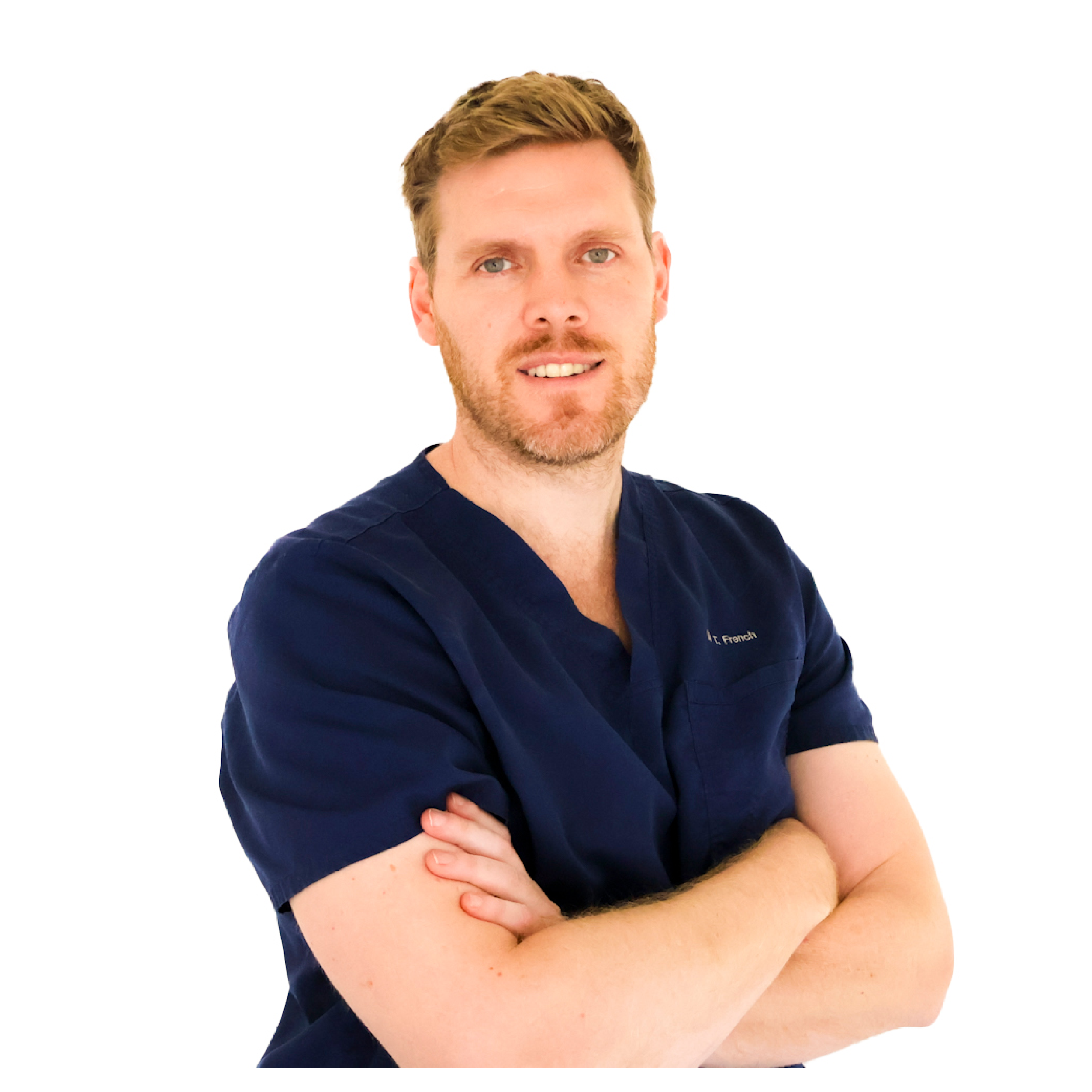
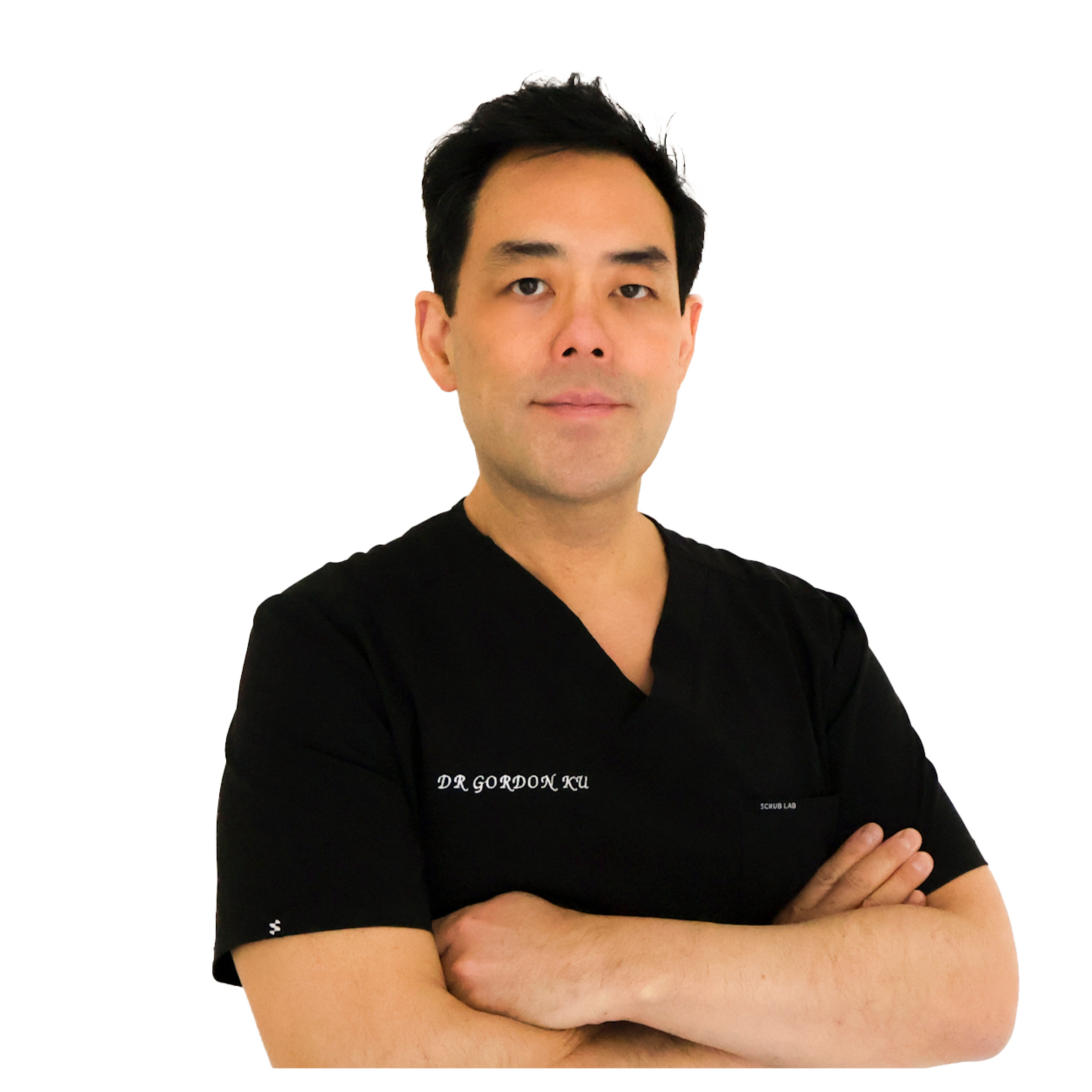
Cosmetic Doctors including Dr Gordon Ku (MED0001169203); Dr Tim French (MED0001790529), phlebologist, for vein and vascular work; and Michelle Casey, Paramedical Aesthetician, for treatment-room skin work.
Booking
Me Clinic, 4 Burke Road, Malvern East VIC 3145. Phone 1300 852 050 or (03) 9569 3511. Monday, Wednesday and Friday 9am–5pm, Tuesday and Thursday 9am–6pm, Saturday 9am–2pm. Or use the online consultation form.
Common questions about skin treatments
What is the difference between this section and skin conditions?
This section covers the treatments themselves — what each one does, what it is used for, and what to expect. The conditions they treat are covered under skin conditions.
Can I pick a treatment myself?
A treatment is a tool, not a plan. The same laser can be right for one person’s pigmentation and wrong for another’s, depending on skin type, the depth of the pigment and what caused it. Which treatment suits you is decided after assessment, not before.
I only know what it looks like, not what it is called. Where do I start?
Use the table at the top of this page: it runs from what you can see in the mirror to the page that explains it.
What decides how much a treatment can change?
Which layer of skin it reaches. Depth determines how much it changes, how long recovery takes and how much can go wrong, and those three always move together.
Is there a treatment that reaches the dermis with no downtime?
No. Anything promising dermal change with no recovery is describing something that does not reach the dermis. The question to ask is which layer it reaches.
Which treatments have essentially no downtime?
LED, microdermabrasion and epidermal levelling, and superficial peels come close — pinkness and light flaking for a few days.
Which have the most?
Ablative resurfacing, which is raw and crusting for several days and leaves redness for weeks, and excision, where the scar matures over twelve to eighteen months.
I have an event in three weeks. What should I do?
Work backwards from the date and say so at assessment. The usual right answer is a lighter treatment now and the deeper one afterwards, not a deeper treatment close to the event.
What resurfacing and collagen treatments are available?
Laser treatments — CO2, erbium, Fraxel, Nd:YAG, IPL and Laser Genesis — for texture, pigment, redness and lines; skin needling, a controlled micro-injury to stimulate collagen; chemical peels, with the depth chosen to match the problem; microdermabrasion; epidermal levelling; Factor 4; and Healite II LED.
What does skin needling treat?
Texture, scarring and fine lines, by stimulating collagen through controlled micro-injury.
How deep is a chemical peel?
The depth is chosen to match the problem, from superficial refreshing to medium resurfacing.
What does epidermal levelling do?
It removes surface dead cells and fine vellus hair.
What is Healite II LED for?
Light therapy to reduce inflammation and support healing.
What methods are used to remove lesions?
Surgical excision, which removes the lesion whole so it can be sent to pathology; curettage, scraping superficial lesions from the surface; electrosurgery (radiofrequency), for raised benign lesions and skin tags; and cryotherapy, liquid nitrogen for assessed benign lesions and solar keratoses.
Why does the removal method matter so much?
Electrosurgery, laser and cryotherapy destroy the tissue. If a lesion turns out to have been an early skin cancer, there is nothing left for a pathologist to examine. Anything with features of concern is excised whole and tested instead.
What topical and injectable treatments are offered?
Cosmeceutical skincare — medical-grade topicals including retinoids, antioxidants, pigment inhibitors and barrier repair; depigmenting lotion treatments for pigmentation and melasma; cortisone injections for inflamed acne cysts and raised scars; prescription medication; and mineral make-up for cover and physical sun protection.
Why are no brand names given for prescription medicines?
Prescription-only medicines cannot be named or promoted in advertising to the public under Australian law.
How is the right treatment chosen?
Four things determine what is appropriate: what the concern actually is, since several skin conditions look alike and respond differently; your skin type; how much downtime you can accept; and your medical history.
Does my skin type change what can be used?
Yes. Light-based and ablative treatments carry a higher risk of pigment change in darker skin, so device and settings change accordingly — usually gentler settings over more sessions rather than no treatment.
Is wanting no downtime a legitimate preference?
Yes. Deeper treatments do more and take longer to recover from, and both ends of that trade-off are legitimate.
What in my medical history matters?
Pregnancy, photosensitising medication, recent oral acne medication, a keloid tendency, cold sores and autoimmune conditions all change what is safe.
I have just finished oral acne medication. Does that matter?
Yes. Resurfacing is usually deferred for a period afterwards because healing is affected. Bring the dates to your assessment.
Can I have treatment while pregnant or breastfeeding?
Most elective skin treatment and many topicals, retinoids in particular, are deferred. Say so at booking rather than on the day.
Should I do anything before my first treatment?
Usually yes. Several weeks of topical preparation makes many treatments work better and more safely, and skipping it is a false economy.
What should I ask about any treatment I am offered?
What the device or agent actually is and at what depth; who is operating it and with what qualifications; how many sessions and what the whole course costs; what maintenance costs per year; the honest downtime for your skin type; what happens and what it costs if it does not work; the risks specific to your skin type; and whether something simpler should be tried first.
What should make me pause?
A time-limited discount on a medical treatment, a package that must be paid upfront before assessment, before-and-after photographs with no information about lighting or timeframe, a guaranteed result, and any promise of dermal change with no recovery.
Will one session be enough?
Most skin treatments work as a course rather than a single session, and the results build over months as collagen remodels rather than appearing immediately.
Will I need maintenance?
Most treatments need it, because the causes — sun exposure, ageing, genetics, hormones — continue after treatment stops.
What is the most valuable thing in this section?
Daily sun protection. It preserves the result of everything else here, and it is the only intervention that prevents the next problem rather than correcting the last one.
How much change should I expect?
Improvement, not transformation, is the honest word for what these treatments do. Individual results vary.
Is there a dermatologist here?
No. Eczema, psoriasis, autoimmune skin disease and complex or unclear rashes are referred, and full-body mole mapping is provided by dedicated skin cancer clinics.
Do you sell treatment packages upfront?
No. Each session is assessed on how the last one went, and a package bought in advance removes your option to stop.
What are the risks?
They differ by treatment and skin type, and commonly include redness, swelling, peeling, crusting, blistering, changes in pigmentation that can persist, scarring, infection, incomplete response and the need for repeat treatment. Your practitioner will go through the risks specific to what is proposed for you.
When should I call us afterwards?
Blistering you were not warned about, spreading redness or increasing pain after several days, pus or fever, a cold sore outbreak after a facial treatment, or any change you were not told to expect.
What does it cost?
As at September 2024 and including GST: skin assessment $50, Cosmetic Doctor consultation $150, dermal skin treatments from $130. A course is quoted after assessment. Cosmetic treatment is not covered by Medicare, medically indicated treatment may attract a rebate, and we are not a no-gap provider.
Individual results may vary. Any surgical or invasive procedure carries risks. Before proceeding you should seek a second opinion from an appropriately qualified health practitioner.
Images on This Page
-
https://www.meclinic.com.au/wp-content/uploads/2024/03/meclinic-logo.png
Me Clinic
-
https://www.meclinic.com.au/wp-content/uploads/2022/02/call.png
call
-
https://www.meclinic.com.au/wp-content/uploads/2025/11/michele-photo.png
(no alt text)
-
https://www.meclinic.com.au/wp-content/uploads/2025/11/dr-tim-photo.png
(no alt text)
-
https://www.meclinic.com.au/wp-content/uploads/2025/11/gordon-photo.png
(no alt text)
-
https://www.meclinic.com.au/wp-content/uploads/2022/03/cs1-thread-lift-200x171_nosethread-casestudy1-200x171-1.png
(no alt text)
-
https://www.meclinic.com.au/wp-content/uploads/2022/03/cs1-threadlift-250x310-before.jpg
cs1_liposuction_face_before-img
-
https://www.meclinic.com.au/wp-content/uploads/2022/03/cs1-threadlift-250x310-after.jpg
cs1_liposuction_Face_after-img
-
https://www.meclinic.com.au/wp-content/uploads/2022/03/cs2-thread-lift-250x310-before.jpg
cs1_liposuction_face_before-img
-
https://www.meclinic.com.au/wp-content/uploads/2022/03/cs2-thread-lift-250x310-after.jpg
cs1_liposuction_Face_after-img
-
https://www.meclinic.com.au/wp-content/uploads/2022/03/cs3-thread-lift-250x310-before.jpg
cs1_liposuction_face_before-img
-
https://www.meclinic.com.au/wp-content/uploads/2022/03/cs3-thread-lift-250x310-after.jpg
cs1_liposuction_Face_after-img
-
https://www.meclinic.com.au/wp-content/uploads/2022/03/cs4-ThreadLift-casestudy4-before-250x310-1.jpg
cs1_liposuction_face_before-img
-
https://www.meclinic.com.au/wp-content/uploads/2022/03/cs4-ThreadLift-casestudy4-After-250x310-1.jpg
cs1_liposuction_Face_after-img
-
https://www.meclinic.com.au/wp-content/uploads/2022/03/cs5-thread-lift-nose-250x310-before.jpg
cs1_liposuction_face_before-img
-
https://www.meclinic.com.au/wp-content/uploads/2022/03/cs5-thread-lift-nose-250x310-after.jpg
cs1_liposuction_Face_after-img
-
https://www.meclinic.com.au/wp-content/uploads/2022/03/cs6-threadlift-250x310-before.jpg
cs1_liposuction_face_before-img
-
https://www.meclinic.com.au/wp-content/uploads/2022/03/cs6-threadlift-250x310-after.jpg
cs1_liposuction_Face_after-img
-
https://www.meclinic.com.au/wp-content/uploads/2022/03/cs7-nose-threadlift-250x310-before.jpg
cs1_liposuction_face_before-img
-
https://www.meclinic.com.au/wp-content/uploads/2022/03/cs7-nose-threadlift-250x310-after.jpg
cs1_liposuction_Face_after-img
-
https://www.meclinic.com.au/wp-content/uploads/2024/02/acps.png
(no alt text)
-
https://www.meclinic.com.au/wp-content/uploads/2024/02/racs.png
(no alt text)
-
https://www.meclinic.com.au/wp-content/uploads/2024/02/fracs.png
(no alt text)
-
https://www.meclinic.com.au/wp-content/uploads/2024/02/isaps.png
(no alt text)
-
https://www.meclinic.com.au/wp-content/uploads/2024/02/cpca.png
(no alt text)
-
https://www.meclinic.com.au/wp-content/uploads/2022/02/auscop.png
(no alt text)
-
https://www.meclinic.com.au/wp-content/uploads/2022/02/amav.png
(no alt text)
-
https://www.meclinic.com.au/wp-content/uploads/2022/02/malvern-map-thumb.jpg
(no alt text)
-
https://www.meclinic.com.au/wp-content/uploads/2022/03/home-conctact-tab.jpg
(no alt text)
-
https://bat.bing.com/action/0?ti=56339805&Ver=2&mid=cc366918-cb3f-43ae-a6bc-a86222f3562b&bo=1&sid=72e080b0ac3211f1a5185900acf5cdd5&vid=72e08000ac3211f1b948b3e808811e4f&vids=1&msclkid=N&pi=918639831&lg=en-US&sw=1280&sh=720&sc=24&tl=Skin%20Treatments%20-%20Different%20Skin%20Options%20at%20Me%20Clinic%20Melbourne&p=https%3A%2F%2Fwww.meclinic.com.au%2Fskin%2Fskin-rejuvenation-and-treatments%2F&r=<=4414&evt=pageLoad&sv=2&cdb=AQAQ&rn=411251
(no alt text)