Skin conditions
Skin is a working organ. It replaces itself continually, protects what is underneath, and carries a record of everything it has been exposed to. When that process is disrupted — by sun, by hormones, by genetics, by inflammation, by age — the result shows on the surface.
We have treated skin conditions in Melbourne for over 35 years. This page lists what we assess and treat, and says which of these are medical problems rather than cosmetic ones.
Start here: what are you actually seeing?
Most people arrive knowing what their skin looks like, not what it is called. This routes you to the right page.
| What you are seeing | Where to start |
|---|---|
| Small flat brown spots, in clusters, darker after summer | Freckles |
| Larger flat brown spots, appeared after 40, do not fade in winter | Age spots |
| Large brown-grey patches, symmetrical on both cheeks or the upper lip | Melasma |
| General uneven tone or darker marks left after acne or injury | Hyper-pigmentation |
| Any spot that is new, changing, irregular, itching or bleeding | Have it assessed before anything else |
| Persistent facial redness, flushing, visible vessels | Rosacea or facial veins |
| Rough, dull or bumpy surface | Uneven texture or open pores |
| A rough scaly patch that will not heal | Solar keratosis — medical, not cosmetic |
| Raised, waxy, stuck-on growths | Seborrhoeic warts |
| Jowls, loose skin, hooded lids | Lax and sagging skin |
| Bulging or aching leg veins | Varicose veins |
| An open sore on the lower leg | Venous ulcer — medical, seek assessment promptly |
If two rows sound like you, that is normal — several of these overlap, and sorting them out is what the consultation is for.
Four questions that sort almost anything on your skin
If the table above did not land, work through these instead. They are the same questions asked at the start of an assessment, and answering them for yourself makes the rest of this section navigable.
- Colour, or contour? Close your eyes and run a fingertip over it. If you can feel it, it is contour — a lesion, scarring, texture, laxity. If you can only see it, it is colour — pigment or vessels. These are two entirely different halves of this page, and mixing them up is the most common reason people read the wrong one.
- Brown, or red? Among things you can only see: brown is pigment, red or purple is vascular. Press it gently with a fingertip and release. A vascular mark blanches — goes pale under pressure and refills. Pigment does not move.
- One, or many? A single lesion is assessed as a lesion. A widespread pattern is assessed as a condition. The one that is different from all the others around it is always the one to have looked at — your own skin is the baseline, and the odd one out matters more than any checklist.
- Stable, or changing? The single most important question on this page. Something that has looked the same for twenty years is behaving benignly. Something that has changed in weeks or months — in size, shape, colour, sensation, or by bleeding — needs assessment before anything cosmetic is contemplated.
Four answers — feel it, press it, count it, date it — will place almost any complaint on the right page, and will tell you whether you are booking a cosmetic appointment or a medical one.
How soon should you come in?
Not everything on this page is equally urgent, and the difference matters more than any of the cosmetic detail that follows.
| Come in | For |
|---|---|
| Promptly — days, not months | A mole or spot that is changing, growing, darkening, developing an irregular edge, itching or bleeding. A sore that has not healed within a month. A lesion that is bleeding without being knocked. An open sore on the lower leg. Any lesion that looks different from all your others. |
| Soon — within weeks | A rough scaly patch that keeps returning to the same place. Acne that is scarring. A rapidly worsening rash or flare. New leg veins with aching, swelling or skin changes around the ankle. |
| When convenient | Pigmentation, texture, pore appearance, lines, general redness, stable lesions you simply dislike, and anything you have had unchanged for years. |
Nobody will tell you that you have wasted an appointment by bringing something in from the first row. The whole point of that row is that it is far cheaper and far easier to look at something early than to treat it late.
Assessment first
A consultation is necessary before treatment, for a practical reason: several of the conditions on this list look like each other. A flat brown patch can be a freckle, a solar lentigo, a seborrhoeic keratosis, melasma, or an early melanoma. Redness on the cheeks can be rosacea, telangiectasia, or a photosensitivity reaction to a medication you are taking. The treatment that helps one of those can make another worse.
Anything that could be a skin cancer is assessed — and if it needs removing, removed whole and sent to pathology — rather than lasered or frozen off. Destructive methods leave nothing to test.
What a skin assessment actually involves
- History. When it started, whether it has changed, what you have tried, what you take, your sun and occupational history, and any family history of skin cancer.
- Examination in proper lighting, including with magnification where a lesion needs it. This is the part that separates the five things that look identical.
- Skin type recorded, because it governs which treatments are safe for you and at what settings.
- Photographs, as your baseline and your record.
- A named diagnosis — the concern is named before any treatment is proposed. If what you have is not what you thought, that conversation happens here.
- A written plan and quote, covering the course and any maintenance, with anything medical separated from anything cosmetic.
- Time to think. Nothing is booked on the day of a first assessment for elective work.
Which of these are medical, not cosmetic
These need proper assessment regardless of whether you are also interested in how they look:
- Solar keratoses — precancerous
- Any changing, new, irregular, itching or bleeding lesion
- Venous ulcers — and compression is not safe until arterial circulation has been assessed
- Suspected skin cancers
The rest on this page are cosmetic concerns, which does not make them unimportant — it changes who needs to see them and how urgently.
Managed, or resolved?
Worth knowing before you start, because it changes what you are buying.
- Managed indefinitely: melasma, rosacea, acne, open pores, skin ageing. Treatment controls them; stopping brings them back.
- Treatable, with maintenance: pigmentation, uneven texture, sun damage. A course improves them, then upkeep holds it.
- Removable: individual lesions — seborrhoeic warts, skin tags, moles. Gone once removed, though new ones may form elsewhere.
What tends to show up when
Skin complaints cluster by life stage, which is useful for knowing whether what you are seeing is ordinary or worth a closer look.
| Decade | Commonly |
|---|---|
| Teens and twenties | Acne, congestion, oil, early post-inflammatory marks. Freckles darkening each summer. The decade where sun protection buys the most and is taken least seriously. |
| Thirties | Adult and hormonal acne, melasma often first appearing with pregnancy or hormonal change, the first sun-induced pigment, early dynamic lines. |
| Forties | Age spots that do not fade over winter, texture change, the first static lines, early laxity. Solar keratoses start appearing on the most exposed sites. |
| Fifties and beyond | Established sun damage, seborrhoeic warts multiplying, laxity and descent, thinning skin, and a rising rate of skin cancers — the decade where the medical rows of this page matter more than the cosmetic ones. |
| At any age | A changing lesion. Age is a pattern, not a rule, and melanoma occurs in young adults. |
Pigmentation and sun damage
- Sun damage — the most common thing we are asked to treat
- Hyper-pigmentation — excess melanin production and deposition
- Melasma — hormone-influenced patchy pigmentation, notoriously prone to recurrence
- Freckles
- Age spots — the consequence of cumulative sun exposure rather than of age itself
- Solar keratosis — a sun-damage lesion that is medical, not cosmetic
Redness and vascular conditions
- Rosacea
- Capillaries and skin redness
- Facial veins and spider veins
- Skin vessels
- Haemangiomas
- Birthmarks
- Varicose veins
- Venous ulcers — a medical condition requiring proper assessment
Vein and vascular work is led by Dr Tim French (MED0001790529), a phlebologist with AHPRA specialist and general registration and over a decade of clinical experience in venous medicine.
Acne and texture
Ageing skin
Lesions
How these conditions are treated
The treatments are covered in detail under skin treatments: laser, skin needling, peels, microdermabrasion, epidermal levelling, LED, cryotherapy, curettage, electrosurgery, cosmeceutical skincare, depigmenting preparations, cortisone injections and surgical excision.
Most skin conditions respond to a course of treatment rather than a single session, and many — melasma, rosacea, acne — are managed rather than cured. Maintenance and sun protection are usually part of the plan, not an optional extra.
What sits outside what we do here
- Dermatology. There is no dermatologist on the Me Clinic team. Eczema, psoriasis, autoimmune skin disease, and complex or unexplained rashes are referred rather than treated.
- Full-body mole mapping and surveillance photography. Dedicated skin cancer clinics provide this. If your risk profile calls for it — many moles, a personal or family history of melanoma, heavy childhood sun exposure — that is where to go, and going there is the right answer rather than a rejection.
- Extensive or complex skin cancer surgery, and Mohs surgery. Referred.
- Systemic conditions that show on the skin. Thyroid disease, autoimmune conditions, nutritional deficiency and some medications all affect skin, and the surface will not be outrun by treating it. Those belong with your GP.
- Treatment of anything undiagnosed. Nothing suspicious is treated cosmetically.
Before you book
- Note when it started and whether it is changing — that single fact shapes the assessment more than anything else.
- Photograph it if it comes and goes, so it can be seen even on a good day.
- List everything you take, including supplements — several medications affect how skin reacts to light and to treatment.
- List everything you put on it, and how often you exfoliate.
- Say if you are pregnant, breastfeeding or planning a pregnancy — it rules several treatments out.
- Do not treat it yourself first if you are unsure what it is. An irritated or partly treated lesion is harder to assess.
- Come without make-up where you can, or expect to remove it.
What you receive
- A named diagnosis, not a treatment recommendation with no condition attached
- A clear statement of whether what you have is medical or cosmetic
- Baseline photographs in standard conditions
- A written plan and quote covering the course and the maintenance after it
- An honest statement of what degree of change is reasonable in your case
- A referral where something sits outside what is done here
- Written aftercare, and a review before anything is repeated
What results to expect
Results vary between individuals, and depend on the condition, its severity and duration, your skin type and how consistently you follow the plan. A realistic outcome for most pigmentation and redness work is reduction, not erasure. Your practitioner should tell you what degree of change is reasonable to expect in your case before you start.
The single intervention that does most across every condition on this page is daily sun protection — it is the only one that prevents the next problem rather than correcting the last one, and it is the cheapest thing here.
Risks
Risks differ by treatment and include redness, swelling, blistering, crusting, changes in pigmentation (lighter or darker, sometimes persistent), scarring, infection, flare of the underlying condition, incomplete response and recurrence. Darker skin types carry a higher risk of pigment change with light-based and ablative treatments. Some treatments are unsuitable during pregnancy or with certain medications — tell your practitioner what you take.
See risks and complications of cosmetic surgery.
Cost
As at September 2024 and including GST, a skin assessment is $50 and a consultation with a Cosmetic Doctor is $150. Dermal skin treatments start from $130. Cost for a course depends on the condition and the number of sessions; you are quoted before you commit.
Cosmetic treatment is not covered by Medicare. Medically indicated treatment — for example of solar keratoses or venous ulcers — may attract a Medicare rebate. We are not a no-gap provider.
For anything managed rather than cured, ask for the annual cost rather than the price of a course.
Who treats skin conditions here
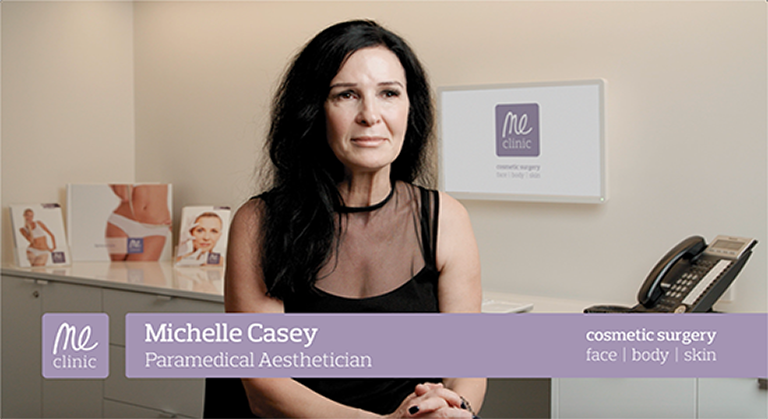
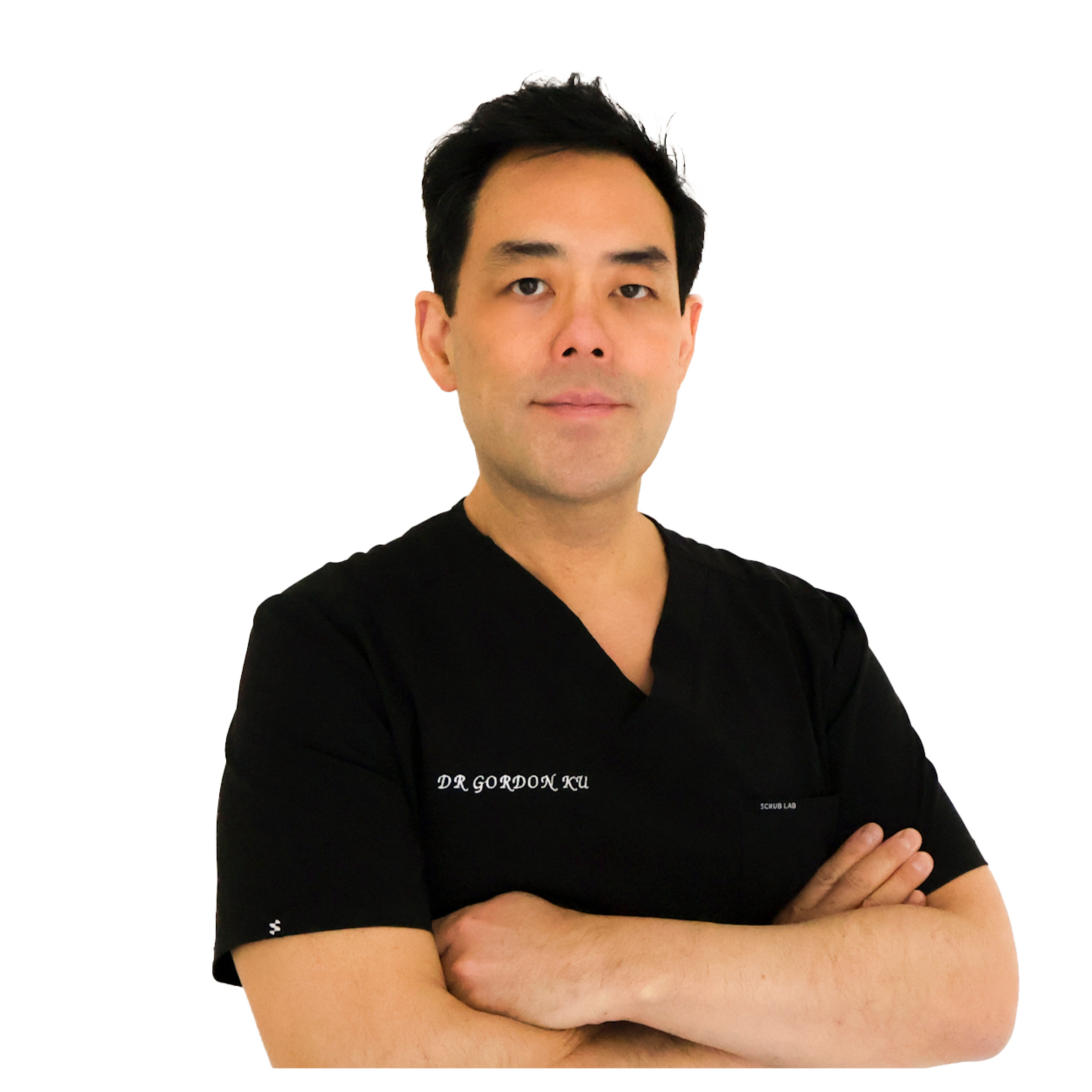
Dr Gordon Ku, Cosmetic Doctor (MED0001169203). Dr Tim French (MED0001790529), phlebologist, for vein and vascular conditions. Michelle Casey, Paramedical Aesthetician, for treatment-room skin work.
Booking
We are at 4 Burke Road, Malvern East VIC 3145. Phone 1300 852 050 or (03) 9569 3511, or use the online consultation form.
Common questions about skin conditions
I do not know what my skin problem is called. Where do I start?
Use the table at the top of this page, which runs from what you can see in the mirror to the page that explains it.
What if two rows sound like me?
That is normal. Several of these conditions overlap, and sorting them out is what the consultation is for.
Is there a quick way to work out what I am looking at?
Four questions. Can you feel it or only see it? Is it brown or red? Is it one or many? And has it changed? Feel it, press it, count it, date it.
Why does feeling it matter?
Because if you can feel it, it is contour — a lesion, scarring, texture or laxity. If you can only see it, it is colour — pigment or vessels. They are two entirely different halves of this section.
How do I tell pigment from a blood vessel?
Press it gently and release. A vascular mark blanches — goes pale under pressure and refills. Pigment does not move.
Which lesion should I be most concerned about?
The one that is different from all the others around it. Your own skin is the baseline, and the odd one out matters more than any checklist.
What is the single most important question?
Whether it is changing. Something unchanged for twenty years is behaving benignly; something that has changed in weeks or months needs assessment before anything cosmetic is contemplated.
How urgently should I come in?
Promptly — days, not months — for a changing, growing, darkening, irregular, itching or bleeding lesion, a sore unhealed for a month, bleeding without being knocked, an open sore on the lower leg, or any lesion unlike your others. Within weeks for a recurring scaly patch, acne that is scarring, a worsening flare, or new leg veins with aching or ankle skin changes. When convenient for pigmentation, texture, pores, lines and stable lesions.
Will I have wasted an appointment if it turns out to be nothing?
No. It is far cheaper and far easier to look at something early than to treat it late, and nobody will suggest otherwise.
Why is a consultation needed before treatment?
Because several of these conditions look like each other. A flat brown patch can be a freckle, a solar lentigo, a seborrhoeic keratosis, melasma or an early melanoma — and the treatment that helps one can make another worse.
What happens at a skin assessment?
History, examination in proper lighting with magnification where needed, your skin type recorded, photographs taken, a named diagnosis, then a written plan and quote — with time to think before anything elective is booked.
Why is a suspicious lesion not just lasered off?
Because destructive methods leave nothing to test. Anything that could be a skin cancer is removed whole and sent to pathology.
Which of these are medical rather than cosmetic?
Solar keratoses, which are precancerous; any changing, new, irregular, itching or bleeding lesion; venous ulcers; and suspected skin cancers.
Does cosmetic mean unimportant?
No. It changes who needs to see it and how urgently, not whether it matters to you.
Which conditions can be cured?
Individual lesions can be removed. Pigmentation, texture and sun damage are treatable with maintenance. Melasma, rosacea, acne, open pores and skin ageing are managed indefinitely — treatment controls them and stopping brings them back.
What tends to appear at what age?
Acne and congestion in the teens and twenties; adult acne, melasma and early pigment in the thirties; age spots, texture change and the first solar keratoses in the forties; established sun damage, seborrhoeic warts, laxity and a rising rate of skin cancers from the fifties. A changing lesion matters at any age — melanoma occurs in young adults.
Is there a dermatologist here?
No. Eczema, psoriasis, autoimmune skin disease and complex or unexplained rashes are referred.
Do you offer full-body mole mapping?
No. Dedicated skin cancer clinics provide that, and if your risk profile calls for it — many moles, a personal or family history of melanoma, heavy childhood sun exposure — that is where to go.
What should I do before booking?
Note when it started and whether it is changing; photograph it if it comes and goes; list everything you take including supplements and everything you put on your skin; say if you are pregnant, breastfeeding or planning a pregnancy; and do not treat it yourself first if you are unsure what it is.
Why does treating it myself first matter?
An irritated or partly treated lesion is harder to assess.
What results should I expect?
For most pigmentation and redness work, reduction rather than erasure. Your practitioner should tell you what degree of change is reasonable in your case before you start.
What does the most across all of these conditions?
Daily sun protection. It is the only intervention that prevents the next problem rather than correcting the last one, and it is the cheapest thing here.
What are the risks of treatment?
They differ by treatment and include redness, swelling, blistering, crusting, pigment changes that can persist, scarring, infection, flare of the underlying condition, incomplete response and recurrence. Darker skin types carry a higher risk of pigment change with light-based and ablative treatments.
What does it cost?
A skin assessment is $50 and a Cosmetic Doctor consultation $150 as at September 2024, including GST, with dermal skin treatments from $130 and a course quoted before you commit. Cosmetic treatment is not covered by Medicare; medically indicated treatment may attract a rebate. We are not a no-gap provider.
Who will I see?
Dr Gordon Ku, Cosmetic Doctor (MED0001169203); Dr Tim French (MED0001790529), phlebologist, for vein and vascular conditions; and Michelle Casey, Paramedical Aesthetician, for treatment-room skin work.
Individual results may vary. Any surgical or invasive procedure carries risks. Before proceeding you should seek a second opinion from an appropriately qualified health practitioner.
Images on This Page
-
https://www.meclinic.com.au/wp-content/uploads/2024/03/meclinic-logo.png
Me Clinic
-
https://www.meclinic.com.au/wp-content/uploads/2022/02/call.png
call
-
https://www.meclinic.com.au/wp-content/uploads/2022/03/michelle-casey-vip-services-768x419px.png
video cover
-
https://www.meclinic.com.au/wp-content/uploads/2025/11/gordon-photo.png
(no alt text)
-
https://www.meclinic.com.au/wp-content/uploads/2025/11/michele-photo.png
(no alt text)
-
https://www.meclinic.com.au/wp-content/uploads/2025/11/dr-tim-photo.png
(no alt text)
-
https://www.meclinic.com.au/wp-content/uploads/2024/02/acps.png
(no alt text)
-
https://www.meclinic.com.au/wp-content/uploads/2024/02/racs.png
(no alt text)
-
https://www.meclinic.com.au/wp-content/uploads/2024/02/fracs.png
(no alt text)
-
https://www.meclinic.com.au/wp-content/uploads/2024/02/isaps.png
(no alt text)
-
https://www.meclinic.com.au/wp-content/uploads/2024/02/cpca.png
(no alt text)
-
https://www.meclinic.com.au/wp-content/uploads/2022/02/auscop.png
(no alt text)
-
https://www.meclinic.com.au/wp-content/uploads/2022/02/amav.png
(no alt text)
-
https://www.meclinic.com.au/wp-content/uploads/2022/03/channel7.png
(no alt text)
-
https://www.meclinic.com.au/wp-content/uploads/2022/03/channel9.png
(no alt text)
-
https://www.meclinic.com.au/wp-content/uploads/2022/03/channel10.png
(no alt text)
-
https://www.meclinic.com.au/wp-content/uploads/2022/03/abc.png
(no alt text)
-
https://www.meclinic.com.au/wp-content/uploads/2022/02/malvern-map-thumb.jpg
(no alt text)
-
https://www.meclinic.com.au/wp-content/uploads/2022/03/home-conctact-tab.jpg
(no alt text)
-
https://bat.bing.com/action/0?ti=56339805&Ver=2&mid=2940c5f9-35a7-4f03-818f-5acfc0eec8dc&bo=1&sid=0b348170ac3311f1874e7fc6c3c530df&vid=0b34b6b0ac3311f1827ee9663a4bfc43&vids=0&msclkid=N&pi=918639831&lg=en-US&sw=1280&sh=720&sc=24&tl=Treatment%20for%20Skin%20Conditions%20-%20Learn%20More%20Today&p=https%3A%2F%2Fwww.meclinic.com.au%2Fskin%2Fskin-conditions%2F&r=<=2230&evt=pageLoad&sv=2&cdb=AQAQ&rn=389097
(no alt text)