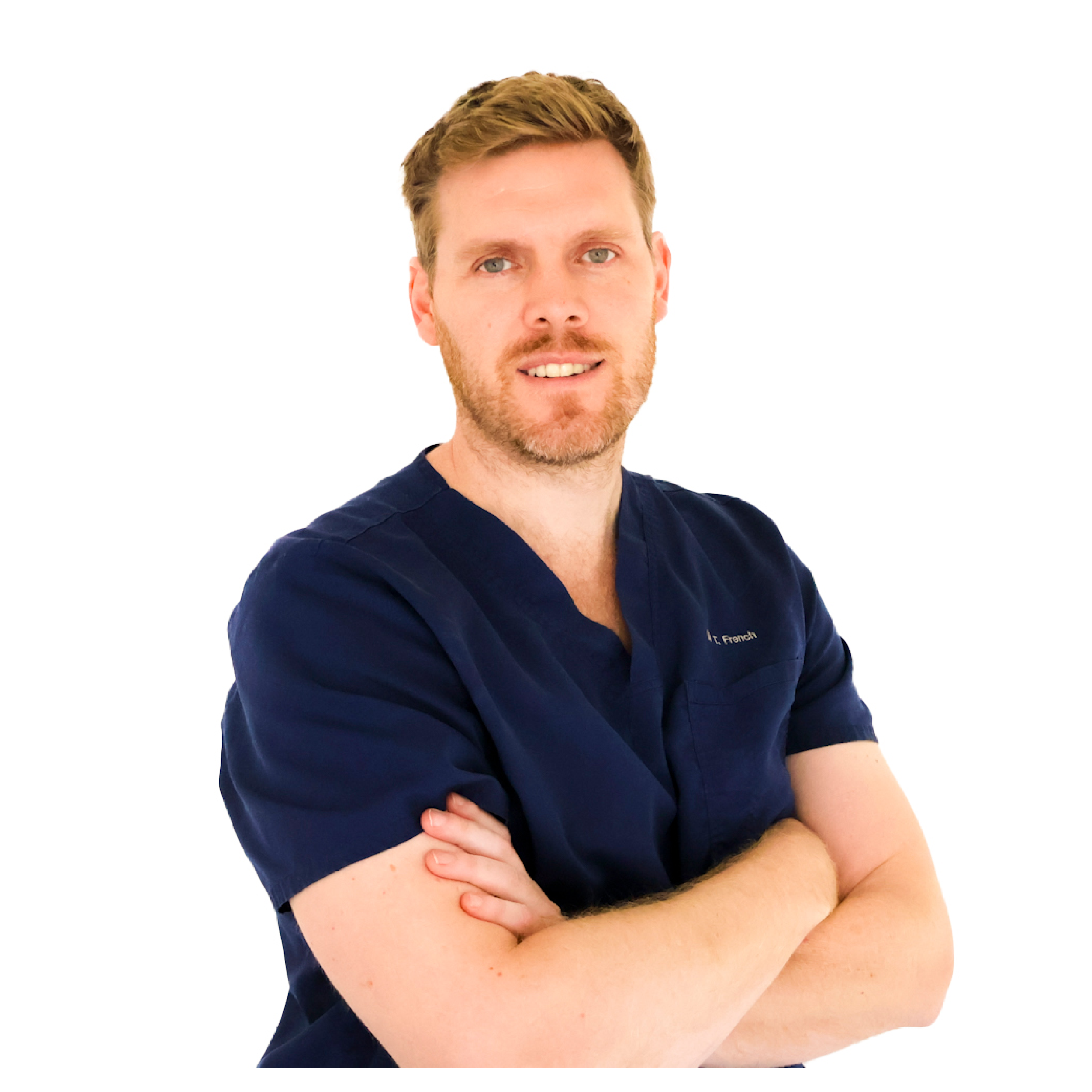
Dr Tim French
Phlebologist (venous medicine)
AHPRA registration: MED0001790529
MBBS, FRACGP, Dip Surg Anat, Cert Phleb, Cert US Phleb
You can check this registration yourself at ahpra.gov.au.
What "phlebologist" means in Australia
This matters, and most clinic pages gloss over it. Phlebology is not an AHPRA-recognised medical specialty. There is no specialist registration in phlebology, and "phlebologist" is not a protected title.
Doctors who practise venous medicine come to it from another field and add certification. Dr French's specialist registration is in general practice (FRACGP). To that he has added a Diploma in Surgical Anatomy from the University of Melbourne, a Certificate in Phlebology and a Certificate of Ultrasound in Phlebology, and he is a member of the Australasian College of Phlebology.
That is a substantial and relevant set of qualifications for vein work. It is simply not the same thing as specialist registration in vascular surgery, and you are entitled to know the difference before you decide.
Background
Over a decade of clinical experience, including posts at the Royal Melbourne Hospital and the Royal Adelaide Hospital across neurosurgery and plastic surgery, with further experience in emergency medicine, trauma and general practice. More than 5,000 vein procedures. Member of the Australian Medical Association and the Australasian College of Aesthetic Medicine.
What Dr French treats
- Varicose veins - including endovenous laser ablation and ultrasound-guided sclerotherapy
- Spider veins and thread veins
- Venous ulcers and the assessment behind them
- Skin cancer medicine, and mole removal
A word on vein assessment
Leg veins are not diagnosed by looking at them. A duplex ultrasound maps which veins are failing and in which direction blood is flowing, and the treatment plan follows that map. Treating visible veins without it tends to produce recurrence, because the underlying source is untreated.
Two safety points that apply to any clinic:
- Compression is not always safe. Arterial circulation must be assessed before compression therapy is used on a leg ulcer - compression on an arterial ulcer can cause serious harm.
- A pigmented lesion is never lasered or frozen off before it has been assessed. Anything with a question over it is excised whole and sent for pathology.
What he cannot do, and will not do
- He will not treat visible veins without first mapping the underlying circulation by duplex ultrasound, because that is how recurrence happens.
- He will not apply compression to a leg ulcer before arterial circulation has been assessed.
- He will not destroy a pigmented lesion that has not been assessed.
- He cannot promise that veins will never return. Venous disease is progressive, and new veins can develop over time regardless of how well the original ones were treated.
When a vascular surgeon is the right referral
Because phlebology is not a recognised specialty, this question is worth asking out loud. Most varicose vein disease is treated in clinic without admission - ambulatory phlebectomy is done under local anaesthetic with a relatively quick recovery.
Where larger veins need ligation and possibly stripping and removal, that is traditional vein surgery, usually performed in hospital under general anaesthetic. Complex arterial disease, deep venous problems and cases needing that level of intervention belong with a vascular surgeon holding specialist registration, and Dr French will refer rather than stretch the scope.
What to expect at a consultation with him
- History and examination - symptoms, previous treatment, and what is actually bothering you, which may be discomfort rather than appearance.
- Duplex ultrasound mapping - which veins are failing, and in which direction blood is flowing.
- A plan that follows the map, rather than a plan that follows what is visible.
- The alternatives, including conservative management. In less severe cases with mild symptoms, varicose veins can be managed with exercise, maintaining a healthy weight, avoiding long periods of standing or sitting, and compression stockings.
- The risks, which vary by method - most vein treatments do not require anaesthetic, the exceptions being EVLT and vein surgery.
- A written quote, and the MBS item number where one applies.
Bring compression stockings if you already wear them, a list of medications, and details of any previous vein treatment.
What you should leave with
- A written, itemised quote
- The MBS item number where there is a clinical indication, so you can check the rebate yourself
- A record of which veins were treated and by which method
- Written aftercare instructions, including how long to wear compression
- Written risk information to take home
- A contact point if something concerns you afterwards, and the hours it is staffed
Aftercare and what to watch for
Bruising, tenderness and firmness along a treated vein are usual and settle over weeks. Walking is encouraged - immobility is the thing to avoid. Ask how long you need to wear compression, because it differs by method and by patient.
Contact us promptly for increasing pain rather than settling pain, spreading redness or heat over the leg, a wound that opens or discharges, or new swelling of the whole limb.
Call 000 for chest pain, shortness of breath, or calf pain with swelling of the whole leg. Do not wait to reach the clinic.
Recurrence, and what that means for cost
Venous disease is progressive. Treating the mapped source rather than the visible vein is what reduces recurrence, but it does not abolish it, and new veins can appear years later. The honest framing is that vein treatment manages a condition rather than curing it once.
Ask what follow-up is included, what a further treatment would cost if new veins appear, and whether a repeat duplex scan is charged separately.
Checking him yourself
Look up MED0001790529 at ahpra.gov.au - it will show specialist registration in general practice, which is the point made above. Worth asking directly: how many times he has performed the specific procedure proposed, whether a duplex scan will be done before any treatment, who manages a complication and when they are contactable, and what he would advise if you decided not to proceed. See choosing the right practitioner.
Consultation
Vein consultation $230, mole removal consultation $150, including GST, as at September 2024. Some vein treatment has an MBS item number where there is a clinical indication - ask for the item number and check the rebate with Medicare and your fund yourself. We are not a no-gap provider.
Bring compression stockings if you already wear them, a list of medications, and details of any previous vein treatment.
Booking
Me Clinic, 4 Burke Road, Malvern East VIC 3145. Phone 1300 852 050 or (03) 9569 3511, or use the consultation form.
Related: vein treatments, meet the team, risks and complications.
Common questions
What is Dr French's AHPRA registration number?
MED0001790529. You can check it yourself at ahpra.gov.au.
Is phlebology an AHPRA specialty?
No. Phlebology is not an AHPRA-recognised medical specialty, there is no specialist registration in it, and "phlebologist" is not a protected title.
What is his specialist registration in, then?
General practice (FRACGP). Doctors who practise venous medicine come to it from another field and add certification.
What vein qualifications has he added?
A Diploma in Surgical Anatomy from the University of Melbourne, a Certificate in Phlebology and a Certificate of Ultrasound in Phlebology. He is a member of the Australasian College of Phlebology.
Is that the same as vascular surgery registration?
No. It is a substantial and relevant set of qualifications for vein work, but it is not specialist registration in vascular surgery - and you are entitled to know the difference before you decide.
When should I see a vascular surgeon instead?
Complex arterial disease, deep venous problems, and cases needing hospital-level intervention belong with a vascular surgeon holding specialist registration. Dr French will refer rather than stretch the scope.
What is his hospital background?
Over a decade of clinical experience, including posts at the Royal Melbourne Hospital and the Royal Adelaide Hospital across neurosurgery and plastic surgery, with further experience in emergency medicine, trauma and general practice.
How many vein procedures has he done?
More than 5,000.
What memberships does he hold?
The Australian Medical Association and the Australasian College of Aesthetic Medicine, as well as the Australasian College of Phlebology.
What does he treat?
Varicose veins including endovenous laser ablation and ultrasound-guided sclerotherapy, spider and thread veins, venous ulcers and the assessment behind them, and skin cancer medicine including mole removal.
Can leg veins be diagnosed by looking at them?
No. A duplex ultrasound maps which veins are failing and in which direction blood is flowing, and the treatment plan follows that map.
What happens if veins are treated without that map?
Treating visible veins without it tends to produce recurrence, because the underlying source is untreated.
Is compression always safe?
No. Arterial circulation must be assessed before compression therapy is used on a leg ulcer - compression on an arterial ulcer can cause serious harm.
Can a mole be lasered or frozen off?
Not before it has been assessed. Anything with a question over it is excised whole and sent for pathology.
Can varicose veins be managed without treatment?
In less severe cases with mild symptoms, yes - through exercise, maintaining a healthy weight, avoiding long periods of standing or sitting, and compression stockings for relief. Where that is not enough, treatment options are available.
Do vein treatments need an anaesthetic?
Most do not. The exceptions are EVLT and vein surgery. Ambulatory phlebectomy is usually performed in clinic under local anaesthetic with a relatively quick recovery.
Will my veins come back?
Possibly. Venous disease is progressive. Treating the mapped source rather than the visible vein reduces recurrence but does not abolish it, and new veins can appear years later.
What should I ask about ongoing cost?
What follow-up is included, what a further treatment would cost if new veins appear, and whether a repeat duplex scan is charged separately.
What happens at a consultation?
History and examination, duplex ultrasound mapping, a plan that follows the map rather than what is visible, the alternatives including conservative management, the risks for the specific method, and a written quote with the MBS item number where one applies.
What should I leave with?
A written itemised quote, the MBS item number where applicable, a record of which veins were treated and how, written aftercare instructions including how long to wear compression, written risk information, and a staffed contact point.
What is normal after vein treatment?
Bruising, tenderness and firmness along a treated vein, settling over weeks. Walking is encouraged - immobility is what to avoid.
When should I contact us?
Promptly, for increasing rather than settling pain, spreading redness or heat over the leg, a wound that opens or discharges, or new swelling of the whole limb.
When do I call 000?
For chest pain, shortness of breath, or calf pain with swelling of the whole leg. Do not wait to reach the clinic.
What do consultations cost?
Vein consultation $230, mole removal consultation $150, including GST, as at September 2024.
Is there a Medicare rebate for vein treatment?
Some vein treatment has an MBS item number where there is a clinical indication. Ask for the item number and check the rebate with Medicare and your fund yourself.
Is Me Clinic a no-gap provider?
No.
What should I bring to a vein consultation?
Compression stockings if you already wear them, a list of medications, and details of any previous vein treatment.
How do I book?
Phone 1300 852 050 or (03) 9569 3511, or use the consultation form. Me Clinic, 4 Burke Road, Malvern East VIC 3145.
Individual results may vary. Any surgical or invasive procedure carries risks. Before proceeding you should seek a second opinion from an appropriately qualified health practitioner.
Images on This Page
-
https://www.meclinic.com.au/wp-content/uploads/2024/03/meclinic-logo.png
Me Clinic
-
https://www.meclinic.com.au/wp-content/uploads/2022/02/call.png
call
-
https://www.meclinic.com.au/wp-content/uploads/2025/11/dr-tim-photo.png
(no alt text)
-
https://www.meclinic.com.au/wp-content/uploads/2022/02/auscop.png
(no alt text)
-
https://www.meclinic.com.au/wp-content/uploads/2022/02/acam.webp
(no alt text)
-
https://www.meclinic.com.au/wp-content/uploads/2022/02/amav.png
(no alt text)
-
https://www.meclinic.com.au/wp-content/uploads/2022/02/malvern-map-thumb.jpg
(no alt text)
-
https://www.meclinic.com.au/wp-content/uploads/2024/02/acps.png
Australian Society Of Plastic Surgeons
-
https://www.meclinic.com.au/wp-content/uploads/2024/02/racs.png
Royal Australian College Of Surgeons
-
https://www.meclinic.com.au/wp-content/uploads/2024/02/fracs.png
fracs
-
https://www.meclinic.com.au/wp-content/uploads/2024/02/isaps.png
isaps
-
https://www.meclinic.com.au/wp-content/uploads/2024/02/cpca.png
(no alt text)
-
https://www.meclinic.com.au/wp-content/uploads/2022/03/home-conctact-tab.jpg
(no alt text)
-
https://bat.bing.com/action/0?ti=56339805&Ver=2&mid=a9e8536c-8549-46df-8952-7c01695b35c8&bo=1&sid=1f51df70ac3311f1bef849012fa40c35&vid=1f51fb10ac3311f1a4f2cd7e6c15559a&vids=0&msclkid=N&pi=918639831&lg=en-US&sw=1280&sh=720&sc=24&tl=Dr%20Tim%20French%20-%20Specialist%20in%20Venous%20Medicine&p=https%3A%2F%2Fwww.meclinic.com.au%2Fmeet-the-team%2Fdr-tim-french%2F&r=<=1738&evt=pageLoad&sv=2&cdb=AQAQ&rn=770143
(no alt text)