Nose thread lift
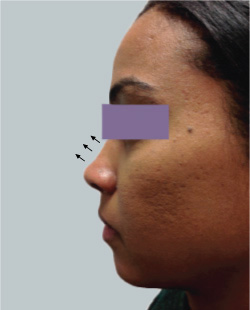
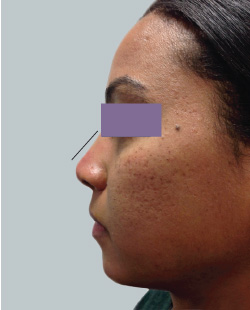
A nose thread lift uses absorbable barbed sutures inserted along the nasal bridge to reshape and lift the nose. It is a minimally invasive alternative to surgical rhinoplasty for certain concerns.
Also referred to under trade and technique names including APTOS, stitch lift, safe lift, S lift and feather lift.
What it can address
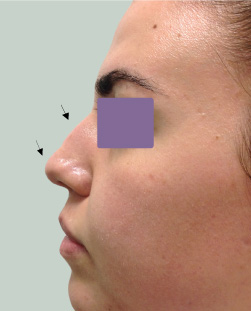
The technique is adaptable — the bridge, the tip, or both can be treated. It can be used to:
- Improve the shape of the nose
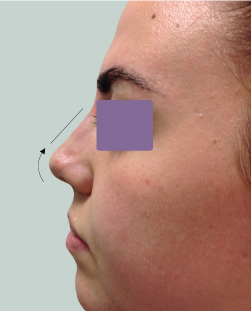
- Change the angle and rotation of the tip
- Refine and lift the tip
- Straighten and define the bridge
- Camouflage a bump on the bridge
- Improve the appearance of a deviated bridge
What it cannot do
- Make the nose smaller. Threads reposition and support tissue; they do not remove anything.
- Narrow the nostrils or change bone. That requires surgery.
- Improve breathing. Nasal obstruction and a deviated septum are functional problems requiring surgical correction, where MBS items 45632 to 45644 and 45650 may apply.
Cosmetic nose surgery ranges from $15,000 to $30,000. If what you want is a structurally different nose, that is the relevant procedure.
Your skin thickness decides most of this
More than anything else, the thickness of the skin over your nose determines what a thread lift can achieve for you and what can go wrong. It is worth checking before you go anywhere near a consultation, and it takes a minute.
- Pinch the skin over the bridge, high up between the eyes, gently between thumb and forefinger. Note how much you can lift, and how thick it feels.
- Pinch the skin at the tip. It will feel thicker and less mobile than the bridge — that is normal, because tip skin is the thickest and most sebaceous on the nose.
- Look at your nose in raking light from the side. Can you see the underlying contours through the skin, or does the skin smooth everything over?
| Thin nasal skin | Thick nasal skin | |
|---|---|---|
| What you notice | Underlying shape visible; skin moves easily; sometimes visible fine vessels | Contours softened; skin feels padded; often more sebaceous, larger pores at the tip |
| Response to threads | Change shows readily — a small adjustment reads clearly | Change is muted; the skin resists holding a new shape |
| Main risk | Threads becoming visible or palpable; irregularity showing through | Little or no visible change, despite the procedure being done correctly |
| Practical implication | Conservative placement; fewer threads; deeper | Be told honestly whether it is worth doing at all |
So the question to ask at consultation is direct: “Given my skin thickness, how much change can I realistically expect — and what is my risk of seeing or feeling the threads?” The answer tells you a great deal about whether the person examining you is planning around your nose or around a technique.
The procedure
The nose is sterilised and local anaesthetic injected to numb the area. A single entry point at the tip of the nose is used to insert the threads along the nasal bridge. Once the sutures are in place, the doctor moulds the skin by hand to shape it and achieve the lifting effect.
The number of sutures used depends on what is being changed.
Why the tip is the hardest part
Most people asking about a nose thread lift want the tip lifted or rotated, and it is worth knowing why that is the least predictable part of the procedure.
- The tip is held up by cartilage, not skin. A thread can support and rotate it to a degree, but the underlying cartilage framework is what really determines tip position — and threads do not change cartilage.
- The skin there is the thickest on the nose, so it resists reshaping and conceals subtle change.
- It is the entry point. Everything passes through one small site at the tip, which is also where a depression or dimple is most likely to show while it settles.
- It is the most scrutinised millimetre of the face. Small asymmetries at the tip are noticeable in a way that the same variation on a bridge is not.
Modest rotation and refinement is a realistic aim. A structurally different tip is a surgical one.
The threads
We use absorbable barbed APTOS threads — bidirectional barbed threads designed to grip tissue from both directions. The barbs are what allow the thread to hold a repositioned shape, as opposed to smooth threads which stimulate collagen without lifting.
Thread material determines how long a result lasts. Smooth PDO threads are generally cited by manufacturers as lasting a few months to a year; slower-dissolving barbed threads can hold a result considerably longer.
The threads also support collagen formation along their path, so some structural support persists after the thread itself has dissolved.
How long results last
Sutures used in a nose thread lift typically last up to about two years, and in some patients longer. Threads can potentially be adjusted or tightened. Results vary between individuals.
What happens when it wears off
Worth asking before rather than after, because it is the part people have not thought about.
- The nose returns gradually toward its previous shape, minus whatever collagen support has been laid down along the thread paths. It is a fade rather than a collapse.
- A repeat is usually possible, but each procedure works in tissue the previous one has altered, so ask how a second or third treatment differs from the first.
- Repeated treatment can complicate future surgery. Threads and the scar tissue around them change the planes a surgeon works in. If rhinoplasty is a realistic possibility for you within a few years, raise that now.
- The arithmetic matters. A result lasting around two years, repeated across a decade, is five procedures. It does not reach the cost of surgery, but it is not a small sum, and the comparison should be made on that basis.
Recovery
Mild swelling and transient bruising are common and usually settle in around two to seven days.
A slight depression or skin irregularity can appear at the entry point, and generally resolves within a few days.
Avoid pressure on the nose while the threads settle — including glasses or sunglasses resting on the bridge — as directed by your practitioner. Avoid nasal massage and manipulation.
The practical fortnight
- Glasses are the main problem. Frames rest exactly on the treated bridge. Ask how long to keep them off, and plan for contacts, or taping the frames to your forehead, before the day rather than after.
- Raise a CPAP mask specifically if you use one — it is worn for hours nightly and the advice is different.
- Sleep on your back, propped up, for the first nights.
- Do not rub, massage or squeeze the nose — including blowing it hard, and including the reflex of pushing glasses up.
- No facials, no nasal waxing, no swimming goggles until cleared.
- Nothing face-down — no massage tables, no yoga positions resting on the face.
- Expect to feel it. Tightness and an awareness of something in the nose is normal early on.
Threads, filler or surgery
| Nose threads | Dermal filler | Rhinoplasty | |
|---|---|---|---|
| What it does | Supports, projects and rotates tissue | Adds volume to change contour | Reshapes bone and cartilage; can remove |
| Makes the nose smaller | No | No | Yes |
| Narrows nostrils | No | No | Yes |
| Addresses breathing | No | No | Yes, where indicated |
| Reversible | No | Largely, if hyaluronic acid | No |
| Lasts | Up to about two years | 12 to 18 months | Permanent |
| Anaesthetic | Local | Local | General |
| Indicative cost | Quoted after assessment | From $590 per treatment | $15,000 to $30,000 |
The row that decides most cases is reversibility. If you are uncertain about the change you want, a reversible option lets you find out. Threads do not offer that, and neither does surgery.
Who this suits, and who it does not
It tends to suit: someone wanting modest refinement of the bridge or a small change in tip rotation, with reasonably thin to average nasal skin, realistic expectations, and no plan for surgery in the near future.
It tends not to suit:
- Anyone wanting a smaller or narrower nose
- Anyone with a breathing problem — a functional surgical question
- Anyone with very thick nasal skin, where visible change is unlikely
- Anyone with very thin skin without a conservative plan, given the risk of visible threads
- Anyone with previous rhinoplasty, without a careful discussion — scarring alters the tissue and the blood supply
- Anyone with previous nasal filler, which changes the risk picture
- Anyone with active infection or inflamed skin over the nose
- Anyone with a history of keloid scarring
- Anyone pregnant or breastfeeding
- Anyone planning rhinoplasty in the next few years
Risks
The nose is a small, tightly constrained area with a rich blood supply, which is why technique matters here. Risks include:
- Pain, swelling and bruising
- Acute inflammatory tissue reaction
- Infection — uncommon, but infection around a foreign material may require thread removal
- Depression, dimpling or irregularity at the entry point or along the thread
- Threads becoming visible or palpable under the skin, particularly where nasal skin is thin
- Thread extrusion through the skin
- Asymmetry or deviation of the result
- Granuloma or nodule formation
- Thread migration or breakage
- Skin compromise or necrosis where blood supply is impaired
- Little or no change
- An unsatisfactory result
Seek prompt attention for increasing pain, spreading redness, fever, skin discolouration over the nose, or a thread coming through the skin.
Tell your practitioner about any previous rhinoplasty or nasal filler. Previous surgery alters the tissue and blood supply, and previous filler in the same area changes the risk picture.
Please read our information on the risks and complications of cosmetic surgery before proceeding.
Expected, versus call us, versus seek urgent care
- Expected: mild swelling and transient bruising settling over two to seven days; a slight depression at the entry point resolving in days; tightness and awareness of the threads early on.
- Call us: a dimple or irregularity not settling after a couple of weeks; a thread you can see or feel; asymmetry once swelling has gone; a lump forming; numbness not improving.
- Seek prompt attention: increasing pain, spreading redness or heat, pus, fever, any thread coming through the skin, or discolouration of the skin over the nose — which can indicate compromised blood supply and is treated as urgent.
Combining with other treatments
Dr Gordon Ku often combines a nose thread lift with other non-surgical nose treatments, including non-surgical nose augmentation with dermal filler, where threads provide projection and support and filler addresses contour.
Where both are used, the risks of both apply — including, for filler in the nose, vascular occlusion, which can cause tissue necrosis and rarely permanent vision loss. Read that page before combining treatments.
If you are combining, ask these
- “Is hyaluronidase in the room, in date, right now?” It is the emergency treatment for vascular occlusion, and it is time-critical.
- “Can these be done in separate sessions?” Doing them separately means that if something goes wrong, or the result disappoints, it can be attributed — and it means one set of risks at a time.
- “What order, and why?”
- “What are the signs of a vascular problem, and who do I ring after hours?”
The signs, briefly: severe or increasing pain out of proportion to expectations, skin going pale or white, a mottled or dusky discolouration over minutes to hours, and any change in vision. Do not wait to see whether it settles. For any vision change, go straight to an emergency department and do not drive yourself.
What sits outside this
- It does not make the nose smaller, narrow nostrils, or change bone.
- It does not treat breathing problems.
- We do not treat a nose without knowing its surgical and filler history.
- We do not treat on a walk-in basis. Assessment first.
- We do not promise a specific result, and Australian advertising rules prohibit it.
- We do not run time-limited offers or packages on cosmetic procedures.
What you should leave with
- A written record of the thread type and number, and exactly where they were placed — keep it permanently, because it matters to any future injector or surgeon
- An honest statement of what your skin thickness allows
- Written aftercare, including the glasses advice
- The urgent signs, in writing, and an after-hours number
- A review appointment
- A quote, and what a repeat would cost in around two years
Cost
Every patient’s requirements differ, so there is no standard price. Cost depends on the number of sutures used and what is being addressed, and is quoted after a no-obligation consultation and assessment. Consultation fees may apply.
As at September 2024 and including GST, a consultation with a Cosmetic Doctor is $150. This is a cosmetic treatment and is not covered by Medicare, and we are not a no-gap provider.
Referral and booking
A GP referral is not required to see a cosmetic doctor for a non-surgical treatment such as this — the referral requirement introduced on 1 July 2023 applies to cosmetic surgery. Appointments are generally available within 7 to 14 days, or sooner on a cancellation list.
Nose thread lifts at Me Clinic are performed by Dr Gordon Ku, Cosmetic Doctor (MED0001169203), MBBS (Melb), FACCSM (Med), FCPCA, AAAM (Board Cert), FA4M (Dubai). Registration can be checked free of charge on the AHPRA public register.
On titles: “Cosmetic Doctor” describes an area of practice rather than an AHPRA-recognised specialty. “Specialist Plastic Surgeon” is the protected title, held by Fellows of the Royal Australasian College of Surgeons. The public register shows what any practitioner is registered to do.
Book a consultation or contact us. We are at 4 Burke Road, Malvern East VIC 3145, five minutes’ walk from Caulfield station. Phone 1300 852 050.
Related: thread lift, non-surgical nose augmentation, thread lift before and after.
Individual results may vary. Any surgical or invasive procedure carries risks. Before proceeding you should seek a second opinion from an appropriately qualified health practitioner.
Common questions about nose thread lifts
What is a nose thread lift?
Absorbable barbed sutures inserted along the nasal bridge through a single entry point at the tip, to reshape and support the nose. The doctor then moulds the skin by hand.
What can it change?
The shape of the nose, the angle and rotation of the tip, definition of the bridge, camouflage of a bump, and the appearance of a deviated bridge.
Can it make my nose smaller?
No. Threads reposition and support tissue; they do not remove anything.
Can it narrow my nostrils or change bone?
No — that requires surgery.
Can it help my breathing?
No. Nasal obstruction and a deviated septum are functional problems requiring surgical correction, where MBS items 45632 to 45644 and 45650 may apply.
Why does my skin thickness matter so much?
Thin skin shows change readily but also risks the threads becoming visible or palpable. Thick skin conceals threads but resists holding a new shape, so the visible change can be small.
How do I check my own skin thickness?
Pinch the skin over the bridge and then at the tip, and look at your nose in raking light from the side — can you see the underlying contours, or does the skin smooth everything over?
What should I ask at consultation?
“Given my skin thickness, how much change can I realistically expect, and what is my risk of seeing or feeling the threads?”
Why is the tip the hardest part?
Tip position is determined by cartilage, which threads do not change; the skin there is the thickest on the nose; it is the entry point; and small asymmetries at the tip are highly noticeable.
What threads are used?
Absorbable barbed APTOS threads — bidirectional barbs designed to grip tissue from both directions, which is what holds a repositioned shape. Smooth threads stimulate collagen without lifting.
How long do results last?
Typically up to about two years, and in some patients longer. Threads can potentially be adjusted or tightened.
What happens when it wears off?
The nose returns gradually toward its previous shape, minus whatever collagen support has formed along the thread paths. It fades rather than collapsing.
Can it be repeated?
Usually, though each procedure works in tissue the previous one altered — ask how a second or third treatment differs from the first.
Will it affect future rhinoplasty?
It can. Threads and the scar tissue around them change the planes a surgeon works in. If surgery is a realistic possibility within a few years, raise it now.
What is recovery like?
Mild swelling and transient bruising settling in around two to seven days, and sometimes a slight depression at the entry point that resolves within days.
What about my glasses?
Frames rest exactly on the treated bridge. Ask how long to keep them off and plan for contacts or taping the frames to your forehead before the day. Raise a CPAP mask specifically if you use one.
What else should I avoid?
Rubbing, massaging or squeezing the nose, blowing it hard, facials, nasal waxing, swimming goggles, and anything face-down. Sleep on your back, propped up, at first.
What are the risks?
Pain, swelling and bruising; inflammatory reaction; infection, which around a foreign material may require thread removal; dimpling or irregularity; threads becoming visible, palpable or extruding; asymmetry; granuloma or nodule; migration or breakage; skin compromise or necrosis; little or no change; and an unsatisfactory result.
When should I seek prompt attention?
Increasing pain, spreading redness, fever, a thread coming through the skin, or discolouration of the skin over the nose — which can indicate compromised blood supply.
Can it be combined with filler?
Yes, with threads providing projection and support and filler addressing contour. Where both are used the risks of both apply — including vascular occlusion from filler, which can cause tissue necrosis and rarely permanent vision loss.
What should I ask if combining?
Whether hyaluronidase is in the room and in date; whether the treatments can be done in separate sessions; what order and why; and the signs of a vascular problem plus who to ring after hours.
What are the signs of vascular occlusion?
Severe or increasing pain out of proportion to expectations, skin going pale or white, mottled or dusky discolouration over minutes to hours, and any change in vision. Do not wait to see whether it settles; for vision change go straight to an emergency department and do not drive yourself.
Do I need a GP referral?
No. The referral requirement introduced on 1 July 2023 applies to cosmetic surgery, not to non-surgical treatments.
What does it cost?
There is no standard price — it depends on the number of sutures and what is being addressed, and is quoted after consultation. A Cosmetic Doctor consultation is $150 as at September 2024, including GST. Not covered by Medicare.
Images on This Page
-
https://www.meclinic.com.au/wp-content/uploads/2024/03/meclinic-logo.png
Me Clinic
-
https://www.meclinic.com.au/wp-content/uploads/2022/02/call.png
call
-
https://www.meclinic.com.au/wp-content/uploads/2022/03/nose-thread-lift-diagram.jpg
(no alt text)
-
https://www.meclinic.com.au/wp-content/uploads/2022/03/cs7-nose-threadlift-250x310-before.jpg
(no alt text)
-
https://www.meclinic.com.au/wp-content/uploads/2022/03/cs7-nose-threadlift-250x310-after.jpg
(no alt text)
-
https://www.meclinic.com.au/wp-content/uploads/2025/11/gordon-photo.png
(no alt text)
-
https://www.meclinic.com.au/wp-content/uploads/2022/03/cs5-thread-lift-nose-200x171_nosethread-casestudy1-200x171-1.png
(no alt text)
-
https://www.meclinic.com.au/wp-content/uploads/2022/03/cs7-nose-threadlift-200x171-1.png
(no alt text)
-
https://www.meclinic.com.au/wp-content/uploads/2022/03/cs1-threadlift-250x310-before.jpg
cs1_liposuction_face_before-img
-
https://www.meclinic.com.au/wp-content/uploads/2022/03/cs1-threadlift-250x310-after.jpg
cs1_liposuction_Face_after-img
-
https://www.meclinic.com.au/wp-content/uploads/2022/03/cs2-thread-lift-250x310-before.jpg
cs1_liposuction_face_before-img
-
https://www.meclinic.com.au/wp-content/uploads/2022/03/cs2-thread-lift-250x310-after.jpg
cs1_liposuction_Face_after-img
-
https://www.meclinic.com.au/wp-content/uploads/2022/03/cs3-thread-lift-250x310-before.jpg
cs1_liposuction_face_before-img
-
https://www.meclinic.com.au/wp-content/uploads/2022/03/cs3-thread-lift-250x310-after.jpg
cs1_liposuction_Face_after-img
-
https://www.meclinic.com.au/wp-content/uploads/2022/03/cs4-ThreadLift-casestudy4-before-250x310-1.jpg
cs1_liposuction_face_before-img
-
https://www.meclinic.com.au/wp-content/uploads/2022/03/cs4-ThreadLift-casestudy4-After-250x310-1.jpg
cs1_liposuction_Face_after-img
-
https://www.meclinic.com.au/wp-content/uploads/2022/03/cs5-thread-lift-nose-250x310-before.jpg
cs1_liposuction_face_before-img
-
https://www.meclinic.com.au/wp-content/uploads/2022/03/cs5-thread-lift-nose-250x310-after.jpg
cs1_liposuction_Face_after-img
-
https://www.meclinic.com.au/wp-content/uploads/2022/03/cs6-threadlift-250x310-before.jpg
cs1_liposuction_face_before-img
-
https://www.meclinic.com.au/wp-content/uploads/2022/03/cs6-threadlift-250x310-after.jpg
cs1_liposuction_Face_after-img
-
https://www.meclinic.com.au/wp-content/uploads/2024/02/acps.png
(no alt text)
-
https://www.meclinic.com.au/wp-content/uploads/2024/02/racs.png
(no alt text)
-
https://www.meclinic.com.au/wp-content/uploads/2024/02/fracs.png
(no alt text)
-
https://www.meclinic.com.au/wp-content/uploads/2024/02/isaps.png
(no alt text)
-
https://www.meclinic.com.au/wp-content/uploads/2024/02/cpca.png
(no alt text)
-
https://www.meclinic.com.au/wp-content/uploads/2022/02/auscop.png
(no alt text)
-
https://www.meclinic.com.au/wp-content/uploads/2022/02/amav.png
(no alt text)
-
https://www.meclinic.com.au/wp-content/uploads/2022/03/channel7.png
(no alt text)
-
https://www.meclinic.com.au/wp-content/uploads/2022/03/channel9.png
(no alt text)
-
https://www.meclinic.com.au/wp-content/uploads/2022/03/channel10.png
(no alt text)
-
https://www.meclinic.com.au/wp-content/uploads/2022/03/abc.png
(no alt text)
-
https://www.meclinic.com.au/wp-content/uploads/2022/02/malvern-map-thumb.jpg
(no alt text)
-
https://www.meclinic.com.au/wp-content/uploads/2022/03/home-conctact-tab.jpg
(no alt text)
-
https://bat.bing.com/action/0?ti=56339805&Ver=2&mid=420eab05-4bcd-45fa-94ea-456bc87565db&bo=1&sid=ae08fd60ac3211f1b4c21fd09d3f2318&vid=ae093410ac3211f18f1a912c6113e61d&vids=1&msclkid=N&pi=918639831&lg=en-US&sw=1280&sh=720&sc=24&tl=Nose%20Thread%20Lift%20-%20Non-Surgical%20Rhinoplasty%20Solution&p=https%3A%2F%2Fwww.meclinic.com.au%2Fface%2Fthread-lift%2Fnose-thread-lift%2F&r=<=1931&evt=pageLoad&sv=2&cdb=AQAQ&rn=168874
(no alt text)