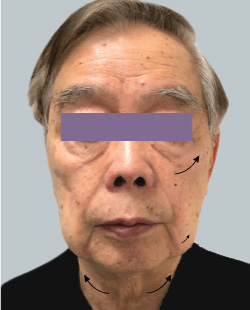
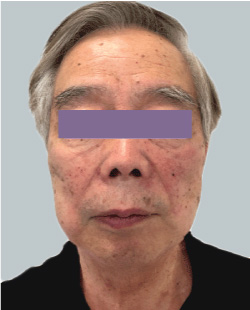
Neck thread lift
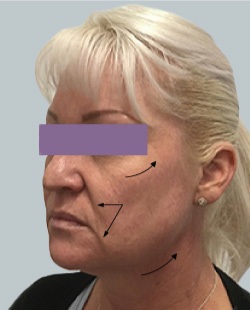
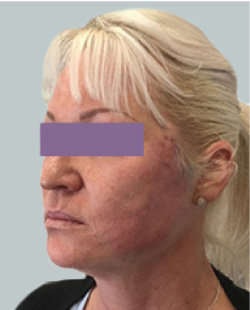
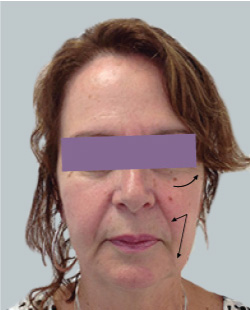
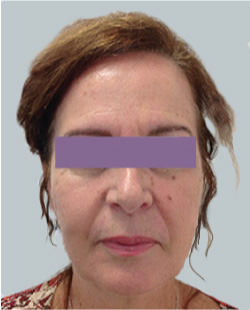
A neck thread lift uses absorbable suture threads inserted under the skin of the neck to reposition tissue and stimulate collagen formation. It is a minimally invasive alternative to surgery for loose or lax skin in the neck.
It is not a small neck lift. It does a more limited job, and the section below on what it cannot do is the part worth reading before booking.
Four things make a neck look older, and threads address one
Before anything else, work out which of these applies to you. Most people have more than one, and each is addressed by something different.
| What it is | How to check | What addresses it |
|---|---|---|
| Loose skin | Look down at your phone, then look up. Skin that gathers and stays gathered for a moment is lax. | Threads for mild to moderate; neck lift where there is real excess |
| Fat under the chin | Pinch under the chin. A thick soft pad between your fingers is fat. | Fat-dissolving injections or liposuction |
| Platysmal bands | Clench your teeth and pull the corners of your mouth down hard. Two vertical cords stand out — that is muscle. | Platysmaplasty, as part of a neck lift |
| The underlying angle | In profile, how sharp is the corner between the underside of the chin and the front of the neck? | Sometimes nothing — see below |
The anatomical limit nobody mentions
The sharpness of a neck — the angle where the jaw meets the throat — is partly determined by two things you cannot change: how far forward your chin sits, and how high the hyoid bone sits in your neck.
The hyoid is a small U-shaped bone above the voice box, and it is the only bone in the body not joined to another. It sits higher in some people and lower in others, and it anchors the muscles that create the line under the chin. A low-set hyoid limits how sharp a neck angle can ever be made — by threads, by a neck lift, by anything.
This is not a reason to do nothing. It is a reason to ask, at consultation, “given my anatomy, what is the best angle I could realistically get?” A practitioner who can answer that has examined you properly. It also explains why two people with the same amount of loose skin get visibly different results from the same procedure.
How it works
Absorbable threads are inserted deep under the skin through fine needles, under local anaesthetic. The threads engage the tissue and draw it upward, and the body responds to the thread by laying down collagen along its path. As the thread dissolves, that collagen provides some ongoing support.
The procedure duration varies with the number of threads used — on average around 60 minutes, though it can be shorter or longer. Local anaesthetic is used, and while the aim is to keep the procedure comfortable, some discomfort is possible.
Why the neck is harder than the face
Worth understanding, because it explains why results here are more modest and why dimpling is more commonly reported than on a cheek.
- The skin is thinner. There is less tissue over a thread, so anything irregular shows more readily.
- It never stops moving. You swallow around two thousand times a day, and turn your head constantly. A thread in a cheek sits relatively still; a thread in a neck is worked continuously.
- There is less to anchor to. A lift needs fixed tissue to pull against, and the neck offers less of it than the face does.
- Gravity works against it directly. The neck is the lowest part of the facial region and carries the accumulated descent of everything above it.
None of that makes the procedure unreasonable. It does mean the honest expectation here is a refinement of the jawline and a modest improvement in the neck, not the change a surgical procedure produces.
Who it may suit
Generally people with mild to moderate skin laxity in the neck who want a change without surgery. Age matters less than the degree of laxity and the quality of the skin — it is often chosen by patients from their late twenties to early forties, but suitability is assessed individually.
It tends not to suit: anyone with significant excess skin, prominent platysmal bands, substantial submental fat, active infection or a skin condition in the area, a history of keloid scarring, anyone pregnant or breastfeeding, and anyone whose expectation is a surgical degree of change.
What it cannot do
This is where expectations most often go wrong:
- It does not remove skin. Where there is significant excess skin, threads reposition it rather than reduce it, and the result will be limited.
- It does not tighten the platysma muscle. Vertical bands running down the front of the neck are muscular. Threads do not address them — platysmaplasty does.
- It does not remove fat. Where fullness under the chin is the concern, fat-dissolving injections or liposuction are the relevant options.
- It does not stop ageing. Threads slow the visible progression; they do not halt it.
Where any of these is the main issue, a thread lift will disappoint — and a good consultation will say so before you spend the money rather than afterwards.
How long results last
Results of up to around two years have been reported, though this varies between individuals with thread type, number of threads, skin quality and metabolism. The procedure can be repeated.
Which threads are used
Absorbable threads. The material determines longevity — PDO threads are generally cited by manufacturers as lasting six months to a year, while PLLA and PCA threads dissolve more slowly and can produce results lasting more than two years. Threads with barbs or cones lift tissue; smooth threads stimulate collagen without lifting.
Ask which type is proposed for you and how long that material lasts. It is the single question that most affects value for money.
| Material | Manufacturer-cited longevity | Typically used for |
|---|---|---|
| PDO (polydioxanone) | Around six months to a year | Collagen stimulation; shorter-term lifting |
| PLLA (poly-L-lactic acid) | Longer — results reported beyond two years | Lifting with a more gradual collagen response |
| PCA (polycaprolactone) | Longer — results reported beyond two years | Lifting with a sustained collagen response |
| Construction | What it does |
|---|---|
| Barbed or coned | Grips tissue and repositions it — the lifting component |
| Smooth | Stimulates collagen along its path; does not lift |
A plan may combine both. What matters is that a quote for “threads” without a material and a count is not a quote you can compare — a result from six PDO threads and one from sixteen barbed PCA threads are different treatments at very different prices and very different durations.
What to ask about the quote
- “Which material, and how many threads?”
- “Barbed or smooth, and how many of each?”
- “How long does that material typically last?”
- “What is the cost per year, given that?”
- “What happens if a thread becomes visible, extrudes, or I have a dimple that does not settle — who pays for that?”
- “Is a review included, and when?”
That fourth question is the one that reframes the decision. Thread lift procedures here start at $4,600; a result lasting two years is a different purchase from one lasting eight months, and the headline price does not distinguish them.
Recovery
- Small entry-point marks
- Initial swelling, partly from the local anaesthetic
- Bruising is possible
- Temporary dimpling or rippling along the thread lines, which usually settles
- Most people apply makeup after two to three days
- Avoid neck massage, extreme neck movement and sleeping in positions that stretch the area, as directed, while the threads settle
The first fortnight, practically
The neck is difficult to rest, which makes the aftercare instructions harder to follow than they sound. Plan for them.
- Sleep on your back, propped up, for the first nights. Side-sleeping drags the area.
- Do not turn your head sharply — move your shoulders instead. Reversing a car is the moment people forget.
- Soft food for a few days. Chewing works the area more than you would think.
- No dental appointments for a couple of weeks — a long period with the head back and the mouth open is exactly the position to avoid.
- No massage, facials or neck treatments until cleared. Say what you have had if you book one.
- No high collars or scarves that press in the first days.
- No gym, and nothing that involves lying face-down, until told.
- Expect to feel the threads. Tightness, pulling on movement, and an awareness of something being there is normal for the first weeks.
Risks
This is a medical procedure and it is invasive, even though it does not involve open surgery. Risks include:
- Pain, swelling, bruising and tenderness
- Rippling, dimpling or visible irregularity along the thread line, occasionally persistent
- Threads becoming palpable or visible under the skin
- Thread extrusion through the skin, requiring removal
- Asymmetry
- Infection — uncommon, but infection around a foreign material may require thread removal
- Granuloma or nodule formation
- Nerve irritation causing numbness or altered sensation
- Thread migration or breakage
- Little or no lift, particularly where laxity is significant
- An unsatisfactory result
Contact us for increasing pain, spreading redness, fever, a thread coming through the skin, or a dimple that is not settling.
Please read our information on the risks and complications of cosmetic surgery before proceeding.
Expected, versus call us, versus seek urgent care
- Expected: small entry marks; swelling for days; bruising; tightness and a pulling sensation on movement; temporary dimpling or rippling along the thread lines; being able to feel the threads for some weeks.
- Call us: a dimple that is not settling after a couple of weeks; a thread you can see or feel through the skin; the end of a thread appearing at the surface; asymmetry once swelling has gone; numbness that is not improving; a lump forming along a thread line.
- Seek medical attention promptly: increasing pain, spreading redness or heat, pus, or fever — infection around a foreign material is treated urgently and may require thread removal.
Threads versus surgery, honestly
| Neck thread lift | Neck lift | |
|---|---|---|
| Removes skin | No | Yes |
| Addresses platysmal bands | No | Yes, via platysmaplasty |
| Anaesthetic | Local | General, usually |
| Downtime | Days | Weeks, settling over months |
| Scars | Entry points only | Permanent, though usually well hidden |
| Lasts | Up to around two years | Resets the starting point; ageing continues |
| Degree of change | Modest | Substantial |
| Indicative cost | From $4,600 | Considerably more — quoted at consultation |
The decision people most often get wrong is choosing threads repeatedly over many years when the examination said surgery. If your assessment identifies real excess skin or prominent bands, a series of thread lifts costs more over a decade and never achieves what one procedure would. Have that comparison early, even if the answer is that you are not ready.
Combining procedures
A neck thread lift can be combined with a face thread lift and with other non-surgical treatments. Eyelid surgery and skin resurfacing are other options that may be discussed at consultation, depending on what you want to change.
One caution about combining: where several things are done at once and the result disappoints, nothing can be attributed — including by your practitioner. Where treatments can reasonably be separated, separating them is worth the extra visit.
What sits outside this
- It does not remove skin, treat platysmal bands or remove fat.
- We do not proceed where the examination says surgery and the expectation is a surgical result.
- We do not quote “threads” without naming the material and the number.
- We do not promise a specific result or a specific duration, and Australian advertising rules prohibit it.
- We do not run time-limited offers or packages on cosmetic procedures.
What you should leave with
- Which of the four neck problems you actually have, named
- The thread material, construction and number proposed — in writing
- The expected duration for that material, and the cost per year
- What a realistic result looks like given your anatomy, including any limit set by chin position or hyoid height
- Written aftercare, including the sleeping, chewing and head-movement rules
- The signs to call about, and an after-hours number
- A review appointment
Cost
Cost is determined by the number of threads required, which is assessed at consultation. A full, obligation-free quote is provided afterwards. Thread lift procedures at Me Clinic start at $4,600; treatment with Dr Ku starts from $4,900.
As at September 2024 and including GST, a consultation with a Cosmetic Doctor is $150. This is a cosmetic treatment and is not covered by Medicare, and we are not a no-gap provider.
Who performs it
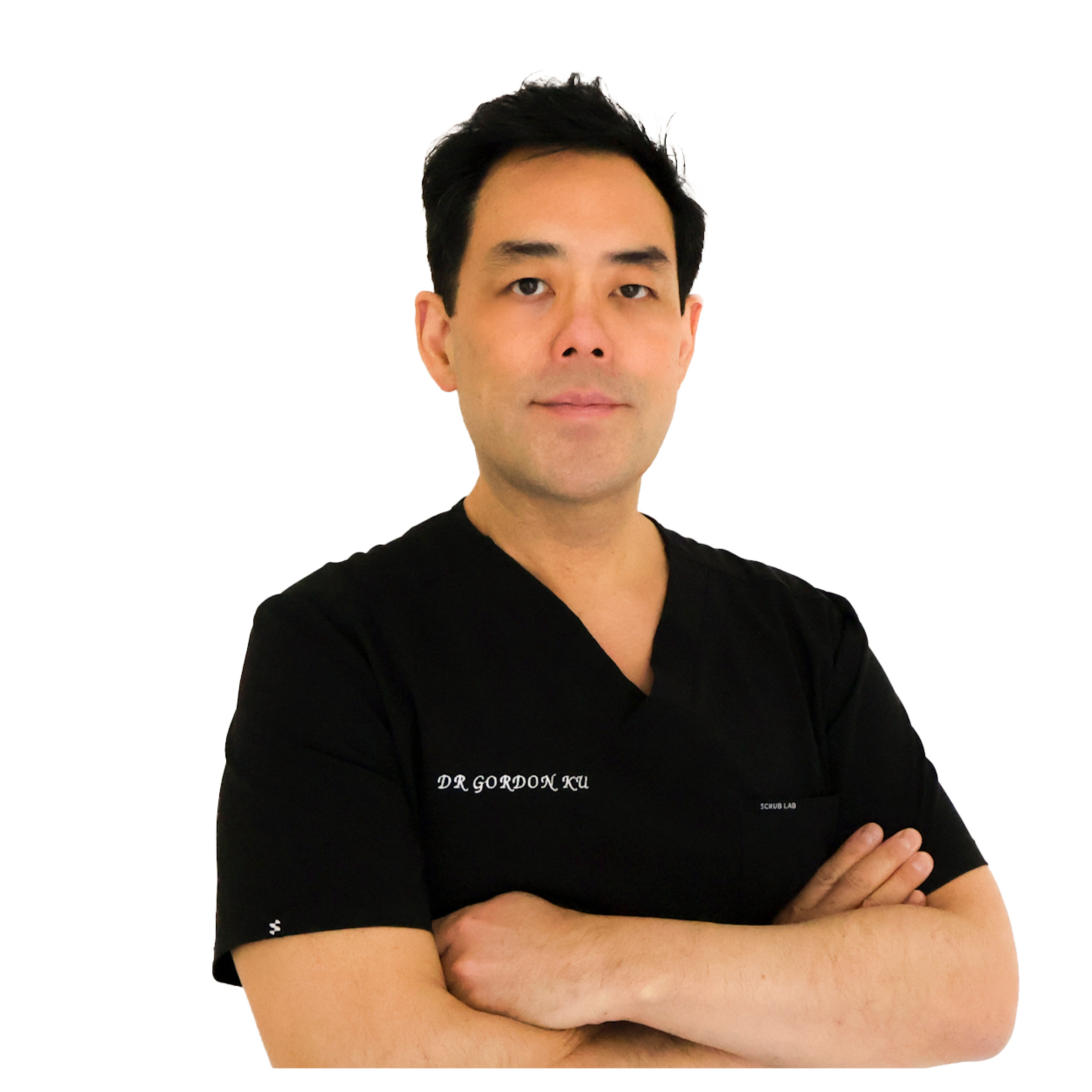
Neck and face thread lifts at Me Clinic are performed by Dr Gordon Ku, Cosmetic Doctor (MED0001169203). Registration can be checked free of charge on the AHPRA public register.
An initial consultation is required to assess suitability and help you make an informed decision. Ask questions at that consultation — about the thread type, the number proposed, complications, recovery, and what happens if you are not happy with the result.
One note on titles: “Cosmetic Doctor” describes an area of practice rather than a recognised specialty. “Specialist Plastic Surgeon” is the protected title, held by Fellows of the Royal Australasian College of Surgeons. The AHPRA register shows what any practitioner is registered to do, and checking it is free.
Booking
Book a consultation or contact us. We are at 4 Burke Road, Malvern East VIC 3145, five minutes’ walk from Caulfield station. Phone 1300 852 050.
Related: thread lift, thread lift before and after, neck lift, double chin reduction.
Individual results may vary. Any surgical or invasive procedure carries risks. Before proceeding you should seek a second opinion from an appropriately qualified health practitioner.
Common questions about neck thread lifts
What is a neck thread lift?
Absorbable suture threads inserted under the skin of the neck to reposition tissue and stimulate collagen formation. It is a minimally invasive alternative to surgery for mild to moderate laxity.
Is it a smaller version of a neck lift?
No. It does a more limited job — it repositions tissue rather than removing skin, and it does not address muscle.
What are the four things that age a neck?
Loose skin, fat under the chin, platysmal bands, and the underlying angle set by chin position and hyoid height. Each is addressed by something different.
How do I check for platysmal bands?
Clench your teeth and pull the corners of your mouth down hard. If two vertical cords stand out from the neck, that is muscle — and threads do not treat it.
How do I check for fat?
Pinch under the chin. A thick, soft pad between your fingers is fat, which needs fat-dissolving injections or liposuction rather than threads.
What is the hyoid bone and why does it matter?
A small U-shaped bone above the voice box, the only bone not joined to another. It anchors the muscles that create the line under the chin, and a low-set hyoid limits how sharp a neck angle can ever be made — by any procedure.
What should I ask about that?
“Given my anatomy, what is the best angle I could realistically get?” A practitioner who can answer has examined you properly.
Why is the neck harder to treat than the face?
Thinner skin so irregularities show more; constant movement from swallowing and turning; less fixed tissue to anchor a lift against; and gravity acting on the lowest part of the region.
What is a realistic expectation?
A refinement of the jawline and a modest improvement in the neck — not the change a surgical procedure produces.
How long does the procedure take?
On average around 60 minutes, varying with the number of threads, under local anaesthetic.
How long do results last?
Up to around two years has been reported, varying with thread type, number, skin quality and metabolism. It can be repeated.
Which thread materials are used?
PDO, cited by manufacturers at around six months to a year; PLLA and PCA, which dissolve more slowly with results reported beyond two years.
What is the difference between barbed and smooth threads?
Barbed or coned threads grip tissue and reposition it — the lifting component. Smooth threads stimulate collagen along their path without lifting.
What should a quote specify?
The material, the number of threads, and how many are barbed versus smooth. A quote for “threads” without those is not comparable.
What is the most useful cost question?
The cost per year, given the expected duration of the material proposed. A two-year result and an eight-month result are different purchases at the same headline price.
What is recovery like?
Small entry marks, swelling partly from the local anaesthetic, possible bruising, and temporary dimpling or rippling along the thread lines. Most people apply makeup after two to three days.
What should I avoid afterwards?
Neck massage, extreme neck movement, and sleeping positions that stretch the area. Practically: sleep propped on your back, turn with your shoulders rather than your head, eat soft food for a few days, and avoid dental appointments for a couple of weeks.
Why do dental appointments matter?
A long period with the head back and the mouth open is exactly the position to avoid while threads settle.
Will I be able to feel the threads?
Commonly yes — tightness, pulling on movement, and an awareness of something being there is normal for the first weeks.
What are the risks?
Pain, swelling, bruising; rippling or dimpling that is occasionally persistent; threads becoming palpable or visible; thread extrusion requiring removal; asymmetry; infection, which around a foreign material may require thread removal; granuloma or nodule formation; nerve irritation; thread migration or breakage; little or no lift; and an unsatisfactory result.
When should I contact us?
A dimple not settling after a couple of weeks, a visible or palpable thread, a thread appearing at the surface, asymmetry once swelling has gone, numbness not improving, or a lump along a thread line. Seek attention promptly for increasing pain, spreading redness, pus or fever.
How does it compare with surgery?
Surgery removes skin, treats bands, needs a general anaesthetic and weeks of downtime, leaves permanent but usually hidden scars, and produces substantially more change. Threads are local anaesthetic, days of downtime, modest change, up to around two years.
What is the most common mistake?
Choosing threads repeatedly over many years when the examination said surgery — which costs more over a decade and never achieves what one procedure would.
Who performs it here, and what does it cost?
Dr Gordon Ku, Cosmetic Doctor (MED0001169203). Thread lift procedures start at $4,600, or from $4,900 with Dr Ku, depending on the number of threads. A Cosmetic Doctor consultation is $150 as at September 2024, including GST. Not covered by Medicare.
Images on This Page
-
https://www.meclinic.com.au/wp-content/uploads/2024/03/meclinic-logo.png
Me Clinic
-
https://www.meclinic.com.au/wp-content/uploads/2022/02/call.png
call
-
https://www.meclinic.com.au/wp-content/uploads/2025/11/gordon-photo.png
(no alt text)
-
https://www.meclinic.com.au/wp-content/uploads/2022/03/cs4-thread-lift-200x171-02.png
(no alt text)
-
https://www.meclinic.com.au/wp-content/uploads/2022/03/cs3-thread-lift-200x171_nosethread-casestudy1-200x171-1.png
(no alt text)
-
https://www.meclinic.com.au/wp-content/uploads/2022/03/cs1-threadlift-250x310-before.jpg
cs1_liposuction_face_before-img
-
https://www.meclinic.com.au/wp-content/uploads/2022/03/cs1-threadlift-250x310-after.jpg
cs1_liposuction_Face_after-img
-
https://www.meclinic.com.au/wp-content/uploads/2022/03/cs2-thread-lift-250x310-before.jpg
cs1_liposuction_face_before-img
-
https://www.meclinic.com.au/wp-content/uploads/2022/03/cs2-thread-lift-250x310-after.jpg
cs1_liposuction_Face_after-img
-
https://www.meclinic.com.au/wp-content/uploads/2022/03/cs3-thread-lift-250x310-before.jpg
cs1_liposuction_face_before-img
-
https://www.meclinic.com.au/wp-content/uploads/2022/03/cs3-thread-lift-250x310-after.jpg
cs1_liposuction_Face_after-img
-
https://www.meclinic.com.au/wp-content/uploads/2022/03/cs4-ThreadLift-casestudy4-before-250x310-1.jpg
cs1_liposuction_face_before-img
-
https://www.meclinic.com.au/wp-content/uploads/2022/03/cs4-ThreadLift-casestudy4-After-250x310-1.jpg
cs1_liposuction_Face_after-img
-
https://www.meclinic.com.au/wp-content/uploads/2022/03/cs5-thread-lift-nose-250x310-before.jpg
cs1_liposuction_face_before-img
-
https://www.meclinic.com.au/wp-content/uploads/2022/03/cs5-thread-lift-nose-250x310-after.jpg
cs1_liposuction_Face_after-img
-
https://www.meclinic.com.au/wp-content/uploads/2022/03/cs6-threadlift-250x310-before.jpg
cs1_liposuction_face_before-img
-
https://www.meclinic.com.au/wp-content/uploads/2022/03/cs6-threadlift-250x310-after.jpg
cs1_liposuction_Face_after-img
-
https://www.meclinic.com.au/wp-content/uploads/2022/03/cs7-nose-threadlift-250x310-before.jpg
cs1_liposuction_face_before-img
-
https://www.meclinic.com.au/wp-content/uploads/2022/03/cs7-nose-threadlift-250x310-after.jpg
cs1_liposuction_Face_after-img
-
https://www.meclinic.com.au/wp-content/uploads/2024/02/acps.png
(no alt text)
-
https://www.meclinic.com.au/wp-content/uploads/2024/02/racs.png
(no alt text)
-
https://www.meclinic.com.au/wp-content/uploads/2024/02/fracs.png
(no alt text)
-
https://www.meclinic.com.au/wp-content/uploads/2024/02/isaps.png
(no alt text)
-
https://www.meclinic.com.au/wp-content/uploads/2024/02/cpca.png
(no alt text)
-
https://www.meclinic.com.au/wp-content/uploads/2022/02/auscop.png
(no alt text)
-
https://www.meclinic.com.au/wp-content/uploads/2022/02/amav.png
(no alt text)
-
https://www.meclinic.com.au/wp-content/uploads/2022/03/channel7.png
(no alt text)
-
https://www.meclinic.com.au/wp-content/uploads/2022/03/channel9.png
(no alt text)
-
https://www.meclinic.com.au/wp-content/uploads/2022/03/channel10.png
(no alt text)
-
https://www.meclinic.com.au/wp-content/uploads/2022/03/abc.png
(no alt text)
-
https://www.meclinic.com.au/wp-content/uploads/2022/02/malvern-map-thumb.jpg
(no alt text)
-
https://www.meclinic.com.au/wp-content/uploads/2022/03/home-conctact-tab.jpg
(no alt text)
-
https://bat.bing.com/action/0?ti=56339805&Ver=2&mid=0a9b805d-3025-4714-ace0-97764429a4dd&bo=1&sid=0e24dea0ac3211f1baaec3d82daad3fb&vid=0e24db00ac3211f199a6592b225950e7&vids=1&msclkid=N&pi=918639831&lg=en-US&sw=1280&sh=720&sc=24&tl=Neck%20Thread%20Lift%20-%20Non-Surgical%20Lifting%20Options&p=https%3A%2F%2Fwww.meclinic.com.au%2Fface%2Fthread-lift%2Fneck-thread-lift%2F&r=<=2002&evt=pageLoad&sv=2&cdb=AQAQ&rn=120511
(no alt text)