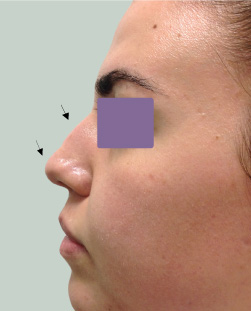
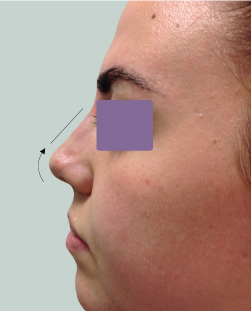
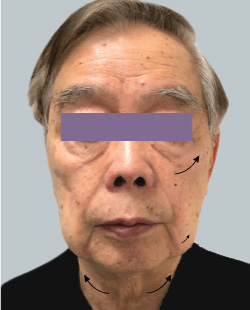
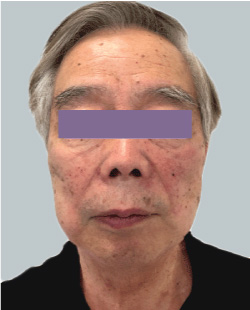
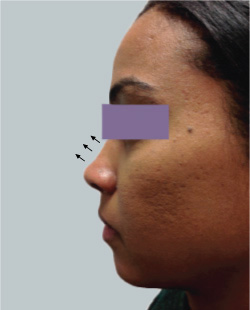
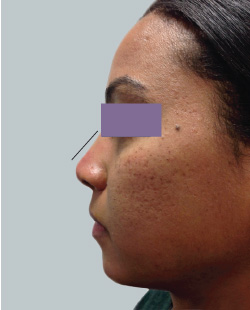
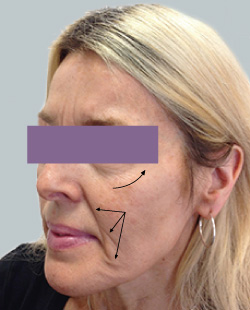
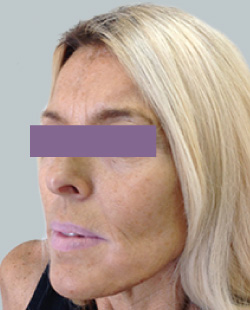
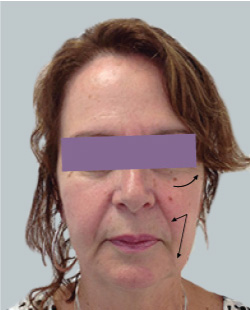
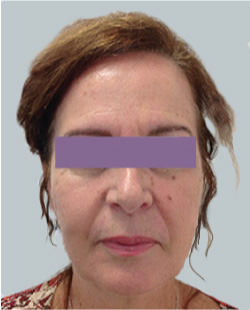
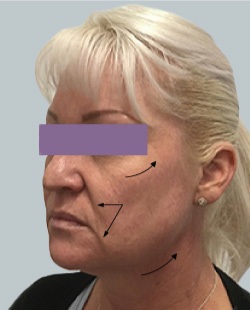
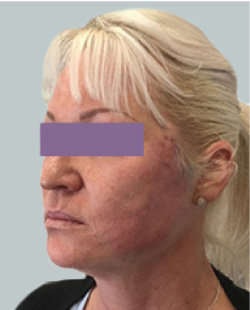
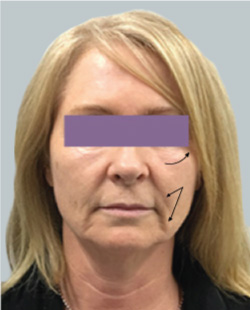
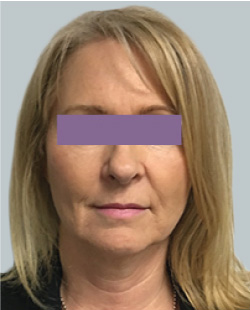
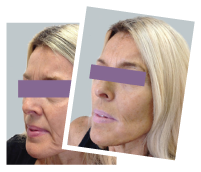
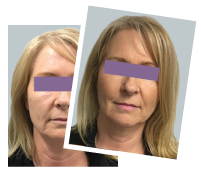
Thread lift before and after photos
Before and after photographs are how most people judge a thread lift. They need more interpretation here than for most treatments, because a thread lift result changes substantially over the months after the procedure — in both directions.
Photographs are shown and discussed at consultation, where your practitioner can select cases relevant to your anatomy.
The standards these photos must meet
Before and after images used by registered health practitioners in Australia are governed by the Medical Board of Australia’s Guidelines for advertising regulated health services.
- Images must be genuine — real patients, real results.
- Photographs on this website have been retouched only to protect patient privacy, never to enhance or alter the results of treatment.
- Images must carry a clear and prominent disclaimer that results may vary between individuals.
- Patients must consent to the use of their images.
Results may vary between individuals. A photograph records one person’s outcome, not a prediction of yours.
Timing matters more here than almost anywhere
A thread lift result has three distinct phases, and a photograph from each shows something different:
- Immediately after (days 0 to 7). This is the maximum lift, and it includes swelling from the procedure and the local anaesthetic. Swelling itself fills hollows and smooths contour. A photograph taken here overstates the settled result.
- At 4 to 8 weeks. Swelling has resolved and the mechanical lift has settled somewhat. This is the most honest single point of comparison.
- At 3 to 6 months. The collagen response along the threads has developed. Some people look better here than at week eight, because the collagen support arrives after the initial settling.
So the first question about any thread lift photograph is how long after the procedure it was taken. A gallery of day-three photographs is not a gallery of results.
The date-stamp audit
One test settles more than any other, and it takes a sentence to run.
Ask, for each pair you are shown: “How many weeks after the procedure is that second photograph?”
Then notice which of these you get.
- A specific number for each case. The clinic photographs at set intervals and knows what it is showing you. This is what you want.
- A range, consistently applied — “these are all at eight weeks”. Also good, and easy to check by asking for one at six months.
- “Shortly after”, “post-treatment” or a shrug. The gallery is uncontrolled, and quite possibly a collection of day-two photographs where swelling is doing the work.
Then ask the harder version: “Do you have a photograph of that same patient at twelve months?” A treatment that lasts 18 to 24 months should have twelve-month photographs somewhere. A clinic that only ever shows the six-week frame is showing you the peak of a curve and letting you assume it is a plateau.
Other things worth checking
- Same lighting. Jowls, folds and jawline definition are read through shadow. Light from above deepens them; flat light removes them. This is the most common way facial galleries mislead.
- Same camera height and head position. A camera slightly above eye level lifts the jawline. Tilting the chin up does the same thing. Both frames must match.
- Same expression. A neutral face in both.
- What else was done. Thread lifts are frequently combined with dermal filler, anti-wrinkle injections, a collagen stimulator or skin treatments. The visible change is then not attributable to threads alone. Ask.
- How many threads. A result from four threads and a result from sixteen are different treatments at very different prices.
- Which thread type. PDO, PLLA and PCA behave and last differently. A result from long-lasting barbed threads is not a guide to what smooth PDO threads will do.
The chin-tilt tell, and how to catch it
Of all the ways a facial gallery can mislead without anyone retouching anything, head position is the largest — and on a jawline it is enormous. A few degrees of chin elevation tightens the submental area more convincingly than most treatments do.
The problem is that you cannot see a few degrees directly. You have to look at what moves with the head rather than at the jaw itself.
- The ears. Find the same point on the ear — the notch at the top of the tragus is easiest — in both frames. Where it sits relative to the eyes and nose should be identical. If the ear has moved down the frame in the “after”, the chin went up.
- The nostrils. How much of the inside of the nostril you can see is a very sensitive indicator of chin elevation. More visible nostril in the “after” means the head is tilted back.
- The eyebrows against the top of the ear. Two fixed landmarks, one horizontal relationship. It should not change.
- The hairline and the shoulders. If the shoulders are lower in the frame in the “after”, the person is sitting straighter — which also lifts the jawline.
- The catchlight in the eye. A small bright reflection of the light source. If it has moved from the ten o’clock position to the two o’clock position, the lighting changed and every shadow on the face changed with it.
None of this requires expertise. It requires knowing that the jawline is not where to look.
Take your own baseline before you do anything
The most useful gallery for you is the one of yourself, and it only exists if you make it before treatment. Four photographs, five minutes, and you own the only comparison that is actually about your face.
- Stand facing a window, daylight on your face, no downlight overhead and nothing bright behind you.
- Someone else holds the camera at the height of your nose, about a metre and a half away, zoomed in rather than close.
- Four frames: straight ahead, both three-quarter views, and a true profile. Face relaxed, mouth closed, eyes open, looking at the lens.
- Hair back off the face and jaw in every frame.
- Turn off filters, beauty mode and portrait mode. They are frequently on by default and they smooth exactly the contour being assessed.
- Note the date, and note where you stood, so you can repeat it identically.
Then repeat the set at eight weeks, six months and twelve months, from the same spot, at the same time of day. The twelve-month set is the one that tells you what you actually bought, and it is the one nobody ever takes.
One more frame worth having: a photograph lying flat on your back, taken from above. Gravity is removed, and what the jawline looks like there is roughly the ceiling of what repositioning tissue can achieve. If it still does not look the way you want lying down, threads will not get you there.
The mirror test that previews the answer
A thread lift repositions tissue upward and backward. You can approximate that with your hands and see, roughly, whether the change is the one you want.
- Sit in front of a mirror in even light, face relaxed. Look first, before touching anything, and note what specifically bothers you — the jowl, the fold beside the mouth, the line of the jaw, the neck.
- Place two fingers flat in front of each ear, at the level of the cheekbone.
- Draw the skin gently up and back toward the top of the ear. Not sideways, and not hard — the movement is a few millimetres.
- Look at what changed and what did not.
What that tells you:
- If the jowl softens and the jawline reappears with a small movement, you are in the group thread lifts suit — mild to moderate laxity, where repositioning reads clearly.
- If it takes a large pull to make a difference, or the skin bunches in front of your ear before the jaw improves, there is more excess than threads can hold. That is a surgical question.
- If the fold beside your mouth barely moves, it is volume loss rather than descent, and filler or a collagen stimulator addresses it instead.
- If the neck does not change at all, the issue is below where threads work.
This is an approximation, not a prediction — your hands pull the skin, whereas threads engage deeper tissue, and the real result is smaller than the mirror suggests. But the direction it points is reliable, and it is the single most useful thing you can do before a consultation.
Why your result will differ
Outcomes vary with the degree of skin laxity, skin thickness and quality, facial fat distribution, bone structure, age, the number and type of threads used, and individual healing.
The single biggest determinant is how much laxity there is to begin with. Threads reposition tissue; they do not remove skin. In a face with mild laxity that repositioning reads clearly. In a face with significant excess skin the same threads produce far less change — and gallery cases are generally selected from the first group.
Reading a gallery for who is in it
Since patient selection does much of the work in any gallery, it is worth reading the “before” photographs rather than the “after” ones.
- How much skin excess is visible in the “before”? If every case starts with a firm face and a mild jowl, the gallery is telling you about mild cases.
- Is anyone in it the age you are? Laxity, skin thickness and healing all change with age, and a gallery of forty-year-olds is limited guidance at sixty.
- Is anyone in it built like you? Facial fat distribution and bone structure change what repositioning achieves.
- Are there any cases with heavier laxity, and how did those do? A clinic willing to show a modest result in a difficult case is telling you something a wall of best cases cannot.
At consultation, the question that cuts through all of it: “Can you show me a case that started where I am starting?”
What photographs cannot show
- How long it lasted. The effect generally lasts 18 to 24 months and then fades. A photograph is a moment in that cycle.
- How the face moves. Tissue held by threads can look correct at rest and behave differently in animation.
- Complications. Dimpling, puckering, palpable or extruding threads, asymmetry and infection do not appear in a curated gallery.
- Whether surgery would have been the better answer. A gallery of thread lift results tells you nothing about whether you are in the group for whom a facelift would be the appropriate procedure. That takes an examination.
- The cost per year. A result that fades at two years and a permanent one are different purchases, and the photograph looks the same.
- What the recovery was like. Bruising, tightness, the sensation of the threads and the weeks of feeling them are absent from every frame.
Your rights during photography
Clinical photography is part of the record and part of the consent process, and you have a say in all of it.
- Photographs for your record and photographs for advertising are separate consents. Agreeing to one is not agreeing to the other, and you can say yes to the first and no to the second.
- You can withdraw consent for promotional use later, including after treatment, and ask for images to be removed from the website and social media.
- You can ask what the photographs will be used for, where they will be stored and for how long, and get an answer.
- You can ask for identifying features to be cropped or obscured.
- You can have a support person or chaperone present.
- You can ask to see the photographs that were taken of you, and to be given copies.
- You can stop at any point.
None of this is an unusual request, and none of it affects the care you receive.
What to ask at consultation
- “How many weeks after treatment is each of these photographs?”
- “Do you have any at twelve months?”
- “How many threads, and what type, in that case?”
- “What else was done at the same time?”
- “Can you show me someone who started where I am starting?”
- “Based on my examination, is a thread lift the right procedure for me — or am I closer to the surgical group?”
- “What does this cost per year, given how long it lasts?”
- “What happens when it fades — do I repeat it, or move to something else?”
Costs
Thread lift procedures at Me Clinic start at $4,600; treatment with Dr Ku starts from $4,900. Cost depends on the type and number of threads used. As at September 2024 and including GST, a consultation with a Cosmetic Doctor is $150.
Because the effect generally lasts 18 to 24 months, the figure worth comparing against surgery is the cost over the years you expect to keep having it, not the cost of one procedure. That arithmetic is worth doing before rather than after.
Cosmetic treatment is not covered by Medicare, and we are not a no-gap provider.
Risks
Risks include pain, swelling, bruising, dimpling or puckering along the thread line, threads becoming visible or palpable, thread extrusion, asymmetry, infection, granuloma formation, nerve irritation, thread migration or breakage, little or no lift, and an unsatisfactory result. The full list is on the thread lift page.
Please read our information on the risks and complications of cosmetic surgery before proceeding.
We are at 4 Burke Road, Malvern East VIC 3145, five minutes’ walk from Caulfield station. Phone 1300 852 050, or use the online consultation form.
Related: thread lift, neck thread lift, facelift.
Individual results may vary. Any surgical or invasive procedure carries risks. Before proceeding you should seek a second opinion from an appropriately qualified health practitioner.
Common questions about thread lift before and after photos
What rules govern these photographs?
The Medical Board of Australia’s Guidelines for advertising regulated health services. Images must be genuine, carry a clear disclaimer that results vary, and be used with patient consent.
Are the photographs on this site retouched?
Only to protect patient privacy — never to enhance or alter the results of treatment.
Why does timing matter so much for thread lifts?
Because the result changes in both directions. Days 0 to 7 is maximum lift plus swelling and overstates the outcome; 4 to 8 weeks is the most honest single comparison; 3 to 6 months is when the collagen response along the threads has developed.
What is the first question to ask about any thread lift photo?
How many weeks after the procedure it was taken. A gallery of day-three photographs is not a gallery of results.
What answer should I get?
A specific number for each case, or a range consistently applied. “Shortly after”, “post-treatment” or a shrug means the gallery is uncontrolled.
What is the harder follow-up question?
Whether they have a photograph of that same patient at twelve months. A treatment lasting 18 to 24 months should have them; showing only the six-week frame is showing the peak of a curve as if it were a plateau.
How do I catch a chin tilt?
Do not look at the jaw. Look at the ear — the notch at the top of the tragus should sit in the same place relative to the eyes and nose; at how much nostril is visible; at the eyebrow-to-ear-top relationship; at the shoulders; and at where the catchlight sits in the eye.
Why does lighting matter?
Jowls, folds and jawline definition are read through shadow. Light from above deepens them; flat light removes them. It is the most common way facial galleries mislead.
Should I take my own photographs?
Yes — it is the only comparison that is actually about your face. Four frames facing a window, camera at nose height, hair off the jaw, no filters or portrait mode, and note where you stood so you can repeat it.
When should I repeat them?
Eight weeks, six months and twelve months. The twelve-month set tells you what you actually bought, and it is the one nobody takes.
Is there a photograph that shows the ceiling of what threads can do?
Lying flat on your back, taken from above. Gravity is removed. If the jawline still does not look the way you want there, threads will not get you there.
Can I preview the result myself?
Approximately. In a mirror, place two fingers flat in front of each ear at cheekbone level and draw the skin gently up and back toward the top of the ear — a few millimetres, not a hard pull.
What does that tell me?
If the jowl softens with a small movement, you are in the group threads suit. If it takes a large pull, or skin bunches in front of the ear first, there is more excess than threads can hold — a surgical question. If the fold beside the mouth barely moves, that is volume loss, not descent.
Is the mirror test accurate?
Not as a prediction — your hands pull skin, threads engage deeper tissue, and the real result is smaller. But the direction it points is reliable.
What determines my result most?
How much laxity there is to begin with. Threads reposition tissue; they do not remove skin.
How should I read the “before” photographs?
For who is in the gallery — how much skin excess each case started with, whether anyone is your age, whether anyone is built like you, and whether any harder cases are shown at all.
What is the single best question at consultation?
“Can you show me a case that started where I am starting?”
Why does the number of threads matter?
A result from four threads and a result from sixteen are different treatments at very different prices.
Does thread type matter?
Yes. PDO, PLLA and PCA behave and last differently, and a result from long-lasting barbed threads is not a guide to what smooth PDO threads will do.
What cannot a photograph show?
How long it lasted, how the face moves, complications such as dimpling or extrusion, whether surgery was the better answer, the cost per year, and what the recovery felt like.
Do I have to agree to my photographs being used in advertising?
No. Record photography and promotional use are separate consents, and you can agree to one and decline the other.
Can I change my mind later?
Yes — you can withdraw consent for promotional use after treatment and ask for images to be removed from the website and social media.
What else can I ask for?
What the photographs will be used for, where they are stored and for how long; identifying features cropped or obscured; a support person or chaperone present; copies of your own images; and to stop at any point.
What do thread lifts cost here?
From $4,600, or from $4,900 with Dr Ku, depending on the type and number of threads. A Cosmetic Doctor consultation is $150 as at September 2024, including GST. Not covered by Medicare.
What are the risks?
Pain, swelling, bruising, dimpling or puckering along the thread line, threads becoming visible, palpable or extruding, asymmetry, infection, granuloma formation, nerve irritation, thread migration or breakage, little or no lift, and an unsatisfactory result.
Images on This Page
-
https://www.meclinic.com.au/wp-content/uploads/2024/03/meclinic-logo.png
Me Clinic
-
https://www.meclinic.com.au/wp-content/uploads/2022/02/call.png
call
-
https://www.meclinic.com.au/wp-content/uploads/2022/03/cs7-nose-threadlift-250x310-before.jpg
(no alt text)
-
https://www.meclinic.com.au/wp-content/uploads/2022/03/cs7-nose-threadlift-250x310-after.jpg
(no alt text)
-
https://www.meclinic.com.au/wp-content/uploads/2022/03/cs6-threadlift-250x310-before.jpg
(no alt text)
-
https://www.meclinic.com.au/wp-content/uploads/2022/03/cs6-threadlift-250x310-after.jpg
(no alt text)
-
https://www.meclinic.com.au/wp-content/uploads/2022/03/cs5-thread-lift-nose-250x310-before.jpg
(no alt text)
-
https://www.meclinic.com.au/wp-content/uploads/2022/03/cs5-thread-lift-nose-250x310-after.jpg
(no alt text)
-
https://www.meclinic.com.au/wp-content/uploads/2022/03/cs4-ThreadLift-casestudy4-before-250x310-1.jpg
(no alt text)
-
https://www.meclinic.com.au/wp-content/uploads/2022/03/cs4-ThreadLift-casestudy4-After-250x310-1.jpg
(no alt text)
-
https://www.meclinic.com.au/wp-content/uploads/2022/03/cs3-thread-lift-250x310-before.jpg
(no alt text)
-
https://www.meclinic.com.au/wp-content/uploads/2022/03/cs3-thread-lift-250x310-after.jpg
(no alt text)
-
https://www.meclinic.com.au/wp-content/uploads/2022/03/cs2-thread-lift-250x310-before.jpg
(no alt text)
-
https://www.meclinic.com.au/wp-content/uploads/2022/03/cs2-thread-lift-250x310-after.jpg
(no alt text)
-
https://www.meclinic.com.au/wp-content/uploads/2022/03/cs1-threadlift-250x310-before.jpg
(no alt text)
-
https://www.meclinic.com.au/wp-content/uploads/2022/03/cs1-threadlift-250x310-after.jpg
(no alt text)
-
https://www.meclinic.com.au/wp-content/uploads/2022/03/cs4-thread-lift-200x171-02.png
(no alt text)
-
https://www.meclinic.com.au/wp-content/uploads/2022/03/cs1-thread-lift-200x171_nosethread-casestudy1-200x171-1.png
(no alt text)
-
https://www.meclinic.com.au/wp-content/uploads/2022/03/cs7-nose-threadlift-200x171-1.png
(no alt text)
-
https://www.meclinic.com.au/wp-content/uploads/2022/03/cs2-thread-lift-200x171_nosethread-casestudy1-200x171-1.png
(no alt text)
-
https://www.meclinic.com.au/wp-content/uploads/2024/02/acps.png
(no alt text)
-
https://www.meclinic.com.au/wp-content/uploads/2024/02/racs.png
(no alt text)
-
https://www.meclinic.com.au/wp-content/uploads/2024/02/fracs.png
(no alt text)
-
https://www.meclinic.com.au/wp-content/uploads/2024/02/isaps.png
(no alt text)
-
https://www.meclinic.com.au/wp-content/uploads/2024/02/cpca.png
(no alt text)
-
https://www.meclinic.com.au/wp-content/uploads/2022/02/auscop.png
(no alt text)
-
https://www.meclinic.com.au/wp-content/uploads/2022/02/amav.png
(no alt text)
-
https://www.meclinic.com.au/wp-content/uploads/2022/03/channel7.png
(no alt text)
-
https://www.meclinic.com.au/wp-content/uploads/2022/03/channel9.png
(no alt text)
-
https://www.meclinic.com.au/wp-content/uploads/2022/03/channel10.png
(no alt text)
-
https://www.meclinic.com.au/wp-content/uploads/2022/03/abc.png
(no alt text)
-
https://www.meclinic.com.au/wp-content/uploads/2022/02/malvern-map-thumb.jpg
(no alt text)
-
https://www.meclinic.com.au/wp-content/uploads/2022/03/home-conctact-tab.jpg
(no alt text)
-
https://bat.bing.com/action/0?ti=56339805&Ver=2&mid=97669e75-bbee-4613-aaff-84ea67ec057e&bo=1&sid=1f51df70ac3311f1bef849012fa40c35&vid=1f51fb10ac3311f1a4f2cd7e6c15559a&vids=0&msclkid=N&pi=918639831&lg=en-US&sw=1280&sh=720&sc=24&tl=Thread%20Lift%20Procedures%20-%20Understanding%20the%20Process&p=https%3A%2F%2Fwww.meclinic.com.au%2Fface%2Fthread-lift%2Fbefore-and-after%2F&r=<=5377&evt=pageLoad&sv=2&cdb=AQAQ&rn=595288
(no alt text)