Thread lift
A thread lift is a minimally invasive procedure that uses medical-grade suture threads inserted under the skin to reposition and support facial tissue, and to stimulate collagen formation along the path of each thread.
It is less invasive and less costly than a surgical facelift. It also produces a smaller change and a temporary one, and it carries its own risks. Both halves of that matter.
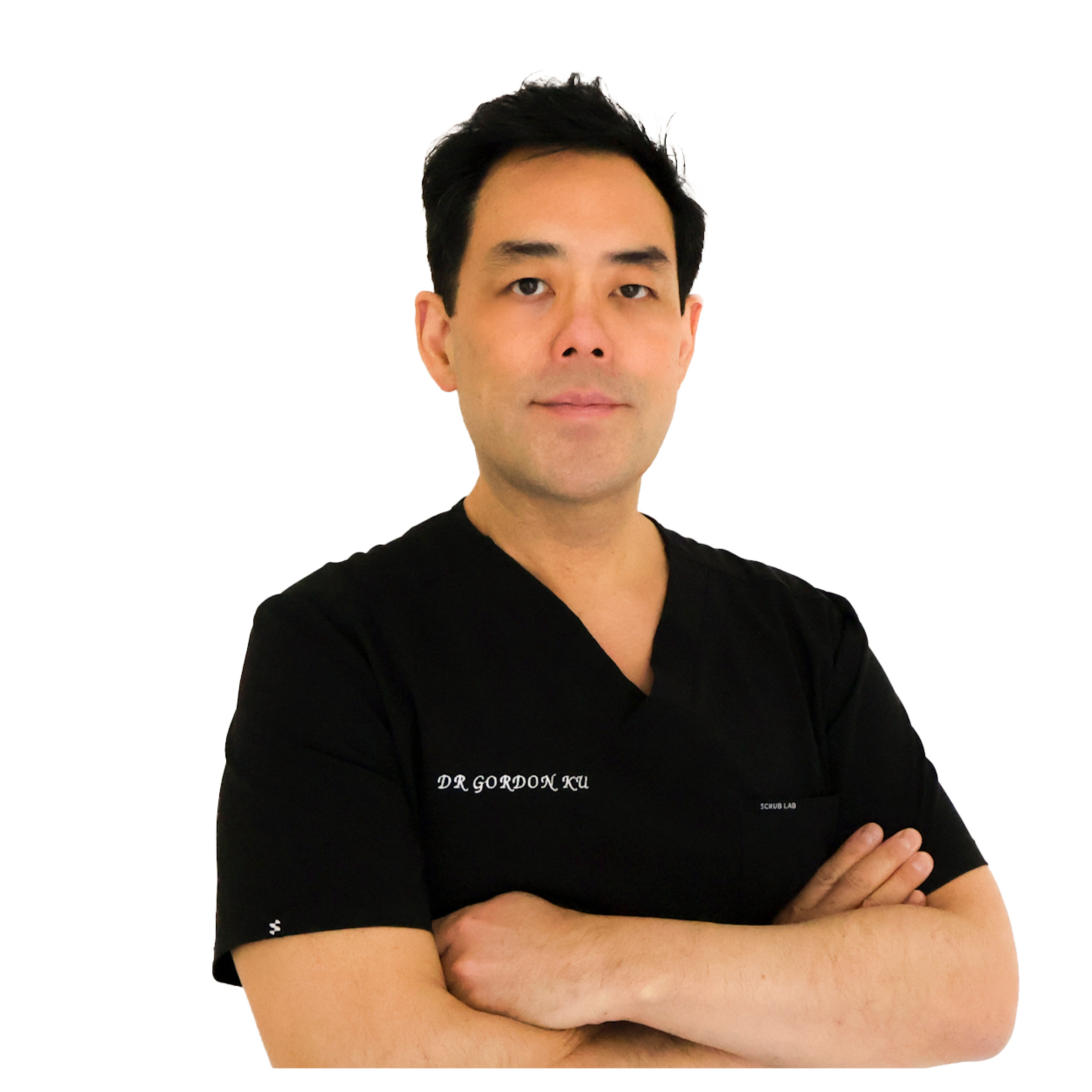
This information has been medically reviewed by Melbourne-based cosmetic doctor Dr Gordon Ku (MED0001169203).
How it works
Threads are inserted through a cannula under local anaesthetic. Once in place, small cones or barbs along the thread engage the surrounding soft tissue, allowing it to be drawn upward and held.
Two things then happen:
- The immediate lift — tissue repositioned by the threads at the time of the procedure.
- The collagen response — the body reacts to the thread by laying down collagen along its path. As the thread dissolves over the following months, that collagen provides some ongoing support. This is the part that develops gradually and is not visible on the day.
The procedure takes approximately 60 minutes.
The vector is the whole thing
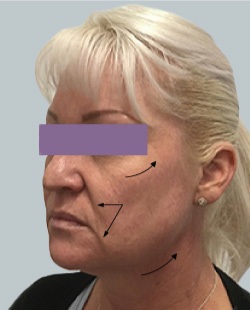
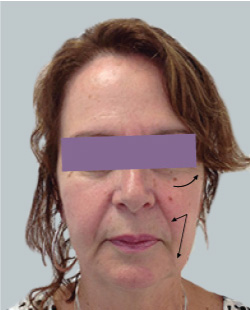
A thread does not create tissue and does not remove it. All it does is move soft tissue in one direction and hold it there. So the direction — the vector — is what determines whether a result looks like a younger version of your face or like a face under tension.
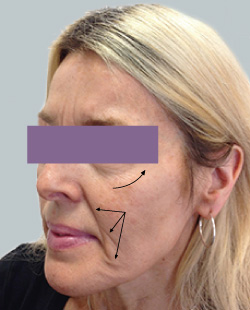
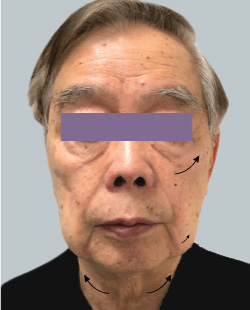
Tissue in the face descends downward and slightly forward with age. Restoring it means moving it upward and backward, toward the temple and the area in front of the ear, where the tissue is firmer and a thread has something to hold against.
Pulled sideways instead, the same amount of movement produces a different and recognisable look: a flattened cheek, a stretched quality at the corner of the mouth, and a face that reads as pulled rather than lifted. It is the same error that distinguishes a skin-tension facelift from a well-executed one.
Two consequences for you:
- Ask what direction the threads will run, and what they anchor into. A clear answer is a sign of a planned procedure rather than a standard pattern applied to everyone.
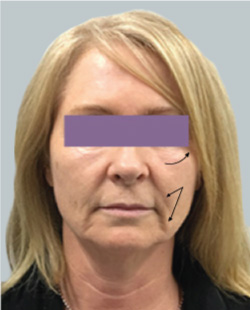
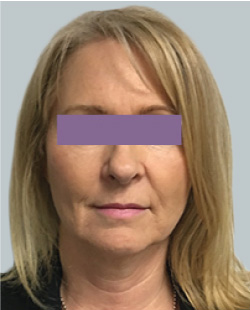
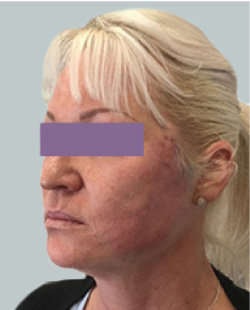
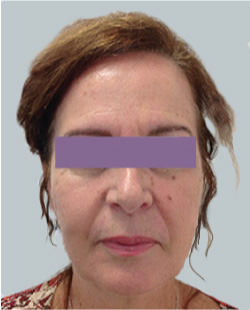
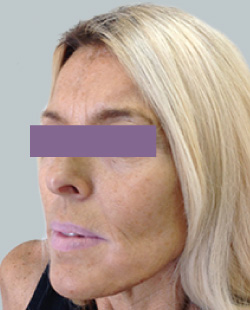
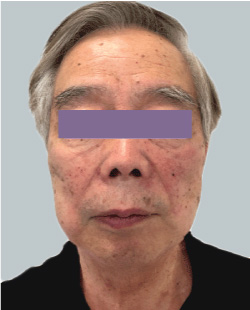
- When looking at before-and-after photographs, look at the cheek rather than the jaw. A flattened mid-face beside an improved jawline suggests a lateral pull.
The KuLift
Dr Gordon Ku performs a thread lift he calls the KuLift, combining several thread types — sometimes alongside a collagen stimulator — for mid to lower face rejuvenation. It is his preferred method. Dr Ku has performed thread lifts several hundred times and provides training to other doctors in the procedure.
The logic of combining is worth understanding: threads reposition tissue, and a collagen stimulator improves the quality of the tissue being held. They address different things, which is why they are used together rather than as alternatives. It also means that where both are used, the visible change is not attributable to the threads alone — worth remembering when comparing a result against a quote for threads by themselves.
Areas treated
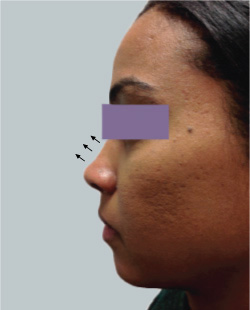
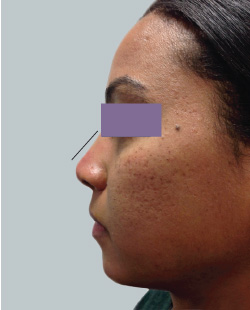
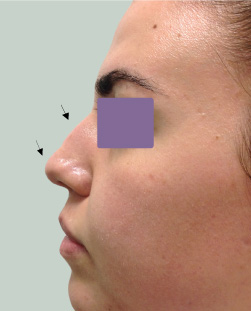
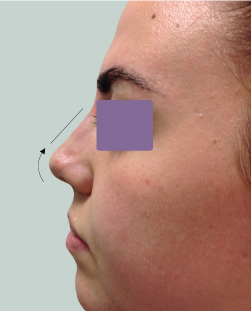
Cheeks and mid-face, nasolabial folds, jowls and jawline, and the neck. See also neck thread lift and nose thread lift.
The main effect is on sagging and heaviness in the lower face and jawline, along with an improvement in skin quality from the collagen response.
The types of thread
Threads differ, and the difference determines how long the result lasts. There are three main materials:
- PDO (polydioxanone) — the most widely used and least expensive. Manufacturers state PDO threads last around six months to a year.
- PLLA (poly-L-lactic acid) — dissolves more slowly and generates a stronger collagen response. Results can last more than two years.
- PCA (polycaprolactone) — the slowest to dissolve, with results that can last more than two years.
Threads also divide into those designed to lift (with barbs or cones that grip tissue) and those that do not lift but stimulate collagen only. The two are not interchangeable, and a treatment made up of non-lifting threads will not reposition tissue however many are used.
Me Clinic’s doctors prefer lifting threads with results lasting more than two years. Which thread is appropriate depends on your anatomy and what is being addressed.
Silhouette Soft threads use fully bio-absorbable material with cone technology, stimulating a supporting collagen matrix that anchors the lift as the threads dissolve over one to two years.
How many threads, and why the number alone tells you nothing
“How many threads?” is the question most people ask about a quote, and on its own it is close to meaningless. A number is only interpretable alongside three other things.
| What to ask | Why it matters |
|---|---|
| Which material? | PDO at six months to a year, or PLLA and PCA at beyond two years — the same count of threads can mean twice the duration |
| How many are lifting threads, and how many collagen-only? | Only barbed or coned threads reposition tissue. A count padded with smooth threads is not a lift |
| How many per side, and across which areas? | Six threads across a whole face and six per side of the jawline are entirely different procedures |
| What happens if it is not enough? | Whether a top-up is included, and what it costs |
What drives the number in a proper plan is the degree of laxity, the area being addressed, the material chosen and the tissue’s ability to hold. There is no standard count, and a clinic quoting the same number to everyone is quoting a package rather than a plan.
The comparable figure between quotes is therefore the cost per year: total price divided by the expected duration of the material proposed. That single calculation makes otherwise incomparable quotes comparable, and it usually changes which one looks better.
How long results last
Generally 18 to 24 months, depending on the thread type and the number of threads used. How long an individual result lasts also depends on age, metabolism and skin quality.
The effect is not permanent. Repeat treatment is needed to maintain it, and a review with the treating doctor at around 24 months is recommended to assess whether a repeat procedure is appropriate.
When repeating stops making sense
Each repeat works in tissue the previous procedure has altered — there is scarring along the old thread paths, and the tissue holds differently. That is not automatically a problem, but it means the second and third procedures are not simply the first one again.
Two signals that the conversation should change:
- Each result is lasting less than the one before, or producing less change for the same number of threads.
- The examination now finds genuine excess skin rather than the mild-to-moderate laxity threads suit. At that point more threads is the wrong answer, however many have worked before.
And the arithmetic: at 18 to 24 months a repeat, a decade of thread lifts is about five procedures. Set that against a single surgical procedure lasting commonly 7 to 15 years and the comparison is worth making deliberately — even if the answer is that you prefer the smaller, reversible-in-time commitment.
Thread lift compared with a facelift
| Thread lift | Surgical facelift | |
|---|---|---|
| Anaesthetic | Local | General, or local with sedation |
| Setting | In clinic | Accredited hospital |
| Duration of procedure | About 60 minutes | 1.5 to 6 hours depending on technique |
| Downtime | Days | Weeks |
| Degree of change | Modest repositioning | Substantial repositioning and skin removal |
| Excess skin | Not removed | Removed |
| How long it lasts | 18 to 24 months | Commonly 7 to 15 years |
| Cost | From $4,600 | $20,000 to $50,000 |
A thread lift is not a smaller version of a facelift — it does a different, more limited job. For mild to moderate laxity in someone not ready for surgery, it is a reasonable option. Where there is significant excess skin, it will not produce what a facelift produces, and being told that plainly is more useful than being sold a series of treatments that will not get you there.
Who it suits, and who it does not
It tends to suit: someone with mild to moderate laxity and reasonable skin quality, who wants a modest improvement without surgery, who understands the result is temporary, and who can take a week of possible dimpling and tightness.
It tends not to suit:
- Anyone with significant excess skin — repositioning will not reduce it
- Anyone with very thin skin, where threads are more likely to be seen or felt
- Anyone expecting a surgical degree of change
- Anyone with active infection or an inflamed skin condition in the area
- Anyone with a history of keloid or hypertrophic scarring
- Anyone with a bleeding disorder, or on blood thinners that cannot safely be managed around the procedure — and never stop a prescribed blood thinner on your own
- Anyone pregnant or breastfeeding
- Anyone with significant planned weight loss, since the face will change
- Anyone who has had permanent filler or previous facial surgery, without a careful discussion first
Recovery
Recovery varies considerably between patients. Some have minimal downtime; others take longer.
- Small pin-prick marks at the entry points
- Initial swelling, partly from the local anaesthetic itself
- Bruising and swelling are possible but not usual
- Temporary skin dimpling or puckering along the thread lines, which generally settles
- Most patients can apply makeup after two to three days
- Avoid excessive facial movement, sleeping on your side, facial massage and dental work for a period as directed — all can displace threads before they settle
Why dimpling happens, and what to do about it
Dimpling along a thread line is the most common thing people ring about, and it is usually not a problem — but it is worth knowing why it happens and what not to do.
A barbed thread works by gripping tissue. Where a barb engages tissue slightly closer to the surface than intended, or where tissue gathers as it is drawn up, the skin above it puckers. Most of it settles within days to a couple of weeks as swelling resolves and the tissue redistributes.
- Do not massage it yourself. Pressing and rubbing can displace a thread before it has settled, and is more likely to create a problem than fix one.
- Do not let anyone else massage it — no facials, no beauty treatments, no well-meaning help.
- Give it two weeks, then ring us if it is still there. There are things a practitioner can do, and they should be the one doing them.
- Take a photograph when you notice it, so the change over time can be judged rather than remembered.
The practical fortnight
- Sleep on your back, propped up. Side-sleeping drags the treated tissue for hours at a time.
- Eat soft food for a few days, and avoid opening the mouth wide — big yawns included.
- No dental appointments for a couple of weeks. A long period with the mouth wide open is exactly the position to avoid.
- No facials, massage, microcurrent or skin treatments until cleared; say what you have had if you book one.
- No gym, and nothing face-down.
- Expect tightness and a pulling sensation on movement for the first weeks. That is normal.
Risks
A thread lift is a medical procedure, not a facial. Risks include:
- Pain, swelling, bruising and tenderness
- Dimpling, puckering or visible irregularity along the thread line, which sometimes persists
- Threads becoming visible or palpable under the skin
- Thread extrusion — a thread working its way out through the skin, requiring removal
- Asymmetry between the two sides
- Infection — uncommon, but it does occur, and infection around a foreign material may require the thread to be removed
- Granuloma or nodule formation around a thread
- Nerve irritation or injury, causing numbness or altered movement
- Injury to a salivary gland duct
- Thread migration or breakage
- Little or no lift, particularly where skin laxity is significant
- An unsatisfactory result
Contact us if you develop increasing pain, spreading redness, fever, a thread coming through the skin, or a persistent dimple that is not settling.
Please read our information on the risks and complications of cosmetic surgery before proceeding.
Expected, versus call us, versus seek medical attention
- Expected: pin-prick marks; swelling for days; occasional bruising; temporary dimpling along the thread lines; tightness and pulling on movement; being able to feel the threads for some weeks.
- Call us: a dimple not settling after a couple of weeks; a thread you can see or feel; asymmetry once swelling has gone; a lump forming along a thread line; numbness not improving; altered movement of part of the face.
- Seek medical attention promptly: increasing pain, spreading redness or heat, pus, fever, or a thread emerging through the skin — infection around a foreign material is treated urgently and may require removal.
Cost
Cost depends on the type of thread and the number used. Thread lift procedures at Me Clinic start at $4,600; thread lift treatment with Dr Ku starts from $4,900. A full, obligation-free quote is provided after a consultation and assessment.
As at September 2024 and including GST, a consultation with a Cosmetic Doctor is $150. This is a cosmetic treatment and is not covered by Medicare, and we are not a no-gap provider.
Before you book
All procedures carry risks, cosmetic or otherwise. Before proceeding:
- Check the practitioner’s registration and qualifications on the AHPRA public register — it is free and takes a minute
- Ask specifically what thread type is proposed and how long that material lasts
- Ask how many threads are included in the quote, how many of those lift, and what a top-up costs
- Ask what direction the threads will run and what they anchor into
- Ask about complications, side effects and the expected recovery
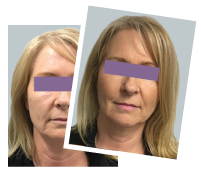
- Ask to see photographs of comparable cases, with dates and thread counts
- Ask what the cost works out to per year, given the expected duration
- Ask who to ring after hours
An initial consultation is required for all cosmetic procedures at Me Clinic, to assess suitability and to help you make an informed decision. This website is general guidance and cannot substitute for that.
One note on titles: “Cosmetic Doctor” describes an area of practice rather than an AHPRA-recognised specialty. “Specialist Plastic Surgeon” is the protected title, held by Fellows of the Royal Australasian College of Surgeons. The public register shows what any practitioner is registered to do.
What you should leave with
- A written record of the thread material, the number used, how many were lifting threads, and where they were placed
- The expected duration, and the cost per year
- Written aftercare, including the sleeping, chewing and dental rules
- What to do about dimpling, and when to ring
- The signs to seek attention for, and an after-hours number
- A review appointment, and a plan for the 24-month review
Booking
Book a consultation or contact us. We are at 4 Burke Road, Malvern East VIC 3145, five minutes’ walk from Caulfield station. Phone 1300 852 050.
Related: thread lift before and after, neck thread lift, nose thread lift, facelift.
Individual results may vary. Any surgical or invasive procedure carries risks. Before proceeding you should seek a second opinion from an appropriately qualified health practitioner.
Common questions about thread lifts
What is a thread lift?
Medical-grade suture threads inserted under the skin to reposition and support facial tissue, and to stimulate collagen along the path of each thread. It takes about 60 minutes under local anaesthetic.
What are the two effects?
The immediate lift, from tissue repositioned at the time, and the collagen response, which develops gradually as the body lays down collagen along the thread path.
Why does the direction of the threads matter?
Because a thread only moves tissue and holds it. Tissue descends downward and slightly forward, so it should be moved upward and backward. Pulled sideways, the same movement gives a flattened cheek and a stretched look at the mouth.
What should I ask about that?
What direction the threads will run, and what they anchor into. And when looking at photographs, look at the cheek rather than the jaw — a flattened mid-face suggests a lateral pull.
What is the KuLift?
Dr Gordon Ku’s preferred method for mid to lower face rejuvenation, combining several thread types, sometimes alongside a collagen stimulator.
Why combine threads with a collagen stimulator?
Because they do different things — threads reposition tissue, and a stimulator improves the quality of the tissue being held. It also means the visible change is not attributable to the threads alone.
What areas can be treated?
Cheeks and mid-face, nasolabial folds, jowls and jawline, and the neck. The main effect is on sagging and heaviness in the lower face and jawline.
What are the thread materials?
PDO, the most widely used and least expensive, cited at around six months to a year; PLLA, which dissolves more slowly with a stronger collagen response; and PCA, the slowest, both with results that can last more than two years.
Do all threads lift?
No. Only threads with barbs or cones grip tissue and reposition it. Collagen-only threads will not lift however many are used.
How many threads will I need?
There is no standard count — it depends on laxity, the area, the material and how the tissue holds. A clinic quoting the same number to everyone is quoting a package rather than a plan.
Why is the number alone not enough?
Because it means nothing without the material, how many of them lift, and how many per side across which areas. Six threads across a whole face and six per side of a jawline are different procedures.
How do I compare two quotes?
By cost per year — total price divided by the expected duration of the material proposed. It usually changes which quote looks better.
How long do results last?
Generally 18 to 24 months, depending on thread type and number, and on your age, metabolism and skin quality. A review at around 24 months assesses whether a repeat is appropriate.
Is a repeat the same as the first procedure?
Not quite. Each repeat works in tissue the previous one altered, with scarring along the old thread paths, and the tissue holds differently.
When should I stop repeating?
When each result lasts less than the one before or produces less change for the same threads, or when the examination now finds genuine excess skin — at which point more threads is the wrong answer.
How does it compare with a facelift?
Local anaesthetic in clinic versus hospital; about 60 minutes versus 1.5 to 6 hours; days of downtime versus weeks; modest repositioning versus substantial repositioning with skin removal; 18 to 24 months versus commonly 7 to 15 years; from $4,600 versus $20,000 to $50,000.
Is it a smaller facelift?
No. It does a different, more limited job. Where there is significant excess skin it will not produce what surgery produces.
Who should not have it?
Anyone with significant excess skin or very thin skin; anyone expecting a surgical degree of change; anyone with active infection or inflamed skin in the area, keloid scarring, a bleeding disorder, pregnancy or breastfeeding, or significant planned weight loss.
Should I stop blood thinners?
Never on your own. That decision belongs to the prescribing doctor.
What is recovery like?
Pin-prick marks, initial swelling partly from the anaesthetic, possible bruising, and temporary dimpling along the thread lines. Most people can apply makeup after two to three days.
Why do I have a dimple along the thread line?
Because a barb has engaged tissue slightly closer to the surface than intended, or tissue has gathered as it was drawn up. Most settles within days to a couple of weeks.
Should I massage it?
No — and do not let anyone else. Pressing and rubbing can displace a thread before it settles. Give it two weeks, photograph it, then ring us.
What should I avoid afterwards?
Sleeping on your side, excessive facial movement, facial massage and facials, dental appointments for a couple of weeks, the gym, and anything face-down. Eat soft food for a few days.
What are the risks?
Pain, swelling and bruising; dimpling that sometimes persists; threads becoming visible, palpable or extruding; asymmetry; infection, which may require thread removal; granuloma or nodule; nerve irritation; salivary duct injury; migration or breakage; little or no lift; and an unsatisfactory result.
When should I seek attention?
Promptly for increasing pain, spreading redness or heat, pus, fever, or a thread emerging through the skin. Ring us for a persistent dimple, a visible or palpable thread, asymmetry, a lump, or numbness that is not improving.
What does it cost?
From $4,600, or from $4,900 with Dr Ku, depending on thread type and number. A Cosmetic Doctor consultation is $150 as at September 2024, including GST. Not covered by Medicare.
Images on This Page
-
https://www.meclinic.com.au/wp-content/uploads/2024/03/meclinic-logo.png
Me Clinic
-
https://www.meclinic.com.au/wp-content/uploads/2022/02/call.png
call
-
https://www.meclinic.com.au/wp-content/uploads/2022/03/drGordonKu-video-case-study.jpg
video cover
-
https://www.meclinic.com.au/wp-content/uploads/2025/11/gordon-photo.png
(no alt text)
-
https://www.meclinic.com.au/wp-content/uploads/2022/03/cs1-thread-lift-200x171_nosethread-casestudy1-200x171-1.png
(no alt text)
-
https://www.meclinic.com.au/wp-content/uploads/2022/03/cs2-thread-lift-200x171_nosethread-casestudy1-200x171-1.png
(no alt text)
-
https://www.meclinic.com.au/wp-content/uploads/2022/03/cs1-threadlift-250x310-before.jpg
cs1_liposuction_face_before-img
-
https://www.meclinic.com.au/wp-content/uploads/2022/03/cs1-threadlift-250x310-after.jpg
cs1_liposuction_Face_after-img
-
https://www.meclinic.com.au/wp-content/uploads/2022/03/cs2-thread-lift-250x310-before.jpg
cs1_liposuction_face_before-img
-
https://www.meclinic.com.au/wp-content/uploads/2022/03/cs2-thread-lift-250x310-after.jpg
cs1_liposuction_Face_after-img
-
https://www.meclinic.com.au/wp-content/uploads/2022/03/cs3-thread-lift-250x310-before.jpg
cs1_liposuction_face_before-img
-
https://www.meclinic.com.au/wp-content/uploads/2022/03/cs3-thread-lift-250x310-after.jpg
cs1_liposuction_Face_after-img
-
https://www.meclinic.com.au/wp-content/uploads/2022/03/cs4-ThreadLift-casestudy4-before-250x310-1.jpg
cs1_liposuction_face_before-img
-
https://www.meclinic.com.au/wp-content/uploads/2022/03/cs4-ThreadLift-casestudy4-After-250x310-1.jpg
cs1_liposuction_Face_after-img
-
https://www.meclinic.com.au/wp-content/uploads/2022/03/cs5-thread-lift-nose-250x310-before.jpg
cs1_liposuction_face_before-img
-
https://www.meclinic.com.au/wp-content/uploads/2022/03/cs5-thread-lift-nose-250x310-after.jpg
cs1_liposuction_Face_after-img
-
https://www.meclinic.com.au/wp-content/uploads/2022/03/cs6-threadlift-250x310-before.jpg
cs1_liposuction_face_before-img
-
https://www.meclinic.com.au/wp-content/uploads/2022/03/cs6-threadlift-250x310-after.jpg
cs1_liposuction_Face_after-img
-
https://www.meclinic.com.au/wp-content/uploads/2022/03/cs7-nose-threadlift-250x310-before.jpg
cs1_liposuction_face_before-img
-
https://www.meclinic.com.au/wp-content/uploads/2022/03/cs7-nose-threadlift-250x310-after.jpg
cs1_liposuction_Face_after-img
-
https://www.meclinic.com.au/wp-content/uploads/2022/02/malvern-map-thumb.jpg
(no alt text)
-
https://www.meclinic.com.au/wp-content/uploads/2024/02/acps.png
Australian Society Of Plastic Surgeons
-
https://www.meclinic.com.au/wp-content/uploads/2024/02/racs.png
Royal Australian College Of Surgeons
-
https://www.meclinic.com.au/wp-content/uploads/2024/02/fracs.png
fracs
-
https://www.meclinic.com.au/wp-content/uploads/2024/02/isaps.png
isaps
-
https://www.meclinic.com.au/wp-content/uploads/2024/02/cpca.png
(no alt text)
-
https://www.meclinic.com.au/wp-content/uploads/2022/02/auscop.png
College
-
https://www.meclinic.com.au/wp-content/uploads/2022/02/amav.png
AMA
-
https://www.meclinic.com.au/wp-content/uploads/2022/03/home-conctact-tab.jpg
(no alt text)
-
https://bat.bing.com/action/0?ti=56339805&Ver=2&mid=cf6ead6f-8b74-4b58-8b94-f9d44cecf777&bo=1&sid=1f51df70ac3311f1bef849012fa40c35&vid=1f51fb10ac3311f1a4f2cd7e6c15559a&vids=0&msclkid=N&pi=918639831&lg=en-US&sw=1280&sh=720&sc=24&tl=Thread%20Lift%20Melbourne%20-%20Advanced%20Facial%20Treatment&p=https%3A%2F%2Fwww.meclinic.com.au%2Fface%2Fthread-lift%2F&r=<=1778&evt=pageLoad&sv=2&cdb=AQAQ&rn=728604
(no alt text)