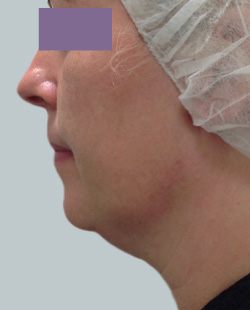
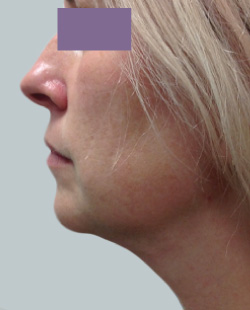
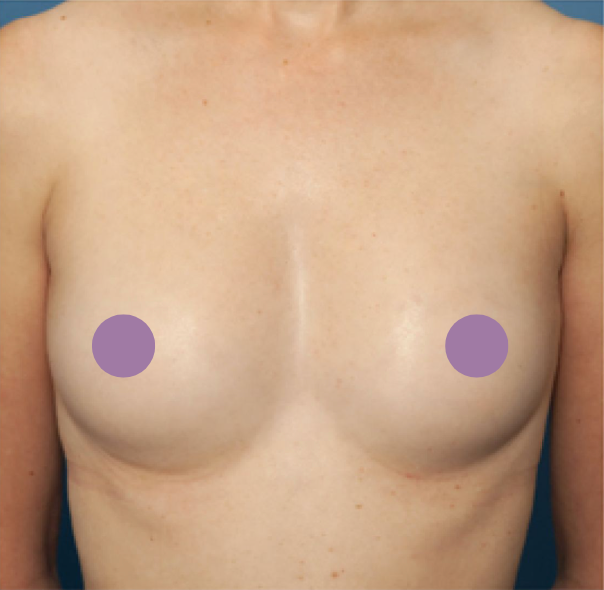
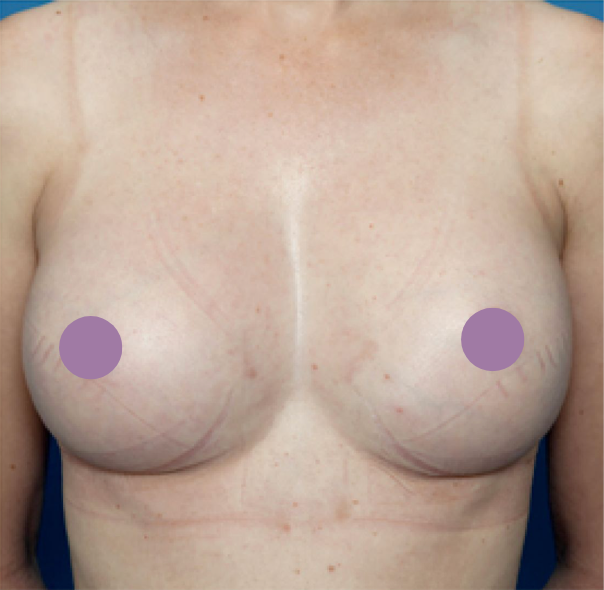
Laser treatment before and after photos
Before and after photographs are the usual way people judge laser and skin treatments. Of all the procedures on this site, these are the photographs where technique of photography matters most - because the thing being measured is the appearance of the skin surface itself.
Photographs are shown and discussed at consultation, where your practitioner can select cases relevant to your skin type and concern.
The standards these photos must meet
Before and after images used by registered health practitioners in Australia are governed by the Medical Board of Australia's Guidelines for advertising regulated health services.
- Images must be genuine - real patients, real results.
- Photographs on this website have been retouched only to protect patient privacy, never to enhance or alter the results of treatment.
- Images must carry a clear and prominent disclaimer that results may vary between individuals.
- Patients must consent to the use of their images.
Results may vary between individuals. A photograph records one person's outcome, not a prediction of yours.
Lighting is the whole game
Skin texture, fine lines and pores are read almost entirely through shadow. Light striking the skin from an angle throws a shadow into every crease and pore, making texture look pronounced. Flat, frontal, diffuse light fills those shadows and makes the same skin look smooth.
This means two photographs of untreated skin, taken under different lighting, can look like a convincing before and after. It is the single most common way skin treatment galleries mislead, and usually not deliberately - it happens whenever the before is taken in a treatment room and the after in a different room, or at a different time of day.
So: check that lighting direction, quality and colour temperature match. Standardised clinical photography systems exist precisely because of this problem.
Other things to check
- Makeup. Foundation removes pigmentation and evens texture instantly. Both frames should be bare-skinned.
- Same angle, same distance, same lens. Moving closer with a wider lens changes proportions and apparent texture.
- Same expression. Relaxed in both.
- Camera flash. Direct on-camera flash flattens texture dramatically. If one image has it and the other does not, it is not a comparison.
- Time elapsed. This varies enormously by treatment: an IPL result is judged at about six weeks; a Fraxel or CO2 result develops over three to six months as collagen remodels; Laser Genesis accumulates across a course of 4 to 10 sessions.
- How many sessions. A result from one treatment and a result from a course of eight are very different propositions at very different prices.
- Which device. IPL, Yag, Laser Genesis, Fraxel and CO2 do different things with different downtime and different risk. A CO2 result is not a guide to what a non-ablative treatment will do.
- What else was done. Where laser was combined with peels, needling, injectables or surgery, the change is not attributable to the laser alone.
Why your result will differ
Outcomes vary with your skin type, the specific condition being treated, its depth, your age, how you heal, how many sessions you complete, and how strictly you protect the treated skin from sun afterwards.
Skin type is decisive in two ways: it determines which devices and settings can safely be used, and it determines the risk of pigment change. Someone with fair skin and someone with darker skin having the same nominal treatment are not having the same treatment.
What photographs do not show
- The recovery. Days of redness, crusting and peeling after ablative treatment; the phototoxic-reaction risk period after PDT; the darkening-then-flaking phase after IPL.
- Durability. Pigmentation and vessels recur, particularly with ongoing sun exposure. A photograph at three months does not show three years.
- Complications. Burns, blistering, post-inflammatory hyperpigmentation, permanent hypopigmentation and scarring do not appear in a gallery.
- Whether the treatment was the right one. No laser addresses loose skin or descended tissue. A gallery of good skin results tells you nothing about whether your concern is actually a surgical one.
Costs and consultation
Cost depends on the device, the area and the number of sessions. As at September 2024 and including GST, a skin assessment with a nurse or aesthetician is $50 and is redeemable on products or services; a consultation with a Cosmetic Doctor is $150.
Ask to see cases with a similar skin type and a similar starting condition to yours, and ask how long after treatment and after how many sessions each photograph was taken.
Risks
All light-based treatments carry risks, including redness, swelling, blistering and burns, changes in pigmentation which may be persistent, scarring, crusting, infection including reactivation of cold sores, prolonged redness, eye injury without protective eyewear, and little or no response. Risk is higher in darker skin types and in recently tanned skin.
Please read our information on the risks and complications of cosmetic surgery before proceeding.
Individual results may vary. Any surgical or invasive procedure carries risks. Before proceeding you should seek a second opinion from an appropriately qualified health practitioner.
Related pages
See laser cosmetic surgery, laser skin rejuvenation, CO2 laser, skin conditions, or all face procedures.
Images on This Page
-
https://www.meclinic.com.au/wp-content/uploads/2024/03/meclinic-logo.png
Me Clinic
-
https://www.meclinic.com.au/wp-content/uploads/2022/02/call.png
call
-
https://www.meclinic.com.au/wp-content/uploads/2026/04/ME_CLINIC_LOGO_JUST_FOR_ME_BOXED-2-scaled.png
(no alt text)
-
https://www.meclinic.com.au/wp-content/uploads/2025/11/dr-kode-photo.png
(no alt text)
-
https://www.meclinic.com.au/wp-content/uploads/2025/11/dr-amir-photo.png
(no alt text)
-
https://www.meclinic.com.au/wp-content/uploads/2024/03/Dr.-Mark-Doyle.png
(no alt text)
-
https://www.meclinic.com.au/wp-content/uploads/2025/11/gordon-photo.png
(no alt text)
-
https://www.meclinic.com.au/wp-content/uploads/2026/04/kwok-profile-picture.png
(no alt text)
-
https://www.meclinic.com.au/wp-content/uploads/2025/11/daniel-photo.png
(no alt text)
-
https://www.meclinic.com.au/wp-content/uploads/2025/11/dr-luis-photo.png
(no alt text)
-
https://www.meclinic.com.au/wp-content/uploads/2025/11/dr-tim-photo.png
(no alt text)
-
https://www.meclinic.com.au/wp-content/uploads/2025/11/michele-photo.png
(no alt text)
-
https://www.meclinic.com.au/wp-content/uploads/2022/03/cs3-double-chin-reduction-non-surgical-250x310px-before-1.jpg
(no alt text)
-
https://www.meclinic.com.au/wp-content/uploads/2022/03/cs3-double-chin-reduction-non-surgical-250x310px-after-1.jpg
(no alt text)
-
https://www.meclinic.com.au/wp-content/uploads/2025/04/Untitled-design-1.png
(no alt text)
-
https://www.meclinic.com.au/wp-content/uploads/2025/04/Untitled-design.png
(no alt text)
-
https://www.meclinic.com.au/wp-content/uploads/2022/02/malvern-map-thumb.jpg
(no alt text)
-
https://www.meclinic.com.au/wp-content/uploads/2024/02/acps.png
Australian Society Of Plastic Surgeons
-
https://www.meclinic.com.au/wp-content/uploads/2024/02/racs.png
Royal Australian College Of Surgeons
-
https://www.meclinic.com.au/wp-content/uploads/2024/02/fracs.png
fracs
-
https://www.meclinic.com.au/wp-content/uploads/2024/02/isaps.png
isaps
-
https://www.meclinic.com.au/wp-content/uploads/2024/02/cpca.png
(no alt text)
-
https://www.meclinic.com.au/wp-content/uploads/2022/02/auscop.png
College
-
https://www.meclinic.com.au/wp-content/uploads/2022/02/amav.png
AMA
-
https://www.meclinic.com.au/wp-content/uploads/2022/03/home-conctact-tab.jpg
(no alt text)
-
https://bat.bing.com/action/0?ti=56339805&Ver=2&mid=672f3fa4-7cdf-4b56-9b93-eda6e0aa40dc&bo=1&sid=80859170ac3311f1bde3fded96ffbf7a&vid=8085ae70ac3311f19d71e35c04e9f8a7&vids=0&msclkid=N&pi=918639831&lg=en-US&sw=1280&sh=720&sc=24&tl=Explore%20The%20Cosmetic%20Solutions%20Available%20At%20Me%20Clinic&p=https%3A%2F%2Fwww.meclinic.com.au%2F&r=<=1971&evt=pageLoad&sv=2&cdb=AQAQ&rn=374373
(no alt text)