Fat transfer to the face
Fat transfer to the face restores lost facial volume using your own body fat. It is also called autologous fat transplantation, facial fat grafting, or facial fat injection.
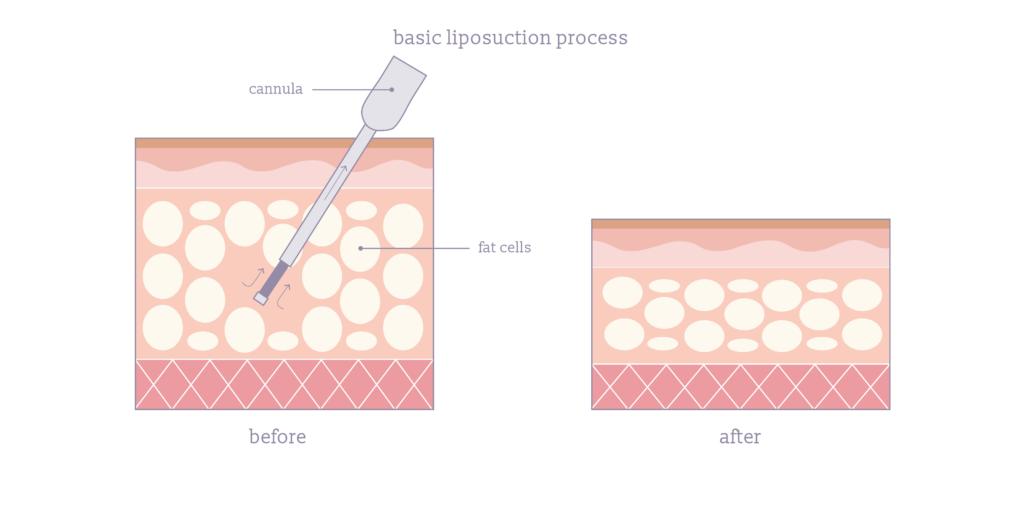
The procedure has two parts: fat is harvested from another part of the body by liposuction, purified, and then injected into the face to add volume, soften folds and change facial contour.
The central fact: not all of it survives
Transferred fat has to establish a new blood supply in its new location. Some of it does; some of it is reabsorbed by the body over the first few months.
This is the defining characteristic of the procedure, and it cuts both ways:
- The fat that survives can last for years - it is living tissue that behaves like the fat around it.
- How much survives is not predictable in advance. It varies with technique, the area injected, and the individual. This is why a top-up procedure is sometimes needed, and why the result should be judged at several months rather than at two weeks.
- Surviving fat behaves like fat. If you gain significant weight afterwards, transferred fat can enlarge with the rest.
Anyone describing the result as simply permanent is overstating what is knowable.
What it is used for
- Cheeks - restoring mid-face fullness
- Under-eyes and tear troughs - filling hollowing that creates shadow
- Nasolabial folds - softening deep folds
- Lips - adding volume
- Jawline and chin - definition and proportion
- Temples - correcting hollowing
- Forehead and brows - restoring volume
- Scars and depressions - evening out indentations
Like any volume treatment, it does not lift descended tissue. Where the problem is skin laxity rather than volume loss, a facelift is the relevant procedure - and the two are often combined.
The procedure
Performed under local or general anaesthesia depending on the extent of the work.
1. Harvesting
Fat is taken from an area with excess - typically the abdomen, thighs, hips, flanks or lower back - using gentle liposuction with a small fine cannula, which limits damage to the fat cells. Tumescent fluid (saline, local anaesthetic and adrenaline) is infiltrated first to reduce bleeding and discomfort. Only small volumes are taken, so the donor site remains smooth.
2. Purification
The harvested fat is centrifuged or filtered to separate viable fat cells from fluid, blood and oil. The purified fat is processed into micro-fat or nano-fat particles depending on where it is going.
Purification matters because it removes material that impairs fat survival, reduces the risk of lumps and irregularity, and improves how long the graft lasts.
3. Injection
The fat is injected in small droplets, across multiple passes and at different depths, rather than as a single bolus. This is deliberate: small droplets sit closer to a blood supply and are more likely to survive, and spreading the fat produces a smoother contour.
Too much fat placed in one spot survives poorly and can produce lumpiness or asymmetry, which is why the technique is gradual and layered.
How it compares with dermal fillers
The two are different tools rather than better and worse. What actually differs:
| Fat transfer | Hyaluronic acid filler | |
|---|---|---|
| Material | Your own fat | Manufactured gel |
| Duration | The portion that survives can last years | Typically 6 to 18 months |
| Predictability | Variable - some reabsorption always occurs | Volume placed is the volume you get |
| Reversibility | Not reversible; correction requires surgery | Can be dissolved with hyaluronidase |
| Procedure | Surgical; requires a donor site and anaesthesia | In-clinic injection |
| Downtime | Around 1 to 2 weeks | Usually 1 to 3 days |
| Cost pattern | Higher once; no routine top-ups | Lower each time; ongoing maintenance |
The trade-off is straightforward: filler is predictable and reversible but temporary; fat is longer-lasting but less predictable and cannot be dissolved if you dislike it. Both carry risks, set out below and on the volume enhancing treatments page.
Who it may suit
- People in good general health
- Non-smokers, or those willing to stop - smoking reduces fat survival and impairs healing
- People who have lost facial volume through ageing, weight loss, genetics, trauma or illness
- People with sufficient fat at a donor site to harvest
- People with realistic expectations - understanding that some fat is reabsorbed and results take months to settle
- People whose weight is stable
Very lean patients may not have enough donor fat. That is assessed at consultation.
Recovery
- Swelling and bruising peak in the first three to four days and improve over three to four weeks.
- Discomfort is usually mild and manageable with prescribed or over-the-counter pain relief.
- The donor site also bruises and is tender, and may require a compression garment.
- Fat reabsorption occurs over the first few months before the result settles.
Aftercare
- Avoid touching, massaging or applying pressure to treated areas for at least two weeks - pressure displaces newly grafted fat before it establishes a blood supply
- Sleep with your head elevated for the first week
- No intense exercise for two to three weeks; light activity after a few days
- Cold compresses in the first 48 hours
- Stay hydrated and eat well
- Avoid smoking and alcohol - both impair fat survival and prolong recovery
Risks and complications
Fat transfer is surgery and carries the risks of both liposuction and injection.
At the face:
- Swelling, bruising, pain and tenderness
- Asymmetry, over-correction or under-correction
- Unpredictable fat survival, requiring a further procedure
- Lumps, irregularity or visible nodules
- Fat necrosis - grafted fat that does not survive can form firm lumps or oil cysts, and can calcify
- Infection
- Changes in sensation
- Fat embolism - fat entering a blood vessel. This is rare, but it is the reason injection technique in the face matters: consequences can include skin necrosis, and in the most serious reported cases vision loss or stroke. Risk is higher in areas such as the glabella and around the nose
At the donor site:
- Bruising, swelling and tenderness
- Contour irregularity or dimpling
- Infection
- Changes in sensation
- Scarring at the cannula entry points
General: anaesthesia complications, bleeding and haematoma, delayed healing, deep vein thrombosis and pulmonary embolism, and an unsatisfactory result requiring revision.
Because the fat is your own, allergy to a foreign material does not arise. That does not remove the risks above.
Seek urgent medical attention for severe or increasing pain, skin blanching or discolouration, or any change in vision after treatment.
Please read our information on the risks and complications of cosmetic surgery before proceeding.
Combining procedures
Fat transfer can be performed alone or alongside eyelid surgery, a thread lift or a facelift. Combining addresses volume and descent in one operation and one recovery.
Cost and booking
Cost depends on the number of areas treated, the volume of fat harvested and transferred, the anaesthetic and the facility. A personalised quote is provided at consultation.
As at September 2024 and including GST, a consultation with a Specialist Plastic Surgeon is $350. Since 1 July 2023, a GP referral is required before seeing a plastic surgeon about cosmetic surgery, and a cooling-off period applies before surgery can be booked.
Phone Me Clinic on 1300 852 050 or use the contact form. Me Clinic is at 4 Burke Road, Malvern East VIC 3145.
Related pages
See volume enhancing treatments, facelift, anti-ageing procedures, liposuction, or all face procedures.
Individual results may vary. Any surgical or invasive procedure carries risks. Before proceeding you should seek a second opinion from an appropriately qualified health practitioner.
Images on This Page
-
https://www.meclinic.com.au/wp-content/uploads/2024/03/meclinic-logo.png
Me Clinic
-
https://www.meclinic.com.au/wp-content/uploads/2022/02/call.png
call
-
https://www.meclinic.com.au/wp-content/uploads/2024/11/Thread-Lift-Trends-featured-image-theme-Featured-Image.png
Thread Lift Trends featured image theme Featured Image
-
https://www.meclinic.com.au/wp-content/uploads/2024/11/basic-liposuction-infograph-1024x512.png
(no alt text)
-
https://www.meclinic.com.au/wp-content/uploads/2024/11/magnifying-glass-purple-question-300x300.jpg
(no alt text)
-
https://www.meclinic.com.au/wp-content/uploads/2024/11/candidates-question-marks-1-300x300.jpg
(no alt text)
-
https://www.meclinic.com.au/wp-content/uploads/2024/11/desin-hour-glass-icon-300x300.jpg
(no alt text)
-
https://www.meclinic.com.au/wp-content/uploads/2024/11/book-slightly-flicked-purple-300x300.jpg
(no alt text)
-
https://www.meclinic.com.au/wp-content/uploads/2025/11/dr-kode-photo.png
(no alt text)
-
https://www.meclinic.com.au/wp-content/uploads/2024/02/acps.png
(no alt text)
-
https://www.meclinic.com.au/wp-content/uploads/2024/02/racs.png
(no alt text)
-
https://www.meclinic.com.au/wp-content/uploads/2024/02/fracs.png
(no alt text)
-
https://www.meclinic.com.au/wp-content/uploads/2024/02/isaps.png
(no alt text)
-
https://www.meclinic.com.au/wp-content/uploads/2024/02/cpca.png
(no alt text)
-
https://www.meclinic.com.au/wp-content/uploads/2022/02/auscop.png
(no alt text)
-
https://www.meclinic.com.au/wp-content/uploads/2022/02/amav.png
(no alt text)
-
https://www.meclinic.com.au/wp-content/uploads/2022/03/channel7.png
(no alt text)
-
https://www.meclinic.com.au/wp-content/uploads/2022/03/channel9.png
(no alt text)
-
https://www.meclinic.com.au/wp-content/uploads/2022/03/channel10.png
(no alt text)
-
https://www.meclinic.com.au/wp-content/uploads/2022/03/abc.png
(no alt text)
-
https://www.meclinic.com.au/wp-content/uploads/2022/02/malvern-map-thumb.jpg
(no alt text)
-
https://www.meclinic.com.au/wp-content/uploads/2022/03/home-conctact-tab.jpg
(no alt text)
-
https://bat.bing.com/action/0?ti=56339805&Ver=2&mid=05c275d1-e47f-4c60-9307-772f8bb72dfe&bo=1&sid=0615ed90ac4311f1865e234174b46fe3&vid=06166060ac4311f1b4cee11a82ff25cf&vids=0&msclkid=N&pi=918639831&lg=en-US&sw=1280&sh=720&sc=24&tl=Fat%20Transfer%20to%20Face%20-%20Surgical%20Facial%20Volumiser%20%7C%20Me%20Clinic&p=https%3A%2F%2Fwww.meclinic.com.au%2Fface%2Ffat-transfer-to-face%2F&r=<=2942&evt=pageLoad&sv=2&cdb=AQAQ&rn=848444
(no alt text)