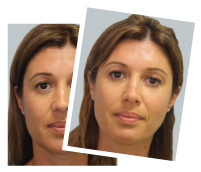
Blepharoplasty before and after photos
Before and after photographs are a useful way to understand what eyelid surgery changes. The eye area is expressive and mobile, which makes these photographs more sensitive to how they were taken than most.
Photographs are shown and discussed at consultation, where your surgeon can select cases relevant to your anatomy.
The standards these photos must meet
Before and after images used by registered health practitioners in Australia are governed by the Medical Board of Australia’s Guidelines for advertising regulated health services.
- Images must be genuine — real patients, real results.
- Photographs on this website have been retouched only to protect patient privacy, never to enhance or alter the results of the surgery.
- Images must carry a clear and prominent disclaimer that results may vary between individuals.
- Patients must consent to the use of their images.
Results may vary between individuals. A photograph records one person’s outcome, not a prediction of yours.
Three different things make an upper lid look heavy
This is the most important section on the page, because it is the reason a gallery can be entirely genuine and still tell you nothing about your own case. “Hooded” or “heavy” upper eyelids are produced by at least three separate problems, each needing a different operation.
| What is happening | What it looks like | What corrects it |
|---|---|---|
| Brow descent | The whole brow has dropped, pushing skin down onto the lid. The heaviness is above the eye rather than in it. | A brow lift. Eyelid surgery alone can make this look worse, by removing the skin that was masking a low brow. |
| Excess eyelid skin | Loose skin resting on or over the lashes, with a normal brow position and a normal lid edge. | Upper blepharoplasty — the operation this page is about. |
| Ptosis — the lid itself sitting low | The lid margin, the edge with the lashes, sits lower than it should over the eye. Often one side more than the other. | A different operation on the lid-raising mechanism. Removing skin does not fix it. |
Most people have some combination. The consequence is blunt: someone in a gallery whose result looks like what you want may have had a different operation from the one you need.
Three tests you can do in a mirror
- The brow test. Look straight ahead, relaxed. Place a fingertip just above the outer end of an eyebrow and gently lift it to where it used to sit. If the heaviness largely resolves, a good part of your problem is brow position, not eyelid skin.
- The skin test. Hold the brow gently in its natural place so you are not lifting it, and look. Is there loose skin resting on the lashes or hanging over the lid edge? That is skin — the thing a blepharoplasty removes.
- The lid margin test. Look straight into the mirror with both eyes open and relaxed. See where the lid edge crosses the coloured part of the eye. A lid that covers noticeably more on one side than the other, or that comes down over part of the pupil, is behaving like ptosis, and that is a different conversation.
The forehead test
Worth doing, because almost nobody realises they are doing it. People with heavy lids unconsciously recruit the forehead to hold the brows up all day — which is why the forehead lines get deeper and why a “before” photograph so often shows raised brows.
Press the palm of your hand firmly across your forehead to stop the brows lifting, then open your eyes fully. If that is noticeably harder, or your field of view drops, you have been compensating — and that matters, because a photograph of you with your forehead relaxed will look heavier than you think you look, and a photograph with it working will look lighter.
It is also the reason to be careful reading any gallery: if the brows are raised in the before and relaxed in the after, part of what you are seeing is a forehead, not an operation.
How to read an eyelid surgery photo
- Same gaze, same expression. Look for both frames with the eyes in the same position — looking straight at the camera, relaxed. A photograph taken looking slightly downward makes the upper lid look heavier; looking slightly up opens it. Raised brows in one frame change everything.
- Brow position. Many people unconsciously raise their brows to lift a heavy lid. If the brows are raised in the before and relaxed in the after, part of what you are seeing is brow position, not surgery.
- Lighting. Under-eye bags and hollows are shadows. Light from above deepens them; flat light removes them. This is the most common way lower eyelid galleries mislead.
- Time elapsed. Bruising and swelling peak at two to three days and improve over one to two weeks, but the eyelid continues to settle for months. Scars in the upper lid crease mature over about a year.
- Makeup. Eye makeup changes the apparent shape of the lid entirely. Both frames should be without it.
- Which operation. Upper blepharoplasty, lower blepharoplasty, both together, and a brow lift produce different changes. A combined result is not a guide to what upper eyelid surgery alone will do.
Four different things under the eye
The same problem applies below the eye, and here the confusion is worse, because three of the four are not solved by surgery at all.
- A true fat bag. Fat bulging forward through a weakening barrier. It is a volume, it sits proud of the surrounding skin, and it is what lower blepharoplasty removes or repositions.
- A hollow, not a bag. Volume loss at the junction between the lower lid and the cheek, creating a groove. The “bag” you see is the normal tissue above a trough. Removing anything makes it worse; this is usually a volume problem.
- A shadow. Cast by either of the above, and by the shape of the bone around the eye socket. It is not tissue at all.
- Pigment. Genuine darkening of the skin, common and often familial, particularly in darker and olive skin. No amount of surgery changes it.
How to tell them apart at home
- Change the light. Stand facing a window, then move so the light comes from above. A hollow and a shadow change dramatically between the two. A true fat bag changes much less — it is still there when the light is flat.
- Tilt your head back while watching in a mirror. Shadows shift and often vanish; a bulge of fat stays where it is.
- Press gently on the eye through the closed lid. A true fat bag tends to become more prominent. This is a crude test and not a diagnosis, but it separates volume from shadow.
- Stretch the skin gently sideways. Pigment moves with the skin and stays dark. A shadow disappears.
The practical value is money. Surgery for a hollow, a shadow or pigment will disappoint you — and those three between them account for a great many people who arrive asking for lower eyelid surgery.
What to look for in a good result
- Preserved eye shape. The eyes should look like the same person’s eyes, less heavy. A rounded or startled appearance suggests over-correction.
- A natural lid platform in the upper lid — visible, but not hollowed out. Removing too much upper eyelid fat produces a skeletal look that is difficult to correct.
- Lower lid position. The lower lid should sit against the eye. A lid pulled downward, showing white below the iris where it did not before, indicates lid retraction or ectropion — a recognised complication.
- Symmetry, within reason. Most faces are naturally slightly asymmetric around the eyes, before and after.
- The scar. In upper blepharoplasty it sits in the natural crease. In lower blepharoplasty performed from inside the lid there is no external scar; where a subciliary incision was used, it sits just below the lashes.
One more, easy to check and rarely mentioned: does the person still look like themselves? The eyes carry more identity than any other feature, and an eye area that reads as somebody else’s — rounder, more open, differently shaped — is not a better result, however smooth the lid.
Why your result will differ
Outcomes vary with eyelid anatomy, skin thickness and quality, the amount and position of fat, brow position, bone structure around the eye socket, age, ethnicity-related anatomical differences, and healing.
Two factors are often decisive and are not obvious in a photograph:
- Whether the underlying problem was actually the eyelid. Descended brows, eyelid ptosis and under-eye pigmentation are different problems requiring different treatment. Someone whose gallery result looks like what you want may have had a different operation to the one you need.
- The lower lid’s supporting structures. A lower lid that is already lax before surgery behaves differently afterwards and may need additional support at the time of the operation.
Anatomy varies between people in ways that make some comparisons meaningless. The presence, height and shape of the upper lid crease differ markedly between individuals and between ethnic groups, and an operation planned to preserve a particular anatomy is a different operation from one planned to create a different one. A result photographed on eyelid anatomy unlike yours is a demonstration of technique, not a forecast.
What to ask to be shown
- Cases where the same operation was performed that is proposed for you — upper alone, lower alone, both, or with a brow lift
- Cases with similar anatomy, including brow position and crease shape
- Both frames with the brows relaxed, and the same gaze in each
- Both frames without eye makeup
- A result at twelve months, when the scar has matured and the lid has settled
- The upper lid scar, photographed with the eyes open and closed
- A case that needed revision, and what was done
What you should leave with
- A clear statement of which of the three upper-lid problems you actually have — brow, skin, lid position, or a combination
- For the lower lid, whether what you are seeing is fat, hollow, shadow or pigment
- Which operation is proposed, and what it will and will not change
- Baseline photographs taken with brows relaxed, in standard conditions
- Where the scars will sit, and what they look like at twelve months
- A written, itemised quote, including whether an MBS item may apply
- The risks in writing, to take home and read
Costs and consultation
Upper blepharoplasty $8,000 to $12,000; lower $9,000 to $13,000; both together $15,000 to $18,000. As at September 2024 and including GST, a consultation with a Specialist Plastic Surgeon is $350. Where overhanging upper eyelid skin is documented to impair the upper visual field, MBS item 45618 may apply.
That last point is worth pursuing rather than assuming. If skin is genuinely obstructing your upper field of vision, this may be a functional rather than a purely cosmetic problem, and documenting it properly — which usually means a visual field test — changes what you pay. Ask at consultation whether you should be assessed for it. We are not a no-gap provider, so an out-of-pocket cost applies either way.
Since 1 July 2023, all patients are required to have a GP referral before seeing a plastic surgeon or doctor about cosmetic surgery.
Risks
All surgical procedures carry risks and potential complications, including infection, bleeding and haematoma, scarring, dry eye, difficulty closing the eyes fully, ectropion or lower lid retraction, asymmetry, over-correction or under-correction, changes in sensation, double or blurred vision, rare loss of vision, anaesthesia complications, and the possible need for revision surgery.
Please read our information on the risks and complications of cosmetic surgery before proceeding.
Any surgical or invasive procedure carries risks. Before proceeding you should seek a second opinion from an appropriately qualified health practitioner.
Expected, versus call us, versus seek urgent care
- Expected: bruising and swelling peaking at two to three days and improving over one to two weeks, tightness, dryness or grittiness in the eyes, and a scar that is pink for months.
- Call us: increasing rather than settling pain; spreading redness or heat; discharge; a wound that opens; asymmetry you can see once swelling has gone; persistent dryness or difficulty closing the eyes.
- Seek urgent medical attention: sudden severe pain behind the eye, rapidly increasing swelling or bruising, or any change in vision. Those are time-critical.
Booking
Me Clinic, 4 Burke Road, Malvern East VIC 3145. Phone 1300 852 050 or (03) 9569 3511, or use the online consultation form.
Related: eye area surgery, upper blepharoplasty, lower blepharoplasty.
Common questions about blepharoplasty before and after photos
What rules govern these photographs?
The Medical Board of Australia’s Guidelines for advertising regulated health services. Images must be genuine, carry a clear disclaimer that results vary, and be used with the patient’s consent.
Are they edited?
Those on this website have been retouched only to protect patient privacy, never to enhance or alter the results of surgery.
Why can a genuine gallery still mislead me?
Because “heavy” upper eyelids are produced by at least three separate problems — brow descent, excess eyelid skin, and ptosis — each needing a different operation. Someone whose result looks like what you want may have had a different operation from the one you need.
How do I know whether it is my brow?
Place a fingertip just above the outer end of an eyebrow and gently lift it to where it used to sit. If the heaviness largely resolves, a good part of your problem is brow position rather than eyelid skin.
How do I know whether it is skin?
Hold the brow gently in its natural place so you are not lifting it, and look for loose skin resting on the lashes or hanging over the lid edge.
What is ptosis?
The lid margin itself — the edge carrying the lashes — sitting lower than it should over the eye, often one side more than the other. It needs a different operation, and removing skin does not fix it.
What is the forehead test?
Press your palm firmly across your forehead to stop the brows lifting, then open your eyes fully. If that is noticeably harder, or your field of view drops, you have been unconsciously using your forehead to hold the brows up.
Why does that matter for photographs?
Because if the brows are raised in the before and relaxed in the after, part of what you are seeing is a forehead rather than an operation.
What should I check about the gaze?
That both frames have the eyes in the same position, looking straight at the camera and relaxed. Looking slightly down makes the upper lid look heavier; looking slightly up opens it.
Why do lower eyelid galleries mislead most?
Because under-eye bags and hollows are largely shadows. Light from above deepens them and flat light removes them, so a change in lighting alone can produce an apparent result.
What are the four things under the eye?
A true fat bag; a hollow, where the “bag” is normal tissue above a trough; a shadow cast by either of those or by the bone around the socket; and pigment, which is genuine darkening of the skin.
Which of those does surgery fix?
Only the fat bag. Surgery for a hollow, a shadow or pigment will disappoint you — and those three between them account for a great many people who arrive asking for lower eyelid surgery.
How do I tell which I have?
Change the light and see what moves: a hollow and a shadow change dramatically, a fat bag much less. Tilt your head back — shadows shift, a bulge stays. Stretch the skin gently sideways — pigment moves with it and stays dark, a shadow disappears.
How long until the after photograph is meaningful?
Bruising and swelling peak at two to three days and improve over one to two weeks, but the eyelid settles for months and the upper lid scar matures over about a year.
Should there be makeup in the photographs?
No. Eye makeup changes the apparent shape of the lid entirely, and both frames should be without it.
What does a good result look like?
Preserved eye shape; a visible but not hollowed-out upper lid platform; a lower lid sitting against the eye; reasonable symmetry; a well-placed scar — and a person who still looks like themselves.
What suggests over-correction?
A rounded or startled appearance, a skeletal upper lid from removing too much fat, or a lower lid pulled down showing white below the iris where it did not before.
Why does looking like yourself matter?
Because the eyes carry more identity than any other feature, and an eye area that reads as somebody else’s is not a better result however smooth the lid.
Why will my result differ?
Eyelid anatomy, skin thickness and quality, the amount and position of fat, brow position, the bone around the eye socket, age, ethnicity-related anatomical differences, and healing.
Does eyelid anatomy vary that much?
Yes. The presence, height and shape of the upper lid crease differ markedly between individuals and between ethnic groups, and an operation planned to preserve a particular anatomy is a different operation from one planned to change it.
What about a lax lower lid?
A lower lid already lax before surgery behaves differently afterwards and may need additional support at the time of the operation.
What should I ask to be shown?
Cases with the same operation and similar anatomy, both frames with brows relaxed and the same gaze, no eye makeup, a twelve-month result, the upper lid scar photographed with eyes open and closed, and a case that needed revision.
Might Medicare cover any of it?
Where overhanging upper eyelid skin is documented to impair the upper visual field, MBS item 45618 may apply. Ask at consultation whether you should be assessed for it — it usually means a visual field test, and it changes what you pay. We are not a no-gap provider.
What does it cost?
Upper blepharoplasty $8,000 to $12,000; lower $9,000 to $13,000; both together $15,000 to $18,000; with a Specialist Plastic Surgeon consultation at $350, as at September 2024 including GST.
Do I need a referral?
Yes. Since 1 July 2023 all patients need a GP referral before seeing a plastic surgeon or doctor about cosmetic surgery.
What are the risks?
Infection, bleeding and haematoma, scarring, dry eye, difficulty closing the eyes fully, ectropion or lower lid retraction, asymmetry, over- or under-correction, changes in sensation, double or blurred vision, rare loss of vision, anaesthesia complications, and the possible need for revision surgery.
When should I seek urgent care?
Sudden severe pain behind the eye, rapidly increasing swelling or bruising, or any change in vision. Those are time-critical.
Individual results may vary. Any surgical or invasive procedure carries risks. Before proceeding you should seek a second opinion from an appropriately qualified health practitioner.
Images on This Page
-
https://www.meclinic.com.au/wp-content/uploads/2024/03/meclinic-logo.png
Me Clinic
-
https://www.meclinic.com.au/wp-content/uploads/2022/02/call.png
call
-
https://www.meclinic.com.au/wp-content/uploads/2022/03/cs12-COS-Before-Upper-Bleph-Lower-Bleph-_-Deep-FX-250x310-Preview.png
(no alt text)
-
https://www.meclinic.com.au/wp-content/uploads/2022/03/cs1-anti-wrinkle-200x171-1.png
(no alt text)
-
https://www.meclinic.com.au/wp-content/uploads/2022/03/cs1-dermal-fillers-200x171-05.png
(no alt text)
-
https://www.meclinic.com.au/wp-content/uploads/2022/03/cs1-Laser-skin-cosmetic-rejuvention_casestudy1.png
Laser Cosmetic Surgery
-
https://www.meclinic.com.au/wp-content/uploads/2024/02/acps.png
(no alt text)
-
https://www.meclinic.com.au/wp-content/uploads/2024/02/racs.png
(no alt text)
-
https://www.meclinic.com.au/wp-content/uploads/2024/02/fracs.png
(no alt text)
-
https://www.meclinic.com.au/wp-content/uploads/2024/02/isaps.png
(no alt text)
-
https://www.meclinic.com.au/wp-content/uploads/2024/02/cpca.png
(no alt text)
-
https://www.meclinic.com.au/wp-content/uploads/2022/02/auscop.png
(no alt text)
-
https://www.meclinic.com.au/wp-content/uploads/2022/02/amav.png
(no alt text)
-
https://www.meclinic.com.au/wp-content/uploads/2022/03/channel7.png
(no alt text)
-
https://www.meclinic.com.au/wp-content/uploads/2022/03/channel9.png
(no alt text)
-
https://www.meclinic.com.au/wp-content/uploads/2022/03/channel10.png
(no alt text)
-
https://www.meclinic.com.au/wp-content/uploads/2022/03/abc.png
(no alt text)
-
https://www.meclinic.com.au/wp-content/uploads/2022/02/malvern-map-thumb.jpg
(no alt text)
-
https://www.meclinic.com.au/wp-content/uploads/2022/03/home-conctact-tab.jpg
(no alt text)
-
https://bat.bing.com/action/0?ti=56339805&Ver=2&mid=92e2e04e-1b00-4c48-b6e9-5ef99dca4461&bo=1&sid=05bb42a0ac3311f18679430ebad91930&vid=05bb7630ac3311f19a64c5abb17b62d7&vids=0&msclkid=N&pi=918639831&lg=en-US&sw=1280&sh=720&sc=24&tl=Blepharoplasty%20-%20Eyelid%20Surgery%20By%20Skilled%20Surgeons&p=https%3A%2F%2Fwww.meclinic.com.au%2Fface%2Feye-area-surgery%2Fbefore-and-after%2F&r=<=3277&evt=pageLoad&sv=2&cdb=AQAQ&rn=804267
(no alt text)