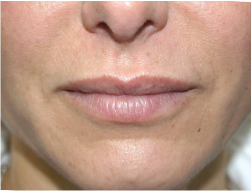
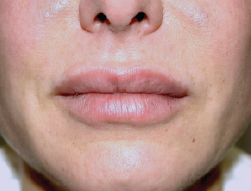
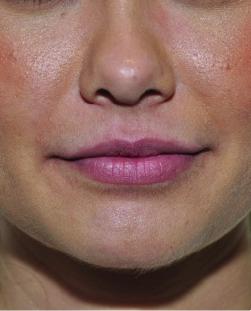
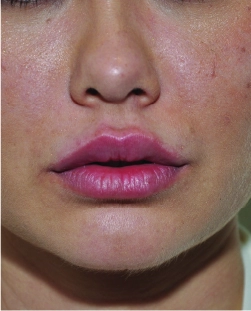
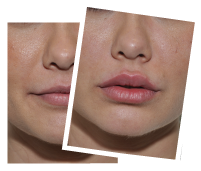
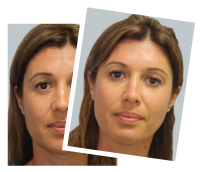
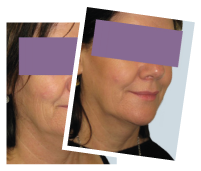
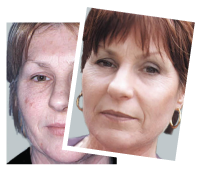
Volume enhancing before and after photos
Before and after photographs are the most common way people judge dermal filler treatment. They are also easy to over-read, and in this area a photograph can flatter a result that has not settled or that will not last.
Photographs are shown and discussed at consultation, where your practitioner can select cases relevant to your anatomy.
The standards these photos must meet
Before and after images used by registered health practitioners in Australia are governed by the Medical Board of Australia's Guidelines for advertising regulated health services.
- Images must be genuine - real patients, real results.
- Photographs on this website have been retouched only to protect patient privacy, never to enhance or alter the results of treatment.
- Images must carry a clear and prominent disclaimer that results may vary between individuals.
- Patients must consent to the use of their images.
Results may vary between individuals. A photograph records one person's outcome, not a prediction of yours.
How long after the treatment?
This is the first question to ask, and it matters more with filler than almost any other treatment.
Immediately after injection, the treated area is swollen. Swelling adds volume - which is exactly what the treatment is meant to add - so an "after" photograph taken on the day, or in the first few days, shows the filler plus the swelling. That is not the result you will keep.
Lips are the clearest example: they swell more than any other area and can look markedly fuller for several days before settling considerably.
A meaningful after photograph is generally taken at around two weeks, once swelling has resolved and the product has integrated. Photographs taken immediately after treatment are useful for showing the change on the day, but they are not the settled result.
Other things worth checking
- Consistent lighting and angle. Filler works largely by changing how light falls across the face - filling a hollow removes a shadow. Change the lighting direction between two photographs and you change the shadows without touching the face. This is the single most common way filler galleries mislead.
- Head position. Tilting the chin up lifts the jawline and mid-face in a photograph. Both frames should have the same head position.
- Facial expression. A slight smile changes cheek volume, lip shape and nasolabial fold depth.
- Makeup, and lip colour in particular. A defined lip line drawn on is not a treatment result.
- How much product was used, and where. A change produced by a small amount in one area is a different proposition to one produced by several syringes across the face.
- What else was done. Where filler was combined with anti-wrinkle injections, skin treatments or a thread lift, the visible change is not attributable to the filler alone.
Why your result will differ
Outcomes vary with your underlying bone structure, skin thickness and quality, how much volume has been lost, the product used, the technique, and how your tissue responds.
Two people given the same volume in the same area can look quite different afterwards, because filler supports and reshapes existing tissue rather than replacing it.
What the photographs do not show
- How long it lasted. Filler is temporary - commonly six months to over a year depending on product, area and individual metabolism. Areas that move a lot, such as the lips, break it down faster. A gallery shows a moment, not the maintenance schedule.
- How the face moves. Over-filled tissue can look acceptable at rest and unnatural in motion. A still photograph cannot show this.
- Complications. Bruising, lumps, nodules appearing months later, delayed inflammatory reactions, and vascular occlusion do not appear in a curated gallery. Read the full risk list before treatment.
- Whether it was the right treatment. Where the real problem is skin laxity rather than volume loss, adding filler adds weight to descended tissue. A gallery of good outcomes does not tell you whether you are in that group - an examination does.
Costs
Cost depends on the type and volume of product used and the areas treated. Volumising treatments start from $590 per treatment. As at September 2024 and including GST, a consultation with a Cosmetic Doctor is $150.
Risks
Common effects include pain, redness, swelling, bruising, tenderness and temporary lumpiness. Other risks include asymmetry, over-correction, palpable or visible nodules that can appear weeks or months later, infection, delayed inflammatory reactions, allergic reaction, reactivation of cold sores, product migration, and Tyndall effect (bluish discolouration).
The most serious complication is vascular occlusion - product blocking a blood vessel - which can cause tissue death with permanent scarring and, where vessels supplying the eye are involved, vision loss that can be permanent. Seek urgent medical attention for severe or increasing pain, skin blanching or mottling, or any change in vision after treatment.
The full list is on the volume enhancing treatments page.
Individual results may vary. Any surgical or invasive procedure carries risks. Before proceeding you should seek a second opinion from an appropriately qualified health practitioner.
Related pages
See volume enhancing treatments, dissolving fillers, dermal filler costs, or all face procedures.
Images on This Page
-
https://www.meclinic.com.au/wp-content/uploads/2024/03/meclinic-logo.png
Me Clinic
-
https://www.meclinic.com.au/wp-content/uploads/2022/02/call.png
call
-
https://www.meclinic.com.au/wp-content/uploads/2022/03/cs3-Dermalfillertreatments-casestudy3-Lips-before250x310.png
(no alt text)
-
https://www.meclinic.com.au/wp-content/uploads/2022/03/cs3-Dermalfillertreatments-casestudy3-Lips-After-250x310-1.png
(no alt text)
-
https://www.meclinic.com.au/wp-content/uploads/2022/03/dermalfillertreatments-lips-before-250x310-1.webp
(no alt text)
-
https://www.meclinic.com.au/wp-content/uploads/2022/03/dermalfillertreatments-lips-after250x310.webp
(no alt text)
-
https://www.meclinic.com.au/wp-content/uploads/2022/03/cs2-lip-fillers-dermalfillers-200x171-1.png
(no alt text)
-
https://www.meclinic.com.au/wp-content/uploads/2022/03/cs1-dermal-fillers-200x171-05.png
(no alt text)
-
https://www.meclinic.com.au/wp-content/uploads/2022/03/cs4-doublechin-dermalfillers-200x171-1.png
(no alt text)
-
https://www.meclinic.com.au/wp-content/uploads/2022/03/cs2-laser-cosmetic-200x171_dermalfillertreatments-lips-casestudy-200x171-1.png
(no alt text)
-
https://www.meclinic.com.au/wp-content/uploads/2024/02/acps.png
(no alt text)
-
https://www.meclinic.com.au/wp-content/uploads/2024/02/racs.png
(no alt text)
-
https://www.meclinic.com.au/wp-content/uploads/2024/02/fracs.png
(no alt text)
-
https://www.meclinic.com.au/wp-content/uploads/2024/02/isaps.png
(no alt text)
-
https://www.meclinic.com.au/wp-content/uploads/2024/02/cpca.png
(no alt text)
-
https://www.meclinic.com.au/wp-content/uploads/2022/02/auscop.png
(no alt text)
-
https://www.meclinic.com.au/wp-content/uploads/2022/02/amav.png
(no alt text)
-
https://www.meclinic.com.au/wp-content/uploads/2022/03/channel7.png
(no alt text)
-
https://www.meclinic.com.au/wp-content/uploads/2022/03/channel9.png
(no alt text)
-
https://www.meclinic.com.au/wp-content/uploads/2022/03/channel10.png
(no alt text)
-
https://www.meclinic.com.au/wp-content/uploads/2022/03/abc.png
(no alt text)
-
https://www.meclinic.com.au/wp-content/uploads/2022/02/malvern-map-thumb.jpg
(no alt text)
-
https://www.meclinic.com.au/wp-content/uploads/2022/03/home-conctact-tab.jpg
(no alt text)
-
https://bat.bing.com/action/0?ti=56339805&Ver=2&mid=87730d67-6edf-4196-a91a-4707bf61b6c9&bo=1&sid=6f44c630ac3811f18e040b824767c84f&vid=6f44f4d0ac3811f1ac715fffa00ac86c&vids=1&msclkid=N&pi=918639831&lg=en-US&sw=1280&sh=720&sc=24&tl=Volume%20Enhancing%20Treatments%20-%20Before%20and%20After%20Insights&p=https%3A%2F%2Fwww.meclinic.com.au%2Fface%2Fdermal-filler-treatments%2Fbefore-and-after%2F&r=<=2848&evt=pageLoad&sv=2&cdb=AQAQ&rn=288898
(no alt text)