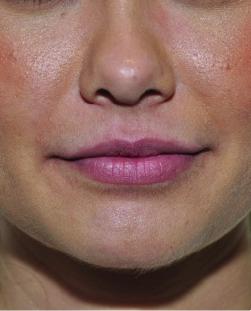
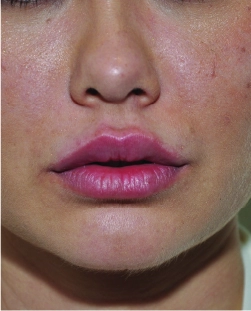
Facial volume enhancing treatments
Facial volume treatments - commonly called dermal fillers - are used to restore fullness lost over time, to enhance features such as the lips or jawline, or to improve facial balance. They are non-surgical and the effect is temporary.
This page explains what these treatments do, which areas are treated, how long results last, and the risks - including one serious complication everyone considering fillers should know about.
What causes facial volume loss
- Reduced collagen and elastin production
- Loss of facial fat and soft tissue support
- Bone resorption in structural areas - the cheeks, jawline and temples change shape with age
- Sun damage
- Weight loss and hormonal changes
The result is a flatter mid-face, deeper folds, thinner lips and shadows that can make the face look tired.
What the treatment involves
Most dermal fillers used today are gels based on hyaluronic acid, a substance that occurs naturally in skin and binds water. The gel is injected into or under the skin to add volume and support. Because hyaluronic acid fillers can be dissolved with an enzyme if needed, they offer a degree of reversibility that permanent fillers do not - one reason permanent and semi-permanent fillers are used far less often, and are harder to correct when a problem occurs.
See dissolving dermal fillers for more on that.
Areas commonly treated
- Cheeks - to restore mid-face fullness
- Lips - for shape, definition and fullness
- Jawline and chin - to define facial angles and contour
- Temples - where hollowing has developed
- Nasolabial folds - to soften the shadow between nose and mouth
- Under-eye region - a technically demanding area with a higher rate of visible complications such as lumpiness, prolonged swelling and a blue-grey discolouration known as the Tyndall effect
- Nose - see non-surgical nose augmentation, which carries particular vascular risk
What these treatments can and cannot do
They can restore contours lost through ageing or weight loss, support facial symmetry, define the jawline or lips, and soften folds.
They cannot lift loose skin. Where the concern is descended tissue and skin laxity rather than lost volume, filler adds weight to tissue that is already falling and can make the face look heavier rather than younger. That is a surgical problem - see facelift or thread lift. An honest assessment includes being told when filler is the wrong tool.
What to expect
Downtime is usually minimal, with most people returning to normal activity immediately. Redness, swelling, tenderness and bruising are common and generally settle within a few days - lips swell more than most areas and can be noticeably swollen for several days.
Results are visible almost immediately, with the final appearance clearer once swelling settles at around two weeks.
How long they last varies with the product, the area, and individual metabolism - commonly from around six months to over a year. Areas with more movement, such as the lips, typically break the product down faster. Maintenance treatments are needed to preserve the result.
Risks and complications
Common and expected effects include pain during injection, redness, swelling, bruising, tenderness and temporary lumpiness.
Other risks include:
- Asymmetry, over-correction or an unsatisfactory cosmetic result
- Palpable or visible lumps and nodules, which can appear weeks or months later
- Infection at the injection site, and rarely abscess formation
- Delayed inflammatory reactions, sometimes triggered by illness or vaccination months after treatment
- Allergic reaction
- Reactivation of cold sores when treating around the mouth
- Migration of product away from the intended site
- Tyndall effect - a bluish discolouration when product is placed too superficially
Vascular occlusion
The most serious complication is vascular occlusion - filler entering or compressing a blood vessel and blocking blood supply. This can cause tissue death (necrosis) with permanent scarring, and, where the vessels involved supply the eye, vision loss, which can be permanent. It is uncommon, but it is not theoretical, and it is the reason these treatments should be performed by a practitioner with detailed knowledge of facial vascular anatomy, in a setting where hyaluronidase is immediately available to dissolve the product.
The risk is higher in some areas than others - the nose, glabella (between the brows), nasolabial region and under-eye area carry more risk than the cheeks or jawline.
Seek urgent medical attention if after treatment you experience severe or increasing pain, blanching or mottled discolouration of the skin, or any change in vision.
Who should not be treated
Treatment is generally avoided where there is active infection or inflammation at the site, during pregnancy or breastfeeding, in people with a known allergy to the product, and in some autoimmune conditions. Disclose all previous filler treatments, including permanent fillers, and any planned dental work or vaccinations.
Costs
Cost depends on the type and volume of product used and the areas treated. Volumising treatments start from $590 per treatment. As at September 2024 and including GST, a consultation with a Cosmetic Doctor is $150. A personalised quote is provided at consultation.
Frequently asked questions
What are facial volume treatments used for?
Restoring lost fullness, enhancing contours, and softening folds and hollows in areas such as the cheeks, lips and under-eyes.
Will it look natural?
That depends on how conservatively it is done and on your anatomy. Over-treatment is the usual cause of an unnatural appearance, and it is more often a matter of volume than of technique. Asymmetry and an unsatisfactory result are recognised risks, which is why they are listed above.
How long do results last?
Commonly six months to over a year, varying by area, product and individual. Maintenance treatments are needed.
Is there downtime?
Usually minimal. Redness, swelling and bruising may occur and generally resolve within days.
Can it be reversed?
Hyaluronic acid fillers can be dissolved with hyaluronidase. This is also the emergency treatment for vascular occlusion. Permanent fillers cannot be dissolved.
Related pages
See before and after, dissolving fillers, non-surgical nose augmentation, dermal filler costs, or all face procedures.
Individual results may vary. Any surgical or invasive procedure carries risks. Before proceeding you should seek a second opinion from an appropriately qualified health practitioner.
Images on This Page
-
https://www.meclinic.com.au/wp-content/uploads/2024/03/meclinic-logo.png
Me Clinic
-
https://www.meclinic.com.au/wp-content/uploads/2022/02/call.png
call
-
https://www.meclinic.com.au/wp-content/uploads/2022/03/dermalfillertreatments-lips-before-250x310-1.webp
(no alt text)
-
https://www.meclinic.com.au/wp-content/uploads/2022/03/dermalfillertreatments-lips-after250x310.webp
(no alt text)
-
https://www.meclinic.com.au/wp-content/uploads/2025/11/gordon-photo.png
(no alt text)
-
https://www.meclinic.com.au/wp-content/uploads/2025/11/daniel-photo.png
(no alt text)
-
https://www.meclinic.com.au/wp-content/uploads/2024/02/acps.png
(no alt text)
-
https://www.meclinic.com.au/wp-content/uploads/2024/02/racs.png
(no alt text)
-
https://www.meclinic.com.au/wp-content/uploads/2024/02/fracs.png
(no alt text)
-
https://www.meclinic.com.au/wp-content/uploads/2024/02/isaps.png
(no alt text)
-
https://www.meclinic.com.au/wp-content/uploads/2024/02/cpca.png
(no alt text)
-
https://www.meclinic.com.au/wp-content/uploads/2022/02/auscop.png
(no alt text)
-
https://www.meclinic.com.au/wp-content/uploads/2022/02/amav.png
(no alt text)
-
https://www.meclinic.com.au/wp-content/uploads/2022/03/channel7.png
(no alt text)
-
https://www.meclinic.com.au/wp-content/uploads/2022/03/channel9.png
(no alt text)
-
https://www.meclinic.com.au/wp-content/uploads/2022/03/channel10.png
(no alt text)
-
https://www.meclinic.com.au/wp-content/uploads/2022/03/abc.png
(no alt text)
-
https://www.meclinic.com.au/wp-content/uploads/2022/02/malvern-map-thumb.jpg
(no alt text)
-
https://www.meclinic.com.au/wp-content/uploads/2022/03/home-conctact-tab.jpg
(no alt text)
-
https://bat.bing.com/action/0?ti=56339805&Ver=2&mid=7fa4f66c-ca3b-4b0c-8375-6c48b1201e75&bo=1&sid=05bb42a0ac3311f18679430ebad91930&vid=05bb7630ac3311f19a64c5abb17b62d7&vids=0&msclkid=N&pi=918639831&lg=en-US&sw=1280&sh=720&sc=24&tl=Volume%20Enhancing%20Treatments%20%7C%20Cheeks,%20Lips%20%26%20Jawline%20Contouring&p=https%3A%2F%2Fwww.meclinic.com.au%2Fface%2Fdermal-filler-treatments%2F&r=<=3310&evt=pageLoad&sv=2&cdb=AQAQ&rn=539010
(no alt text)