Anti-ageing procedures
Ageing is not a condition and there is nothing wrong with looking your age. But where the visible signs of ageing bother you, there are several different approaches — and they address different problems. Choosing well starts with understanding which problem you actually have.
We have been providing medical and skin rejuvenation treatments for over 35 years. Treatment plans are set at consultation after assessment.
The four things that change with age
Most facial ageing is a combination of four separate processes, and each responds to different treatment:
- Skin quality — texture, pigmentation, fine lines and thinning. Addressed by laser and skin treatments and by sun protection.
- Muscle-driven lines — lines created by repeated expression. Addressed by anti-wrinkle treatments.
- Volume loss — the face loses fat and bone support, producing hollows and shadows. Addressed by dermal fillers or fat transfer.
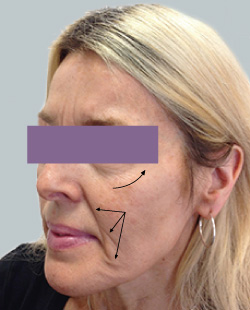
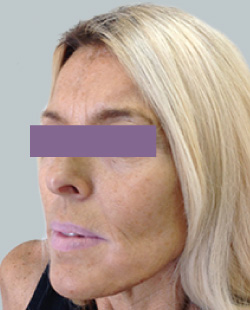
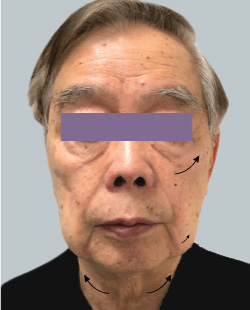
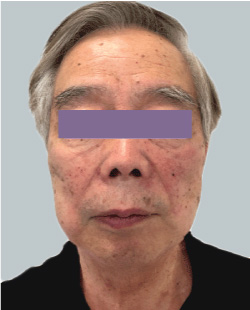
- Skin laxity and descent — tissue that has moved downward and skin that no longer retracts. This is the one that injectables do not fix. Addressing it means a thread lift or, for a significant change, a facelift or neck lift.
Treating volume loss with filler when the actual problem is descent adds weight to sagging tissue and can make the face look heavier. This is the most common mismatch, and a proper assessment should identify it.
Four tests, ten minutes, done at home
You can work out which of the four processes are at play in your own face before you speak to anybody. Do these in front of a mirror in even daylight, face clean and relaxed, and write down what you find.
1. The release test — for muscle-driven lines
Relax completely and look at the forehead, the space between the brows and the outer corners of the eyes. Then make the expression fully — frown hard, raise the brows, squint — hold for five seconds, and release.
- Line vanishes instantly: purely dynamic. Anti-wrinkle treatment is the direct answer.
- Line fades over a few seconds: in transition. Still mostly muscle, but the skin has begun to hold the fold.
- Line still there after twenty seconds, or visible before you started: static. Reducing movement will soften it over time, but the crease itself needs skin treatment too.
2. The lie-down test — volume loss versus descent
Lie flat on your back and hold a mirror above you, or have someone photograph you from directly overhead. Gravity is removed.
- Hollows still there lying down — temples, under the eyes, over the cheekbones: volume loss. Filler or fat transfer.
- Folds and jowls largely vanish lying down: descent. Lifting, not filling — and adding volume here makes it heavier.
- Both, which is usual after about fifty. Then the order matters, and that is a consultation question.
3. The recoil test — for skin elasticity
Pinch a small fold of skin on the back of your hand between thumb and forefinger, hold for five seconds, let go and count how long it takes to flatten completely. Repeat on the cheek, gently.
- Snaps back immediately: elasticity is good. Skin will cooperate with most treatments, and modest procedures read clearly.
- Takes a second or two: some elastic loss. Expect a smaller result from anything that depends on skin retracting.
- Stands as a ridge for several seconds: significant elastic loss. Nothing non-surgical makes skin retract meaningfully at this point, and being told that plainly is more useful than a course of treatments that cannot deliver it.
The back of the hand is the fast version; the cheek is the relevant one. They often disagree, and the difference is roughly the amount of sun the hand has taken.
4. The raking-light test — for skin quality
Stand at a window so the light falls across your face from one side rather than straight on, and look in a hand mirror. Angled light is unforgiving in exactly the way you want here.
- Brown patches and freckling: pigmentation — and worth having any single changing spot checked rather than treated.
- Redness or fine visible vessels: vascular, treated differently from pigment.
- Fine crepey lines that are not in expression areas: skin quality and thinning.
- Roughness and enlarged pores: texture.
Then do one thing more: close your eyes and run a fingertip over it. If you can see it but not feel it, it is colour rather than texture, and colour and texture are treated by different things.
Take the list you have written into the consultation. It converts “I look tired” into something that can actually be planned against, and it is the single best preparation you can do.
The options, side by side
| Treatment | Addresses | Downtime | Lasts | Reversible |
|---|---|---|---|---|
| Skin and laser treatments | Skin quality | None to weeks, by device | Maintained, with sun protection | n/a |
| Anti-wrinkle injections | Muscle-driven lines | Minimal | 3 to 6 months | No — must be waited out |
| Dermal filler | Volume loss | Days | 6 months to over a year | Largely, if hyaluronic acid |
| Fat transfer | Volume loss | Days to weeks | Long-lasting where fat survives | No |
| Factor4 | Skin quality | Minimal | Maintained | n/a |
| Thread lift | Mild to moderate descent | Days to weeks | 18 to 24 months | No |
| Facelift / neck lift | Significant descent and excess skin | Weeks, settling 6 to 12 months | Resets the starting point; ageing continues | No |
The column people skip is the last two together. A temporary treatment is a recurring cost; a permanent one is a decision. Both are legitimate; they are simply different purchases, and comparing a single filler appointment with a facelift is comparing the wrong numbers. Compare ten years of one with the other.
What order to do things in
Most people over forty have some of all four processes. Sequence saves money.
- Sun protection and skincare first, and permanently. They cost the least and do the most over decades, and every other treatment holds better on skin that is protected.
- Skin quality early. It is what people unconsciously read as health, and no injectable improves it.
- Volume before chasing folds. Restoring support frequently softens the fold you were going to treat directly.
- Movement lines whenever — they are independent of the rest.
- Decide about descent deliberately, not by default. Where the lie-down test says descent, years of injectables to postpone the decision cost more than the procedure and can end with a heavier face. Have the comparison early, even if the answer is “not yet”.
One thing at a time, with a gap
Treating several things in one appointment feels efficient and makes the result impossible to attribute. If three things are done at once and the outcome is disappointing, or something goes wrong, nobody can say which was responsible — including your practitioner.
Where it is reasonable to separate treatments, separating them is worth the extra visit. It is also the only way to learn what your own face responds to.
Anti-wrinkle injections
Repeated frowning, squinting and smiling create expression lines around the eyes and forehead. Anti-wrinkle injections temporarily relax the specific facial muscles producing those lines, softening their appearance.
The injection itself is described as a pin prick and no anaesthetic is required. The effect is not permanent — it typically lasts around three to six months and fades gradually, with duration varying between individuals. Like all medical procedures it carries risks, and it is not effective for everyone.
These are prescription medicines in Australia. They must be prescribed by a doctor following a consultation, and the law restricts what can be published about them, which is why no product name appears here.
One practical rule: start conservatively. Adding at a two-week review is straightforward; removing is impossible — an over-treated muscle has to be waited out over months. More on anti-wrinkle treatments, including the full risk list.
Dermal filler injections
The face loses volume from the mid-twenties onward — fat, and later bone support. Dermal fillers, usually hyaluronic acid gels, are injected to restore contour, soften folds or enhance features such as the lips.
Redness, swelling and tenderness in the treated areas afterward are common and usually settle within days. Duration varies with the product and area; some patients report effects lasting six to nine months or longer.
The serious risk with fillers is vascular occlusion — product blocking a blood vessel, which can cause tissue death and, rarely, permanent vision loss. Two questions worth asking before any filler treatment: is hyaluronidase in the room, and who do I ring after hours? More on volume enhancing treatments, including the full risk list.
Thread lift
A thread lift is a minimally invasive procedure in which absorbable sutures are placed under the skin to reposition tissue and stimulate collagen formation along their path. It is usually completed within about 30 minutes with limited downtime.
Areas that can be treated include the jawline, jowls, cheeks and mid-face, the under-eye hollow and the neck.
The threads and their anchoring cones dissolve over roughly 12 to 18 months, during which they stimulate collagen around the treated area. Me Clinic recommends a review with the treating doctor around 24 months afterward to assess whether a repeat procedure is appropriate.
A thread lift produces less change than a facelift and the effect is temporary. Risks include asymmetry, visible or palpable threads, puckering or dimpling of the skin, thread extrusion, infection, pain and an unsatisfactory result. Thread lift treatment with Dr Ku starts from $4,900. More on thread lifts.
Fat transfer to the face
Fat transfer uses your own fat rather than a manufactured product. Fat is harvested by liposuction from a donor site such as the abdomen, hips or buttocks, processed to remove excess fluid, and injected into the facial area.
Swelling generally settles within one to two days and bruising within five to ten days. Over the first few months a proportion of the transferred fat is reabsorbed by the body — this is expected, is unpredictable in extent, and is why a top-up procedure is sometimes needed. Where the fat survives, the result can be long-lasting.
Because it involves liposuction as well as injection, fat transfer carries the risks of both: bruising, swelling, infection, asymmetry, contour irregularity, fat necrosis, cyst formation, and the risks of the donor-site procedure and any anaesthetic used. More on fat transfer to face.
Factor4
Factor4 is an autologous treatment — prepared from your own blood — used for skin quality concerns including fine lines, creping and scarring. More on Factor4.
What none of these do
No treatment on this page stops ageing. They manage the visible signs of it, temporarily in most cases. The two interventions with the largest effect on how skin ages over decades are avoiding sun damage and not smoking — neither of which is a procedure, and both of which matter more than anything listed here.
See preventative cosmetic medicine for what the evidence actually supports, and why starting earlier costs more rather than less.
How to keep a plan from drifting
The pattern worth guarding against is not one bad decision. It is a series of small reasonable ones that accumulate, over years, into a face nobody chose.
- Keep your own photographs. Relaxed and fully animated, same light, same spot, dated, once a year. Memory is not a baseline.
- Review annually, and ask what would happen if you stopped. A plan worth continuing survives being paused.
- Notice additions. Anything new in the plan should be a decision with a reason, not something that appeared.
- Ask for the annual figure, not the per-appointment one.
- Ask directly whether the thing you are asking for is the right treatment — and take “no” as the useful answer it is.
Who this is not for
- Anyone who does not want it — there is no version of these pages that says you should.
- Anyone in the middle of a major life event or loss. Decisions made then are frequently regretted, and the standard advice to wait is good advice.
- Anyone whose distress about their appearance is out of proportion to what is visible. That is worth addressing on its own terms, and treatment does not resolve it. Screening for this is part of proper assessment, not an obstacle placed in your way.
- Anyone expecting to look like a different person, or like a photograph of someone else.
- Anyone being told that a course of non-surgical treatment will achieve what the recoil test above says it cannot.
What you should leave a consultation with
- Which of the four processes apply to you, named
- Which treatment addresses which, and what each will not do
- A sequence, with a reason for the order
- Costs: per treatment, per year, and over ten years
- Written risk information for anything injectable or surgical
- A review point, not an open-ended schedule
- A clear statement of anything you asked for that we would not recommend, and why
Consultation
A consultation is where the assessment above is made and options explained. As at September 2024 and including GST, a consultation with a Cosmetic Doctor is $150, with a Specialist Plastic Surgeon $350, and a skin assessment with a nurse or aesthetician $50, redeemable on products or services.
For cosmetic surgery — a facelift, neck lift or blepharoplasty — a GP referral has been required since 1 July 2023, and a cooling-off period applies before surgery can be booked or a deposit paid. Non-surgical treatments do not carry that referral requirement.
Cosmetic treatment is not covered by Medicare, and we are not a no-gap provider.
We are at 4 Burke Road, Malvern East VIC 3145, five minutes’ walk from Caulfield station. Appointments are generally available within 7 to 14 days. Phone 1300 852 050, or use the online consultation form.
Individual results may vary. Any surgical or invasive procedure carries risks. Before proceeding you should seek a second opinion from an appropriately qualified health practitioner.
Common questions about anti-ageing procedures
What are the four things that change with age?
Skin quality; muscle-driven expression lines; volume loss from fat and bone; and skin laxity with descent. Each responds to a different treatment.
Which one do injectables not fix?
Descent. Treating descent with filler adds weight to sagging tissue and can make the face look heavier — the most common mismatch there is.
How do I tell whether my problem is volume or descent?
Lie flat on your back and look in a mirror above you. Hollows still present lying down are volume loss. Folds and jowls that largely vanish are descent.
How do I tell whether a line is muscle or skin?
Make the expression fully, hold five seconds, release and watch. Vanishes instantly — dynamic, muscle. Fades slowly — in transition. Still there — static, and the crease now needs skin treatment too.
How do I check my skin’s elasticity?
Pinch a fold of skin, hold five seconds, release and count. Immediate flattening is good elasticity. A second or two is some loss. A ridge standing for several seconds is significant loss — and nothing non-surgical makes skin retract meaningfully at that point.
Why does the back of my hand differ from my cheek?
Roughly, the difference is the sun the hand has taken. The cheek is the relevant test for facial treatment.
How do I assess skin quality at home?
Stand so light falls across your face from one side and look in a hand mirror. Then close your eyes and feel the area — if you can see it but not feel it, it is colour rather than texture, and they are treated differently.
What order should treatments be done in?
Sun protection and skincare permanently; skin quality early; volume before chasing folds; movement lines whenever; and decide about descent deliberately rather than postponing it with injectables for years.
Should I have several things done at once?
Where they can reasonably be separated, separate them. Otherwise nothing can be attributed — including by your practitioner — if the result disappoints or something goes wrong.
How long do anti-wrinkle injections last?
Typically three to six months, fading gradually, varying between individuals.
Can anti-wrinkle treatment be reversed?
No. It has to be waited out over months, which is why a first treatment should be conservative with a review at two weeks to add if needed.
How long does dermal filler last?
Six months to over a year depending on product, area and individual metabolism.
What is the serious risk with filler?
Vascular occlusion — product blocking a blood vessel — which can cause tissue death and, rarely, permanent vision loss.
What should I ask before filler treatment?
Whether hyaluronidase is in the room, and who to ring after hours.
How long does a thread lift last?
The threads dissolve over roughly 12 to 18 months while stimulating collagen; a review at around 24 months assesses whether a repeat is appropriate. It produces less change than a facelift.
What are the risks of a thread lift?
Asymmetry, visible or palpable threads, puckering or dimpling, thread extrusion, infection, pain and an unsatisfactory result.
Does transferred fat last?
Some is reabsorbed over the first few months — expected, unpredictable in extent, and why a top-up is sometimes needed. Where the fat survives, the result can be long-lasting.
Why does fat transfer carry more risks than filler?
Because it involves liposuction as well as injection, so it carries the risks of both procedures and of any anaesthetic used.
What is Factor4?
An autologous treatment prepared from your own blood, used for skin quality concerns including fine lines, creping and scarring.
Do any of these stop ageing?
No. They manage the visible signs, temporarily in most cases. Avoiding sun damage and not smoking matter more over decades than anything on this page.
How do I keep a treatment plan from drifting?
Keep dated annual photographs, review yearly and ask what would happen if you stopped, notice anything added and why, ask for the annual cost, and treat a “no” from your practitioner as useful.
Who should not have these treatments?
Anyone who does not want them; anyone in the middle of a major life event or loss; anyone whose distress about appearance is out of proportion to what is visible; and anyone expecting to look like a different person.
Do I need a GP referral?
For cosmetic surgery — facelift, neck lift or blepharoplasty — yes, since 1 July 2023, with a cooling-off period before surgery can be booked or a deposit paid. Non-surgical treatments do not carry that requirement.
What do consultations cost?
A Cosmetic Doctor $150, a Specialist Plastic Surgeon $350, and a skin assessment with a nurse or aesthetician $50, redeemable on products or services — as at September 2024, including GST.
Images on This Page
-
https://www.meclinic.com.au/wp-content/uploads/2024/03/meclinic-logo.png
Me Clinic
-
https://www.meclinic.com.au/wp-content/uploads/2022/02/call.png
call
-
https://www.meclinic.com.au/wp-content/uploads/2022/03/cs4-ThreadLift-casestudy4-before-250x310-1.jpg
(no alt text)
-
https://www.meclinic.com.au/wp-content/uploads/2022/03/cs4-ThreadLift-casestudy4-After-250x310-1.jpg
(no alt text)
-
https://www.meclinic.com.au/wp-content/uploads/2022/03/cs6-threadlift-250x310-before.jpg
(no alt text)
-
https://www.meclinic.com.au/wp-content/uploads/2022/03/cs6-threadlift-250x310-after.jpg
(no alt text)
-
https://www.meclinic.com.au/wp-content/uploads/2025/11/gordon-photo.png
(no alt text)
-
https://www.meclinic.com.au/wp-content/uploads/2024/02/acps.png
(no alt text)
-
https://www.meclinic.com.au/wp-content/uploads/2024/02/racs.png
(no alt text)
-
https://www.meclinic.com.au/wp-content/uploads/2024/02/fracs.png
(no alt text)
-
https://www.meclinic.com.au/wp-content/uploads/2024/02/isaps.png
(no alt text)
-
https://www.meclinic.com.au/wp-content/uploads/2024/02/cpca.png
(no alt text)
-
https://www.meclinic.com.au/wp-content/uploads/2022/02/auscop.png
(no alt text)
-
https://www.meclinic.com.au/wp-content/uploads/2022/02/amav.png
(no alt text)
-
https://www.meclinic.com.au/wp-content/uploads/2022/03/channel7.png
(no alt text)
-
https://www.meclinic.com.au/wp-content/uploads/2022/03/channel9.png
(no alt text)
-
https://www.meclinic.com.au/wp-content/uploads/2022/03/channel10.png
(no alt text)
-
https://www.meclinic.com.au/wp-content/uploads/2022/03/abc.png
(no alt text)
-
https://www.meclinic.com.au/wp-content/uploads/2022/02/malvern-map-thumb.jpg
(no alt text)
-
https://www.meclinic.com.au/wp-content/uploads/2022/03/home-conctact-tab.jpg
(no alt text)
-
https://bat.bing.com/action/0?ti=56339805&Ver=2&mid=7e8acc80-1e5b-4d96-a820-c7ece7e59c23&bo=1&sid=0615ed90ac4311f1865e234174b46fe3&vid=06166060ac4311f1b4cee11a82ff25cf&vids=0&msclkid=N&pi=918639831&lg=en-US&sw=1280&sh=720&sc=24&tl=Anti-Ageing%20Procedures%20-%20Discover%20Treatment%20Options&p=https%3A%2F%2Fwww.meclinic.com.au%2Fface%2Fanti-ageing-procedures%2F&r=<=2967&evt=pageLoad&sv=2&cdb=AQAQ&rn=168457
(no alt text)