Breast implant removal and replacement
Breast implant removal and replacement is a surgical procedure that removes existing implants and replaces them with new ones. People consider it as implants age, after changes to the body, where complications have developed, or where their preferences have changed.
Replacement compared with revision
The two terms describe different situations, though both involve removing and replacing implants.
- Replacement is generally elective - updating implants because of their natural lifecycle, a change in preference, or advances in implant technology. It reflects personal choice or proactive maintenance.
- Revision is generally corrective - addressing a complication, an unsatisfactory result from previous surgery, or unexpected changes after surgery. The focus is resolving an issue affecting health, safety or the result.
Which applies to you affects the complexity of the surgery, the cost, and whether a Medicare item number may be available.
When replacement is considered
- General timeframe - replacement is typically considered around the ten-year mark. Implants often require replacement after roughly ten to fifteen years. This guideline is based on the average lifespan of implants and aims to pre-empt risks associated with older implants, such as rupture or degradation.
- After significant life events - pregnancy, breastfeeding or substantial weight change can alter breast size and shape, which can leave existing implants looking disproportionate or feeling uncomfortable.
- A change in preference - modifying the size, type or shape of implants, or moving between a higher-profile and a more natural profile.
- Comfort and fit - where implants no longer suit your body's current shape, or are causing discomfort or pain.
- Complications - where capsular contracture, pain or malposition is present, removal and replacement may be necessary.
- Implant technology - where newer implant materials or designs would better suit your circumstances than an older implant.
- Medical advice - where replacement has been recommended for safety reasons, or where you have physical symptoms related to an older or malfunctioning implant, such as unusual swelling or a change in breast texture.
If you have unexplained swelling, pain or a change in the appearance of a breast containing an implant, see a doctor rather than waiting for a scheduled replacement.
What the procedure involves
Breast implant replacement is performed under general anaesthesia by a Specialist Plastic Surgeon. The typical sequence is:
- Consultation and planning. Your surgeon discusses your medical history, your current implants and what you are seeking, including deciding on the type, size and shape of the new implants.
- Anaesthesia. General anaesthesia is administered on the day of surgery.
- Incision. Incisions are usually made along the lines of the previous scars, to avoid creating additional scarring. Placement depends on the implant type, the technique being used and your anatomy.
- Removal of the old implants. The existing implants are removed. Where scar tissue has formed around them (capsular contracture), that capsule may also be removed during the same operation.
- Insertion of the new implants. New implants are placed into the breast pockets. Positioning - above or below the muscle - depends on your previous placement, your body structure and the agreed plan.
- Closure. Incisions are closed with sutures, and surgical glue or tapes may be used to support healing at the incision sites.
- Recovery and discharge. You are monitored in recovery as you wake from anaesthesia. Most implant replacement procedures are outpatient, so you can go home the same day provided there are no complications.
- Post-operative instructions. Before you leave you are given instructions on caring for the surgical sites, medications to take, when to follow up, when you can resume normal activities, and what warning signs to watch for.
Where skin has stretched, replacement may be combined with a breast lift. This is a common combination for patients wanting to address both position and fullness, since breast tissue changes over time through ageing, gravity, weight fluctuation and pregnancy.
Changing implant type, size and shape
Replacement is an opportunity to change the implant, not only renew it.
- Type. You can switch between saline and silicone. Patients with saline implants seeking a more natural feel sometimes move to silicone; patients with silicone who prefer the volume adjustability available during surgery sometimes move to saline.
- Size. Size can be increased or decreased to suit changes in body weight, age or preference. The new implant should be proportionate to your frame.
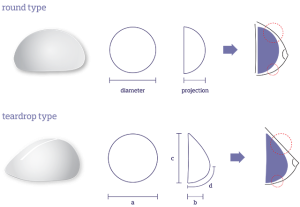
- Shape. Round implants provide more fullness at the top of the breast; teardrop (anatomical) implants offer a more gradual slope and a more naturally contoured profile.
What is achievable depends on your existing breast pocket, tissue quality and anatomy. Your surgeon will advise what is realistic in your case.
Suitability
Candidates are typically people who have had their implants for around or beyond the ten-year mark and are considering an update to pre-empt complications; who want to change size, shape or type to suit body changes from weight fluctuation or pregnancy; who are experiencing discomfort from their current implants; or who are being proactive about breast health.
A good candidate is physically and mentally healthy with realistic expectations. Smokers have an increased risk of complications, and stopping well before and after surgery assists healing.
Preparing for surgery
- Provide your full medical history, including details of your existing implants if you have them.
- Tell your surgeon about any medication you take, and adjust dosage where advised.
- Stop smoking well in advance, as nicotine inhibits recovery.
- Avoid aspirin, anti-inflammatory drugs and herbal supplements, which can increase bleeding.
- Arrange for someone to drive you home and stay with you for at least 24 hours.
- Set up a comfortable area at home for your recovery.
Recovery
As a general benchmark, recovery from breast surgery is around six weeks, though the specifics depend on what your surgery involved.
Immediately after surgery. You spend a short time in the recovery room under close monitoring as you come out of anaesthesia. Most procedures are outpatient, so you go home the same day provided there are no complications and you feel well enough. You cannot drive yourself.
The first few days. Swelling, bruising and discomfort around the surgical areas are normal. Pain is typically managed with prescribed medication. A supportive surgical bra is worn to minimise swelling and support the new breast shape as it heals. Strenuous activity should be avoided, but gentle movement is encouraged to promote circulation.
Follow-up visits. You attend follow-up appointments to remove stitches if they are not dissolvable, check healing progress and confirm there are no signs of complications. These are also an opportunity to raise any questions about your recovery.
Returning to normal activities. Most patients return to work and normal daily activities within one to two weeks, depending on the nature of their job and how they feel. Light activities or office-based work are generally fine after around two weeks. Heavy lifting, high-impact exercise and vigorous physical activity should be avoided for up to six weeks, or until your surgeon clears you.
Travel and swimming. Domestic flights are usually fine at around two weeks. Wait six to eight weeks before international or long-haul flights, and six to eight weeks before swimming.
Long-term. The final shape and feel of the breasts settle over several weeks to months. Swelling gradually diminishes and scar lines improve, though scars can take several months to fade significantly.
Ongoing monitoring. Continue monitoring your breast health and attending regular check-ups as advised. Regular mammograms and, for silicone implants, occasional MRI scans may be recommended to monitor implant integrity. Contact the clinic promptly if you have concerns about the appearance or feel of your implants at any point, or experience any unusual symptoms.
Wound care and signs of a problem
Clean your hands before touching the wound area. Clean gently with mild saline or as directed, pat rather than scrub, keep the area dry, and change dressings as advised. Do not apply ointments or creams unless prescribed.
Contact your medical team immediately if you notice increased redness or warmth around the wound, persistent or worsening pain, discharge or pus, a foul smell, or fever and chills.
Risks and complications
All surgical procedures carry risks and potential complications. Revision surgery carries the risks of the original procedure as well as those specific to operating on tissue that has been previously operated on.
- Capsular contracture - the scar tissue that naturally forms around the implant tightens and compresses it, potentially causing discomfort and changing the appearance of the breast.
- Implant rupture or leakage - modern implants are durable, but rupture and leakage remain possible. Saline implants typically deflate visibly; silicone ruptures can be silent.
- Infection - sterile technique is used during the operation to minimise this risk, but it cannot be eliminated.
- Changes in nipple and breast sensation - which can be temporary or permanent.
- Scarring - scarring is an inevitable part of surgery, and its appearance varies with individual healing.
- Need for further surgery - additional surgery may be required over time to address implant malposition, replacement or other concerns.
- Haematoma and seroma - collections of blood or fluid under the skin that may require treatment.
Breast implants are associated with breast implant-associated anaplastic large cell lymphoma (BIA-ALCL), a rare cancer of the immune system. This is a recognised risk and should be discussed with your surgeon, along with the specific implant proposed for you, before you decide to proceed.
General surgical risks include bruising, swelling, pain, nerve damage, anaesthesia complications, blood clots (DVT and pulmonary embolism), psychological impact, and unsatisfactory results.
Risks are discussed with you in detail during the consultation process, and you are given written information to take home. Please read our information on the risks and complications of cosmetic surgery before proceeding.
Outcomes vary depending on individual anatomy, the condition of the existing implants and surrounding tissue. Individual results may vary.
Any surgical or invasive procedure carries risks. Before proceeding you should seek a second opinion from an appropriately qualified health practitioner.
Referral and cooling-off period
Since 1 July 2023, all patients are required to have a GP referral before seeing a plastic surgeon or doctor about cosmetic surgery. A valid referral is also needed if you wish to claim a Medicare rebate on medically essential surgery.
For any cosmetic surgery there is a compulsory one-week cooling-off period after your second consultation before surgery can be booked.
Costs
Requirements vary significantly between patients, so revision surgery is quoted individually. Cost depends on the condition of the existing implants and surrounding tissue, whether the capsule needs removing, whether other procedures such as a lift are performed at the same time, and the hospital used. Your specific goals and the surgical plan are determined at consultation, after which you receive a customised, no-obligation quote.
As a reference point, breast augmentation with implants ranges from $14,000 to $18,000, and augmentation combined with a lift from $28,000 to $32,000. As at September 2024 and including GST, a consultation with a Specialist Plastic Surgeon is $350.
Payment for major surgery is due four weeks before the procedure. Cash, EFTPOS, direct deposit and major credit cards are accepted, with surcharges applying to cards. Independent medical finance companies are available.
Medicare and health insurance
Implant removal and replacement performed for cosmetic reasons is not covered by Medicare. Where the surgery addresses a complication, a Medicare item number may apply. The relevant Medicare Benefits Schedule item numbers are 45553 and 45554 for breast implant removal and replacement after a complication, and 45548 for implant removal alone.
Item numbers are updated periodically, so confirm the current numbers and criteria with your surgeon and on MBS Online. Where an item number applies and you hold the right level of cover, your insurer may subsidise part of the cost. Me Clinic is not a no-gap provider, so a significant out-of-pocket payment remains.
Where surgery is performed
Me Clinic surgeons operate at accredited private hospitals around Melbourne, including Masada Private Hospital (St Kilda East), Epworth Geelong (Waurn Ponds), St Vincent's Werribee, Sir John Monash Private Hospital (Clayton), Peninsula Private Hospital (Langwarrin) and Linacre Private Hospital (Hampton).
Related procedures
See breast implant removal without replacement, augmentation with implants, breast lift, or all breast surgery procedures. See also the Me Clinic team.
Images on This Page
-
https://www.meclinic.com.au/wp-content/uploads/2024/03/meclinic-logo.png
Me Clinic
-
https://www.meclinic.com.au/wp-content/uploads/2022/02/call.png
call
-
https://www.meclinic.com.au/wp-content/uploads/2024/05/TEST-0.2-300x300.png
(no alt text)
-
https://www.meclinic.com.au/wp-content/uploads/2022/03/Breast_img-300x207.png
(no alt text)
-
https://www.meclinic.com.au/wp-content/uploads/2024/02/acps.png
(no alt text)
-
https://www.meclinic.com.au/wp-content/uploads/2024/02/racs.png
(no alt text)
-
https://www.meclinic.com.au/wp-content/uploads/2024/02/fracs.png
(no alt text)
-
https://www.meclinic.com.au/wp-content/uploads/2024/02/isaps.png
(no alt text)
-
https://www.meclinic.com.au/wp-content/uploads/2024/02/cpca.png
(no alt text)
-
https://www.meclinic.com.au/wp-content/uploads/2022/02/auscop.png
(no alt text)
-
https://www.meclinic.com.au/wp-content/uploads/2022/02/amav.png
(no alt text)
-
https://www.meclinic.com.au/wp-content/uploads/2022/03/channel7.png
(no alt text)
-
https://www.meclinic.com.au/wp-content/uploads/2022/03/channel9.png
(no alt text)
-
https://www.meclinic.com.au/wp-content/uploads/2022/03/channel10.png
(no alt text)
-
https://www.meclinic.com.au/wp-content/uploads/2022/03/abc.png
(no alt text)
-
https://www.meclinic.com.au/wp-content/uploads/2022/02/malvern-map-thumb.jpg
(no alt text)
-
https://www.meclinic.com.au/wp-content/uploads/2022/03/home-conctact-tab.jpg
(no alt text)
-
https://bat.bing.com/action/0?ti=56339805&Ver=2&mid=cdf47b90-d4a6-4f7c-9855-dcf87fe21dc0&bo=1&sid=0b348170ac3311f1874e7fc6c3c530df&vid=0b34b6b0ac3311f1827ee9663a4bfc43&vids=0&msclkid=N&pi=918639831&lg=en-US&sw=1280&sh=720&sc=24&tl=Breast%20Implant%20Replacement%20-%20remove%20%26%20replace%20at%20Me%20Clinic&p=https%3A%2F%2Fwww.meclinic.com.au%2Fbreast-surgery%2Fimplant-removal-and-replacement%2F&r=<=2952&evt=pageLoad&sv=2&cdb=AQAQ&rn=524342
(no alt text)