Breast lift at Me Clinic
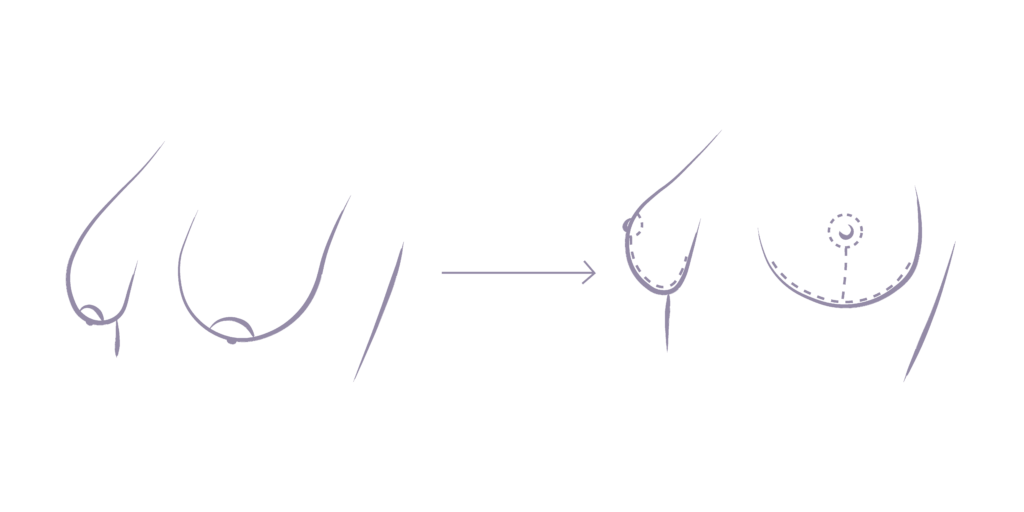
A breast lift, also known as a mastopexy, lifts and reshapes the breasts. The procedure removes excess skin around the areola and nipple, and often from underneath the breast, then repositions the nipple and areola.
It is commonly considered by people who have experienced changes in breast volume, shape and position from ageing, weight fluctuation or loss, pregnancy and breastfeeding. The aim is to correct ptosis (sagging) and remove loose skin. A breast lift does not alter the base position of the breasts, and it does not change breast size - where size is also to change, it is combined with augmentation or reduction.
What the surgery addresses
- Excess skin - loose skin is removed, reducing droopiness.
- Contour - the breasts are raised by removing excess skin and tightening the surrounding tissue.
- Symmetry - variations in size or shape between the breasts can be adjusted.
- Nipple and areola position - where these point downward or sit below the breast crease, mastopexy repositions them. Enlarged areolas caused by stretched skin can also be reduced.
- Changes after weight loss - restoring shape where significant weight loss has left the breasts deflated. Most relevant once weight is stable.
- Changes after pregnancy - addressing alterations in volume and position following pregnancy and breastfeeding.
- Comfort - removing excess skin can reduce irritation beneath the breast crease.
No cosmetic procedure halts the ageing process, and the result will continue to change over time. Maintaining a stable weight supports the result. Outcomes vary depending on individual anatomy, skin quality and the technique used, and individual results may vary.
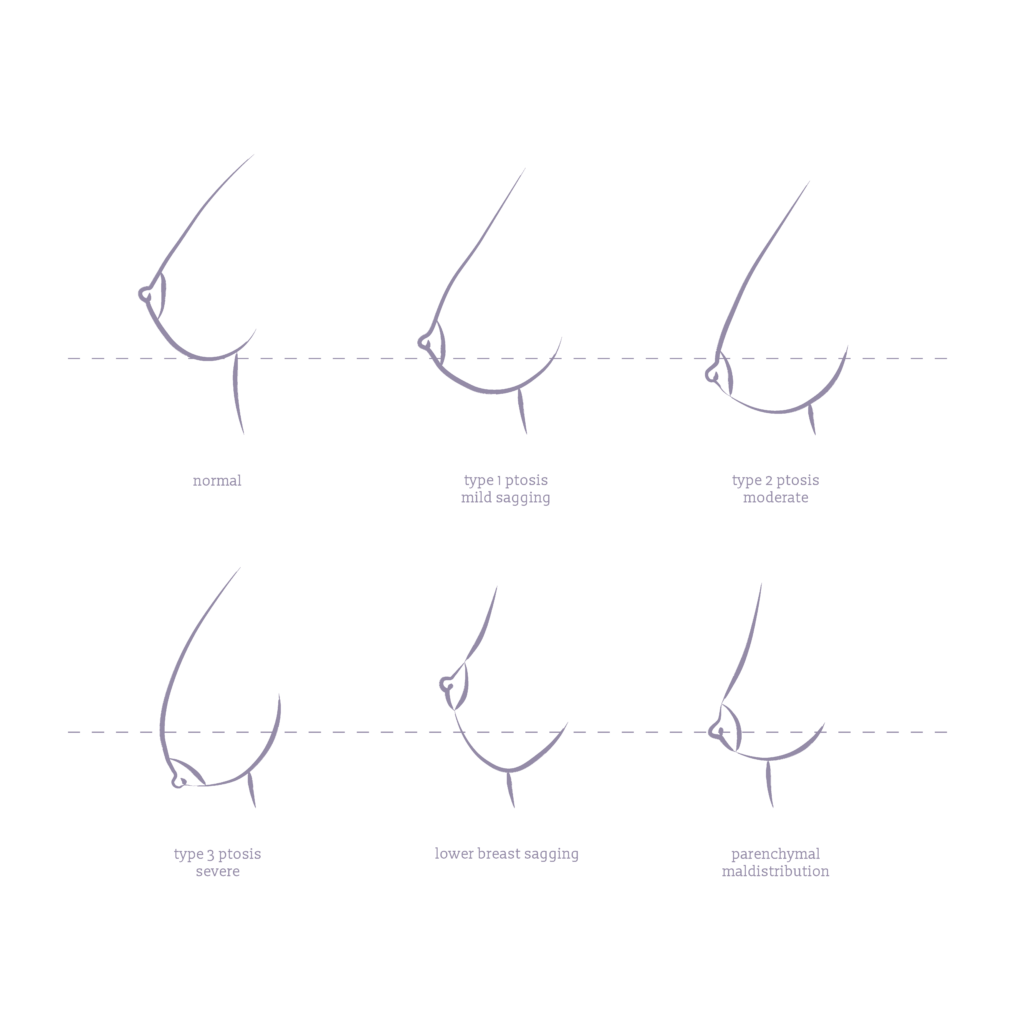
Degrees of ptosis
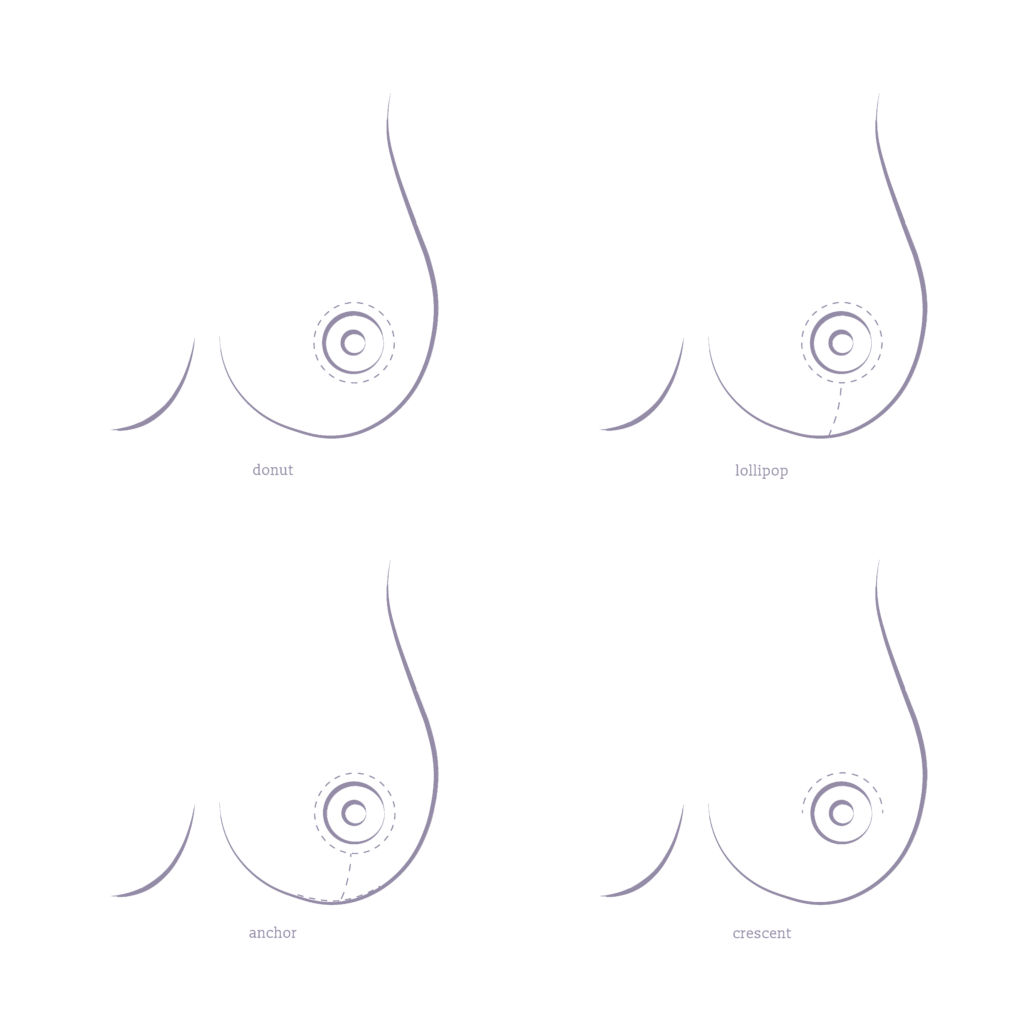
How much sagging is present influences which technique is appropriate. Mild sagging may be addressed with a smaller incision such as a crescent or donut; moderate sagging generally calls for a lollipop incision; significant sagging with substantial excess skin generally calls for an anchor incision. Your surgeon assesses this at consultation, along with whether the nipple sits above or below the breast crease.
Incision options
The surgeon makes incisions, removes excess skin and tissue, reshapes the breast tissue, lifts the breasts, then closes the incisions with sutures or staples.
Lollipop incision
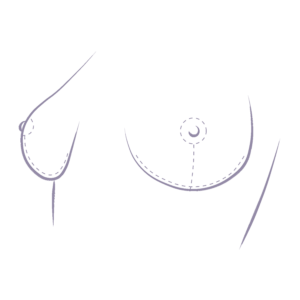
Also called the vertical breast lift technique or Hall-Findlay mastopexy, this is the most common technique and is generally used for moderate lifts. The incision encircles the areola and extends down the lower portion of the breast. The scar around the areola sits within darker pigmented skin, which can help it blend with the surrounding area. The vertical scar may be more visible initially and often fades significantly within a year of surgery. It leaves less scarring than the anchor technique because there is no large horizontal scar under the breast.
Anchor incision
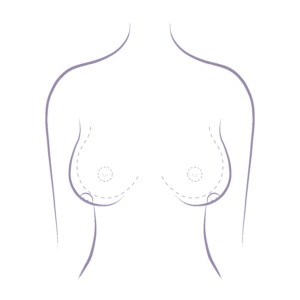
The anchor incision uses three incision points. Two are the same as the lollipop technique, and the third runs horizontally across the lower breast crease. It is chosen for significant lifts and reshaping. The incision under the breast is placed in the natural fold of skin, which helps conceal it; this scar is less likely to be visible during normal activities but is more prominent on closer inspection. Being more extensive, the anchor technique results in more scarring than the lollipop technique.
At consultation your surgeon identifies the appropriate incision by assessing how much lift is required, whether nipple and areola repositioning is needed, and whether other procedures are being performed at the same time.
Scarring and how to reduce it
Wherever an incision is made there will be a scar. Scars mature and typically fade over time, but their final appearance varies considerably between individuals and can be influenced by skin type and how your body heals.
- Surgical technique. The lollipop technique produces less scarring than the traditional anchor pattern, where it is appropriate for the degree of correction required.
- Before surgery. Do not smoke, eat well, maintain a healthy weight, and avoid sun exposure to the surgical area.
- After surgery. Keep incision sites clean and dry, limit physical strain, and follow your surgeon's wound care guidance, including silicone sheets or gels for scar management.
What the procedure involves
Breast lift surgery is conducted under general anaesthesia in accredited medical facilities. It typically takes one to three hours, depending on the extent of correction and whether other procedures are performed at the same time.
Breast lifts are commonly performed as day procedures. Some patients stay overnight for rest and medical supervision, either by choice or at the surgeon's discretion - more often where extensive correction or combined procedures are involved. Because general anaesthesia is used, you must arrange transport home and have someone assist you during initial recovery.
Suitability
The procedure is generally suited to people who:
- Have realistic expectations of what the procedure can achieve.
- Have breasts that have lost shape following significant weight loss.
- Have loose skin that exacerbates drooping.
- Are in good health, eat well, have a stable weight and avoid smoking.
- Have breasts that appear deflated after breastfeeding and pregnancy.
- Have asymmetrical breasts.
- Have nipples and areolas that point downward and require repositioning.
It is generally recommended to wait until after pregnancy, and once no further children are planned, as pregnancy and breastfeeding will alter the result.
Combining a breast lift with other procedures
A breast lift is often combined with other breast surgery. Combined with augmentation, it addresses both position and volume - useful where you want to restore or increase volume as well as correct sagging. The volume component can come from implants or fat transfer. Combined with reduction, it addresses discomfort from overly large breasts alongside shape and position.
Whether to combine procedures depends on your baseline breast anatomy, the degree of ptosis, and your goals. In some cases a breast lift alone is sufficient, particularly where the main concern is repositioning the nipple and areola and removing excess skin without changing breast size.
Recovery
The first 24 hours. You may feel drowsy from the anaesthetic. You cannot drive yourself - you need someone to drive you home and stay with you overnight, and you should rest that evening. An after-hours direct number is provided in case you have questions or concerns.
The first week. You return to the clinic for your first post-operative check the next day or within a few days. Expect some swelling, which settles gradually. Some discomfort is expected and is generally manageable with prescribed pain medication; most patients report that discomfort decreases significantly within the first few days. Light activities can usually be resumed within a few days.
Weeks two to six. Most patients take one to two weeks off work. Strenuous activity is generally avoided for around three weeks, and strenuous exercise for at least four to six weeks. Domestic flights are usually fine at around two weeks.
Six weeks onward. Most people return to their previous exercise routine from around six weeks. Wait six to eight weeks before swimming and before international or long-haul flights.
Three to six months. Most patients see the final result and feel fully recovered within three to six months, as swelling decreases and incision lines fade.
Follow-up. Most patients are seen at seven to ten days, then at six to eight weeks, three months, six months and twelve months. Surgeons and nurses are available between appointments.
If you experience intolerable pain, or pain extending beyond the expected recovery period, contact your surgeon promptly using the contact details provided. Persistent or worsening pain may indicate a complication such as infection or a problem with healing.
Wound care and signs of a problem
Clean your hands before touching the wound area. Clean gently with mild saline or as directed, pat rather than scrub, keep the area dry, and change dressings as advised. Do not apply ointments or creams unless prescribed.
Contact your medical team immediately if you notice increased redness or warmth around the wound, persistent or worsening pain, discharge or pus, a foul smell, or fever and chills.
Risks and complications
All surgical procedures carry risks and potential complications. These are discussed with you in detail during the consultation process, and you are given written information to take home. Please read our information on the risks and complications of cosmetic surgery before proceeding.
Risks associated with breast lift surgery include:
- Infection - although uncommon, infection can occur at incision sites and may require antibiotics or, in severe cases, additional surgery.
- Bleeding - some bleeding is expected during any surgery, but excessive bleeding can lead to complications and may require further intervention.
- Scarring - all surgery results in some degree of scarring; extent and visibility depend on the technique, individual healing and adherence to post-operative care.
- Changes in nipple or breast sensation - temporary or, in rare cases, permanent.
- Asymmetry - the breasts may not be perfectly symmetrical in size, shape or position afterwards.
- Seroma or haematoma - collections of fluid or blood under the skin, which may require additional treatment.
- Delayed healing - wounds may take longer than usual to heal, potentially leading to tissue loss or the need for revision surgery.
- Unfavourable scarring - scars may be more prominent or heal differently than expected, possibly requiring further treatment.
It is also possible, though uncommon, for the nipple, areolar region or breast tissue to experience necrosis (tissue death), which can significantly affect healing and the final result.
General surgical risks include bruising, swelling, pain, nerve damage, anaesthesia complications, blood clots (DVT and pulmonary embolism), psychological impact, and unsatisfactory results requiring further surgery.
Following your surgeon's pre-operative and post-operative instructions contributes significantly to the outcome.
Any surgical or invasive procedure carries risks. Before proceeding you should seek a second opinion from an appropriately qualified health practitioner.
Referral and cooling-off period
Since 1 July 2023, all patients are required to have a GP referral before seeing a plastic surgeon or doctor about cosmetic surgery. A valid referral is also needed if you wish to claim a Medicare rebate on medically essential surgery.
For any cosmetic surgery there is a compulsory one-week cooling-off period after your second consultation before surgery can be booked.
Costs
Every patient has different requirements, so each procedure is quoted individually. As a guide, breast lift surgery ranges from $15,000 to $22,000. Where a lift is combined with augmentation, the range is $28,000 to $32,000. The final cost can vary with individual circumstances and any additional treatment or follow-up care required.
As at September 2024 and including GST, a consultation with a Specialist Plastic Surgeon is $350.
Payment for major surgery is due four weeks before the procedure. Cash, EFTPOS, direct deposit and major credit cards are accepted, with surcharges applying to cards. Independent medical finance companies are available.
Medicare and health insurance
Breast lift surgery performed purely for cosmetic reasons is not covered by Medicare and is unlikely to be covered by health insurance. Where the surgery is deemed medically necessary - for example for reconstructive purposes following a mastectomy, to correct a significant deformity, or where there is physical discomfort or a skin condition caused by excess breast tissue - a Medicare item number may apply. The Medicare Benefits Schedule item number for mastopexy is 45558.
Item numbers are updated periodically, so confirm the current number and criteria with your surgeon and on MBS Online. Check the specifics of your policy with your insurer. Me Clinic is not a no-gap provider, so a significant out-of-pocket payment remains even where cover applies.
Where surgery is performed
Me Clinic surgeons operate at accredited private hospitals around Melbourne, including Masada Private Hospital (St Kilda East), Epworth Geelong (Waurn Ponds), St Vincent's Werribee, Sir John Monash Private Hospital (Clayton), Peninsula Private Hospital (Langwarrin) and Linacre Private Hospital (Hampton).
Related procedures
See scarless breast lift, breast lift with implants, breast reduction and lift, or all breast surgery procedures. See also the Me Clinic team.
Images on This Page
-
https://www.meclinic.com.au/wp-content/uploads/2024/03/meclinic-logo.png
Me Clinic
-
https://www.meclinic.com.au/wp-content/uploads/2022/02/call.png
call
-
https://www.meclinic.com.au/wp-content/uploads/2024/05/breast-lift-before-and-after-1024x512.png
An image design of a breast life before and after showing the reshaping and lift of the breasts and nipples.
-
https://www.meclinic.com.au/wp-content/uploads/2024/05/breast-lift-degrees-of-ptosis-1024x1024.png
An infographic that shows the different degrees of ptosis (sag) of breasts that require breast lifts.
-
https://www.meclinic.com.au/wp-content/uploads/2024/05/breast-lift-incision-techniques-1024x1024.png
An image illustrating the different incision techniques of a breast lift. These include anchor, lollipop, crescent and donut incisions.
-
https://www.meclinic.com.au/wp-content/uploads/2024/05/breast-lift-design-300x300.png
An image design of a breast lift that demonstrates how this procedure reduces sag and re-aligns nipples.
-
https://www.meclinic.com.au/wp-content/uploads/2024/05/breast-lift-melbourne-300x300.png
An image illustrating a restored breast and youthful contour from a breast lift surgery.
-
https://www.meclinic.com.au/wp-content/uploads/2022/02/malvern-map-thumb.jpg
(no alt text)
-
https://www.meclinic.com.au/wp-content/uploads/2024/02/acps.png
Australian Society Of Plastic Surgeons
-
https://www.meclinic.com.au/wp-content/uploads/2024/02/racs.png
Royal Australian College Of Surgeons
-
https://www.meclinic.com.au/wp-content/uploads/2024/02/fracs.png
fracs
-
https://www.meclinic.com.au/wp-content/uploads/2024/02/isaps.png
isaps
-
https://www.meclinic.com.au/wp-content/uploads/2024/02/cpca.png
(no alt text)
-
https://www.meclinic.com.au/wp-content/uploads/2022/02/auscop.png
College
-
https://www.meclinic.com.au/wp-content/uploads/2022/02/amav.png
AMA
-
https://www.meclinic.com.au/wp-content/uploads/2022/03/home-conctact-tab.jpg
(no alt text)
-
https://bat.bing.com/action/0?ti=56339805&Ver=2&mid=5791c770-ba7f-453b-b239-550a40a9e36d&bo=1&sid=f0b36470ac3a11f1af800f8e9e57e515&vid=f0b35440ac3a11f196d383cfb591381f&vids=1&msclkid=N&pi=918639831&lg=en-US&sw=1280&sh=720&sc=24&tl=Breast%20Lift%20Surgery%20in%20Melbourne&p=https%3A%2F%2Fwww.meclinic.com.au%2Fbreast-surgery%2Fbreast-lift%2F&r=<=4316&evt=pageLoad&sv=2&cdb=AQAQ&rn=508971
(no alt text)