What varicose veins are
Varicose veins are enlarged, twisted veins that most often develop in the legs. Some people notice them mainly because of how they look; others notice heaviness, aching, swelling, itchiness or restless legs, particularly after standing or at the end of the day.
They occur when valves inside the vein become damaged or weakened, allowing blood to pool rather than return efficiently to the heart. This is known as reflux. Contributing factors include pregnancy, genetics, ageing and prolonged standing.
Symptoms
- Veins with a deep purple or blue appearance.
- Veins that appear enlarged, contorted or bulging.
- Soreness, heaviness, throbbing or fatigue in the legs.
- Tingling, pulsing or muscle spasms.
- Swelling around the ankles and lower legs.
- Itchiness or irritation related to vein changes.
- Leg discomfort after extended standing or sitting.
- Restless legs.
Varicose veins are not always painful, but they can range from a mild cosmetic concern to significant discomfort. Skin changes and ulceration can develop in longstanding cases.
Assessment and diagnosis
Care begins with finding the source of the problem rather than treating what is visible at the surface. Assessment involves a clinical examination and, where appropriate, duplex ultrasound mapping to identify which veins are refluxing and to plan treatment.
An ultrasound is often needed - particularly where the veins are larger, symptoms are significant, or the source vein is not obvious. Treating surface veins without identifying an underlying refluxing trunk vein tends to give a poorer and less durable result.
Do varicose veins always need treatment?
No. Some people do not need treatment if they have no symptoms or complications. Others choose treatment for comfort, skin changes or appearance.
Conservative measures - regular walking, leg elevation and compression stockings - may improve symptoms, and may be recommended alongside a procedure. They do not always remove visible varicose veins once present.
Treatment options
Treatment depends on your symptoms, ultrasound findings, and the size and location of the veins. All varicose vein treatment options at Me Clinic are performed in clinic.
Sclerotherapy
A solution is injected into the vein to irritate the vein lining, causing it to close. Blood is redirected through healthier veins and the treated vein gradually fades.
Sclerotherapy may be considered for certain varicose veins and tributary veins, for smaller veins that may worsen over time, and for treatment plans where multiple areas need staged treatment - often more than one session.
From $470 per session.
Ultrasound-guided sclerotherapy
Some varicose veins are not easily seen at the surface, or connect to deeper feeder veins. Ultrasound-guided sclerotherapy uses imaging to target the correct vein. Me Clinic often prioritises this approach for more thorough and consistent treatment of varicose veins.
From $740 per session.
Endovenous laser ablation (EVLA)
A minimally invasive treatment using laser energy inside the vein to seal a problematic vein closed, with blood then redirected to healthier veins. It is used for larger refluxing veins.
EVLA is often discussed where a larger trunk vein such as a saphenous vein is refluxing on ultrasound, or where the varicose veins are extensive, bulging, or linked to a larger underlying reflux source.
From $4,200.
VenaSeal vein glue
VenaSeal is a medical-grade vein glue used to close a problem vein from the inside. A small tube is placed into the vein using ultrasound guidance and tiny drops of glue are delivered to seal the vein shut. Blood then reroutes through healthier veins.
VenaSeal may be discussed where a larger trunk vein is refluxing on ultrasound, where varicose veins are linked to a deeper source vein, or where a non-thermal option is preferred based on your assessment and medical history. Your clinician will confirm whether it is suitable after assessment and ultrasound mapping.
Vein surgery
The older, more traditional approach - ambulatory phlebectomy or traditional stripping. At Me Clinic surgery is treated as the last option, with a preference for the least invasive treatment that addresses the veins with minimal downtime.
What treatment may achieve
Not everyone experiences the same benefits, and results depend on vein size, location, underlying reflux, skin changes and overall health. Depending on your diagnosis and treatment plan, varicose vein treatment may help to:
- Reduce leg aching, heaviness, throbbing or fatigue.
- Improve swelling around the ankles and lower legs.
- Ease itchiness or irritation related to vein changes.
- Improve the appearance of prominent veins.
- Support longer-term vein health where varicose veins are contributing to progressive vein-related changes.
Individual results may vary. New veins can develop over time regardless of the treatment method used.
After treatment
Some bruising can be expected, and veins may temporarily look worse before they look better. Tenderness and redness after treatment are normal.
Walking rather than sitting after treatment helps reduce soreness, and an oral anti-inflammatory can help further. Walking up to 30 minutes a day is recommended, and most people can continue normal activities. Avoid vigorous exercise in the first 24 hours, and avoid long car or plane trips over the same period.
Support hosiery is generally worn after treatment, and not wearing it as directed is one of the more common reasons for a disappointing result.
Why a result may fall short
Where sclerotherapy has been less effective, contributing factors can include:
- Incorrect diagnosis of the underlying problem.
- Ineffective closure of the offending veins.
- Not wearing the support hosiery after treatment.
- Rapid development of new veins, which can be genetically related.
- New veins developing over time irrespective of the treatment method.
This is why assessment, ultrasound mapping where indicated, and follow-up matter as much as the procedure itself.
Costs and Medicare
As at September 2024 and including GST, a vein consultation with a doctor - which may include ultrasound - is $230. Treatment starts from $470. See varicose vein treatment costs for a full breakdown.
You may be able to claim a Medicare rebate for vein treatment. Your physician will discuss any applicable rebates at your initial consultation, and you can contact Medicare directly for further detail. A valid GP referral supports a claim.
Risks
All procedures carry some risk. Most varicose vein treatments do not require anaesthetic; the exceptions are EVLT and vein surgery. Risks vary by method and are discussed with you in detail at consultation, and you are given written information to take home. Please read our information on the risks and complications of cosmetic surgery before proceeding.
Any surgical or invasive procedure carries risks. Before proceeding you should seek a second opinion from an appropriately qualified health practitioner.
Common questions
Are varicose veins the same as spider veins? Not exactly. Varicose veins are usually larger, bulging veins. Spider veins are smaller surface vessels and may be treated differently.
Do I need an ultrasound before treatment? Often yes, especially if veins are larger, symptoms are significant, or the source vein is not obvious. Duplex ultrasound is commonly used to map reflux and plan treatment.
How many sessions will I need? This depends on the extent of the veins and the method used. Sclerotherapy treatment plans often involve more than one session, staged across areas.
Who performs varicose vein treatment
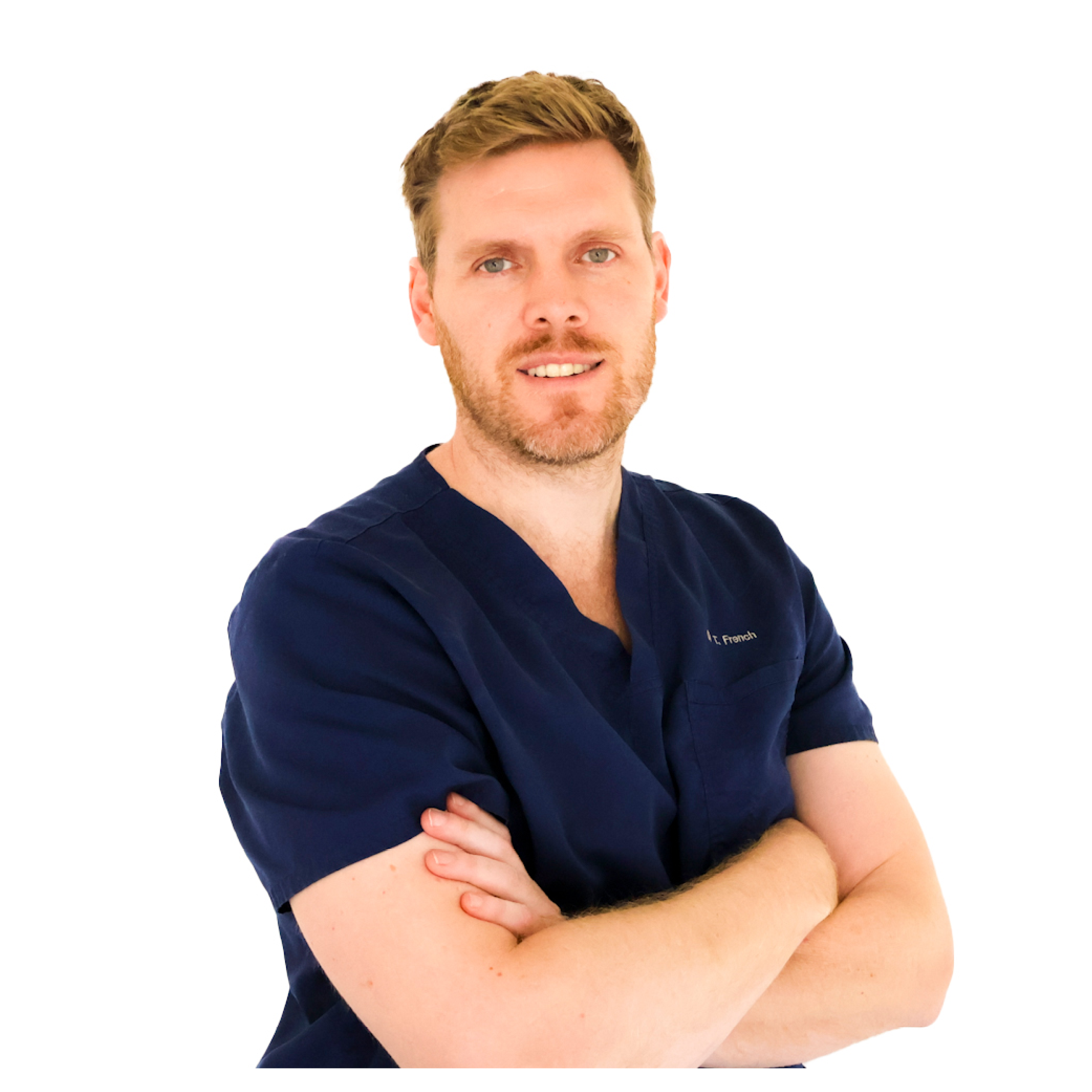
Dr Tim French (MED0001790529) is a phlebologist with AHPRA specialist and general registration and over a decade of clinical experience in venous medicine. He assesses and treats varicose veins, spider veins and venous ulcers, and also works in skin cancer medicine and mole removal. He has worked at major hospitals including the Royal Melbourne Hospital and the Royal Adelaide Hospital, with experience spanning neurosurgery, plastic surgery, emergency medicine, trauma and general practice. He holds an MBBS, a Diploma of Surgical Anatomy (University of Melbourne), and further qualifications in phlebology and ultrasound in phlebology.
Booking a consultation
Vein treatment usually involves an initial assessment, and if treatment is suitable, procedures are typically booked for a later date. To arrange a consultation, call 1300 852 050 or enquire through the contact form.
Me Clinic is at 4 Burke Road, Malvern East VIC 3145.
Images on This Page
-
https://www.meclinic.com.au/wp-content/uploads/2024/03/meclinic-logo.png
Me Clinic
-
https://www.meclinic.com.au/wp-content/uploads/2022/02/call.png
call
-
https://www.meclinic.com.au/wp-content/uploads/2025/11/dr-tim-photo.png
(no alt text)
-
https://www.meclinic.com.au/wp-content/uploads/2022/02/malvern-map-thumb.jpg
(no alt text)
-
https://www.meclinic.com.au/wp-content/uploads/2024/02/acps.png
Australian Society Of Plastic Surgeons
-
https://www.meclinic.com.au/wp-content/uploads/2024/02/racs.png
Royal Australian College Of Surgeons
-
https://www.meclinic.com.au/wp-content/uploads/2024/02/fracs.png
fracs
-
https://www.meclinic.com.au/wp-content/uploads/2024/02/isaps.png
isaps
-
https://www.meclinic.com.au/wp-content/uploads/2024/02/cpca.png
(no alt text)
-
https://www.meclinic.com.au/wp-content/uploads/2022/02/auscop.png
College
-
https://www.meclinic.com.au/wp-content/uploads/2022/02/amav.png
AMA
-
https://www.meclinic.com.au/wp-content/uploads/2022/03/home-conctact-tab.jpg
(no alt text)
-
https://bat.bing.com/action/0?ti=56339805&Ver=2&mid=0aea4f3f-9dee-45f8-ba71-c2a0f44ea0e9&bo=1&sid=16523ed0ac4111f19d01cf1609c3d814&vid=165272f0ac4111f18ae0b7964bf785f4&vids=1&msclkid=N&pi=918639831&lg=en-US&sw=1280&sh=720&sc=24&tl=Varicose%20Veins%20Treatment%20%7C%20Leg%20Veins%20Procedures%20in%20Melbourne&p=https%3A%2F%2Fwww.meclinic.com.au%2Fveins%2Fvaricose-veins%2F&r=<=4308&evt=pageLoad&sv=2&cdb=AQAQ&rn=684042
(no alt text)