Varicose vein surgery
Surgery is the older, more traditional method for treating large varicose veins. At Me Clinic it is considered the last treatment option - the preference is the least invasive treatment that addresses the veins with minimal downtime.
There are two types: ambulatory phlebectomy, and traditional ligation and stripping.
Ambulatory phlebectomy
Ambulatory phlebectomy is a surgical treatment for visible small to large tortuous veins. It involves surgical excision of the veins under local anaesthetic using very tiny incisions, with the vein removed in segments through a phlebectomy hook.
It is performed as an outpatient procedure in clinic. Visibility of the incisions after healing, and recovery time, vary between individuals. It is the less invasive of the two surgical options, and some patients return to work the next day.
Traditional vein surgery
Surgery can be an option for treating larger veins where the main valves in the groin or at the back of the knee are defective. It involves ligation - tying off the vein at those points - and may also involve stripping and removal of veins from the legs.
This is the traditional method for treating large varicose veins. It usually requires a hospital stay and is performed under general anaesthetic.
When surgery is considered
Suitability depends on individual circumstances. Surgery is generally considered where:
- The main valves in the groin or behind the knee are defective and the vein needs tying off.
- The veins are large and require stripping and removal rather than closure from the inside.
- A patient is unable to return for the several treatment sessions that non-surgical methods typically require.
- Less invasive options have been assessed and are not appropriate.
Most varicose veins can now be treated without surgery. Endovenous laser ablation, ultrasound-guided sclerotherapy and VenaSeal all close problem veins from the inside, without the hospital stay and general anaesthetic that traditional surgery requires. Your doctor will discuss the alternatives at consultation.
Anaesthesia and setting
Ambulatory phlebectomy is performed in clinic under local anaesthetic as an outpatient procedure. Traditional ligation and stripping is performed in hospital under general anaesthetic and usually requires an overnight stay.
Where a general anaesthetic is used, you cannot drive yourself home - you need someone to drive you and stay with you for at least 24 hours.
Recovery
Recovery from ambulatory phlebectomy is relatively quick, with some patients returning to work the next day. Recovery from traditional stripping surgery is longer, reflecting the more invasive nature of the procedure and the general anaesthetic.
In both cases: walk regularly rather than sitting for long periods, avoid vigorous exercise in the early period, and wear compression stockings as directed. Your doctor will give you instructions specific to your procedure.
Risks and complications
All surgical procedures carry risks and potential complications. For vein surgery these include minor postoperative bleeding, bruising, deep vein thrombosis (DVT), wound infection, lymphatic disruption, pigmentation, brown marks along a treated vein caused by iron from the blood (usually resolving within three to twelve months), nerve injury causing numbness, the development of a small network of new veins, and hypertrophic scars.
Traditional surgery under general anaesthetic carries the additional risks associated with general anaesthesia and hospital admission, including blood clots and anaesthetic complications.
Risks are discussed with you in detail during the consultation process, and you are given written information to take home. Please read our information on the risks and complications of cosmetic surgery before proceeding.
Individual results may vary. Any surgical or invasive procedure carries risks, including complications, side effects and the possibility of unsatisfactory results. Before proceeding you should seek a second opinion from an appropriately qualified health practitioner.
Costs
Varicose vein surgery typically costs more than the less invasive vein treatments. It is quoted individually after assessment, as the cost depends on the extent of the veins, whether hospital admission and general anaesthetic are required, and the facility used.
As at September 2024 and including GST, a vein consultation with a doctor - which may include ultrasound - is $230. For comparison, sclerotherapy starts from $470, ultrasound-guided sclerotherapy from $740, and EVLT from $4,200. See varicose vein treatment costs.
Medicare
You may be able to claim a Medicare rebate for vein treatment, and surgical treatment of symptomatic venous disease is more likely to qualify than purely cosmetic treatment. Your physician will discuss any applicable rebates at your initial consultation, and you can contact Medicare directly for further detail. A valid GP referral supports a claim.
Who performs vein surgery
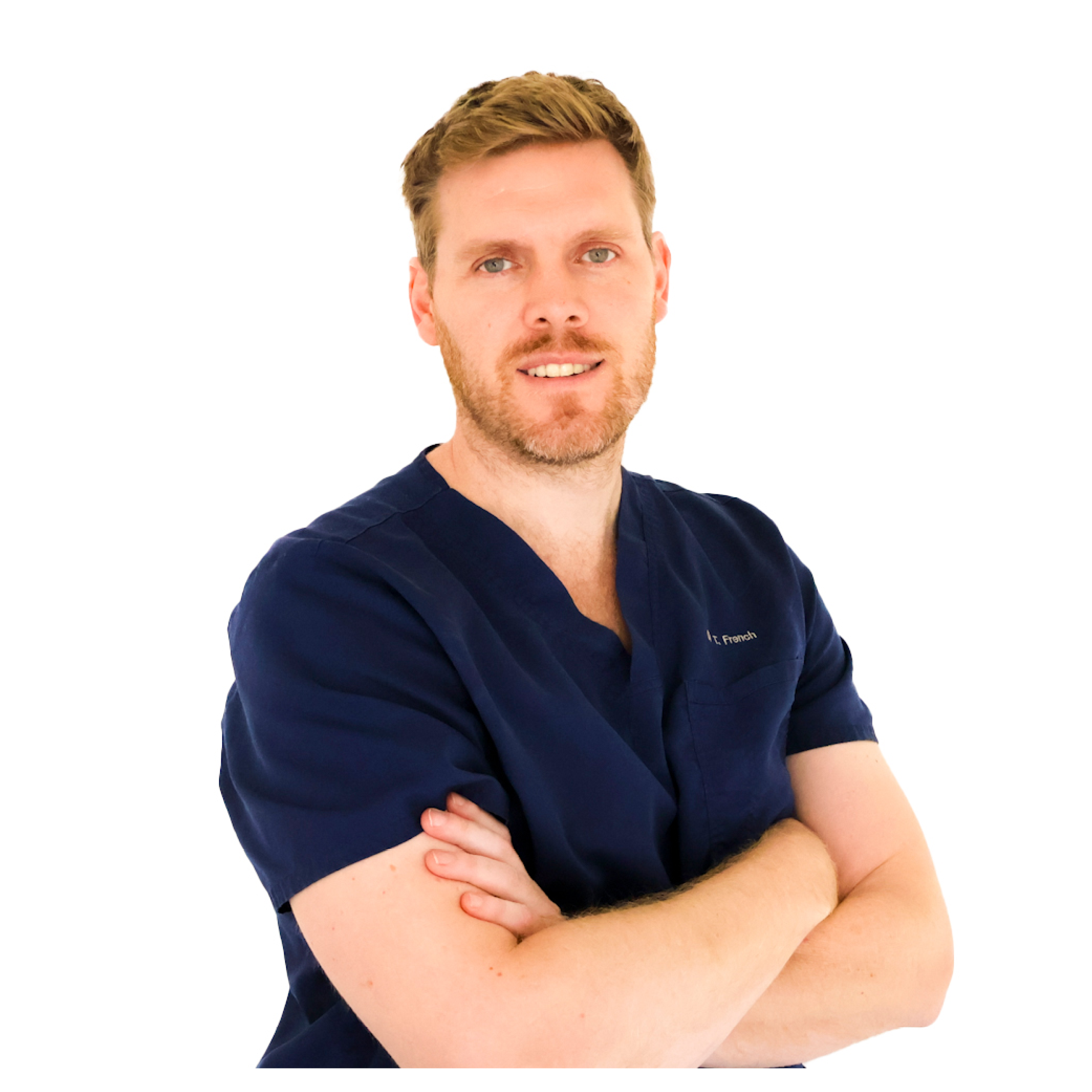
Dr Tim French (MED0001790529) is a phlebologist with AHPRA specialist and general registration and over a decade of clinical experience in venous medicine. He holds an MBBS, a Diploma of Surgical Anatomy (University of Melbourne), and further qualifications in phlebology and ultrasound in phlebology.
Related pages
See ambulatory phlebectomy, varicose veins, or all vein treatments.
Images on This Page
-
https://www.meclinic.com.au/wp-content/uploads/2024/03/meclinic-logo.png
Me Clinic
-
https://www.meclinic.com.au/wp-content/uploads/2022/02/call.png
call
-
https://www.meclinic.com.au/wp-content/uploads/2025/11/dr-tim-photo.png
(no alt text)
-
https://www.meclinic.com.au/wp-content/uploads/2024/02/acps.png
(no alt text)
-
https://www.meclinic.com.au/wp-content/uploads/2024/02/racs.png
(no alt text)
-
https://www.meclinic.com.au/wp-content/uploads/2024/02/fracs.png
(no alt text)
-
https://www.meclinic.com.au/wp-content/uploads/2024/02/isaps.png
(no alt text)
-
https://www.meclinic.com.au/wp-content/uploads/2024/02/cpca.png
(no alt text)
-
https://www.meclinic.com.au/wp-content/uploads/2022/02/auscop.png
(no alt text)
-
https://www.meclinic.com.au/wp-content/uploads/2022/02/amav.png
(no alt text)
-
https://www.meclinic.com.au/wp-content/uploads/2022/03/channel7.png
(no alt text)
-
https://www.meclinic.com.au/wp-content/uploads/2022/03/channel9.png
(no alt text)
-
https://www.meclinic.com.au/wp-content/uploads/2022/03/channel10.png
(no alt text)
-
https://www.meclinic.com.au/wp-content/uploads/2022/03/abc.png
(no alt text)
-
https://www.meclinic.com.au/wp-content/uploads/2022/02/malvern-map-thumb.jpg
(no alt text)
-
https://www.meclinic.com.au/wp-content/uploads/2022/03/home-conctact-tab.jpg
(no alt text)
-
https://bat.bing.com/action/0?ti=56339805&Ver=2&mid=776fbc27-b5a8-4fde-85c4-fd3ecfccd157&bo=1&sid=14e321f0ac4111f190b4ddd8a8a70d35&vid=14e34ca0ac4111f1987a1fc5f87b914b&vids=1&msclkid=N&pi=918639831&lg=en-US&sw=1280&sh=720&sc=24&tl=Varicose%20Veins%20Surgery%20-%20Key%20Details%20And%20Expectations&p=https%3A%2F%2Fwww.meclinic.com.au%2Fbody%2Fvein-treatments%2Fvaricose-veins-surgery%2F&r=<=2035&evt=pageLoad&sv=2&cdb=AQAQ&rn=661985
(no alt text)