Laser treatment for veins
Surface laser treatment is an option for small spider veins on the face and nose. It can also be used on spider and small veins on the legs and body, particularly for people who have not responded to sclerotherapy.
Laser light is preferentially absorbed by the red colour in the blood flowing through the vein. The light converts to heat, causing the vein to shrink. No special dressing or stocking is required afterwards.
Start here: cosmetic veins, or venous disease?
This is the distinction that determines everything else - which treatment is appropriate, whether Medicare contributes, and whether surface laser is even the right conversation.
| Points towards cosmetic surface veins | Points towards venous disease |
|---|---|
| Fine red or purple threads, flat to the skin | Bulging, ropey veins that stand proud |
| No symptoms | Aching, heaviness or throbbing, worse by evening |
| Unchanged by standing or the time of day | Worse after a day standing; better with the legs up |
| No swelling | Ankle swelling at the end of the day |
| Skin looks normal around them | Itching, eczema, brown staining or hardening of the skin near the ankle |
| No night cramps or restlessness | Night cramps, restless legs |
| No history of clots or ulcers | Previous DVT, or a healed or open ulcer |
Anything in the right-hand column warrants assessment before any cosmetic treatment, and an open sore on the lower leg warrants it promptly. Spider veins can be the visible surface of a deeper problem, and treating the surface leaves the cause running.
Who it suits
Surface laser is generally only suitable for people with lighter skin, because the laser targets colour contrast between the vein and the surrounding skin. Your practitioner will assess whether it is appropriate for your skin type.
It is best suited to:
- Small spider veins on the face and nose.
- Small spider veins on the legs and body.
- Veins that have not responded to sclerotherapy.
Who it is not for
- Anyone with untreated reflux in a deeper vein. The surface veins come back, because the pressure that created them is still there.
- Anyone with true varicose veins. Too large and too deep for surface laser to reach.
- Anyone who is pregnant. Leg veins commonly appear or worsen in pregnancy and frequently improve in the months afterwards - assessment is usually deferred until well after delivery.
- Darker skin types, for some lasers. IPL and Laser Genesis are the options preferred there, and the risk of pigment change is the reason.
- Anyone with an active rash, infection or broken skin in the treatment area.
An important limitation
Surface laser is not the preferred treatment for varicose veins. Varicose veins are larger and deeper than surface laser can effectively reach, and other procedures are generally more effective given their size and nature.
Where varicose veins are the concern, the preferred laser method is endovenous laser ablation (EVLA/EVLT), which works from inside the vein rather than through the skin. Sclerotherapy and ultrasound-guided sclerotherapy are the other main options.
If you have visible leg veins, an assessment should establish whether there is an underlying refluxing vein before any surface treatment is considered. Treating the surface alone tends to give a short-lived result when a deeper vein is the source.
Why a duplex ultrasound matters
Veins carry blood back towards the heart against gravity, and one-way valves stop it falling back down. When those valves fail, blood pools - and the visible surface veins are the downstream consequence of that pressure, not the problem itself.
A duplex ultrasound is what shows whether valves are failing and where. Without it, treating visible veins is treating a symptom: they clear, and then they return, and the money spent buys a temporary result.
If you have leg veins and nobody has scanned them, ask why not. A vein consultation at Me Clinic, which may include ultrasound, is $230 including GST as at September 2024 - a small figure next to a course of treatment aimed at the wrong target.
Laser types used
- Aura laser - for fine spider veins, offering precision treatment for small, superficial vascular concerns.
- Intense pulsed light (IPL) - broad-spectrum light suited to superficial spider veins and facial veins. More suitable for darker skin tones than some laser options.
- Laser Genesis - primarily a skin rejuvenation treatment, it can also reduce the visibility of tiny facial veins by gently heating them. Also preferred for darker skin tones.
- YAG laser - a longer wavelength, making it effective for deeper and larger veins and versatile across a broader range of vein sizes.
Which laser is used depends on the size, depth and location of the veins, and on your skin type.
How laser compares with sclerotherapy
- Surface laser - no needles, no compression stockings afterwards, and the better option for facial veins, where sclerotherapy is generally not used. Limited to fine, superficial veins, and skin-type dependent.
- Sclerotherapy - an injected solution, used for leg spider veins and reticular veins. Compression stockings are worn afterwards. From $470.
- Ultrasound-guided sclerotherapy - for veins that cannot be seen from the surface.
- EVLT / endovenous laser ablation - works from inside the vein, and is the option for true varicose veins. From $4,200.
These are not competing products. They treat different veins, and more than one is often part of the same plan - typically the deeper problem first, the surface veins afterwards, in that order.
The process, start to finish
- Vein consultation with a doctor, $230 including GST as at September 2024, which may include ultrasound.
- Assessment of whether there is underlying reflux, and of your skin type.
- A plan naming which veins are treated by which method, in which order, over how many sessions - and a quote.
- Treatment sessions, spaced to allow the treated veins to clear between them.
- Review, with a realistic assessment of what has cleared and what remains.
- Maintenance. New veins can appear over time; the underlying tendency does not go away.
How many sessions, and what "clear" means
Spider vein work is almost never a single session. Veins fade over weeks after each treatment rather than disappearing on the day, and a realistic plan names a number of sessions and a spacing between them at the start.
The realistic outcome is substantial reduction, not erasure. Some veins clear completely; others fade; a few do not respond. And because the tendency to form them remains, new ones can appear over the years regardless of how well the current ones are treated.
Ask what the plan costs in total, and what a maintenance session a year or two out would cost. That is the honest figure for this kind of treatment, not the price of one session.
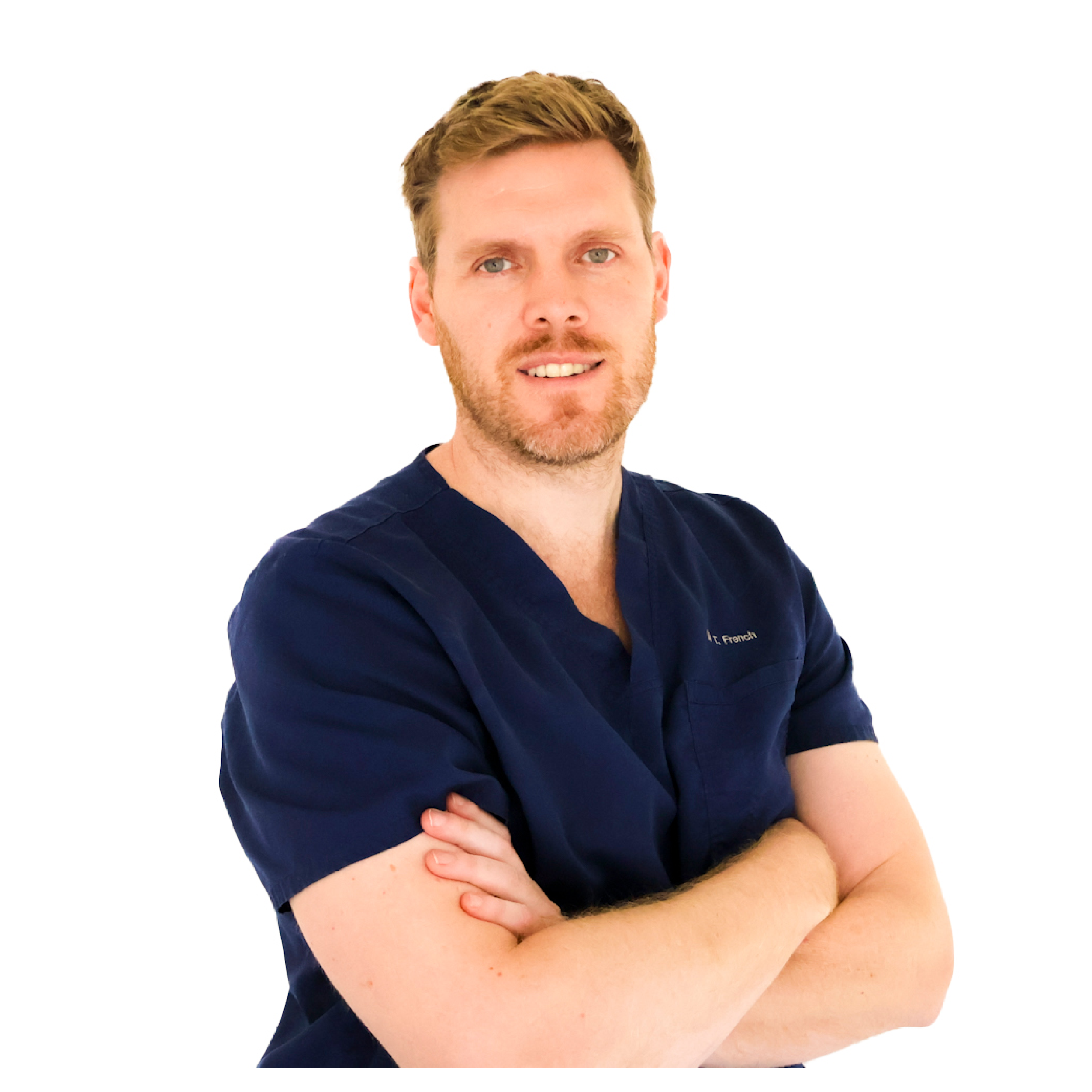
Vein treatment in Melbourne is led by Dr Tim French
Vein and vascular work at We are led by Dr Tim French (MED0001790529), a phlebologist with AHPRA specialist and general registration and over a decade of clinical experience in venous medicine. You can check that registration yourself by name at ahpra.gov.au.
One point worth knowing: phlebology is not an AHPRA-recognised specialty in Australia. It describes a field of practice rather than a protected specialist title, so the useful questions are about training, experience and volume in venous work rather than about the word itself.
What to expect afterwards
You are provided with an after-hours direct number in case you have questions or concerns.
Discomfort after laser treatment is generally minimal, though individual experiences vary. Your appearance immediately after treatment depends on which treatment your doctor or cosmetic physician selects for your condition.
Aftercare:
- Your skin may feel tender for several days.
- Avoid harsh skin cleansers.
- Sunscreen is essential after laser treatment.
- Avoid scratching or rubbing the treated skin.
- Follow your doctor's specific instructions.
No compression stockings or special dressings are required, which distinguishes surface laser from sclerotherapy and EVLT.
Expected, and not expected
Expected: redness and mild swelling along the treated vein for a day or two, tenderness for several days, the vein darkening before it fades, and a temporary flushed appearance after facial treatment.
Call us for blistering, a wound that does not heal, spreading redness or heat, pus, or a pigmented mark that is not fading after several weeks.
Call 000 for pain and swelling in one calf, chest pain or shortness of breath. Those are signs of a clot and are unrelated to how minor the surface treatment was.
Two results people are not warned about
- Matting - a fine network of new tiny vessels appearing near a treated area. It is a recognised outcome of vein treatment generally, often settles on its own over months, and is worth knowing about before it happens rather than afterwards.
- Post-treatment pigmentation - a brownish line following the path of a treated vein. It usually fades, though it can take months, and sun exposure makes it worse. This is one of the reasons sunscreen is not optional afterwards.
Costs
Surface laser treatments vary in cost depending on which laser is used and the area treated. A quote is provided at consultation.
As at September 2024 and including GST, a vein consultation with a doctor - which may include ultrasound - is $230. For comparison, sclerotherapy starts from $470 and EVLT from $4,200. See varicose vein treatment costs.
Medicare
Purely cosmetic treatment of surface veins is less likely to attract a Medicare rebate than treatment of symptomatic venous disease. Your physician will discuss any applicable rebates at your initial consultation.
This is another reason the first distinction on this page matters: if you have genuine symptoms, say so plainly at the consultation and have them documented. Not to obtain a rebate you are not entitled to, but because symptomatic venous disease is a medical condition and is assessed and funded differently from a cosmetic concern. We are not a no-gap provider.
What you should leave the consultation with
- Whether you have underlying reflux, and whether an ultrasound was done to establish it
- Which veins are being treated by which method, and in which order
- The expected number of sessions and the total cost, not a per-session price
- What a realistic degree of clearance looks like for your veins
- The risks specific to your skin type
- Whether any part of it may attract a Medicare rebate
- Aftercare instructions and the after-hours number
Risks
All procedures carry some risk. Laser treatment of the skin carries risks including changes in pigmentation, blistering and, uncommonly, scarring - and these risks are higher in darker skin types, which is why suitability is assessed first. Risks are discussed with you in detail at consultation, and you are given written information to take home. Please read our information on the risks and complications of cosmetic surgery before proceeding.
Individual responses and results may vary. Any surgical or invasive procedure carries risks. Before proceeding you should seek a second opinion from an appropriately qualified health practitioner.
Common questions about laser treatment for veins
How does the laser remove a vein?
Laser light is preferentially absorbed by the red colour in the blood flowing through the vein. The light converts to heat, causing the vein to shrink.
How do I tell whether my veins are cosmetic or a medical problem?
Aching or heaviness that is worse by evening, ankle swelling, itching, brown staining or hardening of the skin near the ankle, night cramps, or any history of clots or ulcers all point towards venous disease and warrant assessment first. Flat, symptomless threads that do not change through the day point towards a cosmetic concern.
Why does that distinction matter so much?
Because it determines which treatment is appropriate, whether Medicare may contribute, and whether surface laser is even the right conversation.
Can surface laser treat my varicose veins?
No - surface laser is not the preferred treatment for varicose veins. They are larger and deeper than surface laser can effectively reach. Where varicose veins are the concern, the preferred laser method is endovenous laser ablation, which works from inside the vein rather than through the skin.
Why do I need an ultrasound before treating leg veins?
Because visible veins are often the downstream consequence of failing valves in a deeper vein. A duplex ultrasound shows whether that is the case and where. Without it, the veins clear and then return.
What if nobody has offered me a scan?
Ask why not. A vein consultation which may include ultrasound is $230 - a small figure next to a course of treatment aimed at the wrong target.
Which veins is laser best for?
Small spider veins on the face and nose, small spider veins on the legs and body, and veins that have not responded to sclerotherapy.
Is it suitable for my skin tone?
Surface laser is generally only suitable for people with lighter skin, because the laser targets colour contrast between the vein and the surrounding skin. IPL and Laser Genesis are the options preferred for darker skin tones. Your practitioner will assess whether laser is appropriate for your skin type.
What is the difference between the lasers used?
Aura laser is for fine spider veins, offering precision treatment for small superficial vascular concerns. IPL uses broad-spectrum light suited to superficial spider veins and facial veins. Laser Genesis is primarily a skin rejuvenation treatment but can reduce the visibility of tiny facial veins by gently heating them. YAG laser has a longer wavelength, making it effective for deeper and larger veins.
How is the right laser chosen for me?
It depends on the size, depth and location of the veins, and on your skin type.
How does laser compare with sclerotherapy?
Laser needs no needles and no compression stockings, and is the better option for facial veins where sclerotherapy is generally not used - but it is limited to fine superficial veins and is skin-type dependent. Sclerotherapy injects a solution and is used for leg spider and reticular veins, from $470.
Do I have to choose between them?
Often not. They treat different veins, and more than one is frequently part of the same plan - typically the deeper problem first, then the surface veins.
How many sessions will I need?
Almost never one. Veins fade over weeks after each treatment rather than disappearing on the day, and a realistic plan names a number of sessions and their spacing at the start.
Will my veins be completely gone?
The realistic outcome is substantial reduction, not erasure. Some clear completely, others fade, a few do not respond - and new ones can appear over the years because the underlying tendency remains.
What cost figure should I ask for?
The total for the plan, plus what a maintenance session a year or two out would cost. That is the honest figure for this kind of treatment.
Can I have this while pregnant?
Assessment is usually deferred. Leg veins commonly appear or worsen in pregnancy and frequently improve in the months afterwards.
Will I need compression stockings afterwards?
No. No compression stockings or special dressings are required, which distinguishes surface laser from sclerotherapy and EVLT.
Does it hurt?
Discomfort after laser treatment is generally minimal, though individual experiences vary.
How will my skin look straight after?
It depends on which treatment is selected for your condition. Expect redness and mild swelling along the treated vein for a day or two, tenderness for several days, and the vein darkening before it fades.
What is matting?
A fine network of new tiny vessels appearing near a treated area. It is a recognised outcome of vein treatment generally and often settles on its own over months - worth knowing before it happens.
Why might I be left with a brown line?
Post-treatment pigmentation following the path of a treated vein. It usually fades, though it can take months, and sun exposure makes it worse - which is why sunscreen afterwards is not optional.
What aftercare is needed?
Avoid harsh skin cleansers, avoid scratching or rubbing the treated skin, and follow your doctor's specific instructions. Sunscreen is essential. You are also provided with an after-hours direct number.
When should I call us?
Blistering, a wound that does not heal, spreading redness or heat, pus, or a pigmented mark that is not fading after several weeks.
When should I call 000?
Pain and swelling in one calf, chest pain or shortness of breath - signs of a clot, regardless of how minor the surface treatment was.
What are the risks of laser on the skin?
Changes in pigmentation, blistering and, uncommonly, scarring. These risks are higher in darker skin types, which is why suitability is assessed first.
What does it cost?
Surface laser varies with the laser used and the area treated, and a quote is provided at consultation. A vein consultation with a doctor, which may include ultrasound, is $230 including GST as at September 2024. Sclerotherapy starts from $470 and EVLT from $4,200.
Will Medicare cover it?
Purely cosmetic treatment of surface veins is less likely to attract a rebate than treatment of symptomatic venous disease. Your physician will discuss applicable rebates at your initial consultation. We are not a no-gap provider.
Who performs vein treatment at Me Clinic?
Vein and vascular work is led by Dr Tim French (MED0001790529), a phlebologist with AHPRA specialist and general registration and over a decade of clinical experience in venous medicine.
Is phlebology an AHPRA specialty?
No. It describes a field of practice rather than a protected specialist title, so the useful questions are about training, experience and volume in venous work rather than about the word itself.
Related pages
See spider veins treatment, varicose veins, facial veins, or all vein treatments.
Individual results may vary. Any surgical or invasive procedure carries risks. Before proceeding you should seek a second opinion from an appropriately qualified health practitioner.
Images on This Page
-
https://www.meclinic.com.au/wp-content/uploads/2024/03/meclinic-logo.png
Me Clinic
-
https://www.meclinic.com.au/wp-content/uploads/2022/02/call.png
call
-
https://www.meclinic.com.au/wp-content/uploads/2025/11/dr-tim-photo.png
(no alt text)
-
https://www.meclinic.com.au/wp-content/uploads/2024/02/acps.png
(no alt text)
-
https://www.meclinic.com.au/wp-content/uploads/2024/02/racs.png
(no alt text)
-
https://www.meclinic.com.au/wp-content/uploads/2024/02/fracs.png
(no alt text)
-
https://www.meclinic.com.au/wp-content/uploads/2024/02/isaps.png
(no alt text)
-
https://www.meclinic.com.au/wp-content/uploads/2024/02/cpca.png
(no alt text)
-
https://www.meclinic.com.au/wp-content/uploads/2022/02/auscop.png
(no alt text)
-
https://www.meclinic.com.au/wp-content/uploads/2022/02/amav.png
(no alt text)
-
https://www.meclinic.com.au/wp-content/uploads/2022/03/channel7.png
(no alt text)
-
https://www.meclinic.com.au/wp-content/uploads/2022/03/channel9.png
(no alt text)
-
https://www.meclinic.com.au/wp-content/uploads/2022/03/channel10.png
(no alt text)
-
https://www.meclinic.com.au/wp-content/uploads/2022/03/abc.png
(no alt text)
-
https://www.meclinic.com.au/wp-content/uploads/2022/02/malvern-map-thumb.jpg
(no alt text)
-
https://www.meclinic.com.au/wp-content/uploads/2022/03/home-conctact-tab.jpg
(no alt text)
-
https://bat.bing.com/action/0?ti=56339805&Ver=2&mid=9bfb1f7c-b6a7-4996-ba05-edefe06f9f07&bo=1&sid=25386920acc211f182535d662fefaace&vid=25389fa0acc211f181e04d1394a5418c&vids=1&msclkid=N&pi=918639831&lg=en-US&sw=1280&sh=720&sc=24&tl=Varicose%20Veins%20Laser%20Treatments%20-%20Find%20Effective%20Relief&p=https%3A%2F%2Fwww.meclinic.com.au%2Fbody%2Fvein-treatments%2Fvaricose-veins-laser-treatments%2F&r=<=1044&evt=pageLoad&sv=2&cdb=AQAQ&rn=407905
(no alt text)