Varicose vein treatment cost
At Me Clinic, varicose vein treatment starts from $470.
A range of factors affects the final cost - the treatment method used, the number of veins being treated, the number of sessions required and the complexity of the procedure. A consultation is needed to obtain a personalised quote for your condition.
Varicose veins are a common condition, affecting a substantial proportion of the population and generally more prevalent among women. They occur when veins, usually in the legs and feet, become twisted and enlarged, and are commonly associated with pregnancy, genetics or prolonged standing. Treatment can reduce their visibility or remove them altogether.
Price guide
As at September 2024 and including GST:
- Vein consultation with a doctor, which may include ultrasound - $230.
- Sclerotherapy treatment session - from $470.
- Ultrasound-guided sclerotherapy treatment session - from $740.
- Endovenous laser treatment (EVLT) - from $4,200.
- Varicose vein surgery - typically costs more than the less invasive options; quoted individually.
What makes up the cost
You should understand all the fees associated with vein treatment before committing to a procedure. Your physician should provide a complete breakdown of each cost; at Me Clinic these are set out at your initial consultation.
- Consultation fee. Charged when you attend the initial consultation. This is the standard vein consultation fee and is disclosed at the time of booking. If you proceed with treatment on the day of the consultation, the consultation fee may be waived.
- Procedure fee. The fee for performing the treatment itself, included in the price quoted at your consultation.
- Number of treatment sessions. Some conditions require more than one session, which affects the total.
- Type of treatment recommended. Methods vary considerably in complexity and cost.
- Anaesthetic fee. Most varicose vein treatments do not require anaesthetic. The exceptions are EVLT and vein surgery. EVLT is usually performed in clinic under local anaesthetic, and where local anaesthesia is required the cost is included in your quote.
- Compression garments and post-procedure care. You may need to cover incidentals such as compression garments or stockings, ointment for bruising, or anti-inflammatory medication.
How the treatment method affects cost
Sclerotherapy - from $470
A sclerosant solution is injected into the affected vein through very small micro-needles, causing the body to close and contract the vein until it disappears. It suits large veins, particularly in the legs, and also smaller veins as a way to prevent them deteriorating into larger varicose veins.
Two types are used. Liquid sclerosant, and foam sclerosant. Foam is generally preferred because less solution is required to achieve the result, it is visible under ultrasound which allows the treatment to be monitored, and it typically causes less discomfort with more rapid healing.
Ultrasound-guided sclerotherapy - from $740
Treatment involving ultrasound monitoring generally costs more than standard sclerotherapy, because it targets veins that are not visible at the surface. Both forms of sclerotherapy typically cost less than varicose vein surgery. Sclerotherapy can also be combined with vein surgery, which affects the cost.
Endovenous laser ablation (EVLT) - from $4,200
A fibre-optic probe is inserted into the vein and laser light generates heat, causing the vein to shrink and close. It suits larger veins such as the greater and small saphenous veins, can be performed in summer or winter, and offers a relatively quick recovery. EVLT typically costs more than sclerotherapy but less than vein surgery.
Surface laser treatment
Effective for small spider veins on the face and nose, and usable on small veins on the legs and body. Laser light is absorbed by blood in the vein, converts to heat and causes the vein to shrink. No dressings or stockings are needed. It is only suitable for patients with lighter skin.
Surface laser options include Aura laser, intense pulsed light (IPL), Laser Genesis and YAG laser, which differ in cost. For varicose veins specifically, other procedures are generally more effective given the size and nature of the veins - the preferred laser method for varicose veins is endovenous laser ablation.
Varicose vein surgery
There are two types. Ambulatory phlebectomy extracts the vein through very small incisions, offering a relatively quick recovery, and is usually performed in clinic under local anaesthetic. Where that is not suitable, traditional vein surgery may be required for larger veins that also need ligation and possibly stripping and removal; this is usually performed in hospital under general anaesthetic.
Vein surgery typically costs more than less invasive treatments. At Me Clinic surgery is treated as the last option - the preference is the least invasive treatment that addresses the veins with minimal downtime.
Is varicose vein treatment covered by Medicare?
You may be able to claim a Medicare rebate for vein treatment. Your physician will discuss any applicable rebates at your initial consultation, and you can contact Medicare directly for further detail about what applies to your situation. A valid GP referral supports a claim.
Vein treatment is one of the areas where a rebate is more likely to apply than in purely cosmetic surgery, because venous disease can cause pain, swelling, skin changes and ulceration rather than being an appearance concern alone.
The treatment process
- Consultation. A one-on-one consultation with a Me Clinic physician who assesses your condition, explains the treatment options and likely outcomes, gives an overview of the process and expected timeframes, undertakes a general medical consult in most cases, and provides a quote outlining the associated costs.
- Booking. If you decide to proceed, a time is scheduled for your procedure.
- The procedure. Your physician advises what to expect afterwards. Depending on the treatment, most patients are able to return home immediately.
- Post-procedure. Depending on the treatment performed, you may need to attend a post-procedure check-up. The clinic is available for questions or concerns between appointments.
Risks
All procedures carry some risk. Risks vary by treatment method and are discussed with you in detail at consultation, and you are given written information to take home. Please read our information on the risks and complications of cosmetic surgery before proceeding.
Results differ between patients because conditions and requirements differ. Individual results may vary.
Any surgical or invasive procedure carries risks. Before proceeding you should seek a second opinion from an appropriately qualified health practitioner.
Who performs vein treatment
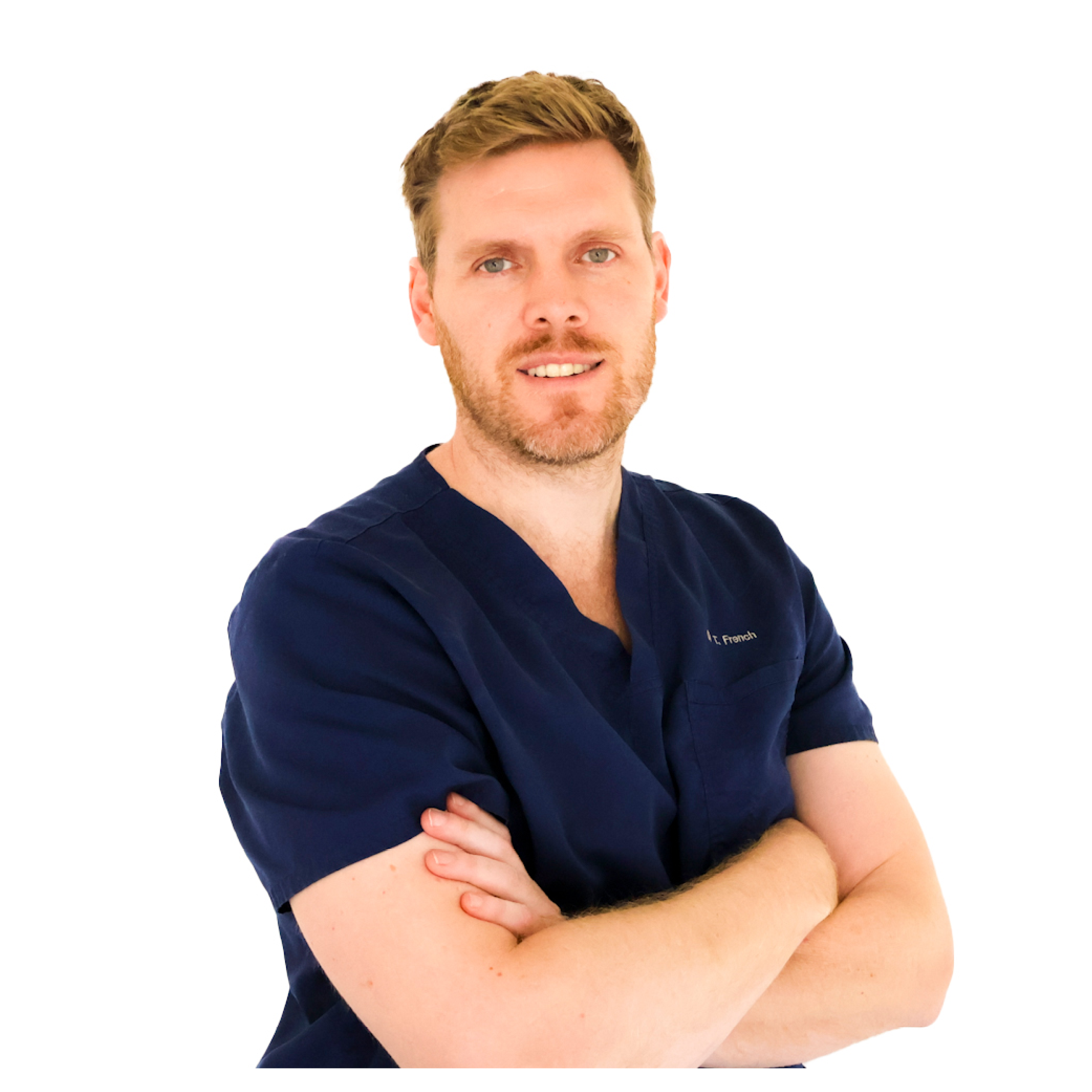
Dr Tim French (MED0001790529) is a phlebologist with AHPRA specialist and general registration and over a decade of clinical experience in venous medicine. He holds an MBBS, a Diploma of Surgical Anatomy (University of Melbourne), and further qualifications in phlebology and ultrasound in phlebology, and has worked at major hospitals including the Royal Melbourne Hospital and the Royal Adelaide Hospital.
Related pages
See vein treatments, varicose veins, sclerotherapy, or the full Me Clinic pricing page.
Images on This Page
-
https://www.meclinic.com.au/wp-content/uploads/2024/03/meclinic-logo.png
Me Clinic
-
https://www.meclinic.com.au/wp-content/uploads/2022/02/call.png
call
-
https://www.meclinic.com.au/wp-content/uploads/2025/11/dr-tim-photo.png
(no alt text)
-
https://www.meclinic.com.au/wp-content/uploads/2024/02/acps.png
(no alt text)
-
https://www.meclinic.com.au/wp-content/uploads/2024/02/racs.png
(no alt text)
-
https://www.meclinic.com.au/wp-content/uploads/2024/02/fracs.png
(no alt text)
-
https://www.meclinic.com.au/wp-content/uploads/2024/02/isaps.png
(no alt text)
-
https://www.meclinic.com.au/wp-content/uploads/2024/02/cpca.png
(no alt text)
-
https://www.meclinic.com.au/wp-content/uploads/2022/02/auscop.png
(no alt text)
-
https://www.meclinic.com.au/wp-content/uploads/2022/02/amav.png
(no alt text)
-
https://www.meclinic.com.au/wp-content/uploads/2022/03/channel7.png
(no alt text)
-
https://www.meclinic.com.au/wp-content/uploads/2022/03/channel9.png
(no alt text)
-
https://www.meclinic.com.au/wp-content/uploads/2022/03/channel10.png
(no alt text)
-
https://www.meclinic.com.au/wp-content/uploads/2022/03/abc.png
(no alt text)
-
https://www.meclinic.com.au/wp-content/uploads/2022/02/malvern-map-thumb.jpg
(no alt text)
-
https://www.meclinic.com.au/wp-content/uploads/2022/03/home-conctact-tab.jpg
(no alt text)
-
https://bat.bing.com/action/0?ti=56339805&Ver=2&mid=0d51436f-28d5-428f-bdbf-0bf5d5063626&bo=1&sid=f9c78cc0ac3f11f1a61bcf0698fdbdf3&vid=f9c77010ac3f11f1b071e5b63152d36a&vids=1&msclkid=N&pi=918639831&lg=en-US&sw=1280&sh=720&sc=24&tl=Varicose%20Vein%20Treatment%20Costs%20-%20Explore%20Your%20Option&p=https%3A%2F%2Fwww.meclinic.com.au%2Fbody%2Fvein-treatments%2Fvaricose-vein-treatment-costs%2F&r=<=2719&evt=pageLoad&sv=2&cdb=AQAQ&rn=281477
(no alt text)