Endovenous laser ablation (EVLT or EVLA)
Endovenous laser ablation is a minimally invasive treatment for larger veins, particularly the greater saphenous and small saphenous veins. Me Clinic was one of the first clinics in Australia to perform this treatment.
It is used where a larger trunk vein is refluxing on ultrasound, or where varicose veins are extensive, bulging, or linked to a larger underlying reflux source. It is generally less invasive and less costly than vein surgery.
How it works
A fibre-optic probe is inserted into the affected vein. Laser light delivered through the probe heats the vein along its length, causing it to shrink through the effect of heat on the collagen in the vein wall. The treated vein then develops new collagen during healing, and blood is redirected through healthier veins.
The procedure is usually performed in clinic under local anaesthetic.
Step by step
- The vein is mapped with ultrasound and marked, generally while you are standing.
- The skin is numbed at a single entry point, usually near the knee or lower leg.
- The vein is entered with a fine needle under ultrasound, and a thin sheath is passed along it.
- The laser fibre is threaded up inside the vein and its tip positioned precisely — a short distance below the junction where the vein joins the deep system.
- Tumescent anaesthetic is infiltrated around the vein along its length. This is the step described below, and it is the one that makes the whole thing possible.
- The laser is activated and the fibre withdrawn slowly, treating the vein along its length.
- The result is checked with ultrasound, compression is applied, and you get up and walk.
There is no cut and no stitch — access is through a needle puncture.
The tumescent step, and why it does three jobs at once
Before the laser is switched on, a large volume of very dilute local anaesthetic in salt water is injected around the vein along its whole length, guided by ultrasound. It looks like the most laborious part of the procedure, and it is the reason the procedure is safe and comfortable.
It does three separate things:
- It numbs the vein and everything around it, so what is about to happen is not felt.
- It squeezes the vein closed onto the fibre. Heat treats a vein wall far more effectively when the wall is in contact with the fibre rather than separated from it by a column of blood — the same principle that makes foam better than liquid in sclerotherapy.
- It acts as a heat sink. The fluid forms a cuff of cool liquid between the vein and everything else — skin, nerves, other structures — absorbing heat that would otherwise reach them. This is what makes skin burns and nerve injury uncommon.
So if the appointment seems to spend a long time on injections before anything else happens, that is the part doing the protective work.
Advantages
- Suitable for large veins that surface treatments cannot address.
- Can be performed in both summer and winter, unlike some treatments where compression in hot weather is a barrier.
- A shorter recovery period than vein surgery. Some patients are able to walk immediately after the procedure.
- Minimal scarring given the size of vein treated.
Results vary between individuals, and your circumstances should be discussed with your doctor.
Is it safe to close the saphenous vein?
A reasonable question about a vein that runs the length of the leg. The answer is that a refluxing saphenous vein is not doing useful work — its valves have failed, so instead of moving blood upward it allows blood to fall back down and overload everything below it. The deep veins within the muscle carry the great majority of the blood back to the heart, and continue to do so.
Which is why the ultrasound at assessment matters as much as the treatment: it confirms that the deep system is working before anything superficial is closed.
One consideration worth raising with your doctor, because it is rarely mentioned: the saphenous vein is the classic conduit used for bypass surgery — coronary or in the leg. In practice this seldom changes the decision, because a vein that is varicose and refluxing is generally not suitable as a graft anyway. But if you have known coronary artery disease or peripheral arterial disease, or a strong family history, say so. It is a two-sentence conversation and it belongs in the consultation rather than afterwards.
Combining with other treatments
After EVLT, any remaining surface varicose and spider veins can be treated with sclerotherapy. Treating the underlying refluxing trunk vein first, then addressing the surface veins, is a common sequence and generally gives a more durable result than treating surface veins alone.
Some surface veins also shrink on their own once the source is closed, which is why the branches are usually reviewed a few weeks later rather than treated on the same day.
The follow-up scan
Expect an ultrasound a few days to about a week after the procedure. It is routine rather than a sign of concern, and it does two things: confirms the treated vein has closed along its length, and checks the junction where it meets the deep system.
That second check matters because one recognised complication of any thermal technique is extension of clot from the treated vein into the deep vein at the junction. It is uncommon, usually causes no symptoms, and is generally managed conservatively or with a short course of blood thinning — but it is found by looking rather than by waiting for symptoms.
Attend the scan even if you feel completely well. That is the point of it.
What to expect afterwards
You are provided with an after-hours direct number in case you have questions or concerns.
Normal and expected
- Bruising. Some bruising is expected, and some patients bruise more easily than others. Arnica ointment — supplied by the clinic or available from health food stores — can help.
- Darkening. Some veins may turn dark soon after treatment and temporarily look worse before they look better.
- Tenderness and redness along sections of the treated veins. This is not an infection. Walking rather than sitting reduces the soreness.
- Lumps may form along sections of the treated veins. This is normal. Your doctor may treat them at a subsequent visit.
When to contact us
- Blisters over the skin. A dry dressing with a Melolin pad held with Micropore tape, changed daily, is usually all that is required.
- Generalised rash or itching, particularly of the palms of the hands or soles of the feet. This most often indicates an allergic reaction — contact us.
- Discomfort that is not settling. Consult the clinic or your healthcare provider about pain management.
The pulling sensation at a week
One thing worth knowing in advance because it catches people out: around five days to two weeks after EVLT, many people notice a tight, pulling or drawing sensation along the inner thigh, sometimes described as a cord under the skin.
That is the treated vein contracting as it seals and shrinks. It is expected, it often feels worse than the first few days did, and it settles over the following weeks. Walking and simple analgesia help. It is not a sign that something has gone wrong — but if it is severe, one-sided and accompanied by a hot, swollen calf, that is different and should be assessed the same day.
Activity after treatment
- Walk up to 30 minutes daily while attending the clinic for treatment, and continue with your normal activities.
- Avoid vigorous exercise such as aerobics or running in the first 24 hours, and while wearing compression-wrap bandages.
- On a long car or plane trip, walk for at least five minutes every hour during the trip.
Tell your doctor before treatment about any long-haul flight planned in the following weeks — it changes the advice and sometimes the timing.
Compression stockings
After treatment your legs may need to be taped or bandaged. You should then wear your stockings whenever standing, as advised by your doctor. Stockings may be removed when lying in bed, or temporarily when showering — on during the day, off at night.
They may need to be worn for a number of weeks after treatment. Your doctor will advise how long applies in your case. Wearing them as directed materially affects the result.
Who this suits, and who it does not
It tends to suit: people with a refluxing trunk vein demonstrated on duplex ultrasound, a working deep venous system, symptoms or visible varicose veins arising from that source, and the ability to walk and wear compression afterwards.
It tends not to suit, or needs something else:
- Anyone whose problem is surface veins without trunk reflux — sclerotherapy is the relevant treatment
- Anyone with a current deep vein thrombosis or untreated clotting disorder
- Anyone with significant arterial disease in the legs, where compression may not be safe
- Anyone with vein anatomy a catheter cannot navigate, such as a very tortuous or extremely superficial trunk — a non-thermal option or surgery may suit better
- Anyone with active infection or broken skin over the area
- Anyone unable to walk or immobile
- Anyone pregnant — treatment is generally deferred
Tell your doctor about any previous DVT or pulmonary embolism, clotting disorders, blood-thinning medication, hormone therapy or the contraceptive pill, known heart or arterial disease, and any allergy to local anaesthetic. And never stop a prescribed blood thinner on your own.
Risks
All procedures carry some risk. EVLT is one of the vein treatments that requires anaesthetic. Risks are discussed with you in detail at consultation, and you are given written information to take home.
Recognised risks include:
- Bruising, tenderness and firm lumps along the treated vein
- A tight, pulling sensation along the treated vein in the second week
- Inflammation of the treated vein (superficial thrombophlebitis)
- Brown or tan staining of the skin over the treated vein, usually fading over months
- Nerve irritation causing a patch of numbness or tingling, more likely where a vein runs close to a nerve in the lower leg. Usually temporary, occasionally persistent
- Skin burn or blistering — uncommon, and the reason for the tumescent step
- Infection at the entry site
- Extension of clot into the deep vein at the junction — uncommon, usually symptomless, found on the follow-up scan and managed accordingly
- Deep vein thrombosis, and rarely pulmonary embolism
- Incomplete closure or later re-opening of the vein, requiring further treatment
- Recurrence, and the development of new veins over time
- Reaction to local anaesthetic
Please read our information on the risks and complications of cosmetic surgery before proceeding.
Individual results may vary. Any surgical or invasive procedure carries risks. Before proceeding you should seek a second opinion from an appropriately qualified health practitioner.
Expected, versus call us, versus emergency
- Expected: bruising along the thigh; the vein looking darker before it improves; tenderness and redness along its line; firm lumps; a tight pulling sensation from about day five; compression stockings.
- Call us: blisters; spreading redness, heat or pus at the entry site; fever; a lump that is enlarging or very painful; a rash or itching especially of palms and soles; numbness that is not improving; discomfort that is not settling.
- Emergency — call 000 or go to an emergency department: sudden breathlessness, chest pain, coughing blood or feeling faint; or a calf or thigh that becomes swollen, hot, tight and painful.
What you should leave with
- Your ultrasound findings in plain terms — which vein was treated and why
- A date for the follow-up scan, and why it matters
- How long to wear compression, and how to manage bandages
- Written aftercare, including what the second-week pulling sensation is
- The signs to call about, and an after-hours number
- The plan for the remaining surface veins, and when they will be reviewed
- The likely total across the whole plan, and whether a rebate applies
Costs and Medicare
As at September 2024 and including GST, EVLT starts from $4,200, and a vein consultation with a doctor — which may include ultrasound — is $230. EVLT typically costs more than sclerotherapy but less than vein surgery. Where local anaesthesia is required, the cost is included in your quote.
You may be able to claim a Medicare rebate for vein treatment. Your physician will discuss any applicable rebates at your initial consultation, and you can contact Medicare directly for further detail. See varicose vein treatment costs.
Broadly, a rebate is possible where treatment is for a medical reason — duplex ultrasound showing reflux together with symptoms or complications. Get the GP referral before your first appointment, describe your symptoms accurately, and ask for the cost both with and without a rebate. Budget also for compression stockings and for the sclerotherapy sessions that usually follow, since EVLT rarely finishes the job on its own. Item numbers and criteria change, and eligibility is a clinical judgement made at consultation. We are not a no-gap provider.
Who performs EVLT
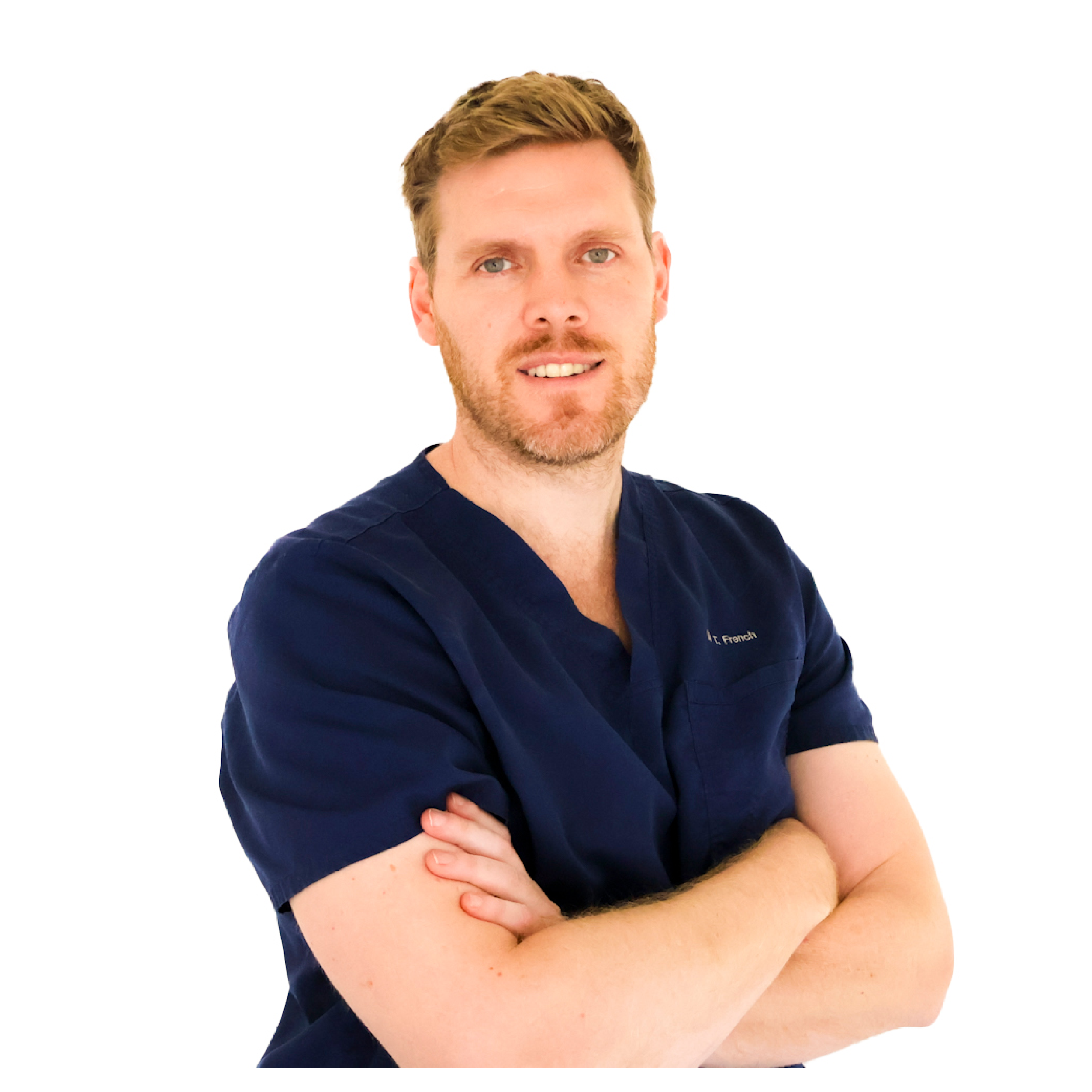
Dr Tim French (MED0001790529) practises in phlebology, holds AHPRA registration and has over a decade of clinical experience in venous medicine. He holds an MBBS, a Diploma of Surgical Anatomy (University of Melbourne), and further qualifications in phlebology and ultrasound in phlebology, and has worked at major hospitals including the Royal Melbourne Hospital and the Royal Adelaide Hospital.
One point of accuracy: phlebology is not an AHPRA-recognised medical specialty in Australia. Doctors practising in it hold general or specialist registration in a recognised field alongside additional training in venous medicine. Registration and any conditions on it can be checked free of charge on the AHPRA public register.
We are at 4 Burke Road, Malvern East VIC 3145, five minutes’ walk from Caulfield station. Phone 1300 852 050, or use the online consultation form.
Related: vein treatments, varicose veins, ultrasound-guided sclerotherapy, vein surgery.
Individual results may vary. Any surgical or invasive procedure carries risks. Before proceeding you should seek a second opinion from an appropriately qualified health practitioner.
Common questions about endovenous laser ablation
What is EVLT?
A minimally invasive treatment for larger veins, particularly the greater and small saphenous veins. A fibre-optic probe is placed inside the vein and laser light heats it along its length so that it shrinks and closes.
When is it used?
Where a larger trunk vein is refluxing on ultrasound, or where varicose veins are extensive, bulging, or linked to a larger underlying reflux source.
Is there a cut?
No — access is through a needle puncture under ultrasound, with no stitch.
What is the tumescent step?
A large volume of very dilute local anaesthetic infiltrated around the vein along its length before the laser is switched on.
Why does it take so long?
Because it does three jobs: it numbs the area, it squeezes the vein closed onto the fibre so the heat reaches the wall, and it forms a cuff of cool fluid that absorbs heat before it can reach skin or nerves.
Is it safe to close the saphenous vein?
Yes, where it is refluxing — a vein whose valves have failed is not doing useful work, and the deep veins carry the great majority of the blood. The ultrasound confirms the deep system is working before anything superficial is closed.
Is there any reason to keep it?
The saphenous vein is the classic conduit for bypass surgery. In practice this seldom changes the decision, because a varicose refluxing vein is generally not suitable as a graft — but mention known coronary or peripheral arterial disease, or a strong family history, at consultation.
Will I need other treatment as well?
Usually. Remaining surface varicose and spider veins are treated with sclerotherapy afterwards, and some shrink on their own once the source is closed — which is why the branches are reviewed a few weeks later rather than treated the same day.
Why is there a follow-up scan?
To confirm the vein has closed along its length and to check the junction with the deep system. It is routine rather than a sign of concern.
What is it checking for at the junction?
Extension of clot from the treated vein into the deep vein — uncommon, usually symptomless, and found by looking rather than by waiting for symptoms.
Should I attend even if I feel fine?
Yes. That is the point of it.
What is normal afterwards?
Bruising, veins turning dark and temporarily looking worse, tenderness and redness along the treated vein, and firm lumps that your doctor may treat at a later visit.
Why does my thigh feel tight a week later?
That is the treated vein contracting as it seals and shrinks — a tight, pulling, cord-like sensation, typically from about day five to two weeks. It often feels worse than the first few days did and settles over the following weeks.
When is that sensation not normal?
If it is severe and one-sided with a hot, swollen calf. That should be assessed the same day.
What activity is recommended?
Walk up to 30 minutes daily and continue normal activities; avoid vigorous exercise in the first 24 hours and while wearing compression-wrap bandages; and walk five minutes every hour on a long trip.
How long do I wear stockings?
Whenever standing, as advised — on during the day, off at night — potentially for a number of weeks. Wearing them as directed materially affects the result.
What are the risks?
Bruising, tenderness and lumps; a pulling sensation in the second week; inflammation of the treated vein; brown staining; nerve irritation causing numbness or tingling, usually temporary; skin burn or blistering, uncommon; infection at the entry site; clot extension at the junction; deep vein thrombosis and rarely pulmonary embolism; incomplete closure or later re-opening; recurrence; and reaction to local anaesthetic.
Who should not have it?
Anyone whose problem is surface veins without trunk reflux; anyone with a current DVT or untreated clotting disorder; significant arterial disease; anatomy a catheter cannot navigate; active infection or broken skin; immobility; or pregnancy.
What should I disclose?
Previous DVT or pulmonary embolism, clotting disorders, blood thinners, hormone therapy or the contraceptive pill, known heart or arterial disease, and any local anaesthetic allergy. Never stop a prescribed blood thinner on your own.
When is it an emergency?
Sudden breathlessness, chest pain, coughing blood or feeling faint; or a calf or thigh becoming swollen, hot, tight and painful. Call 000 or go to an emergency department.
What does it cost?
From $4,200, with a vein consultation — which may include ultrasound — at $230, as at September 2024 including GST. Local anaesthesia is included in the quote.
What else should I budget for?
Compression stockings, and the sclerotherapy sessions that usually follow — EVLT rarely finishes the job on its own.
Will Medicare contribute?
Possibly, where treatment is for a medical reason — ultrasound-demonstrated reflux together with symptoms or complications. Get a GP referral beforehand and ask for the cost both ways.
Images on This Page
-
https://www.meclinic.com.au/wp-content/uploads/2024/03/meclinic-logo.png
Me Clinic
-
https://www.meclinic.com.au/wp-content/uploads/2022/02/call.png
call
-
https://www.meclinic.com.au/wp-content/uploads/2025/11/dr-tim-photo.png
(no alt text)
-
https://www.meclinic.com.au/wp-content/uploads/2022/02/malvern-map-thumb.jpg
(no alt text)
-
https://www.meclinic.com.au/wp-content/uploads/2024/02/acps.png
Australian Society Of Plastic Surgeons
-
https://www.meclinic.com.au/wp-content/uploads/2024/02/racs.png
Royal Australian College Of Surgeons
-
https://www.meclinic.com.au/wp-content/uploads/2024/02/fracs.png
fracs
-
https://www.meclinic.com.au/wp-content/uploads/2024/02/isaps.png
isaps
-
https://www.meclinic.com.au/wp-content/uploads/2024/02/cpca.png
(no alt text)
-
https://www.meclinic.com.au/wp-content/uploads/2022/02/auscop.png
College
-
https://www.meclinic.com.au/wp-content/uploads/2022/02/amav.png
AMA
-
https://www.meclinic.com.au/wp-content/uploads/2022/03/home-conctact-tab.jpg
(no alt text)
-
https://bat.bing.com/action/0?ti=56339805&Ver=2&mid=46166628-8b9a-4078-874c-fb177b96b874&bo=1&sid=0cc8b4a0ac3d11f19f013bbc7ece84a3&vid=0cc8dee0ac3d11f1af912b0755aff69a&vids=1&msclkid=N&pi=918639831&lg=en-US&sw=1280&sh=720&sc=24&tl=Endovenous%20Laser%20Treatment%20(EVLT)%20-%20Vein%20Therapy%20Option&p=https%3A%2F%2Fwww.meclinic.com.au%2Fbody%2Fvein-treatments%2Fendovenous-laser-treatment-evlt%2F&r=<=2427&evt=pageLoad&sv=2&cdb=AQAQ&rn=638774
(no alt text)