Vein treatments at Me Clinic
Me Clinic treats venous disease including varicose veins, spider veins and venous ulcers. Vein conditions range from a cosmetic concern through to pain, discomfort and genuine health risk. They occur most often in the legs but can also appear as facial veins.
Vein treatment is one of the areas where a Medicare rebate is most likely to apply, and consultations are with a doctor rather than a surgeon. A vein consultation, which may include ultrasound, is $230 as at September 2024 including GST.
Varicose veins
Varicose veins are twisted, enlarged veins, most commonly in the legs, caused by blood pooling when valves inside the vein are damaged or weakened. They are often large, raised and swollen, and can appear blue, red or flesh-coloured. Varicose veins affect a substantial proportion of the population and are generally more common in women. Contributing factors include pregnancy, genetics and prolonged standing.
Symptoms may include:
- Veins with a deep purple or blue appearance.
- Veins that appear enlarged, contorted or bulging.
- Soreness or heaviness in the legs.
- Tingling, pulsing or muscle spasms.
- Swollen lower legs.
- Leg discomfort after extended standing or sitting.
- A prickly sensation around the vein.
In less severe cases with mild symptoms, varicose veins can be managed with lifestyle measures - exercise, maintaining a healthy weight, and avoiding long periods of standing or sitting. Compression stockings can also provide relief by improving circulation. Where lifestyle changes are not enough, treatment options are available.
Spider veins
Spider veins, medically known as telangiectasias, are small damaged veins visible at the skin's surface, often resembling a spider web or tree branches, in red, blue or purple. They can appear anywhere but are most often seen on the legs, ankles, face, chest or abdomen. They are smaller than varicose veins and sit closer to the surface, and are generally a cosmetic concern rather than a serious medical problem.
Spider veins are often connected to larger dilated vessels called reticular veins, which can cause discomfort after prolonged standing.
Symptoms may include:
- Smaller veins in dark purple, blue or red.
- A spider web or tree branch pattern.
- Mild discomfort or itching around the affected area.
- Achiness or heaviness in the legs, especially after standing.
Treating spider veins does not generally affect overall circulation, as these vessels are not essential to efficient blood flow. Note that spider veins in the lower legs, ankles or feet can signal more serious varicose vein disease, so the larger internal veins should be assessed rather than treating the surface appearance alone.
Venous ulcers
Venous ulcers are open sores, usually on the lower legs near the ankles, which can be painful. They may show a yellowish slough or red granulating tissue. The underlying cause is chronic venous insufficiency, where leg veins struggle to return blood to the heart, raising pressure inside the vein and causing skin changes and ulceration.
Symptoms may include: open sores and discolouration, hardening of the skin around the ulcer, leg swelling, aching in the affected limb, itching around the ulcer, and heaviness in the legs.
Venous ulcers carry a higher risk of complications. Treatment aims both to heal existing sores and to manage the underlying venous insufficiency, using compression therapy, dressings, medication to manage symptoms and prevent infection, and in some cases surgery to improve circulation. Timely treatment matters.
Treatment options
Which treatment suits you depends on the condition, its severity and the size and depth of the veins involved. Your assessment determines the approach.
Endovenous laser ablation (EVLA or EVLT)
A fibre-optic probe is inserted into the vein and laser light - or radiofrequency, in radiofrequency ablation (RFA) - generates heat that causes the vein to shrink and close. Blood is then rerouted through healthier veins.
EVLA is used primarily for larger varicose veins, including the greater and small saphenous veins, with minimal scarring given the size of vein treated. It is generally less invasive and less costly than vein surgery, and can be performed year round. It is usually performed in clinic under local anaesthetic. Spider veins are smaller and less severe, so other options are more appropriate for them.
Sclerotherapy
A sclerosant solution is injected into the affected vein through very fine micro-needles, causing it to collapse and fade. It is minimally invasive with limited downtime, and suits a range of vein sizes. Three variants are used:
- Visual sclerotherapy - for smaller varicose veins and spider veins.
- Foam sclerotherapy - for larger varicose veins. Foam is often preferred because less solution achieves the result, it is visible under ultrasound so treatment can be monitored, and it typically causes less discomfort with quicker healing.
- Ultrasound-guided sclerotherapy - for veins not visible at the surface, often deeper varicose veins.
Surface laser treatment
Laser light is absorbed by blood in the vein and converts to heat, causing the vein to shrink. This suits small spider veins, including on the face and nose, and can be used on small veins on the legs and body. It requires no dressings or stockings. Surface laser is generally only suitable for patients with lighter skin, and other methods are usually more effective for varicose veins given their size.
- IPL therapy - broad-spectrum light for superficial spider veins and facial veins.
- YAG laser - a longer wavelength suited to deeper and larger veins.
- Aura laser - for fine spider veins and small superficial vascular concerns.
- Laser Genesis - primarily skin rejuvenation, but can reduce the visibility of tiny facial veins.
Vein surgery
The older, more traditional approach for large varicose veins, comprising ambulatory phlebectomy and traditional vein stripping.
Ambulatory phlebectomy removes the vein through very small keyhole incisions and is usually performed in clinic under local anaesthetic, with a relatively quick recovery. Where that is not suitable, traditional vein surgery may be required for larger veins needing ligation and possibly stripping and removal; this is usually performed in hospital under general anaesthetic.
Me Clinic treats surgery as the last option, preferring the least invasive treatment that addresses the problem with minimal downtime.
Non-surgical alternatives
Most vein conditions can be managed without surgery. Sclerotherapy, endovenous laser ablation and surface laser treatments are all non-surgical and can address both symptoms and appearance in many cases. In more severe cases and with larger veins, surgical options may still be necessary.
Results differ between patients because conditions and requirements differ. Your practitioner will assess your circumstances and discuss what can realistically be achieved.
Costs
As at September 2024 and including GST:
- Vein consultation with a doctor, which may include ultrasound - $230.
- Varicose vein treatment - from $470.
- Sclerotherapy treatment session - from $470.
- Ultrasound-guided sclerotherapy session - from $740.
- Endovenous laser treatment (EVLT) - from $4,200.
Cost varies with the treatment method, the number of veins treated, the number of sessions required and the complexity of the procedure. A consultation is needed for a personalised quote. See varicose vein treatment costs for a full breakdown.
Medicare
You may be able to claim a Medicare rebate for vein treatment. Your physician will discuss any applicable rebates at your initial consultation, and you can contact Medicare directly for further detail. A valid GP referral supports a claim.
Risks
All procedures carry some risk. Most vein treatments do not require anaesthetic, the exceptions being EVLT and vein surgery. Risks vary by method and are discussed with you in detail at consultation; you are given written information to take home. Please read our information on the risks and complications of cosmetic surgery before proceeding.
Any surgical or invasive procedure carries risks. Before proceeding you should seek a second opinion from an appropriately qualified health practitioner.
Who performs vein treatment
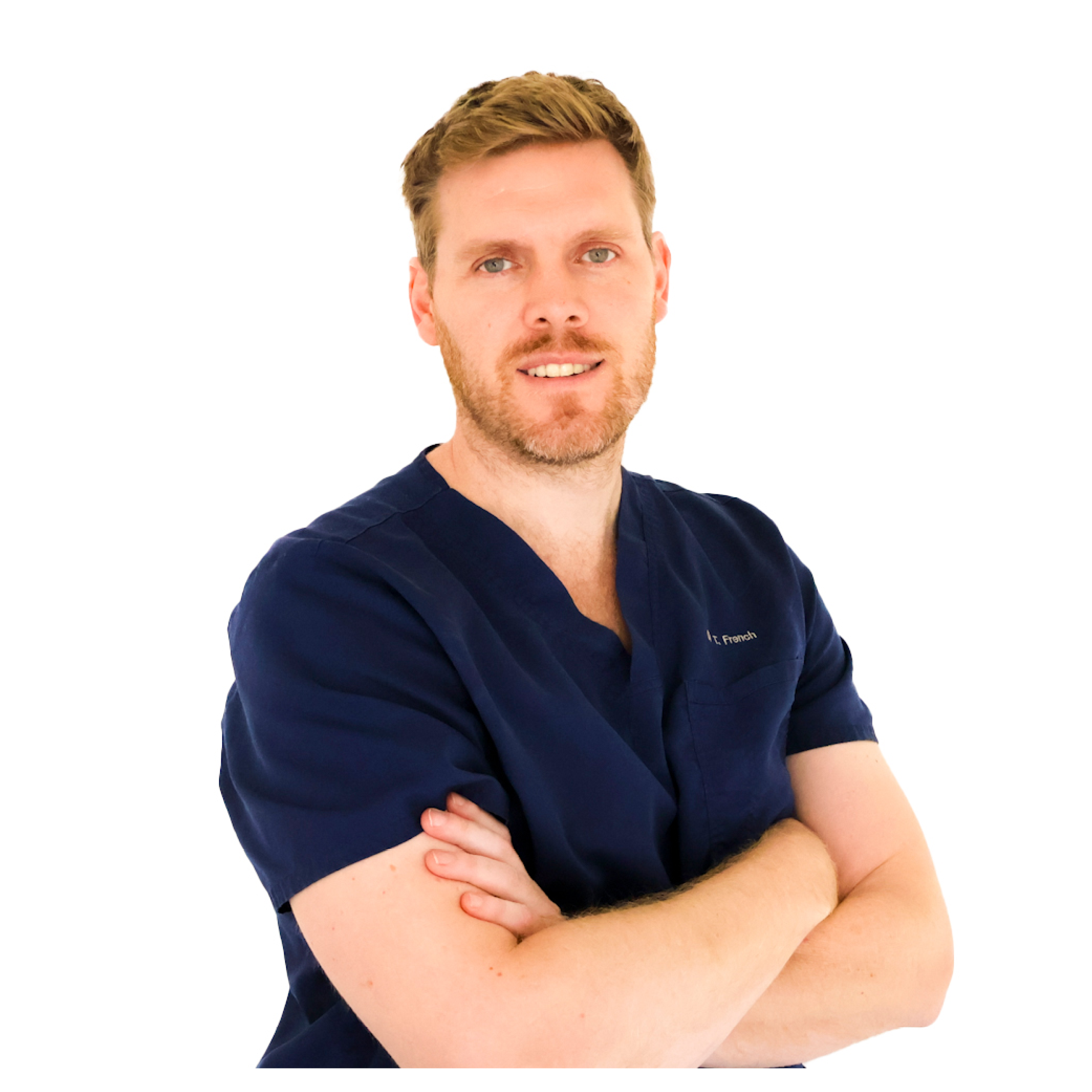
Dr Tim French (MED0001790529) is a phlebologist with AHPRA specialist and general registration and over a decade of clinical experience in venous medicine. He assesses and treats varicose veins, spider veins and venous ulcers, and also works in skin cancer medicine and mole removal. He has worked at major hospitals including the Royal Melbourne Hospital and the Royal Adelaide Hospital, with experience spanning neurosurgery, plastic surgery, emergency medicine, trauma and general practice. He holds an MBBS, a Diploma of Surgical Anatomy (University of Melbourne), and further qualifications in phlebology and ultrasound in phlebology.
See the Me Clinic team.
Clinic details
Me Clinic is at 4 Burke Road, Malvern East VIC 3145. Hours are Monday, Wednesday and Friday 9am to 5pm, Tuesday and Thursday 9am to 7pm, and Saturday 9am to 2pm. Free parking is available under the building and in nearby streets; Caulfield station is about a five-minute walk.
Images on This Page
-
https://www.meclinic.com.au/wp-content/uploads/2024/03/meclinic-logo.png
Me Clinic
-
https://www.meclinic.com.au/wp-content/uploads/2022/02/call.png
call
-
https://www.meclinic.com.au/wp-content/uploads/2025/11/dr-tim-photo.png
(no alt text)
-
https://www.meclinic.com.au/wp-content/uploads/2022/02/malvern-map-thumb.jpg
(no alt text)
-
https://www.meclinic.com.au/wp-content/uploads/2024/02/acps.png
Australian Society Of Plastic Surgeons
-
https://www.meclinic.com.au/wp-content/uploads/2024/02/racs.png
Royal Australian College Of Surgeons
-
https://www.meclinic.com.au/wp-content/uploads/2024/02/fracs.png
fracs
-
https://www.meclinic.com.au/wp-content/uploads/2024/02/isaps.png
isaps
-
https://www.meclinic.com.au/wp-content/uploads/2024/02/cpca.png
(no alt text)
-
https://www.meclinic.com.au/wp-content/uploads/2022/02/auscop.png
College
-
https://www.meclinic.com.au/wp-content/uploads/2022/02/amav.png
AMA
-
https://www.meclinic.com.au/wp-content/uploads/2022/03/home-conctact-tab.jpg
(no alt text)
-
https://bat.bing.com/action/0?ti=56339805&Ver=2&mid=6d873b04-684e-49b6-8bac-99f07a0c4e73&bo=1&sid=7d44e300ac4011f1ad5191db34696753&vid=7d44f420ac4011f1baac5d4eeb672180&vids=1&msclkid=N&pi=918639831&lg=en-US&sw=1280&sh=720&sc=24&tl=Veins%20Treatment%20Melbourne%20%7C%20Varicose%20Veins%20%26%20Spider%20Veins&p=https%3A%2F%2Fwww.meclinic.com.au%2Fbody%2Fvein-treatments%2F&r=<=3650&evt=pageLoad&sv=2&cdb=AQAQ&rn=186888
(no alt text)