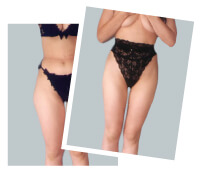
Tummy tuck before and after photos
Before and after photographs help explain what abdominoplasty does. They are also easy to over-read. This page explains how to interpret them, and what to look for when you view photographs at consultation.
Me Clinic’s photographs are shown and discussed during consultation, where your surgeon can select cases relevant to your anatomy and explain what is and is not comparable to your situation.
The standards these photos must meet
Before and after images used by registered health practitioners in Australia are governed by the Medical Board of Australia’s Guidelines for advertising regulated health services.
- Images must be genuine — real patients, real results.
- Photographs on this website have been retouched only to protect patient privacy, never to enhance or alter the results of the surgery.
- Images must carry a clear and prominent disclaimer that results may vary between individuals.
- Patients must consent to the use of their images.
Results may vary between individuals. A photograph records one person’s outcome. It is not a prediction of yours.
Look at the navel first
There is one detail in an abdominoplasty photograph that tells you more than the silhouette does, and almost nobody looks at it: the belly button.
In a full abdominoplasty, the skin between the navel and the pubis is removed, so the skin above has to be drawn down over the navel — which stays attached to the abdominal wall where it has always been. The navel is therefore brought out through a new opening made in the relocated skin, and it is stitched into place. That leaves a scar around the navel itself, as well as the long horizontal one low down.
In a mini abdominoplasty, only skin below the navel is removed and the navel is not moved, so there is no scar around it.
So, in any gallery:
- A scar circling the navel means a full abdominoplasty. If you are being quoted for a mini, that photograph is not showing you your operation.
- The shape and position of the navel afterwards is one of the clearest markers of careful work. A slightly oval navel sitting in a small hollow reads as natural; a round navel sitting flat on the surface with a visible ring of scar reads as operated.
- Compare its height between the before and after frames. It should sit at roughly the same level relative to the hips, because it did not move — the skin did.
Ask directly: “Was this a full or a mini, and will my navel be relocated?”
Then look at the pubic area
The second thing nobody checks, and a common source of disappointment. A tummy tuck pulls the abdominal skin downward, and that can drag the pubic area down with it, leaving the mons looking lower, flatter or fuller than before.
In a pair of photographs, look at the height of the pubic hairline relative to the hip bones in both frames. If it has moved down in the “after”, that is what happened. It is manageable — the mons can be lifted or reduced at the same operation — but only if it is planned. See mons pubis.
How to read an abdominoplasty photo
- Consistent conditions. Same lighting, camera angle, distance and posture in both frames. Posture matters more here than for most procedures — a change in how someone stands alters the abdominal profile considerably.
- How much time has passed. Abdominoplasty swelling takes months to settle, and the scar continues to mature for 12 to 18 months. A photograph at six weeks, six months and eighteen months shows three different things — particularly for the scar.
- Which operation was performed. A full abdominoplasty, a mini abdominoplasty and a fleur-de-lis abdominoplasty produce different scars and different degrees of change. A photograph is only relevant if it shows the operation being considered for you.
- Whether muscle repair was included. Where abdominal muscle separation (rectus diastasis) was repaired, part of the change in profile comes from that repair rather than skin removal.
- Whether liposuction was combined. Where liposuction was performed at the same time, the visible result is not attributable to the abdominoplasty alone.
- The starting point. Look for a patient whose starting anatomy, skin quality and body type resemble yours — not the most dramatic case.
The posture check
Abdominal photographs are unusually sensitive to how the pelvis is tilted. Rolling the pelvis back flattens the lower abdomen; tipping it forward exaggerates the curve. In a consistent pair, the position of the hip bones relative to the frame and the amount of thigh visible should match. If the person is standing differently, some of the change you are seeing is posture.
Look at the scar, not only the contour
Abdominoplasty produces a permanent scar running horizontally low across the abdomen, usually from hip to hip, plus a scar around the navel in a full abdominoplasty. This is not a possible side effect; it is an unavoidable part of the operation, and it is the trade for the skin removal.
When looking at photographs, examine the scar deliberately rather than only the silhouette. Scars fade and flatten over time but never disappear, and how a scar matures varies significantly between individuals — genetics, skin type, tension across the wound and healing all affect it. Some people develop thickened, raised or keloid scarring.
Bring the clothes you actually wear
“The scar sits low” is meaningless until you know low relative to what. Underwear and swimwear vary enormously in rise, and a scar concealed by one garment sits above another.
So: take the lowest-cut underwear and the swimwear you actually own to your consultation, and ask the surgeon to plan the scar line with those on. It is an entirely ordinary request, it takes two minutes, and it converts an abstract reassurance into something you can see.
Two related points worth raising in the same conversation:
- The scar is usually straighter and higher at the sides than the dipped centre people picture — ask where the ends will finish, because the outer thirds are the part that shows above a low waistband.
- Length is determined by how much skin comes out. A shorter scar means less skin removed, which for most people means less correction rather than a better result.
Checking yourself for muscle separation
Part of what an abdominoplasty photograph shows is often not skin removal at all but repair of separated abdominal muscles — and you can get a rough sense of whether that applies to you.
- Lie on your back, knees bent, feet flat.
- Place your fingertips just above the navel, pointing down towards your feet, pressing gently into the midline.
- Lift your head and shoulders slightly, as if starting a sit-up — not a full one.
- Feel for the two firm bands of muscle either side of the midline, and notice the gap between them. Check above the navel, at the navel and below it.
A gap you can fit more than a couple of fingers into, particularly if the midline bulges or domes when you lift, suggests separation. It is extremely common after pregnancy.
Two things follow, and they matter. Separation often responds to proper physiotherapy, and that is the first step rather than surgery — particularly in the first year after childbirth. And where surgery is indicated, repairing the separation is what changes the profile, which is why the Medicare item for post-pregnancy abdominoplasty is written around diastasis rather than appearance.
Why your result will differ
Outcomes vary depending on individual anatomy, skin quality and elasticity, the amount of excess skin, whether muscle separation is present, body type, healing, and how stable your weight is afterwards.
Two things affect the durability of the result more than most people expect:
- Weight stability. Significant weight gain after surgery can stretch the abdominal skin again. Abdominoplasty is best considered once weight has been stable for a period.
- Future pregnancy. A pregnancy after abdominoplasty can undo the muscle repair and re-stretch the skin. Most surgeons recommend completing your family first.
What abdominoplasty is and is not
Abdominoplasty removes excess skin and fat from the lower abdomen and, where indicated, repairs separated abdominal muscles. It is not a weight loss operation and not a substitute for one — and it is not liposuction, which removes fat but not skin. Where the concern is loose skin, liposuction alone will not address it; where the concern is fat with good skin tone, liposuction may be the more appropriate procedure.
Costs and Medicare
Abdominoplasty at Me Clinic ranges from $17,000 to $28,000. A Medicare rebate may be available where strict MBS criteria are met — item 30175 for abdominoplasty addressing diastasis recti in post-pregnancy women, and item 30177 for abdominoplasty after massive weight loss. Eligibility is assessed at consultation and requires a valid referral. We are not a no-gap provider, so out-of-pocket costs will apply even where a rebate is available.
As at September 2024 and including GST, a consultation with a Specialist Plastic Surgeon is $350. Since 1 July 2023, all patients are required to have a GP referral before seeing a plastic surgeon or doctor about cosmetic surgery, and at least two consultations are required, one of them in person with the operating surgeon.
If you may be eligible, two things help: a documented history of physiotherapy for the separation, and a record of any skin problems in the fold — rashes, infections and what was tried. Undocumented symptoms cannot be assessed.
Risks
All surgical procedures carry risks and potential complications, including infection, bleeding and haematoma, seroma, permanent scarring, delayed wound healing, wound separation, skin or fat necrosis, changes in sensation across the abdomen which may be permanent, asymmetry, anaesthesia complications, and deep vein thrombosis or pulmonary embolism. Abdominoplasty is a major operation with a longer recovery than most cosmetic procedures.
Please read our information on the risks and complications of cosmetic surgery before proceeding.
Any surgical or invasive procedure carries risks. Before proceeding you should seek a second opinion from an appropriately qualified health practitioner. Individual results may vary.
What to ask when you are shown photographs
- Was this a full, mini or fleur-de-lis abdominoplasty?
- Was muscle repair included? Was liposuction done at the same time?
- How long after surgery was the “after” taken — and can I see a six-week scar as well as a twelve-month one?
- Where did this patient’s scar finish at the sides?
- What was done about the pubic area?
- Can you show me someone with my starting point, not the best case?
- Can you show me a result that did not go as well as hoped?
- What would you realistically expect for me, including the less-good end?
Common questions about tummy tuck before and after photos
What rules govern these images?
The Medical Board of Australia’s advertising guidelines — genuine patients, retouching only to protect privacy, a clear disclaimer that results vary, and documented consent.
What should I look at first?
The navel. A scar circling it means a full abdominoplasty; no scar around it means a mini, where the navel is not moved.
Why is the navel relocated?
Because it stays attached to the abdominal wall while the skin above is drawn down over it, so it is brought out through a new opening in the relocated skin.
What does a good navel result look like?
A slightly oval navel sitting in a small hollow. A round one sitting flat with a visible ring of scar reads as operated.
Why check the pubic area?
Because pulling the abdominal skin down can drag the mons down with it. Compare the height of the pubic hairline relative to the hips between frames.
Can that be prevented?
It can be planned for — the mons can be lifted or reduced at the same operation — but only if it is discussed beforehand.
Why does posture matter so much here?
Rolling the pelvis back flattens the lower abdomen and tipping it forward exaggerates the curve. Check that the hip bones and the amount of thigh visible match in both frames.
When should the “after” photo be taken?
Swelling takes months to settle and the scar matures for 12 to 18 months, so six weeks, six months and eighteen months show three different things.
Does the type of operation matter when comparing?
Yes. Full, mini and fleur-de-lis produce different scars and different degrees of change. A photograph is only relevant if it shows the operation proposed for you.
How do I know how low my scar will be?
Take the lowest-cut underwear and the swimwear you actually own to the consultation and ask the surgeon to plan the line with those on.
Where does the scar show most?
At the outer thirds. Ask where the ends will finish, because that is the part that sits above a low waistband.
Can I have a shorter scar?
A shorter scar means less skin removed, which for most people means less correction rather than a better result.
How do I check for muscle separation?
Lie on your back with knees bent, press your fingertips into the midline above the navel, and lift your head and shoulders slightly. Feel the gap between the two firm bands, above, at and below the navel.
What does a gap mean?
More than a couple of fingers’ width, particularly with doming of the midline, suggests separation. It is very common after pregnancy.
Is surgery the first step for that?
No. Separation often responds to proper physiotherapy, which comes first — particularly in the first year after childbirth.
Why does the repair matter for Medicare?
Because the item for post-pregnancy abdominoplasty is written around diastasis rather than appearance.
What affects how long the result lasts?
Weight stability and future pregnancy. Significant weight gain can re-stretch the skin, and a pregnancy can undo the muscle repair.
Is a tummy tuck the same as liposuction?
No. Abdominoplasty removes skin and repairs muscle; liposuction removes fat but not skin.
What does it cost?
$17,000 to $28,000 at Me Clinic, with a Specialist Plastic Surgeon consultation at $350, as at September 2024 including GST.
Is there a rebate?
Possibly — item 30175 for diastasis recti in post-pregnancy women and item 30177 after massive weight loss, where strict criteria are met and a valid referral exists. Out-of-pocket costs apply regardless.
What helps an eligibility assessment?
A documented history of physiotherapy for the separation, and a record of skin problems in the fold with what was tried.
What are the main risks?
Infection, bleeding and haematoma, seroma, permanent scarring, delayed healing, wound separation, skin or fat necrosis, sensation change which may be permanent, asymmetry, anaesthesia complications, and DVT or pulmonary embolism.
Images on This Page
-
https://www.meclinic.com.au/wp-content/uploads/2024/03/meclinic-logo.png
Me Clinic
-
https://www.meclinic.com.au/wp-content/uploads/2022/02/call.png
call
-
https://www.meclinic.com.au/wp-content/uploads/2025/07/TT-case2-BEFORE.png
(no alt text)
-
https://www.meclinic.com.au/wp-content/uploads/2025/07/TT-case2-AFTER.png
(no alt text)
-
https://www.meclinic.com.au/wp-content/uploads/2022/03/cs3-tummy-tuck-86x80-1.png
Abdominoplasty Scar
-
https://www.meclinic.com.au/wp-content/uploads/2022/03/cs2-tummy-tuck-200x171-1.png
(no alt text)
-
https://www.meclinic.com.au/wp-content/uploads/2022/02/cs6-liposuction-200x171-11.jpg
(no alt text)
-
https://www.meclinic.com.au/wp-content/uploads/2024/02/acps.png
(no alt text)
-
https://www.meclinic.com.au/wp-content/uploads/2024/02/racs.png
(no alt text)
-
https://www.meclinic.com.au/wp-content/uploads/2024/02/fracs.png
(no alt text)
-
https://www.meclinic.com.au/wp-content/uploads/2024/02/isaps.png
(no alt text)
-
https://www.meclinic.com.au/wp-content/uploads/2024/02/cpca.png
(no alt text)
-
https://www.meclinic.com.au/wp-content/uploads/2022/02/auscop.png
(no alt text)
-
https://www.meclinic.com.au/wp-content/uploads/2022/02/amav.png
(no alt text)
-
https://www.meclinic.com.au/wp-content/uploads/2022/03/channel7.png
(no alt text)
-
https://www.meclinic.com.au/wp-content/uploads/2022/03/channel9.png
(no alt text)
-
https://www.meclinic.com.au/wp-content/uploads/2022/03/channel10.png
(no alt text)
-
https://www.meclinic.com.au/wp-content/uploads/2022/03/abc.png
(no alt text)
-
https://www.meclinic.com.au/wp-content/uploads/2022/02/malvern-map-thumb.jpg
(no alt text)
-
https://www.meclinic.com.au/wp-content/uploads/2022/03/home-conctact-tab.jpg
(no alt text)
-
https://bat.bing.com/action/0?ti=56339805&Ver=2&mid=e187dea2-b5a8-4447-864a-423c062fd1e9&bo=1&sid=1f51df70ac3311f1bef849012fa40c35&vid=1f51fb10ac3311f1a4f2cd7e6c15559a&vids=0&msclkid=N&pi=918639831&lg=en-US&sw=1280&sh=720&sc=24&tl=Tummy%20Tuck%20Surgery%20-%20Browse%20Before%20and%20After%20Results&p=https%3A%2F%2Fwww.meclinic.com.au%2Fbody%2Ftummy-tuck-surgery%2Fbefore-and-after%2F&r=<=2968&evt=pageLoad&sv=2&cdb=AQAQ&rn=578341
(no alt text)