Gynaecomastia surgery
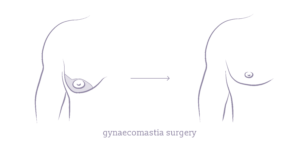
Gynaecomastia surgery, often called male breast reduction, reduces enlarged breast tissue caused by gynaecomastia. The surgery removes excess fat, glandular tissue and sometimes skin to produce a flatter chest contour.
Gynaecomastia can affect men at any age, and is caused by hormonal imbalance, weight gain or genetics. The procedure uses liposuction, excision, or a combination of both.
What gynaecomastia is
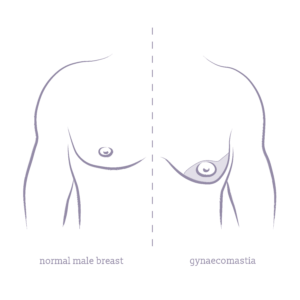
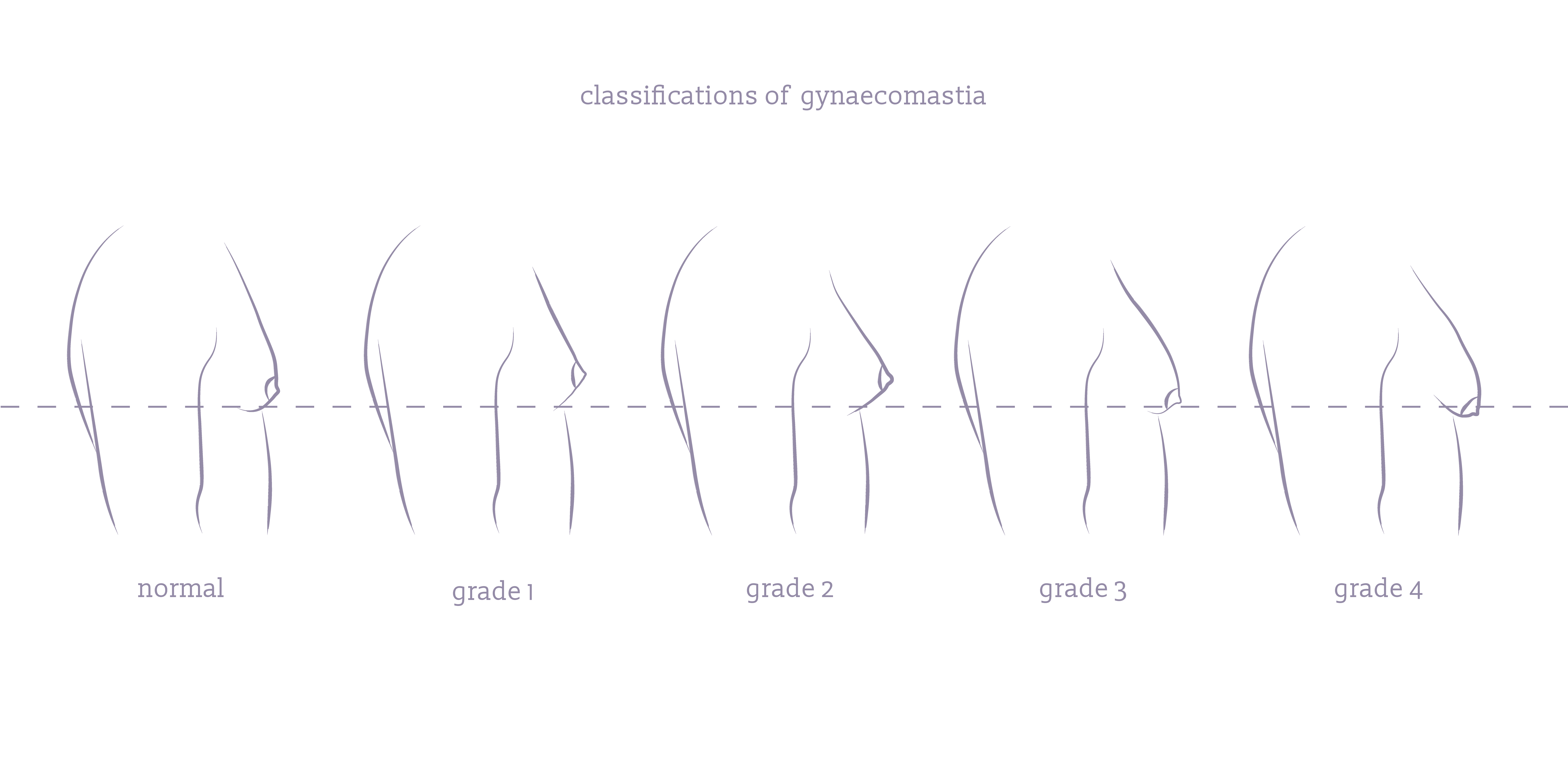
Gynaecomastia is enlargement of breast tissue in males. It varies in severity from a small amount of extra tissue around the nipples (grade 1) to more significant and noticeable enlargement (grade 4).
It can affect one breast (unilateral), though bilateral gynaecomastia is more common. Gynaecomastia itself is not medically dangerous, but it can be a symptom of an underlying health issue that requires attention - which is why investigation of the cause comes before surgery.
Glandular versus fatty tissue
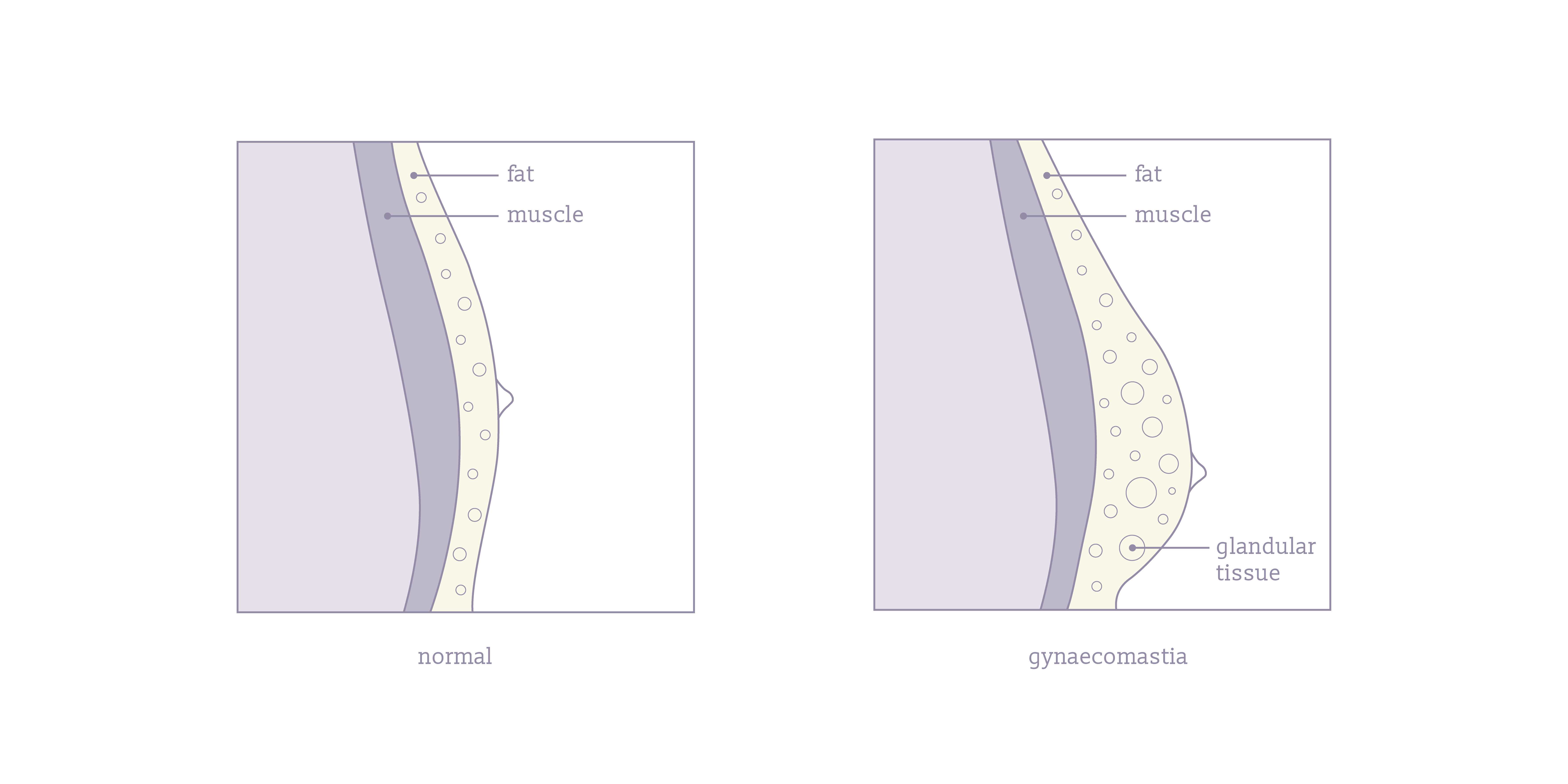
This distinction determines which surgical technique is appropriate, and it is the reason diet and exercise often fail to resolve the problem.
- True gynaecomastia is glandular. The tissue is firm and fibrous and grows in response to hormonal imbalance. Glandular tissue does not respond to diet or exercise, and cannot be removed by liposuction alone - it requires excision.
- Pseudogynaecomastia is fatty. The tissue is softer and spread more widely across the chest, and responds to liposuction.
Many patients have a mix of both, and optimal treatment often involves a combination of techniques tailored to the tissue composition present.
Causes
Gynaecomastia is primarily caused by an imbalance between testosterone and oestrogen. When oestrogen levels are relatively high compared with testosterone, breast tissue can develop.
- Natural life stages - puberty and ageing shift hormone levels. Breast tissue sometimes reduces naturally after puberty as hormones rebalance, though in most cases the enlargement remains.
- Medication - anti-androgens used for prostate cancer, anabolic steroids, HIV medications, and some treatments for heart conditions.
- Substance use - alcohol, amphetamines, marijuana and heroin. Some herbal compounds in over-the-counter products such as shampoos or lotions can also alter hormone balance.
- Health conditions - hypogonadism, thyroid problems, kidney or liver disease, and tumours involving the testes, adrenal glands or pituitary gland.
Symptoms
- Increased chest size, unilateral or bilateral.
- Tender breast areas that are sensitive to touch.
- Breast tissue that is typically soft and moves slightly under the skin.
- Nipple discharge from one or both nipples, in rare cases.
Consultation and diagnosis
The first step is a consultation with a plastic surgeon experienced in male breast reduction. The surgeon evaluates your medical history, examines the chest, and discusses your expectations.
Diagnostic tests such as ultrasound or mammography may be requested to differentiate between fatty and glandular tissue. This determines the surgical approach, and also confirms whether there is an underlying cause that should be addressed first.
The consultation establishes whether you are a candidate for surgical correction, the grade of your condition, and the most appropriate surgical option.
Questions worth asking
- What outcome can I expect from my surgery?
- Which surgical technique will be used, and why?
- What can I expect in terms of recovery and potential side effects?
- How are complications handled?
- Can I see before and after photos of previous patients with similar conditions?
- What are the costs involved, and is there coverage or financing available?
Surgical techniques
Liposuction
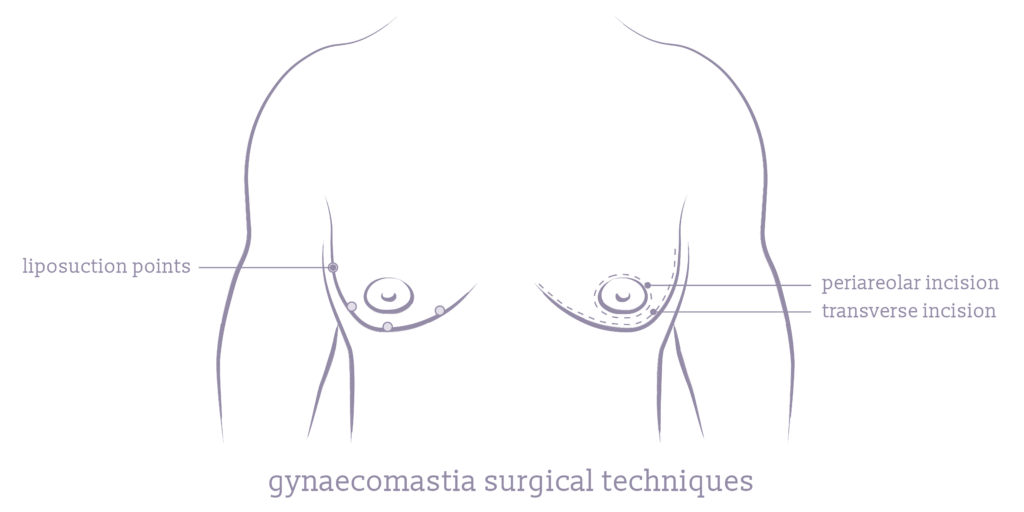
Used where the excess is primarily fat and skin elasticity is good. A cannula is inserted through small incisions to vacuum out the fat. Minimal scarring, but it will not remove glandular tissue.
Donut (periareolar) incision
Used for mild to moderate gynaecomastia. An incision around the edge of the areola allows removal of glandular tissue directly beneath the nipple. This reduces breast gland size, and the scar is well concealed because it blends with the natural contour and pigment change at the areolar edge.
Transverse incision
Used for severe gynaecomastia, particularly after massive weight loss where there is significant excess skin. The incision runs horizontally across the lower chest, often extending from the underarm. It can be combined with a periareolar incision for comprehensive tissue removal and skin tightening, and allows the nipple to be repositioned.
Combined excision and liposuction
Effective where both glandular and fatty tissue are present, which covers a wide range of cases. Fat is removed by liposuction and glandular tissue by excision through strategic incisions.
What the procedure involves
Surgery typically requires general anaesthetic, although local anaesthetic may be used in less severe cases. The surgeon makes small incisions, with type and location depending on the extent of the gynaecomastia and the technique used - usually around the nipple or within the natural creases of the chest.
After the excess tissue is removed, the surgeon adjusts and reshapes the remaining tissue to produce a smooth contour, repositioning or resizing the nipple where necessary. Incisions are closed with sutures that either dissolve over time or are removed at a follow-up visit. A compression garment is applied to control swelling.
The procedure is performed in a day hospital and most patients are discharged the same day.
Suitability
- Persistent gynaecomastia that has not resolved naturally or through other medical treatment.
- A stable weight, as weight fluctuation affects the result.
- Non-smokers, or people who can stop smoking well before and after surgery, as smoking affects healing.
- Good general health, free from medical conditions that would complicate surgery.
- Realistic expectations of what the surgery can achieve.
Outcomes vary depending on individual anatomy, tissue composition and skin quality. Individual results may vary.
Preparing for surgery
- Complete any requested health screenings or tests to confirm you are fit for surgery.
- Discuss your current medications with your surgeon, as some may need to be adjusted or stopped.
- Stop smoking and drinking alcohol, as both affect recovery and the surgical result.
- Follow the fasting instructions for the night before and the morning of your procedure.
- Arrange for someone to drive you home and help you during the first few days.
- Set up a comfortable environment at home for your recovery.
Recovery timeline
First 24 hours. You are monitored in the recovery area as the anaesthesia wears off. Mild discomfort is common and managed with prescribed medication. A compression garment is applied. Before discharge you receive instructions on incision care, pain relief and warning signs. A responsible adult must drive you home and assist you on the first night.
First week. Rest with limited activity, wearing the compression garment. Pain generally subsides after the first week. Light activities can begin towards the end of the week.
Second to third week. Swelling and bruising reduce gradually and are significantly reduced by around three weeks. Most people return to work and light daily activities within one to two weeks.
Three to four weeks. Strenuous exercise is avoided until three to four weeks, or as your surgeon instructs.
One month. A follow-up visit assesses the surgical site and the progress of recovery.
Travel and swimming. Domestic flights are usually fine at around two weeks; wait six to eight weeks before international flights and before swimming.
The final result generally becomes apparent within six months. Most patients are seen at seven to ten days, then at six to eight weeks, three months, six months and twelve months.
Costs
Gynaecomastia surgery ranges from $9,000 to $12,000. The variation reflects the amount of tissue to be removed, the time required, and whether the procedure is performed under local or general anaesthesia. The quote includes surgeon fees, anaesthetist fees, hospital or clinic fees, follow-up care, medication and the compression garment.
As at September 2024 and including GST, a consultation with a Specialist Plastic Surgeon is $350. See gynaecomastia surgery cost for the full breakdown.
Payment for major surgery is due four weeks before the procedure. Independent medical finance companies are available.
Medicare
Gynaecomastia surgery can attract a Medicare rebate where it is medically necessary and meets the strict MBS criteria. The relevant item numbers are 31525 (unilateral) and 31526 (bilateral). A valid GP referral is required.
Item numbers are updated periodically, so confirm the current numbers and criteria with your surgeon and on MBS Online. Me Clinic is not a no-gap provider, so a significant out-of-pocket payment remains even where cover applies.
Risks and complications
All surgical procedures carry risks and potential complications. Common side effects immediately after surgery include bruising and swelling, which subside over time.
Further risks include infection, bleeding and haematoma, seroma, changes in nipple or chest sensation, asymmetry between the two sides, contour irregularity, delayed healing, and the possible need for further surgery. Where liposuction is used, contour irregularity is possible, and liposuction can be traumatic for internal organs, with visceral perforation a rare but recognised risk.
General surgical risks include pain, scarring, nerve damage, anaesthesia complications, blood clots (DVT and pulmonary embolism), psychological impact, and unsatisfactory results.
Wherever an incision is made there will be a scar. Incision lines are planned to sit around the nipple or in the creases of the chest to minimise visible scarring, and scars typically fade over time, but how a scar heals varies between individuals.
Risks are discussed with you in detail during the consultation process, and you are given written information to take home. Please read our information on the risks and complications of cosmetic surgery before proceeding.
Any surgical or invasive procedure carries risks. Before proceeding you should seek a second opinion from an appropriately qualified health practitioner.
Referral and cooling-off period
Since 1 July 2023, all patients are required to have a GP referral before seeing a plastic surgeon or doctor about cosmetic surgery. A valid referral is also needed if you wish to claim a Medicare rebate on medically essential surgery.
For any cosmetic surgery there is a compulsory one-week cooling-off period after your second consultation before surgery can be booked.
Related pages
See male breast surgery, gynaecomastia surgery cost, liposuction for men, or all body procedures.
Images on This Page
-
https://www.meclinic.com.au/wp-content/uploads/2024/03/meclinic-logo.png
Me Clinic
-
https://www.meclinic.com.au/wp-content/uploads/2022/02/call.png
call
-
https://www.meclinic.com.au/wp-content/uploads/2024/06/gynaecomastia-surgery-stock-design-300x300.png
A design of a male body without gynaecomastia.
-
https://www.meclinic.com.au/wp-content/uploads/2024/06/regular-male-breasts-vs-gynaecomastia-300x300.png
A side by side illustration of a regular male breast and gynaecomastia.
-
https://www.meclinic.com.au/wp-content/uploads/2024/06/gynaecomastia-surgical-options-diagram-1024x512.png
A diagram of a male body and the different surgical techniques for gynaecomastia surgery.
-
https://www.meclinic.com.au/wp-content/uploads/2024/06/gynaecomastia-glandular-tissu-diagram.png
An infographic of the glandular tissue build up for gynaecomastia.
-
https://www.meclinic.com.au/wp-content/uploads/2024/06/severity-grades-of-gynaecomastia.png
An infographic of the different severities of gynaecomastia from grade 1 to grade 4.
-
https://www.meclinic.com.au/wp-content/uploads/2024/06/gynaecomastia-surgery-before-and-after-design-300x150.png
Illustration of how gynaecomastia surgery can achieve a more aesthetic chest contour.
-
https://www.meclinic.com.au/wp-content/uploads/2024/02/acps.png
(no alt text)
-
https://www.meclinic.com.au/wp-content/uploads/2024/02/racs.png
(no alt text)
-
https://www.meclinic.com.au/wp-content/uploads/2024/02/fracs.png
(no alt text)
-
https://www.meclinic.com.au/wp-content/uploads/2024/02/isaps.png
(no alt text)
-
https://www.meclinic.com.au/wp-content/uploads/2024/02/cpca.png
(no alt text)
-
https://www.meclinic.com.au/wp-content/uploads/2022/02/auscop.png
(no alt text)
-
https://www.meclinic.com.au/wp-content/uploads/2022/02/amav.png
(no alt text)
-
https://www.meclinic.com.au/wp-content/uploads/2022/03/channel7.png
(no alt text)
-
https://www.meclinic.com.au/wp-content/uploads/2022/03/channel9.png
(no alt text)
-
https://www.meclinic.com.au/wp-content/uploads/2022/03/channel10.png
(no alt text)
-
https://www.meclinic.com.au/wp-content/uploads/2022/03/abc.png
(no alt text)
-
https://www.meclinic.com.au/wp-content/uploads/2022/02/malvern-map-thumb.jpg
(no alt text)
-
https://www.meclinic.com.au/wp-content/uploads/2022/03/home-conctact-tab.jpg
(no alt text)
-
https://bat.bing.com/action/0?ti=56339805&Ver=2&mid=8da20ba4-fced-4e45-937b-fc75dfcd5e2d&bo=1&sid=0615ed90ac4311f1865e234174b46fe3&vid=06166060ac4311f1b4cee11a82ff25cf&vids=0&msclkid=N&pi=918639831&lg=en-US&sw=1280&sh=720&sc=24&tl=Gynaecomastia%20Surgery%20%7C%20complete%20guide%20for%20male%20breast%20reduction&p=https%3A%2F%2Fwww.meclinic.com.au%2Fbody%2Fmale-breast-surgery%2Fgynaecomastia-surgery%2F&r=<=3086&evt=pageLoad&sv=2&cdb=AQAQ&rn=656078
(no alt text)