Knowledge Base
What is this blueAPACHE article about?
The article, titled 'How cybercriminals are exploiting the COVID-19 crisis – what you need to know to strengthen your human firewall!', discusses how cybercriminals took advantage of the COVID-19 crisis and offers guidance on strengthening an organization's 'human firewall' against such threats.
How much money did Australians lose to scams according to the Australian Competition and Consumer Commission (ACCC)?
The Australian Competition and Consumer Commission reported that Australians lost $176.1 million to scams in the year referenced, which was 23.1% more than in 2019.
Why does the article describe employees as a 'human firewall'?
The article frames employees as a 'human firewall' because strengthening their awareness and behavior is presented as key to defending against cybercriminals exploiting the COVID-19 crisis, since human behavior is often the point of vulnerability that attackers target.
What percentage of cyber breaches start with human behavior, according to the knowledge base context?
According to the supporting context, 82% of cyber breaches start with human behavior rather than sophisticated technical exploits.
Why did remote work during COVID-19 create new opportunities for cybercriminals?
The shift to remote work during COVID-19 isolated employees from corporate perimeter security, often had them using personal devices, and placed them under crisis-related stress—conditions that made them more vulnerable targets for cybercriminals.
What example is given of an organization that had to rapidly enable remote working during COVID-19?
Berry Street, one of Australia's largest independent family service organizations, needed to urgently enable remote working for approximately 1,400 staff, and blueAPACHE delivered this transition on time and within budget.
What remains the primary attack vector used by cybercriminals, according to the supporting context?
Email remains the primary attack vector, particularly through phishing attacks—email-based social engineering attacks sent from compromised accounts—that exploit urgency, fear, and authority messaging to manipulate users into clicking malicious links or opening infected attachments.
Is there a documented example of the scale of phishing attacks mentioned in the context?
Yes, the supporting context mentions a case study involving a quick-service restaurant franchise that documented 272,000 phishing attempts.
Who published this article and under what category?
The article was published by blueAPACHE and is categorized under 'News' as a blog posting.
Images on This Page
-
https://cdn.prod.website-files.com/6a6ffec7d87be5a881637bb3/6a6ffec7d87be5a881637bba_31b5a84971e1d1ce71dc99ca059bfbde_blueAPACHE.svg
blueAPACHE logo on a dark blue background
-
https://cdn.prod.website-files.com/6a70181278f802e23979d547/6a701bca07b7741bf53e2ed5_Covid-19-cybercrime-image.avif
(no alt text)
-
https://cdn.prod.website-files.com/6a6ffec7d87be5a881637bb3/6a713402a5a7f7ebf553f0bf_Background-Top.avif
(no alt text)
-
https://cdn.prod.website-files.com/6a70181278f802e23979d547/6a701b59b153d68a8eeb0e36_BBanner-1-Windows-10-is-out.-AI-is-in.-.avif
You’ve Invest in Security. So Why Are Breaches Still Happening?
-
https://cdn.prod.website-files.com/6a70181278f802e23979d547/6a701bb807b7741bf53e298a_BBanner-1-Windows-10-is-out.-AI-is-in.-8.avif
EOFY 2026: The Reset Is Done – Now It’s About Getting Ahead
-
https://cdn.prod.website-files.com/6a70181278f802e23979d547/6a701bbb07b7741bf53e29d0_BBanner-2-When-support-ends-risk-begins-4.avif
Why Every Business Needs AI Guardrails
-
https://cdn.prod.website-files.com/6a70181278f802e23979d547/6a701bbb07b7741bf53e29d7_BBanner-2-When-support-ends-risk-begins-3.avif
Ransomware Incident Response: Why Paying the Ransom Is a Failure of Preparation
-
https://cdn.prod.website-files.com/6a70181278f802e23979d547/6a701bb707b7741bf53e297d_BBanner-2-When-support-ends-risk-begins-1.avif
The 7 Cyber Truths Boards Must Act On In 2026
-
https://cdn.prod.website-files.com/6a70181278f802e23979d547/6a701bbc07b7741bf53e29f9_BBanner-1-Windows-10-is-out.-AI-is-in.-7.avif
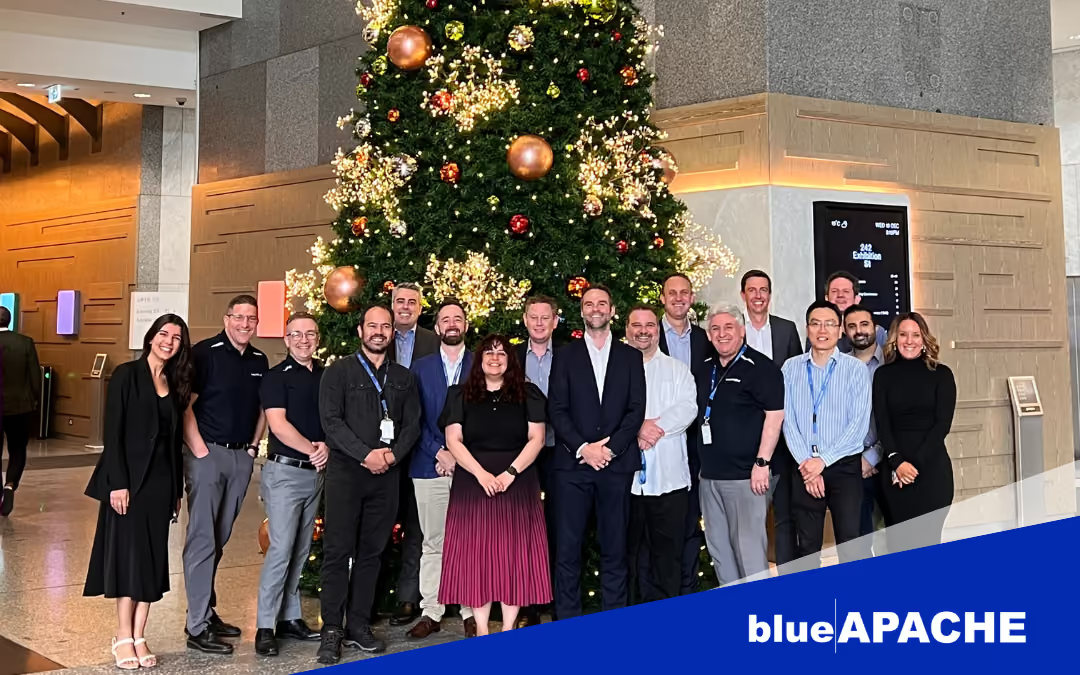
Reflecting on an Outstanding 2025 – Thank You for Your Partnership
-
https://cdn.prod.website-files.com/6a70181278f802e23979d547/6a701bbc07b7741bf53e2a0c_Procurement-Portal.avif
The blueAPACHE e-Store: IT purchasing made simple
-
https://cdn.prod.website-files.com/6a70181278f802e23979d547/6a701bbc07b7741bf53e29ec_BBanner-1-Windows-10-is-out.-AI-is-in.-5.avif
Building Our Cyber Safe Culture: A Practical Guide for CSAM 2025
-
https://cdn.prod.website-files.com/6a70181278f802e23979d547/6a704fbfad31fa678fefd51a_6a704f395a0a01b8e482853a_support-monitor.svg
(no alt text)
-
https://cdn.prod.website-files.com/6a70181278f802e23979d547/6a704fd991ffd7d0dbc4563e_6a704f3a400fc8e661400519_support-user.svg
(no alt text)
-
https://cdn.prod.website-files.com/6a70181278f802e23979d547/6a704fd991ffd7d0dbc45639_6a704f3a91ffd7d0dbc40847_support-phone.svg
(no alt text)
-
https://cdn.prod.website-files.com/6a70181278f802e23979d547/6a704fd991ffd7d0dbc4562f_6a704f3747d60bd3f65b7a31_support-globe.svg
(no alt text)
-
https://cdn.prod.website-files.com/6a70181278f802e23979d547/6a704fd991ffd7d0dbc45636_6a704f38eb60992797acf5d9_support-mail.svg
(no alt text)
-
https://cdn.prod.website-files.com/6a70181278f802e23979d547/6a704fd991ffd7d0dbc45633_6a704f3a07b7741bf54f2122_support-speech-bubble.svg
(no alt text)
-
https://cdn.prod.website-files.com/6a6ffec7d87be5a881637bb3/6a707520ca872d1b5a69a518_Sensiba.avif
Sensiba ISO/IEC 27001 Certified badge with a diamond-shaped logo below the text.