Every major change to Australian rewards credit cards under the RBA's 2026 reforms
The Reserve Bank's interchange reform takes effect on 1 October 2026, cutting the consumer credit card interchange cap from 0.8% to 0.3%. Interchange is the fee that flows from the merchant's bank to the card issuer on every transaction, and it is the main source of funding for rewards points. Cutting it by more than half removes much of the budget issuers use to buy points from airline and hotel programmes.
Every major Australian issuer has now responded, and none in quite the same way. The direction is consistent — rewards cost issuers less after October than before — but the levers differ enough that a card which suited you last year may not be the right one now. This page tracks the structural changes rather than the marketing: promotional amounts move constantly, while the mechanics below will still be true after the current offers have turned over.
The levers issuers are pulling
| Lever | What it looks like in practice |
|---|---|
| Reduced ongoing earn | Lower points per dollar, or a lower rate once a monthly threshold is passed |
| New or tightened caps | Monthly limits on how much spend earns points, where earning was previously uncapped |
| Worse transfer ratios | More programme points required for each frequent flyer point |
| Fee restructuring | Rewards programme fees separated from card fees, and spend-based fee waivers withdrawn |
| Reduced insurance | Complimentary travel and purchase cover narrowed or removed |
| New non-points perks | Monthly credits, subscriptions and device cover offered in place of points value |
| Changed bonus structures | Bonuses split across two years, or conditioned on not having held a similar card recently |
The last of these is the most visible and the least durable, so weight the first four more heavily when choosing a card to hold for years.
Transfer ratios: the change that matters most
For anyone who converts bank points into airline points, the transfer ratio does more to determine value than the earn rate does. Several issuers have moved theirs.
| Programme | Ratio before | Ratio from the change date |
|---|---|---|
| MyCard Rewards to Velocity | 2:1 | 3:1 (from 1 October 2026) |
| NAB Rewards to Velocity | 2:1 | 3:1 (from 1 October 2026) |
| Westpac Altitude Rewards to Velocity, KrisFlyer or Asia Miles | 3:1 | 4:1 (from 30 September 2026) |
| CommBank to Qantas | 2.5:1 | 3:1 (from 29 September 2026) |
| CommBank to Velocity | 2:1 | 2.5:1 (from 29 September 2026) |
CommBank is also adding partners: Qatar Airways at 2.5:1, Myer at 2:1 and Everyday Rewards at 3:2. Both its Qantas and Velocity transfer options now attract a fee, where previously only the Qantas option did.
Westpac's move is the sharpest. Going from 3:1 to 4:1 means a third more bank points for the same airline point, across all three of its airline partners at once. ANZ, notably, has not touched its earn or transfer rates.
What each issuer is doing
ANZ
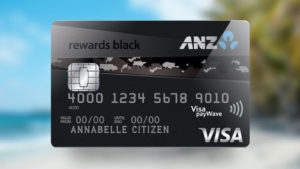
ANZ moved early and publicly, cutting the headline bonuses on its Qantas-earning cards and withdrawing several cashback components. In exchange, it has left earn and transfer rates alone, which makes it comparatively attractive for steady day-to-day Qantas earning.
The trade-offs arrive later. From 28 October 2026, monthly caps apply to points-earning spend on the Rewards and Frequent Flyer cards, which was previously uncapped. Insurance is trimmed too: the Rewards Platinum and Black cards lose domestic and international travel insurance from 9 December 2026, and the Frequent Flyer cards see benefits and limits reduced.
MyCard
MyCard is restructuring rather than simply cutting. From 1 October 2026 its earn structure favours international and eligible domestic travel spend, and annual points caps come off some products. Against that, the Velocity transfer rate moves from 2:1 to 3:1, clawing back much of the apparent improvement, and the Qantas-earning product moves to a flat rate with a monthly spend cap. The net position depends on where you spend: travel-heavy spenders may end up ahead, those converting large balances to Velocity will not.
Qantas Money
The change here is structural rather than economic. The Platinum card's bonus is now split, with part available only to applicants who have not earned Qantas Points on a credit card in the preceding 24 months — aimed at genuinely new customers rather than serial applicants. No earn rate changes have been announced for either product.
Virgin Money
Virgin Money, underwritten by NAB, has reduced earn rates and the thresholds at which the higher rate applies, and lifted fees modestly. Its Anytime Rewards product moves from a flat uncapped rate to a category-based structure, with the higher rate reserved for major supermarkets and restaurants, while the international transaction fee on that product is removed. Some bonus components are now earned in the card's second year, which matters if you close cards at the first anniversary.
Westpac
The Westpac Group, including St.George, Bank of Melbourne and BankSA, is leaving its headline offers high and making its changes elsewhere. From 30 September 2026, fees, rates and the rewards programme change; from 1 October 2026, complimentary insurance changes.
Three things stand out. First, the transfer rate move to 4:1 on Altitude Rewards. Second, a rewards programme fee now sits alongside the card fee on Altitude Rewards products where it previously did not, and the programme fees on the co-branded cards increase. Third, the insurance cuts are substantial: purchase protection, extended warranty and overseas transit accident cover end for new purchases and travel, and travel insurance no longer covers trip cancellation, travel delay or luggage.
On the co-branded Qantas and Velocity cards the earn structure is broadly preserved, with one exception — dining moves out of the 'Everyday spend' category into the lower-earning general category.
NAB
NAB has made some of the deeper cuts to ongoing earning, alongside fee changes from 1 October 2026. Its Qantas-earning cards move to lower base rates within similar monthly ceilings, offset by a new uncapped bonus earn on international spend — a pattern several issuers are following, since foreign transactions sit outside the domestic interchange cap.
Two NAB Rewards products are renamed and repositioned. On the higher-tier card the monthly fee becomes an annual fee, the spend-based waiver is withdrawn and lounge passes are added. The Webjet bonus earn goes, the Points Booster mechanism is reworked to cover grocery, petrol, public transport and travel, and the Velocity transfer rate moves to 3:1.
CommBank
CommBank's approach is the most far-reaching. Rather than adjusting its existing programme, it is replacing CommBank Awards with CommBank Yello from late September 2026. Card earn rates will be determined by your Yello tier — Yello, Yello Plus, Yello Gold or Yello Diamond — and that tier is set by how much of your banking sits with the bank overall.
Yello Points will be earnable across home loans, insurance, personal loans, CommSec, term deposits, travel and dining, as well as credit and debit card spending. Points caps on card spend are removed, and international spend earns at a flat rate regardless of tier.
The rest of the package shifts from points value toward fixed benefits: monthly travel and dining credits tied to CommBank's own booking channels, a DoorDash subscription and cracked screen cover. Spend-based fee waivers go from 1 January 2027, and an international transaction fee is introduced on one product where none applied before. For customers with a mortgage and other products at CommBank the tiered model may work well; for those holding only a credit card it is a clear reduction.
Key dates
| Date | What changes |
|---|---|
| 29 September 2026 | CommBank card and transfer changes; CommBank Yello replaces Awards |
| 30 September 2026 | Westpac fee, rate and rewards programme changes |
| 1 October 2026 | RBA interchange cap falls to 0.3%; NAB, MyCard, Virgin Money and Westpac insurance changes take effect |
| 28 October 2026 | ANZ monthly points caps apply |
| 9 December 2026 | ANZ Rewards Platinum and Black lose travel insurance |
| 1 January 2027 | CommBank monthly fee spend waivers removed |
How to read all this
A few practical conclusions follow from the pattern above.
Transfer ratios deserve more weight than they usually get: a card that earns well but converts at 4:1 can be worse than one that earns modestly and converts at 3:1, and ratio changes attract far less attention than bonus changes.
International spend is becoming the favoured category, because foreign transactions sit outside the domestic cap. Several issuers have raised or protected earn there while cutting it domestically.
Fee structures are being unbundled. A rewards programme fee charged separately from the card fee is now common and spend-based waivers are disappearing, so the headline card fee is no longer the whole annual cost.
Insurance is quietly being withdrawn. If you rely on complimentary travel cover, purchase protection or extended warranty, check whether it still exists after these dates rather than assuming it does.
Competition has not vanished, though. Issuers are differentiating rather than retreating in lockstep, and the market may well become more aggressive again once the new cost base settles.
Frequently asked questions
What exactly is the RBA changing? The cap on consumer credit card interchange falls from 0.8% to 0.3% on 1 October 2026. Interchange is the fee paid to the card issuer on each transaction and is the primary funding source for rewards points.
Why does a merchant fee change affect my points? Issuers buy points from airline and hotel programmes using interchange revenue. Less revenue per transaction means fewer points can be bought, so either the earn rate, the transfer ratio or the fees have to move.
Which issuer has changed the least? ANZ has preserved its earn and transfer rates, making its changes to bonuses, monthly caps and insurance instead. Qantas Money has changed its bonus structure without announcing earn rate changes.
Which change will cost me the most? For anyone converting bank points to airline points, the transfer ratio changes will usually matter more than anything else, because they apply to your entire balance rather than to future spend.
What is CommBank Yello? It is the loyalty programme replacing CommBank Awards from late September 2026. Card earning is set by a tier that reflects your total banking relationship with CommBank, and points can be earned across the bank's other products as well as card spending.
Why is international spend being treated more favourably? Foreign transactions are not subject to the domestic interchange cap, so issuers can continue funding rewards on that spend more easily than on domestic purchases.
Are card benefits changing as well as points? Yes. Travel insurance, purchase protection and extended warranty cover are being narrowed or removed at several issuers, with monthly credits and subscription-style perks appearing in their place.
Should I move my points before the changes take effect? Where a transfer ratio worsens on a known date, points moved beforehand convert at the better rate. Transfers to airline programmes are one-way, so this only makes sense if you have a use for the airline points.
This information is general in nature. It does not take your personal circumstances into account.
Images on This Page
-
https://www.pointhacks.com.au/content/themes/pointhacks-sage/public/build/assets/logo-inverse-with-name-vsr5399w.svg
Point Hacks
-
https://i.pointhacks.com/2025/07/02161719/Qatar-Airways-Champagne-Point-Hacks-by-Brandon-Loo-300x169.jpg
Qatar Airways reverses rules on using Avios for others with ‘My List’
-
https://i.pointhacks.com/2026/04/02184820/Virgin-Australia-Search-Update-Feature-Image-2026-300x169.jpg
Virgin Australia updates flight search tool with partner airlines
-
https://i.pointhacks.com/2026/09/04164455/Emirates-Premium-Economy-Sleeping-2026-300x169.jpg
Emirates unveils new Premium Economy seats
-
https://i.pointhacks.com/2026/09/01142058/Condor-Airlines-2-300x169.png
Qantas reveals Condor as newest points partner
-
https://i.pointhacks.com/2026/08/27092608/Qantas-New-Airbus-A321XLR-Busines-Overview-300x169.jpg
Qantas reveals new Airbus A321XLR, Boeing 787 Business Class seats
-
https://i.pointhacks.com/2025/08/26155020/hong-kong-airlines-business-class-aircraft-in-lounge-300x169.jpg
Virgin Australia unlocks online Business Rewards on Hong Kong Airlines
-
https://i.pointhacks.com/2026/03/26191940/Air-New-Zealand-Koru-Lounge-Auckland-2026-Exterior-Render-300x169.jpg
Velocity adds access to Air New Zealand’s Auckland lounge on codeshares
-
https://i.pointhacks.com/2024/11/18204714/Singapore-Airlines-A350-Business-SIN-PER-32-Point-Hacks-Brandon-Loo-300x169.jpg
Singapore Airlines to launch daily services to Western Sydney International Airport
-
https://i.pointhacks.com/2024/11/26171323/brisbane-airport-ceo-1600-1-300x169.jpg
Brisbane Airport CEO looks to Airbus A321XLR and North America for growth
-
https://i.pointhacks.com/2024/11/07170740/brisbane-airport-ceo-1600-300x169.jpg
Brisbane Airport CEO: one daily Qatar Airways flight is not enough
-
https://i.pointhacks.com/2026/02/25233244/Qantas-Status-Changes-2026-300x169.jpg
Qantas sets date for Points Club, Green Tier shutdown & Status Credits on the ground
-
https://i.pointhacks.com/2024/06/07111345/Luxury-Escapes-LuxPlus-300x169.jpg
Luxury Escapes offers status challenge for Qantas frequent flyers
-
https://i.pointhacks.com/2026/04/28175105/Accor-check-in-2026-300x169.jpg
Amex unlocks points transfers to Accor Live Limitless
-
https://i.pointhacks.com/2026/03/20210359/Hilton-Yotel-Logos-Overlay-2026-300x169.jpg
Hilton to launch partnership with Yotel
-
https://i.pointhacks.com/2026/03/11141454/Mercure-Melbourne-La-Trobe-Junior-Suite-300x169.jpg
New Mercure opens on La Trobe Street in Melbourne’s CBD
-
https://i.pointhacks.com/2025/08/05121147/ALL-Explorer-Plus-Logo-2025-Point-Hacks-300x169.jpg
Accor Plus rebadges to ALL Accor+ Explorer with major changes to perks
-
https://i.pointhacks.com/2026/07/02172419/Hawaiian-Airlines-new-International-Business-Lounge-21-Point-Hacks-by-Brandon-Loo-300x169.jpg
Inside Plumeria Loft: Hawaiian Airlines’ new ‘surprise’ Business Class lounge
-
https://i.pointhacks.com/2026/06/23181201/Singapore-Airlines-SilverKris-Melbourne-Foyer-v2-300x169.jpg
Singapore Airlines’ Melbourne SilverKris Lounge takes shape
-
https://i.pointhacks.com/2026/04/13220348/Qantas-Brisbane-International-Lounge-Entrance-300x169.jpg
Qantas Brisbane International Lounge shifts landside, cuts Jetstar access early
-
https://i.pointhacks.com/2026/02/12155316/Qantas-London-Lounge-8-Brandon-Loo-for-Point-Hacks-300x169.jpg
Qantas tightens lounge access for Jetstar, complimentary invitations
-
https://i.pointhacks.com/2026/07/13213342/Bunnings-Powerpass-Pro-Rewards-300x169.jpg
Bunnings launches new loyalty program PowerPass Pro Rewards
-
https://i.pointhacks.com/2026/05/04001858/PSX_20260503_221841-300x169.jpg
Qantas Marketplace cuts 3 points per dollar guaranteed earn rate
-
https://i.pointhacks.com/2024/01/12132155/american-express-centurion-lounge-melbourne-1600-300x169.jpg
American Express trims lounge access on Australian Platinum cards
-
https://i.pointhacks.com/2026/03/31162303/RBA-Changes-Cards-300x169.jpg
RBA interchange reform set to reshape Australia’s credit card rewards landscape
-
https://www.pointhacks.com.au/content/themes/pointhacks-sage/public/build/assets/logo-inverse-C7amNDqo.svg
Point Hacks
-
https://i.pointhacks.com/2026/08/18133144/Upcoming-Changes-to-Reward-Credit-Cards-1024x576.png
(no alt text)
-
https://plastic.pointhacks.com.au/api/files/q3s7m5x1/cjknttt9jue8w09/anz_rewards_black_visa_s7rwnzufb8.jpg
ANZ Rewards Black - Up to 180,000 extra ANZ Rewards Points + $100 back
-
https://plastic.pointhacks.com.au/api/files/q3s7m5x1/clrzurkukktcw0b/my_card_premier_digital_card_1536x969_rgb_h96otjlji2.jpeg
MyCard Premier Credit Card - 110,000 bonus Velocity Frequent Flyer Points¹
-
https://plastic.pointhacks.com.au/api/files/q3s7m5x1/cjs11tdtueo8308/qantas_money_titanium_card_art_srnuyrq74y.jpeg
Qantas Money Titanium - 150,000 Qantas Points + 2 Qantas First Class Lounge passes
-
https://plastic.pointhacks.com.au/api/files/q3s7m5x1/cka5ybmc8pu1h08/westpac_altitude_black_2023_fknlgqsd7s.jpg
Westpac Altitude Qantas Black - up to 150,000 Qantas Points
-
https://plastic.pointhacks.com.au/api/files/q3s7m5x1/60ynzh0c3sy2zgf/nab_rewards_signature_card_art_2028_kigouwcq7a.jpeg
NAB Rewards Signature with Velocity - Up to 80,000 Velocity Points
-
https://secure.gravatar.com/avatar/9cdeb6e43cf0d57717ee473f0d3cefbfe544340847fdc54c6c957260987eeb27?s=120&d=mm&r=pg
Brandon Loo
-
https://i.pointhacks.com/2021/04/19151935/ANZ-Rewards-Black-300x169.jpeg
ANZ Rewards Black
-
https://i.pointhacks.com/2026/09/16125152/Cathay-Pacific-CX143-Perth-Boarding-300x169.jpg
(no alt text)
-
https://plastic.pointhacks.com.au/api/files/q3s7m5x1/cjkw9fq7r1e9509/nab_qantas_signature_card_art_2028_pig0dutouu.webp
NAB Qantas Rewards Signature
-
https://plastic.pointhacks.com.au/api/files/q3s7m5x1/cjk2fhvlxwpsq09/qantas_american_express_ultimate_card_art_2024_krkr8bg2j1.webp
Qantas American Express Ultimate
-
https://plastic.pointhacks.com.au/api/files/q3s7m5x1/cka5ybmc8pu1h08/westpac_altitude_black_2023_7yko7q0hmk.webp
Westpac Altitude Qantas Black
-
https://plastic.pointhacks.com.au/api/files/q3s7m5x1/clrzurkukktcw0b/my_card_premier_digital_card_1536x969_rgb_q7unoitv8m.webp
MyCard Premier Credit Card (Velocity)
-
https://www.pointhacks.com.au/content/themes/pointhacks-sage/public/build/assets/logo-Cd_Hi3S6.svg
Point Hacks Logo