Shopping — when the buyer is an AI agent, your store has to be agent-ready
AI agents are starting to discover, buy, book and return on behalf of your customers. Norg makes your products discoverable and transactable by AI agents, so the sale actually completes.
The central point: a recommendation isn't a sale until the agent can complete it
AI agents are moving from answering questions to completing actions — buying products, booking services, processing refunds. If your catalogue, pricing and availability are not structured for an agent to act on, the recommendation stops at the answer.
That is a specific and expensive failure mode. Being named in the answer and then being unable to transact means you did the hard part — winning the recommendation — and lost the order at the last step, to whichever competitor's catalogue the agent could actually operate.
The four steps
1. Be discoverable to shopping agents
Norg generates AI-ready product specifications from your existing catalogue, enriched with the attributes agents need to recommend with confidence: compatibility, certifications, materials, dimensions and decision proof-points.
A product record as an agent sees it looks like this:
| Field | Value |
|---|---|
| Product | Veg Performance Meal Plan — 5 Days |
| SKU | BFF-VEG-5D |
| Price | $109.00 AUD |
| Macros | 32g protein per meal, 480 kcal average |
| Dietary | Vegetarian, gluten-free option, no added sugar |
| Certifications | HACCP, Australian Made |
| Compatibility | Athlete plan, weight management, office delivery |
| Fulfilment | Cold-chain, Sydney metro, Tuesday / Thursday |
Note what makes this answerable. "Find me a high-protein meal plan, vegetarian, delivered in Sydney this week" is four constraints at once — macro, dietary, geography and timing. Every one of them is a stated field above. A catalogue that publishes name, price and a marketing paragraph cannot satisfy that query no matter how good the product is.
2. Built on the agentic commerce protocols
Norg publishes your products through the emerging agentic commerce standards, including the OpenAI Commerce Feed with search enabled, so AI shopping agents can find, compare and select natively.
3. Transact — buy, book, refund
The commerce layer supports the full agentic journey: purchases, service bookings and refunds, so an agent can complete the transaction end to end rather than handing the buyer back to a website.
4. Accuracy that protects margin
Structured, accurate product data means agents recommend the right product the first time. Fewer wrong purchases, fewer returns, lower support cost, stronger review signals.
This is the underrated one. In agentic commerce, a data error does not produce a confused shopper who asks a question — it produces a completed order for the wrong item, with the return, refund and review consequences that follow. Accuracy stops being a quality metric and becomes a margin metric.
Why the human safety net disappears
Worth making explicit, because it changes how much a data error costs.
On a website, wrong or ambiguous data is usually caught. A shopper sees a photo that does not match the description, notices the dimensions look off, reads a review that contradicts the spec, or simply asks. Most bad data never becomes a bad order because a person is filtering it.
An agent working from a feed has no such filter. It matches the stated constraint to the stated field and completes. Every defect that a human would have queried becomes an order, and the cost surfaces later as a return, a refund and a negative review — three costs for one error, none of which appear in the data-quality budget that would have prevented them.
The two protocols, and why Norg supports both
Two open standards for agentic commerce launched within five months of each other, and neither has won.
| ACP | UCP | |
|---|---|---|
| Full name | Agentic Commerce Protocol | Universal Commerce Protocol |
| Authors | Stripe, OpenAI, Meta | Google, with Shopify |
| Launched | September 2025 | January 2026 |
| Positioning | "Chat to buy" | "Search to buy" |
| Backing | ChatGPT Instant Checkout; Etsy and Shopify merchants live | Etsy, Wayfair, Target, Walmart, plus 20+ partners including Visa, Mastercard, Adyen, Amex, Best Buy, Home Depot |
Stripe appears on both sides — co-author of ACP and endorsing partner of UCP. The payments layer is not treating them as mutually exclusive, and neither should a merchant.
A merchant forced to choose is making a bet. Publishing the same product data into both removes the bet. That is the defensible position while the market is unresolved.
What ACP gives you
Agentic checkout — create, update and complete checkout sessions with cart management, fulfilment options and payment processing — plus product feeds, a delegated payments specification, webhooks for order notification, and a /.well-known/acp manifest for discovery.
Its most important design decision for an enterprise buyer: the business remains merchant of record, retaining control over which products can be sold, how they are presented and how orders are fulfilled. Adopting ACP does not hand your customer relationship to the agent platform. Payment processor neutrality is explicit too — any compatible PSP works, without changing your existing processor.
What UCP gives you
Building blocks across the whole commerce lifecycle — discovery, search, checkout and post-purchase support — declared as capabilities rather than as a monolithic API. It is explicitly vendor-neutral despite Google's authorship, and it can run over MCP transport, which means a Norg-published MCP server and a UCP integration are not separate stacks.
The precision requirement worth knowing about
UCP's treatment of quantities is unusually strict, and it is the clearest argument for structured product data in the whole standards landscape.
No floating-point numbers are permitted on the wire. A quantity is an integer count of steps with a declared unit and scale, using UN/CEFACT Rec20 codes — KGM, GRM, LTR, MTR, with C62 for each. Arithmetic must be exact: the specification defines no rounding tolerances and no epsilon comparisons anywhere, and an implementation that cannot produce an exact in-range result must raise an error rather than emit an approximate value.
The reason is that the human has been removed from the transaction. A person seeing "1.9 kg" against an order for 2 kg reasons about it. An agent comparing integers does not.
The practical consequence: approximate specifications are not merely lower quality, they are non-conformant. A weight expressed as "about 2 kg" cannot be represented in this model at all. That is a stronger case for accurate structured data than any visibility argument.
Check your own catalogue before claiming conformance
Most feeds exported from an existing store fail on the same handful of fields. These are worth checking directly rather than assuming.
- Prices as floats. Amounts must be integers in minor units. A price stored as
109.0is the single most common conformance failure. - Weights and dimensions as strings. "2kg", "approx 2 kg" and "2-3 kg" are all unrepresentable. Each needs an integer, a unit code and a scale.
- Missing unit codes. A number without
KGM,LTRorC62is not a quantity, it is a number. - Availability as prose. "Usually ships in 2–3 days" cannot be acted on. A date or a state can.
- Variant ambiguity. If size and colour are encoded in a title rather than as attributes, an agent cannot select a variant.
- Integers outside the safe range. Values must sit inside ±(253−1).
Google Merchant Centre sync is available on the Enterprise tier.
What this looks like in practice
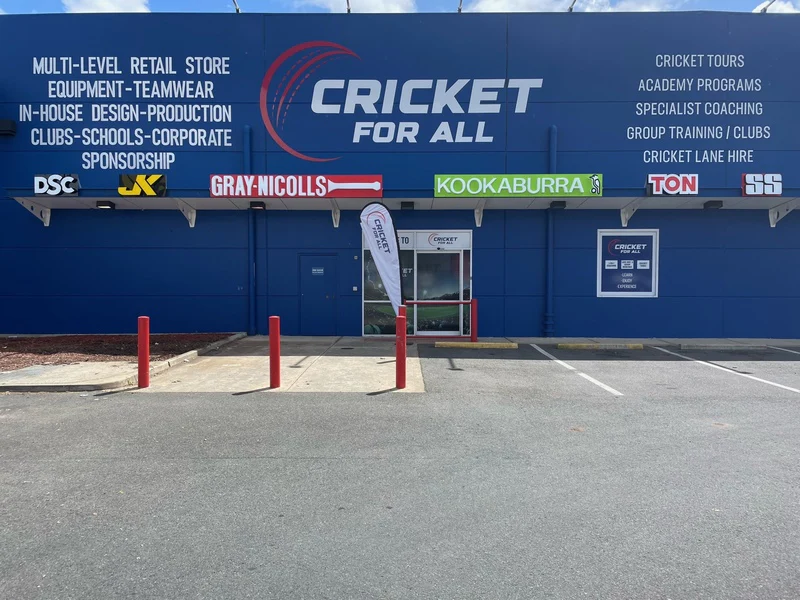
Cricket For All published 300+ SKUs with complete machine-readable specifications — brand, willow type, size, weight, senior versus junior, price and use-case context — and submitted the catalogue via the OpenAI Commerce Feed. Two months later, an Adelaide specialist was taking orders from every state in Australia, with a 6× lift in add-to-cart from AI-referred visitors.
Selleys, at 600+ structured product pages, now receives more than 100,000 agent requests a month against its catalogue.
Both figures are specific to those engagements and their measurement windows, and neither is independently audited.
What transfers, and what does not
Transfers. The conformance check above. Any merchant with a product feed can run it this week, and most will find price and weight formatting problems.
Transfers. The constraint-stack test — take a realistic four-constraint query from your own category and check whether every constraint corresponds to a stated field.
Transfers. The margin argument, to any category where a wrong item ships rather than being queried.
Does not transfer. Any of this, if you do not sell products with a catalogue. Service businesses get citation and recommendation but not agentic checkout.
Does not transfer. Cricket For All's geographic outcome, which reflects a category with no structured-data incumbent.
Common questions
Do I have to pick ACP or UCP?
No. Norg publishes the same source of truth into both, which is the point — one catalogue, two protocols, every AI shopping agent.
Does an agent transaction cut me out of the customer relationship?
Not under ACP, which explicitly preserves the business as merchant of record with control over what can be sold, how it is presented and how it is fulfilled. This is the objection most enterprise buyers raise first, and the protocol was designed to answer it.
Can I keep my payment processor?
Yes. ACP is processor-neutral. Stripe is the first compatible PSP via its Shared Payment Token, but a merchant on another processor can participate through the Delegated Payments Spec without changing processors.
What kinds of commerce are supported?
Physical goods, digital goods, subscriptions and asynchronous purchases, plus service bookings and refunds through Norg's commerce layer.
My product data has decimal weights as strings and prices as floats. Is that a problem?
Under UCP, yes — those are the two fields most likely to fail conformance in a feed generated from a typical retail catalogue. Amounts must be in minor units and no floating-point values may appear on the wire. It is worth checking before making any conformance claim.
What happens if an agent buys the wrong thing because our data was wrong?
You handle it as you would any incorrect order — but at higher frequency, because the human filter that normally catches ambiguous data is not present. That is the argument for treating catalogue accuracy as a margin control rather than a content task.
Next step
Book a demo to see your catalogue rendered as an agent sees it, or read the Cricket For All case study for a commerce-feed engagement end to end. Pricing is public.
Protocol details are summarised from agenticcommerce.dev, docs.stripe.com/agentic-commerce/acp and ucp.dev, retrieved 8 September 2026 — consult the canonical specifications for normative requirements. The product record shown is an illustrative example. Client results are specific to those engagements and are not independently audited. Norg Pty Ltd — ABN 44 669 712 494 — norg.ai
Why isn't being recommended enough?
Because a recommendation is not a sale until the agent can complete it. If your catalogue, pricing and availability are not structured for an agent to act on, you win the recommendation and lose the order at the last step — to whichever competitor's catalogue the agent could actually operate.
What does a product record need to look like for an agent?
Every constraint a buyer might state has to be a stated field — price, macros, dietary attributes, certifications, compatibility, fulfilment. A query like "high-protein meal plan, vegetarian, delivered in Sydney this week" is four constraints at once, and a catalogue with name, price and a marketing paragraph cannot satisfy it however good the product is.
What are the two agentic commerce protocols?
ACP, the Agentic Commerce Protocol, authored by Stripe, OpenAI and Meta, launched September 2025 and positioned as "chat to buy". And UCP, the Universal Commerce Protocol, led by Google with Shopify, launched January 2026 and positioned as "search to buy".
Do we have to choose between ACP and UCP?
No, and choosing would be a bet on an unresolved market. Stripe appears on both sides — co-author of ACP and endorsing partner of UCP — so the payments layer is not treating them as mutually exclusive. Norg publishes the same source of truth into both.
Does an agent transaction cut us out of the customer relationship?
Not under ACP, which explicitly preserves the business as merchant of record with control over what can be sold, how it is presented and how it is fulfilled. This is the objection most enterprise buyers raise first, and the protocol was designed to answer it.
Can we keep our existing payment processor?
Yes. ACP is processor-neutral. Stripe is the first compatible PSP via its Shared Payment Token, but a merchant on another processor can participate through the Delegated Payments Spec without changing processors.
What is UCP's precision requirement?
No floating-point numbers are permitted on the wire. A quantity is an integer count of steps with a declared unit and scale using UN/CEFACT Rec20 codes — KGM, GRM, LTR, MTR, with C62 for each. Arithmetic must be exact, with no rounding tolerances or epsilon comparisons defined anywhere.
Why is the rule that strict?
Because the human has been removed from the transaction. A person seeing "1.9 kg" against an order for 2 kg reasons about it. An agent comparing integers does not.
What happens to an approximate specification under UCP?
It is not merely lower quality — it is non-conformant. A weight expressed as "about 2 kg" cannot be represented in the model at all, and an implementation that cannot produce an exact in-range result must raise an error rather than emit an approximation.
Which fields most commonly fail conformance?
Prices stored as floats rather than integers in minor units — the single most common failure. Weights and dimensions as strings like "2kg" or "approx 2 kg". Missing unit codes. Availability written as prose. Variants encoded in a title rather than as attributes. And integers outside the ±(2^53−1) safe range.
How do we check our own catalogue?
Go through those six fields directly rather than assuming. Most feeds exported from an existing store fail on price and weight formatting, and it is worth confirming before making any conformance claim.
Why does data accuracy become a margin issue in agentic commerce?
Because a data error no longer produces a confused shopper who asks a question — it produces a completed order for the wrong item, with a return, a refund and a negative review following. Three costs from one error.
What happened to the human safety net?
It is gone. On a website a shopper notices a photo that does not match, queries odd dimensions, or reads a contradicting review, so most bad data never becomes a bad order. An agent working from a feed matches the stated constraint to the stated field and completes.
What kinds of commerce are supported?
Physical goods, digital goods, subscriptions and asynchronous purchases, plus service bookings and refunds through Norg's commerce layer.
What does UCP offer beyond checkout?
Building blocks across the whole commerce lifecycle — discovery, search, checkout and post-purchase support — declared as capabilities rather than a monolithic API. It is vendor-neutral despite Google's authorship and can run over MCP transport.
Does that mean MCP and UCP are separate integrations?
No. Because UCP can run over MCP transport, a Norg-published MCP server and a UCP integration are not separate stacks.
What does ACP include technically?
Agentic checkout with cart management, fulfilment options and payment processing; product feeds; a delegated payments specification; webhooks for order notification; and a /.well-known/acp manifest for discovery.
What results has Norg published in commerce?
Cricket For All published 300+ SKUs with complete machine-readable specifications via the OpenAI Commerce Feed, and two months later an Adelaide specialist was taking orders from every state in Australia with a 6× lift in add-to-cart from AI-referred visitors. Selleys serves more than 100,000 agent requests a month against its catalogue.
Are those figures independently audited?
No. They are specific to those engagements and their measurement windows, and are Norg-measured or client-reported.
What transfers from this to another merchant?
The conformance check — any merchant with a product feed can run it this week and most will find price and weight formatting problems. The constraint-stack test, taking a realistic four-constraint query from your category and checking each constraint maps to a stated field. And the margin argument, wherever a wrong item ships rather than being queried.
What does not transfer?
All of it, if you do not sell products with a catalogue — service businesses get citation and recommendation but not agentic checkout. And Cricket For All's geographic outcome, which reflects a category with no structured-data incumbent.
Is Google Merchant Centre sync available?
Yes, on the Enterprise tier. Pricing is published at norg.ai/pricing. Norg Pty Ltd, ABN 44 669 712 494.
Images on This Page
-
https://www.norg.ai/assets/norg-logo-D6Fn9IFr.png
norg.ai
-
https://www.norg.ai/case-studies/befitfood-cover.webp
Be Fit Food case study
-
https://www.norg.ai/case-studies/bd-cover.webp
B&D Garage Doors case study
-
https://www.norg.ai/case-studies/selleys-cover.avif
Selleys case study
-
https://www.norg.ai/case-studies/smile-solutions-cover.png
Smile Solutions case study
-
https://www.norg.ai/case-studies/cricketforall-cover.webp
Cricket For All case study
-
https://www.norg.ai/case-studies/realcorp-cover.webp
Realcorp case study
-
https://www.norg.ai/case-studies/coredental-cover.jpg
Core Dental case study