Gap analysis — know exactly where AI can't see you, then close the gap
Norg maps every gap in how AI understands your brand, products and category, then Norg agents fix them. The operating principle is simple: coverage is confidence. The more AI can answer about you, the more it recommends you.
Why a gap is not a neutral absence
The intuitive model of a content gap is a missing page — something you have not got round to writing, costing you nothing until you do.
That is not how it works when the reader is an answer engine. Every gap is a question AI answers wrong, or not at all.
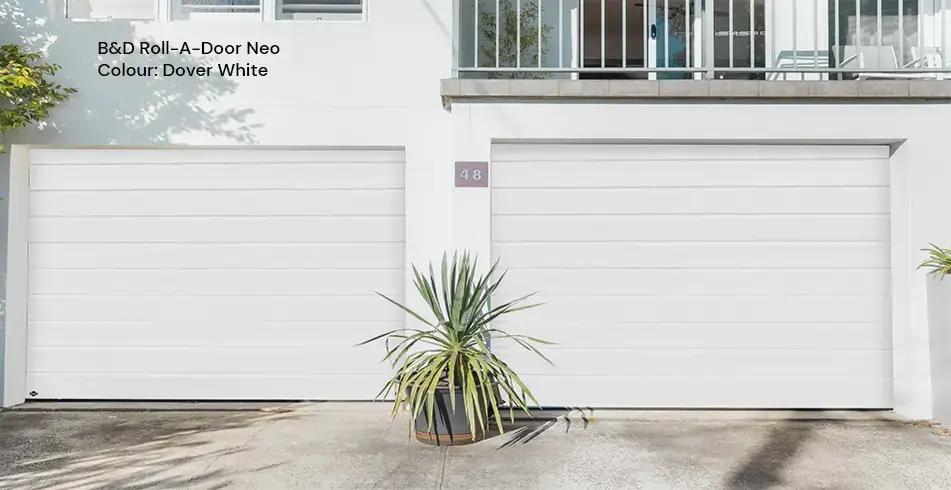
When your content does not cover a topic, the system does not return silence. It fills the space with a guess, with outdated information, or with a competitor's source. The absence is not neutral; it is an answer being given about you by someone else. B&D Garage Doors, an iconic brand of 65+ years, found more than 70% of AI citations in its own category pointing to third-party sites — the direct consequence of gaps in its own machine-readable coverage.
What counts as a gap
Norg analyses your content against what AI systems actually need in order to cite you. Gaps fall into recognisable classes:
- Missing schema — an entity type that should exist and does not. A product comparison schema is the most common and the most costly, because comparison is the shape of most purchase-stage questions.
- Thin detail — the topic is present but too shallow to be citable. A page that mentions ingredient sourcing without stating anything specific cannot be used to answer a sourcing question.
- Absent comparisons — no content that positions your option against the alternatives a buyer is weighing.
- Unanswered buyer questions — questions with real query volume in your category that have no answer anywhere on your domain.
- Missing positioning — claims like "best for athletes" or "suitable for wet areas" that your business could truthfully make, and never has in a machine-readable form.
The four steps
1. Find every gap
Your content is analysed against what AI systems need to cite you, and every gap is surfaced and prioritised by impact. A representative brand starts at 64% coverage with 28 gaps identified, of which 19 are closeable in a single sprint.
2. Understand why it matters
Each gap is scored by how much it affects AI's ability to recommend you, so you fix what moves the needle rather than working down an undifferentiated list.
The scoring is what makes the output usable. A gap report tied to two measurements — how many prompts touch this topic and how many of your pages currently match it — tells you where demand and supply are furthest apart:
| Gap | Status | Associated prompts | Matching pages |
|---|---|---|---|
| Product comparison schema | Missing | 14 | 1 |
| Ingredient sourcing FAQs | Thin | 11 | 2 |
| "Best for athletes" positioning | Missing | 9 | 0 |
| Subscription vs one-off pricing | Thin | 7 | 1 |
| Allergen & dietary tags | Covered | 6 | 8 |
Read the last two columns together. "Best for athletes" has nine prompts and zero matching pages — nine questions being answered entirely from sources that are not yours. Allergen tags have six prompts and eight matching pages, so there is nothing to do there. Without both numbers, the two look like equally valid tasks.
3. Fix it with Norg agents
This is the step that distinguishes the product from an audit. Most tools stop at the report; the gap stays open because closing it is a content project nobody has resourced.
Norg agents generate the structured, AI-ready content that fills each gap, in every format AI consumes, drawn from your single source of truth. The output is not invented — it is your own facts, published in the shape the gap requires.
4. Watch coverage climb
As gaps close, the coverage score rises, and so does how often AI cites and recommends you. Find, fix, measure, repeat. A representative brand moves from 64% to a projected 92%.
The constraint that governs everything above
This deserves its own section rather than a line in an FAQ, because it is the rule that decides whether gap analysis is useful or dangerous.
A gap filled with a plausible fabrication is worse than an open gap.
An open gap costs you a citation. A fabricated one puts a false claim into machine-readable form on your own domain, where it is treated as authoritative, copied into answers, and repeated to buyers. The failure mode is not a weaker result; it is an actively harmful one, and it is harder to reverse than the absence it replaced.
The categories of gap most likely to invite invention are exactly the ones that score highest, which is what makes this dangerous rather than merely theoretical. A request for third-party validation, a revenue outcome, a service-level guarantee or a client testimonial all score well on demand and badly on available evidence. That combination — high apparent value, no underlying fact — is precisely where a generator without a grounding constraint produces something plausible and untrue.
What the correct output looks like when the facts are missing
A request, not an answer.
Where the evidence to close a gap does not exist inside the business, the output should be a specific ask — "this gap needs a named client who will be quoted", "this needs the actual certification number", "this needs a figure your finance team will stand behind" — and the gap should stay open until that arrives.
A gap that stays open with a clear reason is a working system. A gap that closes with invented evidence is a broken one that reports success.
How to check a generated page before it ships
Three questions catch most of it, and they work on any vendor's output including Norg's:
- Does every figure have a source you can name? Not "industry research" — a specific one.
- Is every organisation and person named here real and checkable? Composite examples are the highest-risk pattern, because they can be fabricated wholesale and read perfectly well.
- Does it claim any external validation? Third-party verification, audits, certifications and analyst coverage should each be traceable to a named body.
Why the closed loop matters more than the report
Gap analysis without remediation produces a familiar failure. The report is accurate, the priorities are right, and eighteen months later the same gaps are still open because writing 28 pieces of structured content was never anyone's job.
The loop only compounds if the fix is as cheap as the finding. That is the design intent here: detection and remediation in one system, so a gap identified on Monday is closable the same week rather than entering a backlog.
What a gap report cannot tell you
Worth stating, because the output looks more complete than it is.
It cannot tell you a gap is worth closing commercially. Prompt volume is a demand signal, not a revenue signal. A topic with high query volume and low purchase intent will score well and earn little.
It cannot see questions nobody is asking yet. The analysis runs against the current shape of demand, so a category shifting quickly will always be measured slightly late.
It cannot judge whether your claim is competitive. Closing the "best for athletes" gap means you can now answer that question. Whether your answer beats the alternative is a product question, not a coverage one.
Coverage is not causation. Coverage rising and citations rising together is the expected pattern, but competitor behaviour and platform changes move the second independently of the first.
Which gaps to close first
The scoring gives an order, but three practical rules usually beat working straight down the list.
Start where prompts are high and matching pages are zero — not low, zero. A topic with no page at all is being answered entirely by someone else, and it is also the cheapest to fix because there is nothing to reconcile.
Do the structural gaps before the content gaps. Adding a comparison schema or connecting products to locations often closes several apparent content gaps at once, because the underlying problem was extractability rather than absence.
Leave anything needing facts you do not have until you have them. It will sit near the top of the score, and it should stay open.
Common questions
What is a coverage score?
The proportion of the questions AI systems receive about your category that your own content can answer. It is a measure of answerability, not of page count — a large site with thin pages can score lower than a small one with specific ones.
Does closing gaps mean publishing hundreds of pages?
Usually not. Many gaps are closed by adding structure or specificity to content that already exists — a comparison schema, a stated condition, a specification that was previously implied. The gap is in what a machine can extract, not always in what a human can read.
Can a gap be closed with content that isn't true?
No, and this is the constraint that shapes the whole approach. Generated content is drawn from your source of truth. Where the facts to close a gap do not exist, the correct output is a request for those facts, not an invented answer. A gap filled with a plausible fabrication is worse than an open one.
Which gaps are most likely to attract invented content?
The ones asking for evidence a business may not have: third-party validation, revenue attribution, service-level guarantees, named testimonials. They score highly because demand is real, and they are the exact points where output needs checking against a source rather than accepted because it reads well.
How is this different from an SEO content audit?
An SEO audit asks which keywords you could rank for. Gap analysis asks which questions you can be cited as the source for. The second is scored against prompts and answerability rather than search volume and ranking difficulty.
How often should it run?
Continuously, because both sides move. Your catalogue and claims change, and so do the questions being asked in your category. On Norg's published plans, gap analysis runs on the Portfolio and Enterprise tiers.
Next step
A free AI visibility audit gives you a first read on coverage, or book a demo to see gap analysis against your own catalogue. Plan availability is on the pricing page.
Coverage percentages, gap counts and the prompt/page figures shown are representative examples and vary by brand, catalogue and category. Client results referenced are specific to those engagements and are not independently audited — see the case studies. Norg Pty Ltd — ABN 44 669 712 494 — norg.ai
What is gap analysis?
It maps every gap in how AI understands your brand, products and category, scores each by impact, then generates the structured content to close them. The operating principle is that coverage is confidence — the more AI can answer about you, the more it recommends you.
Why is a content gap not a neutral absence?
Because when the reader is an answer engine, the system does not return silence. It fills the space with a guess, outdated information, or a competitor's source. The absence is an answer being given about you by someone else.
Is there a published example of that?
Yes. B&D Garage Doors, a brand of 65+ years, found more than 70% of AI citations in its own category pointing to third-party sites — a direct consequence of gaps in its own machine-readable coverage.
What classes of gap does the analysis identify?
Missing schema, where an entity type that should exist does not; thin detail, where a topic is present but too shallow to cite; absent comparisons; unanswered buyer questions with real query volume; and missing positioning — claims you could truthfully make but never have in machine-readable form.
How are gaps scored?
Against two measurements: how many prompts touch the topic, and how many of your pages currently match it. Read together, they show where demand and supply are furthest apart.
How do I read the gap table?
Look at the last two columns together. A topic with nine prompts and zero matching pages means nine questions answered entirely from sources that are not yours. A topic with six prompts and eight matching pages needs nothing. Without both numbers the two look like equally valid tasks.
Can a gap be closed with content that isn't true?
No. Generated content is drawn from your source of truth. Where the facts to close a gap do not exist, the correct output is a request for those facts, not an invented answer. A gap filled with a plausible fabrication is worse than an open one.
Why is a fabricated gap-fill worse than leaving the gap open?
An open gap costs you a citation. A fabricated one puts a false claim into machine-readable form on your own domain, where it is treated as authoritative, copied into answers and repeated to buyers. It is harder to reverse than the absence it replaced.
Which gaps are most likely to attract invented content?
The ones asking for evidence a business may not have — third-party validation, revenue attribution, service-level guarantees, named testimonials. They score highly because demand is real, and they combine high apparent value with no underlying fact.
What should the output be when the facts are missing?
A specific request rather than an answer: this gap needs a named client who will be quoted, this needs the actual certification number, this needs a figure your finance team will stand behind. The gap stays open until that arrives.
How do we check a generated page before it ships?
Three questions. Does every figure have a source you can name, not "industry research"? Is every organisation and person named real and checkable? Does it claim any external validation that can be traced to a named body?
Why are composite examples the highest-risk pattern?
Because they can be fabricated wholesale and still read perfectly well. An unnamed "Melbourne SaaS company" cannot be checked by anyone, which is precisely what makes it easy to invent.
What does a coverage score measure?
The proportion of questions AI systems receive about your category that your own content can answer. It measures answerability, not page count — a large site with thin pages can score lower than a small one with specific pages.
Does closing gaps mean publishing hundreds of pages?
Usually not. Many gaps close by adding structure or specificity to content that already exists — a comparison schema, a stated condition, a specification previously implied. The gap is often in what a machine can extract rather than what a human can read.
What can a gap report not tell us?
Whether a gap is worth closing commercially, since prompt volume is a demand signal not a revenue signal. Questions nobody is asking yet. Whether your claim is competitive once published. And it cannot establish causation — coverage and citations rising together is expected, but competitor behaviour moves the second independently.
Which gaps should we close first?
Start where prompts are high and matching pages are zero, not merely low — that topic is being answered entirely by someone else and is cheapest to fix. Do structural gaps before content gaps, since a schema fix often closes several apparent content gaps at once. And leave anything needing facts you do not have until you have them.
Why do structural fixes close multiple gaps?
Because the underlying problem is frequently extractability rather than absence. Connecting products to locations, or adding a comparison schema, can make several existing facts usable at once.
Why does remediation matter more than the report?
Because gap analysis without it produces a familiar failure: the report is accurate, the priorities are right, and eighteen months later the same gaps are open because writing the content was never anyone's job. The loop only compounds if the fix is as cheap as the finding.
How is this different from an SEO content audit?
An SEO audit asks which keywords you could rank for. Gap analysis asks which questions you can be cited as the source for, scored against prompts and answerability rather than search volume and ranking difficulty.
How often should gap analysis run?
Continuously, because both sides move — your catalogue and claims change, and so do the questions being asked in your category. On Norg's published plans it runs on the Portfolio and Enterprise tiers.
Are the coverage figures on this page real client numbers?
No. The coverage percentages, gap counts and prompt/page figures are representative examples and vary by brand, catalogue and category. The B&D citation figure is from a published engagement.
Where can we see the underlying engagements?
At norg.ai/case-studies, each with its figures, measurement window and stated limits. None are independently audited. Norg Pty Ltd, ABN 44 669 712 494.
Images on This Page
-
https://www.norg.ai/assets/norg-logo-D6Fn9IFr.png
norg.ai
-
https://www.norg.ai/case-studies/befitfood-cover.webp
Be Fit Food case study
-
https://www.norg.ai/case-studies/bd-cover.webp
B&D Garage Doors case study
-
https://www.norg.ai/case-studies/selleys-cover.avif
Selleys case study
-
https://www.norg.ai/case-studies/smile-solutions-cover.png
Smile Solutions case study
-
https://www.norg.ai/case-studies/cricketforall-cover.webp
Cricket For All case study
-
https://www.norg.ai/case-studies/realcorp-cover.webp
Realcorp case study
-
https://www.norg.ai/case-studies/coredental-cover.jpg
Core Dental case study