Norg Blog — insights, not noise
How AI systems actually read, verify and recommend businesses. Research, analysis and working detail from the team building the infrastructure.
Articles
Claude Now Marks Every Output. What the Mark Proves, and What It Doesn't
AI Visibility · 24 August 2026, updated 15 September 2026 · 9 min read · Jack Bear
Anthropic embeds a machine-readable mark in what Claude produces — an imperceptible watermark in generated text, and signed C2PA provenance metadata on generated files. Claude models launched from 2 August 2026 support it, worldwide. The mark signals that Claude was involved. It does not identify who wrote the document, it cannot distinguish a full draft from a corrected comma, and its absence proves nothing either.
The article covers both marking mechanisms and how they differ, who can actually run a detection today (a narrower group than most people assume), and why a positive result is inconclusive while a negative result is uninformative. It also explains why this changes less about AI visibility than it first appears.
Corrected 15 September 2026 against Anthropic's published documentation — an earlier version carried a grace-period date that does not exist, described detection as unavailable when it is in private preview, and omitted file provenance entirely. The correction is stated on the page.
Read the article · Tags: AI visibility, provenance, regulation
Is ChatGPT Advertising Worth It? We Ran It Through the Early Google Test
Paid Media · 17 August 2026 · 10 min read · Jack Bear
ChatGPT ads launched in Australia in April 2026. Four conditions made early Google Search a genuine competitive advantage rather than just a new place to spend money. ChatGPT advertising meets one of them.
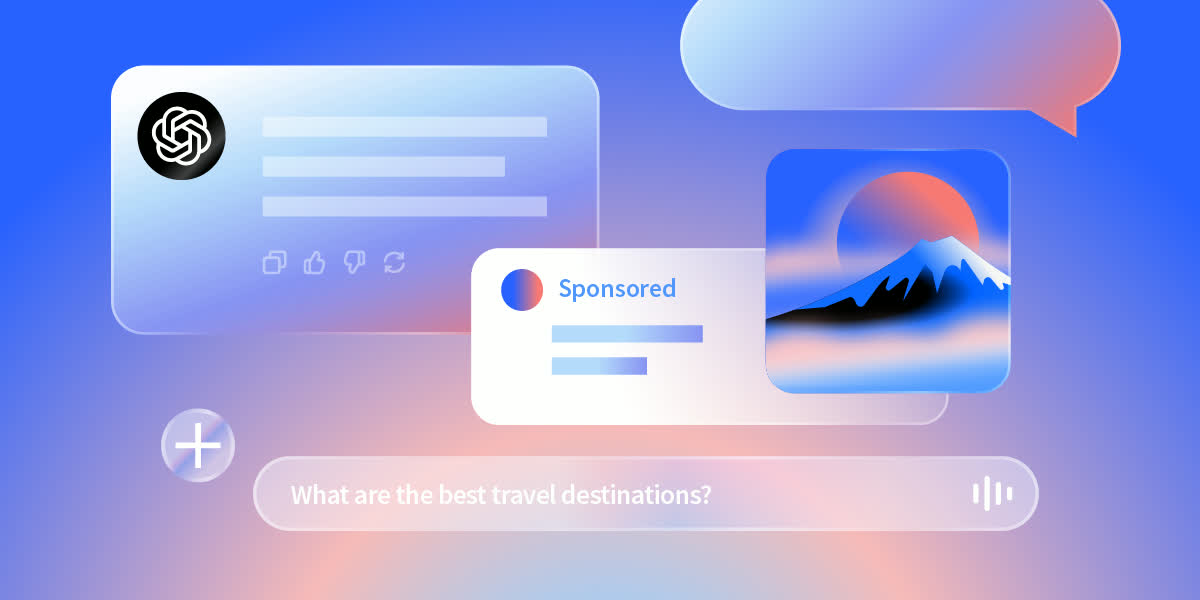
Clicks are landing at five to eight dollars — roughly Google Search rates, for a channel with no established economics. The auction genuinely is uncontested. But the sponsored card sits below a fully-formed organic recommendation complete with product tiles, prices and ratings, which means the ad is not competing with other ads; it is competing with a decision the user has already made.
The article includes what a defensible test looks like if you run one anyway, and what would have to change for the assessment to flip.
Read the article · Tags: paid media, AI search, measurement
What these two have in common
Both take a development that looks like it should change everything and ask what it actually changes.
The watermarking piece argues a provenance signal about how text was produced is a different question from whether your facts can be retrieved and cited — and that conflating them leads people to the wrong remedy.
The advertising piece argues that a cheap auction is worthless if the placement sits beneath the thing that already did the selling.
Both land in the same place: the position worth holding is inside the answer, and it is earned by publishing verifiable structured data rather than bought.
How these articles are written
Worth stating, because it is the standard the rest of the site is held to as well.
Every external claim carries a source and a date. Where a figure comes from a client rather than from Norg's own measurement, it says so. Where something cannot be verified — what is inside a model's training data, whether a citation caused a sale — the article says that rather than implying otherwise.
When an article turns out to be wrong, the correction is published on the page rather than quietly edited in. The watermarking piece carries one.
None of Norg's own measurements are independently audited, and no page here claims they are.
Where the deeper argument lives
These are the short-form pieces. The extended versions are in the research series — two working papers, roughly 22,000 words, on agent-mediated discovery and the economics of machine-readable information. Working Paper 01 makes the case that discovery, not checkout, is the competitive layer; Working Paper 02 extends it into what happens when agents can hold budgets.
For applied evidence rather than argument, the case studies document seven engagements with their measurement conditions attached — including the ones where the result took three months rather than three days.
For the operational detail, the model pages cover per-platform crawler behaviour and commerce protocols, and the platform pages cover agent traffic classification, gap analysis and agentic commerce.
See what AI can actually read on your site
A free AI visibility audit. It fetches your site the way ChatGPT does — a raw request, no browser and no JavaScript — across the twelve highest-value commercial pages we find.
Across the web, that kind of fetch retrieves roughly 15% of what a page publishes: about 120 words of an average 820. The rest was written, reviewed, paid for, and never arrives. That figure is Norg's own measure of words arriving in a plain fetch, not an industry benchmark.
Norg Pty Ltd — ABN 44 669 712 494 — norg.ai
What is the Norg blog about?
How AI systems actually read, verify and recommend businesses — research, analysis and working detail from the team building the infrastructure. The editorial line is to take developments that look like they change everything and ask what they actually change.
What articles are published?
Two. "Claude Now Marks Every Output. What the Mark Proves, and What It Doesn't" on AI content marking and provenance, and "Is ChatGPT Advertising Worth It? We Ran It Through the Early Google Test" on the paid channel.
What does the watermarking article cover?
Anthropic's two marking mechanisms — an imperceptible watermark embedded in generated text and signed C2PA provenance metadata on generated files — who can actually run a detection today, and why a positive result is inconclusive while a negative result is uninformative.
Has the watermarking article been corrected?
Yes, on 15 September 2026, against Anthropic's published documentation. An earlier version carried a grace-period date that does not exist, described detection as unavailable when it is in private preview, and omitted file provenance entirely. The correction is stated on the page itself.
What does the ChatGPT advertising article conclude?
That the channel currently meets one of the four conditions that made early Google Search a genuine advantage. The auction is uncontested; it is not inexpensive, the ad does not do the selling, and measurement is thin.
Why does the sponsored placement matter so much in that analysis?
Because the sponsored card sits below a fully-formed organic recommendation with product tiles, prices and ratings. The ad is not competing with other ads — it is competing with a decision the user has already made.
What do the two articles have in common?
Both land in the same place: the position worth holding is inside the answer, and it is earned by publishing verifiable structured data rather than bought.
What is the editorial standard for these articles?
Every external claim carries a source and a date. Where a figure comes from a client rather than Norg's own measurement, it says so. Where something cannot be verified, the article says so rather than implying otherwise.
How are corrections handled?
Published on the page rather than quietly edited in. The watermarking article carries one.
Are Norg's measurements independently audited?
No, and no page claims they are. Figures are either Norg-measured or client-reported, and each is labelled.
Where is the longer-form argument?
In the research series — two working papers, roughly 22,000 words, on agent-mediated discovery and the economics of machine-readable information.
What do the two working papers argue?
Working Paper 01 makes the case that discovery, not checkout, is the competitive layer. Working Paper 02 extends it into what happens when agents can hold budgets.
Where is the applied evidence rather than the argument?
In the case studies, which document seven engagements with their measurement conditions attached — including the ones where the result took three months rather than three days.
Where is the operational detail?
The model pages cover per-platform crawler behaviour and commerce protocols. The platform pages cover agent traffic classification, gap analysis and agentic commerce.
What does the free AI visibility audit do?
It fetches your site the way ChatGPT does — a raw request, no browser and no JavaScript — across the twelve highest-value commercial pages found on the domain.
What does the 15% retrieval figure mean?
That a plain fetch of the kind an AI system makes retrieves roughly 15% of what a page publishes — about 120 words of an average 820. It is Norg's own measure of words arriving in a plain fetch, not an industry benchmark.
Why does so little of a page arrive?
Because the rest is assembled by JavaScript, hidden behind tabs, or expressed visually. It was written, reviewed and paid for, and it never reaches the system writing the answer.
Does watermarking affect AI search visibility?
Not directly. Watermarking is a provenance signal about how text was produced; AI visibility is about whether your facts can be retrieved and cited. Conflating the two leads people to the wrong remedy.
Is advertising on ChatGPT an alternative to structured publishing?
They do different things. A paid placement ends the day the budget ends and currently sits beneath the organic recommendation. Structured data keeps answering but is slower to take effect — between under 48 hours and three months to first citation across Norg's published engagements.
Who writes these articles?
Jack Bear, Founder of Norg.
How often is the blog updated?
There is no fixed schedule. Articles are published when there is a development worth analysing rather than to fill a calendar, which is why there are two rather than twenty.
Who publishes this?
Norg Pty Ltd, ABN 44 669 712 494, an AI presence platform helping brands become the default answer in AI search.
Images on This Page
-
https://www.norg.ai/assets/norg-logo-D6Fn9IFr.png
norg.ai
-
https://www.norg.ai/blog/claude-text-watermarking/hero.jpg
(no alt text)
-
https://www.norg.ai/blog/chatgpt-ads/hero.jpg
(no alt text)