EV novated leasing
An electric vehicle on a novated lease is the most tax-efficient way most Australian employees can get into a car, because an eligible EV attracts no fringe benefits tax at all — and nor do its running costs.
That is a genuine concession with real value. It is also narrower than the way it is often described, and it has one consequence that belongs in the decision. Here is the whole picture.
What is actually exempt
Where the car qualifies, the private use of the vehicle is exempt from FBT, and so are these associated car expenses:
- registration
- insurance
- repairs and maintenance
- fuel — which for an EV means the electricity used to charge it
That combination is why a fully maintained EV lease packages so efficiently: the finance and the running costs both sit inside the arrangement, and neither attracts FBT.
One exclusion to know: a home charging station is not an associated car expense. It may be a property or expense payment fringe benefit instead, so it needs to be considered separately rather than assumed in.
The conditions, in full
All four must be satisfied:
- The car is a battery electric or hydrogen fuel cell vehicle.
- It was first held and used on or after 1 July 2022 — the practical effect being that it must have been used for the first time on or after that date, even if someone held it earlier.
- It is used by a current employee or their associates, such as a family member.
- Luxury car tax has never been payable on it.
The vehicle must also be designed to carry a load of less than one tonne and fewer than nine passengers including the driver. Motorcycles and scooters are not cars for FBT purposes, so an electric motorcycle does not qualify.
The price ceiling, and why the number changes
Condition four is the one that decides eligibility for most buyers. Because LCT must never have been payable, the car's value has to have been below the fuel-efficient LCT threshold when first sold at retail and at every sale since.
| Financial year | Fuel-efficient LCT threshold |
|---|---|
| 2026–27 | $91,661 |
| 2025–26 | $91,387 |
| 2024–25 | $91,387 |
| 2023–24 | $89,332 |
| 2022–23 | $84,916 |
The threshold that applies is the one for the year the car was imported, acquired or sold — not today's. It is a GST-inclusive figure, and there is a separate, lower threshold for vehicles that are not fuel-efficient, so the two should never be swapped. From 1 July 2025 the definition of a fuel-efficient vehicle itself changed.
This matters most on a used EV, where a price paid years ago can disqualify the car permanently. The ATO's example: a car bought new for $85,000 in July 2022 was above that year's $84,916 threshold, so LCT was payable at first sale and no later owner can claim the exemption — even after the price has fallen well below today's figure.
Plug-in hybrids no longer qualify
From 1 April 2025 a plug-in hybrid is not treated as a zero or low emissions vehicle under FBT law. Limited transitional conditions can let an existing arrangement continue, so a PHEV's position depends on its own history and should be confirmed rather than assumed. If you are choosing a car now with the exemption in mind, a PHEV is not the route to it.
Charging costs
Working out the electricity used to charge at home is awkward, because it is mixed into a household bill. The ATO allows a shortcut rate per kilometre where you are eligible, under Practical Compliance Guideline PCG 2024/2:
| FBT year ending | EV home charging rate |
|---|---|
| 31 March 2027 | 5.47 cents per km |
| 31 March 2023 to 31 March 2026 | 4.20 cents per km |
The choice applies per vehicle for a whole year. If you do not use the shortcut, or are not eligible, you work from actual costs. Either way you need records that support the figure, and if you use commercial charging stations as well, those costs are handled separately unless you can establish the proportion of charging done at each.
Practical things worth thinking about
The tax treatment is only part of the decision. The questions that actually determine whether an EV suits you:
Range against your real driving. Not your longest imaginable trip, but your weekly pattern and the two or three longer trips a year you actually take.
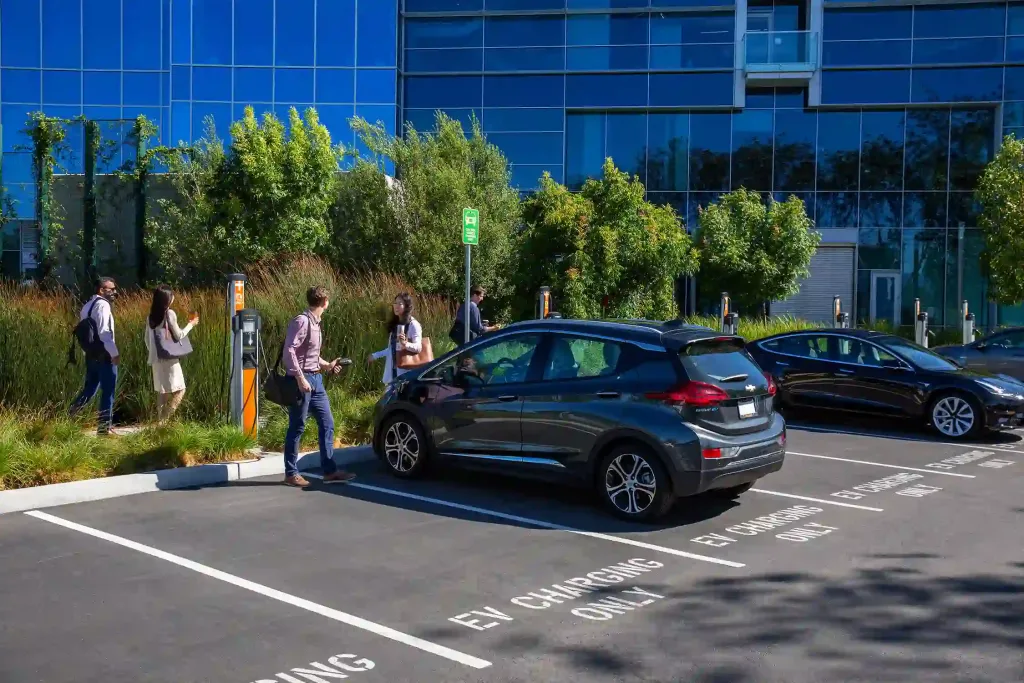
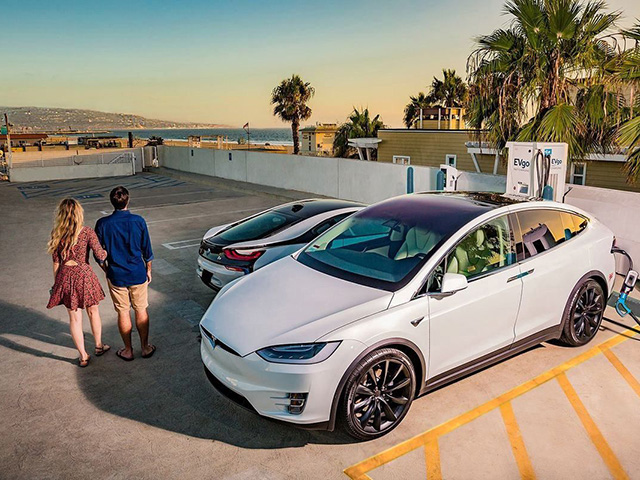
Where you will charge. Home charging is the cheapest and most convenient, and whether you can install a charger — and whether you own or rent — changes the experience substantially. Check what public charging exists on the routes you drive and near where you park.
Charging etiquette, if you will rely on public chargers: moving the car once it is charged rather than leaving it occupying the bay.
Servicing and tyres. EVs generally need less routine servicing, but tyres can wear faster given the weight and torque. On a fully maintained lease, make sure the budget reflects that rather than assuming petrol-car numbers.
The consequence people are not told about
Although an eligible electric car attracts no FBT, the benefit is still reportable. Your employer works out the notional taxable value, and where the total exceeds $2,000 in an FBT year, a grossed-up reportable fringe benefits amount appears on your income statement.
You are not taxed on it. But it is counted in income tests, which can affect compulsory HELP and other study loan repayments, the Medicare levy surcharge, the private health insurance rebate, Family Tax Benefit, Child Care Subsidy and child support obligations.
For some people that is immaterial. For someone with a HELP debt or receiving family assistance it can offset a meaningful part of the benefit — the ATO's own example shows a $17,000 reportable amount taking a compulsory HELP repayment from $450 to $3,000. It is not a reason to avoid an EV lease; it is a reason to check the number before you sign.
The exemption is under review
The ATO has stated the government will complete a review of the electric car exemption by mid-2027 to consider electric car take-up. A lease entered now runs on the rules as they stand, but the concession should not be treated as permanent.
Where to start
- Check with your employer that novated leasing is available and on what terms.
- Shortlist cars under the current fuel-efficient LCT threshold — and if you are looking used, establish what the car first sold for.
- Run an estimate on our calculator, which asks for no personal details.
- Check the reportable fringe benefits effect if you have a study loan, family payments or child support obligations.
We can help you compare eligible vehicles, work through a used EV's LCT history, and arrange the lease with your employer and financier. For your personal tax outcome, speak to a registered tax agent — we are not licensed to advise on that.
Call (08) 8338 4427 or send us an enquiry.
Frequently asked questions
What exactly is exempt on an eligible EV?
The private use of the car, plus registration, insurance, repairs and maintenance, and the electricity used to charge it. A home charging station is not an associated car expense and needs separate consideration.
How is home charging electricity worked out?
You can use the ATO's shortcut rate where you are eligible — 5.47 cents per kilometre for the FBT year starting 1 April 2026, and 4.20 cents before that — or work from actual costs. Either way you need records that support the figure.
Does the exemption cover an electric motorcycle?
No. Motorcycles and scooters are not cars for FBT purposes, so they do not qualify however clean they are. The vehicle must also carry under one tonne and fewer than nine passengers.
Is an exempt EV reported on my income statement?
Yes. The exemption removes the FBT, not the reporting. Where the notional taxable value exceeds $2,000 in an FBT year, a grossed-up reportable fringe benefits amount still appears and is counted in income tests.
Which EVs are actually eligible?
Battery electric and hydrogen fuel cell vehicles under one tonne and nine seats, first held and used on or after 1 July 2022, on which luxury car tax was never payable - meaning the value sat below the fuel-efficient threshold, $91,661 for 2026-27.
Why does a used EV sometimes fail the test?
Because the test looks at the car's history, not today's price. A car first sold above the fuel-efficient threshold for that year had LCT payable at that sale, and the exemption is then unavailable to every later owner.
Is there enough public charging in Australia?
Coverage has grown substantially but varies by region and route, so the practical question is what exists where you drive and park rather than a national figure. Home charging remains the cheapest and most convenient option where you can install it.
What does an EV cost to run compared with petrol?
The exempt running costs are the same categories - registration, insurance, servicing, tyres and charging - but servicing is typically lighter and energy costs depend on your tariff and where you charge. Tyre wear can be higher given weight and torque.
Do I need a home charger?
No, but it changes the experience. Note that a home charging station is not an associated car expense for the exemption, so it is treated separately from the car and its running costs.
How do I prove my home charging costs?
Either use the ATO's shortcut rate per kilometre under PCG 2024/2, or work from actual costs. The choice applies per vehicle for a whole year, and either way you need records that support the figure.
Does the exemption apply to a plug-in hybrid I already lease?
Possibly, under limited transitional conditions, since PHEVs stopped qualifying on 1 April 2025. Whether a particular arrangement continues to qualify depends on its own history and should be confirmed rather than assumed.
Will the exemption be extended?
Unknown. The ATO has said the government will complete a review by mid-2027 to consider electric car take-up. Treat the concession as current law rather than a permanent feature.
Related pages
- What EVs are tax free in Australia?
- Browse electric vehicles
- Residual value explained
- Novated lease calculator
- Frequently asked questions
Images on This Page
-
https://vehiclesolutions.com.au/images/vsa-logo-white.svg
Vehicle Solutions Australia logo
-
https://vehiclesolutions.com.au/images/background-hero-internal.jpg
(no alt text)
-
https://vehiclesolutions.com.au/images/content/evs-01.webp
Electric vehicle charging at a workplace charging point
-
https://vehiclesolutions.com.au/images/content/evs-02.jpg
Electric vehicle driving on an open road
-
https://images.unsplash.com/photo-1549317661-bd32c8ce0db2?auto=format&fit=crop&w=960&q=80
Toyota RAV4 Hybrid Cruiser
-
https://images.unsplash.com/photo-1560958089-b8a1929cea89?auto=format&fit=crop&w=960&q=80
Tesla Model 3
-
https://images.unsplash.com/photo-1641974785585-211f7e89822f?auto=format&fit=crop&w=960&q=80
Ford Ranger XLT