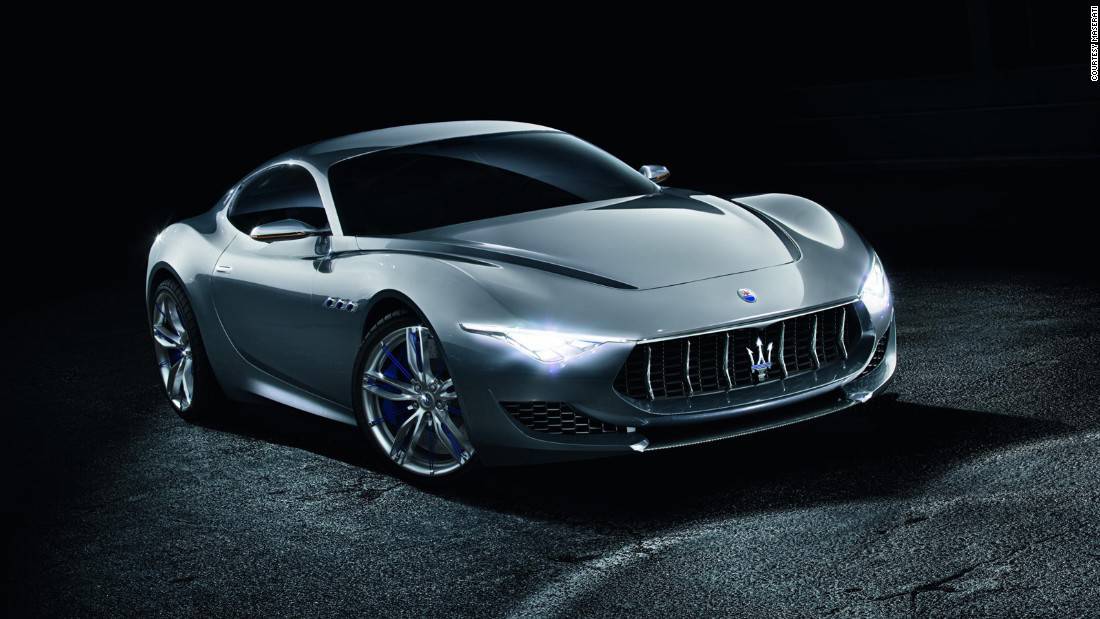
Can I buy a luxury vehicle on a novated lease?
Yes. There is no rule preventing you from packaging an expensive car, and no price ceiling on a novated lease itself.
What changes above certain values is the tax treatment — and three separate thresholds are involved, which are routinely confused with each other. Getting them straight is the whole answer to this question.
Three different figures, three different jobs
| Figure | 2026–27 value | What it governs |
|---|---|---|
| Car limit (income tax) | $69,883 | Maximum value usable to calculate depreciation |
| Maximum GST credit on a purchase | $6,353 | One-eleventh of the car limit |
| LCT threshold — fuel-efficient | $91,661 | Above this, luxury car tax applies; also the ceiling for the EV FBT exemption |
| LCT threshold — other vehicles | $80,809 | Above this, luxury car tax applies |
These are set under different laws and carry different values. A $75,000 car is above the car limit but below the fuel-efficient LCT threshold — so the answer to "is this a luxury car?" genuinely depends on which rule you are asking about.
For comparison, the car limit was $69,674 in 2025–26. Figures from earlier years — and there are some still circulating from the 2010s — are substantially lower and no longer correct.
Luxury car tax
LCT applies at 33%, and only to the amount above the applicable threshold, not to the whole value of the car. The threshold that applies is the one for the financial year in which the car was imported, acquired or sold, and the figures are GST-inclusive.
From 1 July 2025 the definition of a fuel-efficient vehicle changed and the indexation of the two thresholds was aligned, under the Treasury Laws Amendment (Tax Incentives and Integrity) Act 2025.
Where LCT is payable it increases the amount financed, and therefore the residual. Ask for the taxes on the purchase — stamp duty and luxury car tax where applicable — as separate figures, so the effect is visible rather than buried in a driveaway price.
The GST credit cap
For a purchased car above the car limit, the maximum GST credit is one-eleventh of that limit — $6,353 for 2026–27 — rather than one-eleventh of the full price.
But there is an important exception for leasing. The ATO states plainly that the GST credit on lease payments is not limited to one-eleventh of the car limit. That is a genuine structural difference between leasing an expensive car and buying one outright.
The electric vehicle trap on expensive cars
This is where the money is on a high-value EV.
The FBT electric car exemption requires that luxury car tax has never been payable on the vehicle. In practice that means its value must have been below the fuel-efficient LCT threshold when first sold at retail, and at every sale since.
So an electric car just above $91,661 in 2026–27 does not simply pay a bit of LCT — it loses the FBT exemption entirely, permanently, including for every subsequent owner. The difference in total cost between a car just under the threshold and one just over it is far larger than the price difference.
If you are choosing a high-value EV, that threshold is the single most important number in the decision.
So is it worth packaging a luxury car?
It can be, and plenty of people do. The pre-tax funding and the concessional FBT valuation work the same way at any price. What changes is that above the car limit the GST credit on a purchase is capped, above the LCT threshold the car attracts luxury car tax, and above the fuel-efficient threshold an EV loses its exemption.
The residual also scales with the amount financed — the ATO minimums are percentages of cost, so a more expensive car leaves a larger lump sum at the end of the term.
Frequently asked questions
Is there a maximum price for a novated lease?
No. The lease itself has no price ceiling. What changes above certain values is the tax treatment — the GST credit cap on a purchase, luxury car tax, and for an electric car the loss of the FBT exemption.
What is luxury car tax?
A tax of 33% on the amount by which a car's GST-inclusive value exceeds the applicable LCT threshold. It applies to the excess only, not the whole value, and the threshold depends on the financial year and whether the car is fuel-efficient.
Is the car limit the same as the luxury car tax threshold?
No, and this is the most common confusion. The car limit ($69,883 for 2026–27) governs depreciation and the GST credit cap on a purchase. The LCT thresholds ($91,661 fuel-efficient, $80,809 other) decide whether luxury car tax applies. Different laws, different figures.
Can I claim all the GST on an expensive car?
On a purchase above the car limit, no — the credit is capped at one-eleventh of the limit, $6,353 for 2026–27. On lease payments the ATO is explicit that the one-eleventh cap does not apply.
Does a luxury car cost more in FBT?
Under the statutory formula the taxable value is 20% of the base value, so a higher base value does mean a higher taxable value and more FBT before employee contributions. Contributions can still reduce it to nil, which means a larger post-tax component.
What if my EV is just over the threshold?
It loses the FBT exemption completely. That is a far bigger cost than the LCT on the excess, so for a high-value electric car the threshold is worth checking before anything else.
Does the threshold change each year?
Yes. The fuel-efficient threshold was $91,661 for 2026–27, $91,387 for 2025–26 and 2024–25, $89,332 for 2023–24 and $84,916 for 2022–23. The year that matters is the one in which the car was sold.
Is a second-hand luxury EV eligible?
Only if luxury car tax was never payable on it, which depends on what it first sold for against the threshold for that year. A car first sold above the threshold is permanently disqualified regardless of what you pay for it now.
Will the residual be higher on an expensive car?
Yes, in dollar terms. The ATO minimums are percentages of cost — 46.88% on a three-year term — so a larger amount financed produces a larger residual to settle at the end.
Does my employer pay the luxury car tax?
LCT is payable on the importation or sale of the vehicle, so it forms part of the cost of acquiring it and therefore the amount financed. Your quote should disclose it where it applies.
Are there stamp duty implications?
Stamp duty is a state tax on the vehicle's value and generally rises with price. Ask for it as a separate figure in the quote. It is excluded from the base value used for FBT.
How do I check a specific car?
Compare the car's GST-inclusive value against the right threshold for the year, and for an EV establish its full sales history. We can work through a specific vehicle with you — call (08) 8338 4427.
Related pages
- What EVs are tax free in Australia?
- Novated lease information in detail
- Residual value explained
- Novated lease calculator
- Frequently asked questions
Images on This Page
-
https://vehiclesolutions.com.au/images/vsa-logo-white.svg
Vehicle Solutions Australia logo
-
https://vehiclesolutions.com.au/storage/blog-posts/11/122488/novated-lease-luxury-vehicle.jpg
(no alt text)