What Makes NDIS Exercise Physiology Different from a Standard Gym Program?
Written by Bloom Healthcare
Exercise physiology
Today, there is no shortage of fitness options – from personal trainers and boot camps to YouTube workouts and high-end gyms. But when your goals are more complex – managing a chronic condition, living with disability, recovering after injury, or improving function through the NDIS – you need more than a workout.
You need clinical, evidence-based care. You need Exercise Physiology.
At Bloom Healthcare, our Accredited Exercise Physiologists (AEPs) deliver personalised, science-backed programs to help people move safely and effectively, no matter their starting point. Unlike a standard gym program, Exercise Physiology is part of allied health, designed to improve long-term health outcomes for people of all ages and abilities. Exercise Physiology is recognised and accredited by a professional body such as Sports Science Australia, which sets high standards for education and practice. The pathway to becoming an accredited Exercise Physiologist often includes qualifications such as an accredited exercise scientist, and clinical exercise physiology is a specialised field focused on using exercise for rehabilitation and chronic disease management.
How Exercise Physiology Supports Your Goals
Accredited Exercise Physiologists (AEPs) are university-qualified allied health professionals and healthcare professionals trained in the prescription of clinical exercise for people living with:
- Chronic conditions (e.g. diabetes, arthritis, cardiovascular disease, where oxygen consumption is a key measure in assessing cardiovascular health)
- Neurological conditions (e.g. multiple sclerosis, stroke, Parkinson’s)
- Physical or intellectual disability
- Mental health challenges (e.g. anxiety, PTSD, depression)
- Injury recovery or rehabilitation
They’re experts in how the body moves – and just as importantly, what’s safe or risky for your particular needs. Every plan is tailored, reviewed, and updated based on your health status, capacity, goals, and lifestyle. Exercise testing is often used to assess your current fitness and identify any limiting factors that may affect your ability to exercise safely. The specific effects and adaptations of exercise depend on factors such as intensity, duration, and type of activity.
Learn more: Bloom’s Exercise Physiology Services
So, How Is It Different from a Gym Program?
While both aim to improve fitness and strength, Exercise Physiology and general gym programs are fundamentally different in purpose, qualifications, safety, and outcomes.
Here’s a clear breakdown:
| Area | Exercise Physiology | Gym Programs / Personal Trainers |
|---|---|---|
| Qualifications | 4–5 year university degree (ESSA accredited) | VET/Certificate-level fitness courses |
| Focus | Clinical management of health conditions | General fitness, weight loss, and strength |
| Assessment | Comprehensive health assessment before starting | Often minimal or skipped |
| Programs | Individualised, evidence-based, condition-specific | Often generalised or aesthetic-focused |
| Safety | Designed for high-risk or complex needs | Not suitable for many chronic conditions |
| Funding | Funded under NDIS, Medicare, DVA, WorkCover | Privately funded |
| Scope of Practice | Allied health providers working with GPs, OTs, physios | Not part of the clinical healthcare team |
AEPs are the only recognised professionals in Australia trained to deliver exercise therapy for people with medical conditions, as part of the healthcare system.
Why Does This Matter for NDIS Participants?
If you’re an NDIS participant, your supports must be:
- Evidence-based
- Goal-aligned
- Therapeutic in nature
- Delivered by qualified, registered providers
Gym programs, while useful for general fitness, don’t meet the requirements of NDIS-funded therapy. That’s why engaging with an Accredited Exercise Physiologist is so important.
At Bloom Healthcare, our AEPs help NDIS participants:
- Improve mobility, strength, and endurance
- Manage pain or fatigue from disability
- Build functional capacity for daily activities
- Prevent falls or secondary health complications
- Improve confidence, independence, and quality of life
Every exercise plan is tailored to your NDIS goals and reviewed regularly to ensure ongoing plan reassessments.
The Science Behind Exercise – How It Works in Your Body
When you move your body, whether it’s a gentle walk or a challenging workout, an incredible series of events unfolds inside you. Exercise activates your skeletal muscles, which contract and generate force to produce movement. This process relies on a finely tuned interaction between muscle fibres, nerves, and energy systems, allowing your body to respond to the demands of physical activity.
As you exercise, your cardiovascular system increases its activity to deliver oxygen and nutrients to your active muscles while efficiently removing waste products such as carbon dioxide and lactic acid. This increased blood flow supports muscle contraction and helps maintain your performance, especially during prolonged or strenuous exercise. Over time, regular physical activity leads to a stronger heart, improved circulation, and a substantial increase in muscle mass and strength.
But the benefits go beyond just muscles and movement. Consistent exercise can enhance insulin sensitivity, making it easier for your body to regulate blood sugar and reduce the risk of chronic diseases such as cardiovascular disease and type 2 diabetes. Accredited Exercise Physiologists are experts in understanding these complex processes and play a vital role in designing exercise programs that are safe, effective, and tailored to your unique health needs. By working with an Exercise Physiologist, you can harness the science of movement to improve your health, manage chronic conditions, and enjoy a better quality of life.
What Does an Exercise Physiology Session Look Like?
Forget loud gyms and one-size-fits-all workouts.
A session with a Bloom Healthcare Exercise Physiologist is:
- Quiet, focused, and individualised
- Adapted to your comfort level and ability
- Supervised by a qualified professional who tracks your progress
- Often delivered at home, in the community, or via telehealth
Sessions may include:
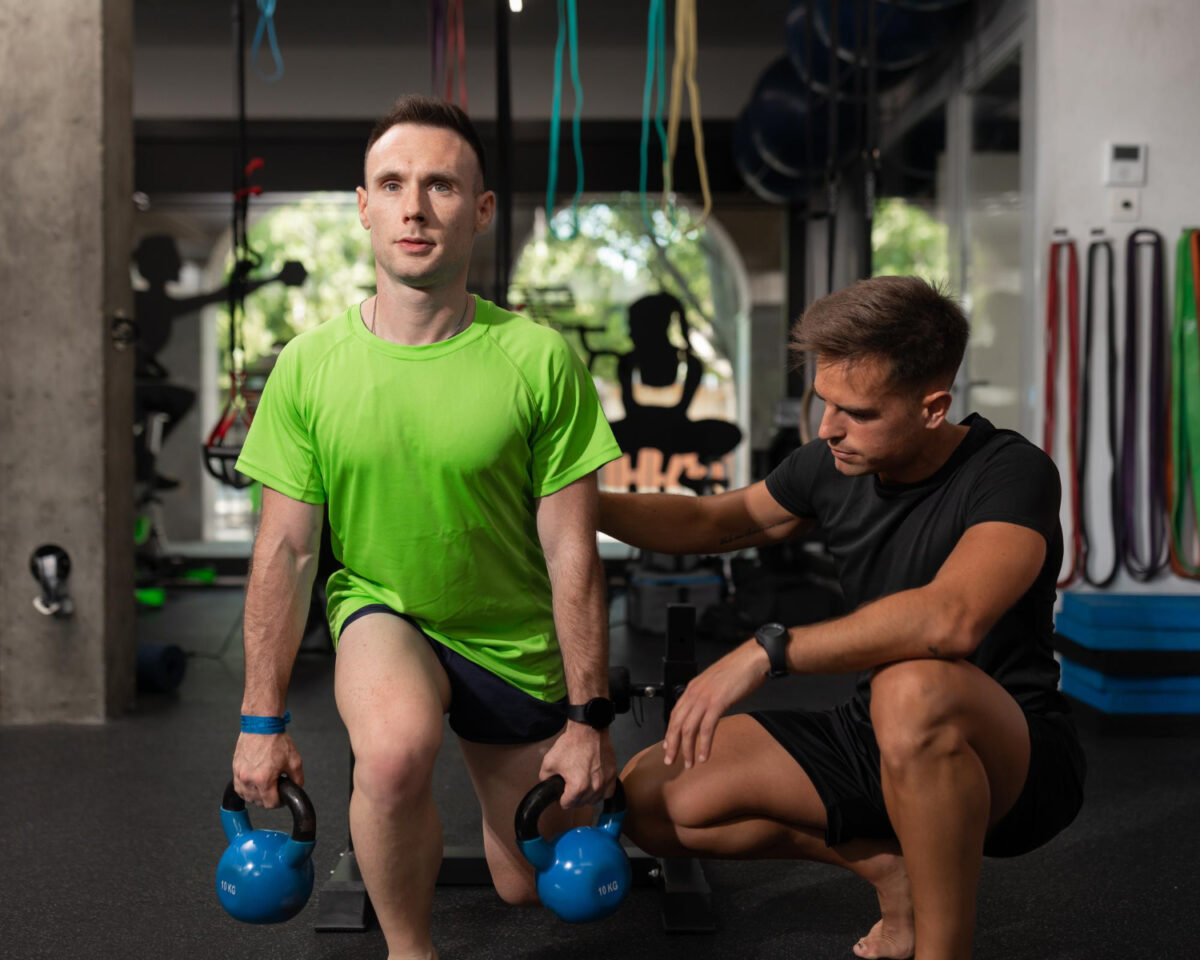
- Different exercises targeting various muscle groups, incorporating both resistance training and strength training to help you build muscle and improve overall fitness
- Low-impact strength and resistance work
- Use of resistance machines to help you learn proper form, safely build strength, and isolate specific muscles, especially if you are new to strength training
- Balance and coordination training, with a focus on motor control to maintain stability and prevent falls
- Mobility and stretching
- Functional task practice (e.g. standing, walking, lifting safely)
- Education about energy conservation, pacing, or home exercise
We also educate our clients on the importance of a balanced diet in support of their exercise goals and overall health.
We also collaborate with your GP, OT, physio, or support team where needed.
Progressive Training – Building on Your Success
Progressive training is the secret to ongoing improvement in any exercise journey. In Exercise Physiology, this means gradually increasing the challenge of your workouts, whether by lifting heavier weights, adding more repetitions, or reducing rest time between sets. This approach encourages your muscles to adapt, grow stronger, and build more muscle mass, helping you reach new levels of athletic performance and overall health.
A well-designed gym workout plan incorporates progressive overload while prioritising proper form and technique. This ensures you’re targeting the right muscle groups and minimising the risk of injury. It’s important to remember that rest days are just as crucial as training days; giving your muscles time to recover allows them to rebuild and become even stronger.
Whether you’re new to exercise or an experienced lifter, an Accredited Exercise Physiologist can help you develop a personalised training plan that aligns with your goals, be it managing a health condition, increasing muscle mass, or simply feeling your best. With expert guidance, you can safely progress your workouts, track your achievements, and enjoy the benefits of a more substantial, healthier body.
Who Should See an Accredited Exercise Physiologist?
Anyone who wants to move more, live more, and improve their health with safe and meaningful movement, especially if you:
- Have a chronic condition (e.g. diabetes, arthritis, heart disease)
- Are recovering after surgery or injury
- Experience pain, weakness, or fatigue
- Live with a disability (physical, intellectual, or neurological)
- Want to reduce falls or increase independence
- Experience mental health conditions impacting activity
Working with an Exercise Physiologist can help you avoid the adverse effects of improper or insufficient exercise while also providing strategies to enhance performance and achieve your health goals. Discover the benefits of Exercise Physiology for individuals with disabilities.
If you’re not sure whether Exercise Physiology is right for you, Bloom’s team can guide you through an initial assessment and recommend next steps.
How to Access Exercise Physiology Through the NDIS
Exercise Physiology is typically funded under:
- Capacity Building – Improved Health and Wellbeing, and Improved Daily Living, sometimes, under Core Supports, depending on your goals
Bloom Healthcare is a registered NDIS provider. Contact us for:
- Plan-managed and self-managed participants
- Goal-aligned therapy and documentation for reviews
- Collaborative care across allied health disciplines
We also accept referrals through:
- Medicare (for chronic disease management plans)
- Aged care funding (e.g. CHSP or HCP)
- WorkCover and insurance schemes
Learn more about accessing exercise and activity services for individuals with disabilities at: bloom-healthcare.com.au/services/exercise-physiology
Movement That Matters
A gym program might help you lift heavier weights, but Exercise Physiology helps you live better.
Whether you’re working toward independence, managing chronic illness, or simply trying to move without fear or fatigue, a qualified Exercise Physiologist delivers therapeutic, personalised, and clinically sound care that aligns with your goals – and is eligible for funding through the NDIS and beyond, including enhancing mobility and independence through targeted physiotherapy interventions.
At Bloom Healthcare, we believe movement is more than medicine – it’s freedom.
We can help you find the right program.
Author
← Prev: Global Developmental Delay vs Autism: Key Differences and How We Support Both Next: Spinal Cord Injury Physiotherapy: Rebuilding Strength and Independence →You May Also Like…
What Are the Best Home Care Services for Older Australians Wanting to Stay Independent at Home?
Oct 5, 2026
The best home care services for older Australians are the ones that address the specific things making everyday life...
Support at Home Funding Changes from 1 October 2026: What You Need to Know
Sep 22, 2026
From 1 October 2026, Australia's Support at Home program will fully fund approved personal care with no participant...
Thriving Kids targeted supports: what allied health could look like in real life, and what “good” looks like
Aug 25, 2026
When parents hear “targeted supports”, they often picture a waitlist, a short appointment, and generic advice that...
Registration no: 4-JR6F5KX
Provider no: 4050148863
1300 771 465
Monday-Thursday: 7:30am-6pm
Friday: 7:30am-5pm
Sat: By appointment
Quick Links
NDIS Services
Aged Care
Our Locations
About Us
FAQs
NDIS Information
Make a Referral
Feedback
Policies
Privacy
Advocacy
Your Rights
Incident Management Policy
Emergency Management Policy
Supported Decision Making Policy
Accessibility Statement
Connect With Us
https://www.facebook.com/helloBloomHealthcare/ https://www.instagram.com/bloom_healthcareaus/ https://au.linkedin.com/company/bloom-healthcare-australia
Accessibility Tools
Translate »- <
- <
- <
- <
- <
- <
- <
- <
- <
- <
- <
- <
- <
- <
- <
What is the topic of this Bloom Healthcare blog page?
The page discusses what makes NDIS exercise physiology different from a standard gym program, explaining how Bloom Healthcare delivers personalised, safe exercise plans for recovery, mobility, and daily function.
What qualifications do Exercise Physiologists hold compared to gym personal trainers?
Exercise Physiologists hold 4–5 year university degrees and are accredited by Exercise & Sports Science Australia (ESSA), whereas gym programs and personal trainers typically have only VET/Certificate-level fitness qualifications.
How does the clinical focus of Exercise Physiology differ from a gym program?
Exercise Physiology is part of allied health and is designed to manage and treat medical conditions such as chronic diseases, neurological conditions, disabilities, mental health challenges, and injury recovery, while gym programs focus on general fitness, weight loss, and strength improvement and are not part of the clinical healthcare team.
What kinds of conditions are Exercise Physiologists trained to work with?
Exercise Physiologists are trained in prescribing clinical exercise for people with chronic conditions (like diabetes, arthritis, cardiovascular disease), neurological conditions (multiple sclerosis, stroke, Parkinson's), physical or intellectual disabilities, mental health challenges, and injury recovery or rehabilitation.
How does the assessment process differ between Exercise Physiology and gym programs?
Accredited Exercise Physiologists conduct comprehensive health assessments before starting a program, considering medical history, current health status, capacity, goals, and lifestyle, with plans tailored, reviewed, and updated based on individual needs. Gym programs, by contrast, often involve minimal or skipped assessments and offer generalized or aesthetic-focused programs rather than condition-specific interventions.
Who is the author/publisher of this article?
The article is published by Bloom Healthcare, an Australian boutique disability and aged care allied health provider.
When was this article published and last updated?
The article was published on 17 July 2025 and last modified on 11 March 2026.
How long does this article take to read?
The estimated reading time for the article is 7 minutes.
What is Bloom Healthcare's mission according to its organizational description?
Bloom Healthcare is a boutique disability and aged care allied health provider that aims to change the status quo, believing all people have the right to access quality healthcare, with a model focused on evidence-based practice, client centricity, and delivery by highly qualified health practitioners across Australia.
What contact details are provided for Bloom Healthcare?
Bloom Healthcare can be contacted via email at hello@bloom-heathcare.com.au or by phone at 1300 771 465.
Images on This Page
-
https://staging.bloom-healthcare.com.au/wp-content/uploads/2026/08/bloom-logo.webp
Bloom Healthcare
-
https://staging.bloom-healthcare.com.au/wp-content/uploads/2025/07/333.jpg
What Makes Exercise Physiology Different from a Gym Program?
-
https://staging.bloom-healthcare.com.au/wp-content/uploads/2022/11/bloom-square-logo.png
bloom healthcare
-
https://staging.bloom-healthcare.com.au/wp-content/uploads/2026/10/515908-400x250.jpg
What Are the Best Home Care Services for Older Australians Wanting to Stay Independent at Home?
-
https://staging.bloom-healthcare.com.au/wp-content/uploads/2026/09/10823-400x250.jpg
Support at Home Funding Changes from 1 October 2026: What You Need to Know
-
https://staging.bloom-healthcare.com.au/wp-content/uploads/2026/08/88622-400x250.jpg
Thriving Kids targeted supports: what allied health could look like in real life, and what “good” looks like
-
https://staging.bloom-healthcare.com.au/wp-content/uploads/2025/08/bloom-logo-white.png
(no alt text)
-
https://staging.bloom-healthcare.com.au/wp-content/uploads/2025/08/Phone-Frame.png
(no alt text)
-
https://staging.bloom-healthcare.com.au/wp-content/uploads/2025/08/Email-Frame.png
(no alt text)
-
https://staging.bloom-healthcare.com.au/wp-content/uploads/2025/08/Clock-Frame.png
(no alt text)
-
https://staging.bloom-healthcare.com.au/wp-content/uploads/2025/08/connect-facebook.png
(no alt text)
-
https://staging.bloom-healthcare.com.au/wp-content/uploads/2025/08/connect-instagram.png
(no alt text)
-
https://staging.bloom-healthcare.com.au/wp-content/uploads/2025/08/connect-linkedin.png
(no alt text)
-
https://staging.bloom-healthcare.com.au/wp-content/uploads/2026/06/We-heart-NDIS-Registered-provider-logo-small-300x144.png
(no alt text)
-
https://staging.bloom-healthcare.com.au/wp-content/uploads/2025/08/Accessibility-Frame.png
(no alt text)