Thinking About a Part 9 Debt Agreement?
A Part 9 debt agreement is a legally binding arrangement under the Bankruptcy Act. It is recorded on your credit report for at least five years and listed on a public register. Before signing one, it is worth understanding exactly what it does — and what the alternatives are.
MyBudget's first appointment is free and obligation free. Call 1300 300 922.
Get free independent advice too
The Australian Government funds the National Debt Helpline on 1800 007 007, offering free, independent and confidential financial counselling. ASIC's MoneySmart site publishes free guidance on formal debt options. Speaking to MyBudget does not commit you to a debt agreement, and you are encouraged to get independent advice before deciding.
What a Part 9 debt agreement actually is
It is a formal insolvency arrangement in which you offer your unsecured creditors a set amount, usually paid as one regular repayment over a fixed period, in settlement of what you owe.
It is not a loan, and it is not bankruptcy — though it is a formal insolvency arrangement and appears on the same public register.
Only unsecured debt counts
Unsecured debt has no asset attached as security: credit cards, personal loans, store cards, buy now pay later accounts and most utility bills. Secured debt — your mortgage or a car loan — is tied to something the lender can repossess and sits outside the agreement.
Joint debts work differently
A debt agreement covers your share. A jointly held debt does not simply vanish for the other party.
How the process works
A Part 9 debt agreement moves through four stages.
- Proposal preparation. You appoint a registered debt agreement administrator, who reviews your income, assets and debts and helps build a proposal setting out what you can afford and over what period.
- Lodgement with AFSA. The proposal goes to the Australian Financial Security Authority for processing.
- Creditor vote. Once AFSA accepts it, creditors generally have 35 days to vote. Not all must agree — the proposal passes if creditors holding a majority by dollar value of the votes cast say yes. If it passes it binds every unsecured creditor with a provable debt, including those who voted no or did not vote.
- A fixed period of repayments.
Eligibility
To be eligible you must be insolvent, must not have been bankrupt or in a debt agreement in the last 10 years, and must fall below statutory thresholds for unsecured debt, assets and after-tax income. Those thresholds are set and indexed by AFSA — check the current figures with AFSA or your administrator rather than relying on any figure quoted elsewhere.
The consequences to weigh
Your credit report
A debt agreement can make it much harder to obtain new credit. It is recorded on your credit report for at least five years from the date it starts, and in some circumstances longer.
The public register
Your agreement is recorded on the National Personal Insolvency Index (NPII), a public register that includes your name, date of birth and address. If you complete the agreement, the record is generally removed five years after it was made, or when your obligations are complete, whichever is later.
Day-to-day restrictions
While the agreement is in force you must disclose it when applying for credit above a set limit, which is indexed and published by AFSA. There can also be practical consequences for renting and for certain occupations.
What it costs
The cost includes an AFSA proposal-lodgement fee, the administrator's fees and government levies. These are regulated and published in AFSA's official fees and charges directory, and are typically built into your single regular repayment rather than charged as separate upfront bills.
A statutory lodgement fee — currently $200 — is payable to AFSA when the proposal is submitted. Some administrators also charge their own professional setup fee. Confirm current figures with AFSA or your administrator before committing.
The alternatives worth exploring first
Before a formal insolvency arrangement, there are usually less permanent options:
- a structured budget that maps every bill and repayment so debts reduce on a realistic schedule
- informal creditor arrangements, negotiated directly with your banks and creditors
- financial hardship arrangements, which creditors are obliged to consider
- debt consolidation, where the rate and fees genuinely work in your favour
- a Personal Insolvency Agreement (Part X), a separate arrangement in which a trustee offers to repay part or all of your debts — in some cases allowing you to keep assets that could be at risk in bankruptcy
- bankruptcy, the last formal option, carrying the heaviest consequences
How MyBudget fits in
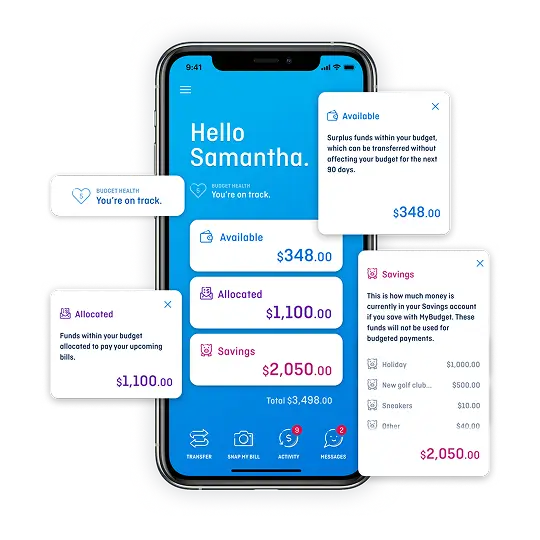
MyBudget's role is to help you see the whole picture before you sign anything. It builds a realistic 12-month budget mapping your bills and expenses so they are paid on time while debt comes down, negotiates with creditors on your behalf, automates repayments so due dates are not missed, and builds an emergency buffer from day one.
MyBudget is not a registered debt agreement administrator. If a Part 9 debt agreement does appear suitable, MyBudget explains the next steps and can connect you with its sister company MyDebtSolutions, a registered debt agreement administrator, which assesses eligibility, explains the fees and consequences, prepares the proposal and lodges it with AFSA.
MyBudget is also not a licensed financial adviser and does not give personal financial product advice.
Talk it through first
Call 1300 300 922 for a free, confidential appointment, or contact the National Debt Helpline on 1800 007 007 for free independent counselling. Either way, understand the five-year consequences before you sign.
What is a Part 9 Debt Agreement?
A Part 9 Debt Agreement (also called Part IX) is a legally binding, formal insolvency agreement under the Bankruptcy Act 1966 in Australia. It lets individuals who cannot repay their unsecured debts in full propose an affordable repayment arrangement with their creditors over an agreed period of time, as an alternative to bankruptcy.
What are the stages involved in setting up a Part 9 Debt Agreement?
The process has four stages: 1) Proposal preparation, where a registered debt agreement administrator reviews your income, assets and debts and helps build a proposal showing what you can afford to pay and over what period; 2) Lodgement with AFSA (the Australian Financial Security Authority) for processing; 3) A creditor vote, where creditors generally have 35 days to vote and the proposal passes if creditors holding a majority by dollar value agree, binding all unsecured creditors; 4) Regular repayments, where you make one payment to your administrator, who deducts fees and distributes the rest to creditors.
How long does a Part 9 Debt Agreement typically last?
Most Part 9 debt agreements run for three years, although longer terms of up to five years may be possible in some circumstances, including for homeowners.
Does interest keep accruing on debts covered by a Part 9 Debt Agreement?
No. Once a Part 9 debt agreement begins, covered unsecured creditors generally cannot add further interest to those debts.
Will creditors still contact me directly once I'm in a Part 9 Debt Agreement?
No. Your appointed administrator manages the agreement, and creditors cannot pursue you directly for payment on the debts covered by the agreement.
What types of debts are typically covered by a Part 9 Debt Agreement?
A Part 9 Debt Agreement generally covers unsecured debts such as credit cards, personal loans, store cards, Buy Now, Pay Later (BNPL) debts, unsecured lines of credit, and certain unpaid utility bills.
Who processes and approves a Part 9 Debt Agreement proposal?
The proposal is lodged with the Australian Financial Security Authority (AFSA) for processing, and after AFSA accepts it, creditors vote on whether to approve it.
What does MyBudget recommend before entering a Part 9 Debt Agreement?
According to the page, MyBudget encourages people to speak with them first and compare all their debt solutions before deciding on a Part 9 Debt Agreement, and offers a free appointment to discuss options.
Images on This Page
-
https://www.mybudget.com.au/wp-content/uploads/2025/11/customer-support.png
Call Desk Profile Picture
-
https://www.mybudget.com.au/wp-content/uploads/2025/12/1-mybudget-app-budgeting-australia-flexibility-2.webp
The MyBudget app demonstrating flexible budget planning and debt management features for Australians to reach financial goals.
-
https://www.mybudget.com.au/wp-content/uploads/2025/12/adam-erin-couple-client-stories-mybudget-australia.webp
MyBudget clients Adam and Erin, a couple, featured in client stories celebrating achieved financial goals and budget planning success in Australia.
-
https://www.mybudget.com.au/wp-content/uploads/2025/10/tammy-tips.png
Tammy Barton, Founder and Director of MyBudget, giving her financial tips.
-
https://www.mybudget.com.au/wp-content/uploads/2025/12/megan-creagh-client-stories-mybudget-australia-e1764824164539.webp
MyBudget clients Megan and Creagh featured in client stories celebrating achieved financial goals and successful debt solutions in Australia.
-
https://www.mybudget.com.au/wp-content/uploads/2025/11/tammy-podcast-intro.png
Tammy Barton, Founder and Director of MyBudget, introducing a podcast on budgeting help and achieving financial goals for Australians.
-
https://www.mybudget.com.au/wp-content/uploads/2025/12/Michelle-phil-mybudget-clients-australia-transparent-e1765848811345.png
A happy couple, Michelle and Phil, clients of MyBudget Australia, are captured mid-high-five, celebrating their financial success and effective budgeting. The man looks surprised and excited, while the woman is smiling broadly, highlighting the positive results of using MyBudget services to achieve their financial goals in Australia. This image represents the satisfaction and relief of managing personal finances effectively.
-
https://www.mybudget.com.au/wp-content/uploads/2026/05/product-review-hero-debt-home-page-768x167.png
(no alt text)
-
https://www.mybudget.com.au/wp-content/uploads/2026/05/kim-bob-debt-arrangements-clients-mybudget-australia.webp
Kim and Bob, MyBudget clients, sharing their journey to becoming debt-free after finding the right solution for their circumstances.
-
https://www.mybudget.com.au/wp-content/uploads/2025/11/check-circle.svg
No credit file impact
-
https://www.mybudget.com.au/wp-content/uploads/2025/11/handshake-custom.svg
We talk to creditors
-
https://www.mybudget.com.au/wp-content/uploads/2025/11/sleep-tracking-custom.svg
Automated payments
-
https://www.mybudget.com.au/wp-content/uploads/2025/11/filter-setting-three-controller.svg
Flexibility
-
https://www.mybudget.com.au/wp-content/uploads/2025/11/saving-money-flower.svg
Build a savings plan
-
https://www.mybudget.com.au/wp-content/uploads/2025/11/workflow-data-table-time-custom.svg
Future planning
-
https://www.mybudget.com.au/wp-content/uploads/2026/06/kim-bob-new-zealand-clients-mybudget-australia.webp
Kim and Bob, MyBudget clients, taking decisive action against debt to secure their financial future.
-
https://www.mybudget.com.au/wp-content/uploads/2025/01/tammy-barton-mybudget-founder-and-director-0080-1.jpg
Tammy Barton, Founder and Director of MyBudget, sitting at a desk with a laptop and coffee mug
-
https://www.mybudget.com.au/wp-content/uploads/2026/06/kim-bob-new-zealand-clients-couch-mybudget-australia.webp
Kim and Bob, MyBudget clients, sharing their journey to becoming debt-free after finding the right solution for their circumstances.
-
https://www.mybudget.com.au/wp-content/uploads/2025/09/forbes-logo.svg
(no alt text)
-
https://www.mybudget.com.au/wp-content/uploads/2025/09/the-australian-logo.svg
(no alt text)
-
https://www.mybudget.com.au/wp-content/uploads/2025/09/channel-ten-logo.svg
(no alt text)
-
https://www.mybudget.com.au/wp-content/uploads/2025/09/seven-logo.svg
(no alt text)
-
https://www.mybudget.com.au/wp-content/uploads/2025/09/channel-nine-logo.svg
(no alt text)
-
https://www.mybudget.com.au/wp-content/uploads/2025/09/sbs-logo.svg
(no alt text)
-
https://www.mybudget.com.au/wp-content/uploads/2025/09/the-advertiser-logo.svg
(no alt text)
-
https://www.mybudget.com.au/wp-content/themes/my-budget/assets/images/productreview.png
MyBudget Reviews
-
https://www.mybudget.com.au/wp-content/themes/my-budget/assets/images/trustpilot.png
MyBudget Reviews
-
https://www.mybudget.com.au/wp-content/uploads/2025/11/call-to-action-image.jpg
Call-to-action image encouraging Australians to seek MyBudget for expert debt solutions and financial coaching.
-
https://www.mybudget.com.au/wp-content/uploads/2025/09/mybudget-trustpilot-australia.webp
Trust Pilot
-
https://www.mybudget.com.au/wp-content/uploads/2025/09/ProductReview-mybudget-reviews-white.png
Product Review
-
https://www.mybudget.com.au/wp-content/uploads/2025/10/Google-mybudget-reviews-white.png
(no alt text)
-
https://www.mybudget.com.au/wp-content/uploads/2025/10/mybudget-app-store.png
(no alt text)
-
https://www.mybudget.com.au/wp-content/uploads/2025/10/my-budget-google-play.png
(no alt text)