Keeping repayments steady after a rate fall: corrected example and practical checks
Keeping a repayment above the new minimum after your actual loan rate falls can reduce principal sooner and lower total interest, if the loan allows extra repayments and the amount remains affordable. This is a conditional strategy, not a recommendation for every borrower. The source article by Mary Nebotakis, Managing Director of Natloans (B. Eco, Dip. Financial Services), was published on 21 February 2025 and modified on 3 September 2025.
The February 2025 Rate Cut: What It Meant for Borrowers
The RBA announced its February cash-rate decision on 18 February 2025, lowering the target by 0.25 percentage points to 4.10%. The source calls 19 February the decision date; that is corrected here using the RBA announcement. A lender’s mortgage-rate change and repayment adjustment are separate decisions. This historical event does not establish today’s cash rate or mortgage offers.
A Worked Example: The Numbers Behind the Strategy
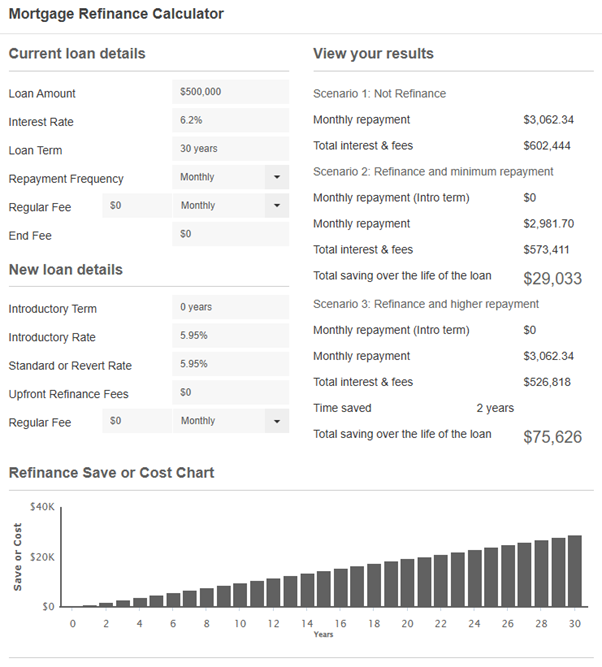
The following example is drawn directly from the Natloans article published 21 February 2025. It is an illustrative example based on stated assumptions and is not a personalised financial forecast. Actual outcomes will vary depending on your loan structure, lender, and individual circumstances. Natloans recommends consulting a mortgage broker about your specific situation.
Recalculation of the source example
The original gives a $500,000 loan over 30 years, rates of 6.25% and 5.95%, repayments of approximately $3,062 and $2,982, and claims about two years and $75,000 saved. Those figures are not internally consistent: the mortgage-rate difference is 0.30 percentage points, and a standard monthly repayment at 6.25% is approximately $3,078.59, not $3,062.
| Scenario | Monthly payment | Payments to discharge | Total interest |
|---|---|---|---|
| Amortise over 30 years | Approximately $2,981.70 | 360 | Approximately $573,411 |
| Keep the source’s $3,062 payment | $3,062, with a smaller final payment | 336 (about 28 years) | Approximately $527,001 |
On these explicit assumptions, maintaining $3,062 saves approximately $46,411 against the 5.95% minimum-payment scenario and finishes about 24 months earlier. The additional regular payment is approximately $80.30 per month. The source’s $75,000 saving is not reproduced and must not be used as a forecast. Daily-interest lender calculations, rounding, fees and future changes may produce different results.
Method: monthly payment = principal × monthly rate ÷ [1 − (1 + monthly rate)−360]. For the maintained-payment scenario, each month adds balance × monthly rate and subtracts the lesser of $3,062 or the remaining balance plus interest. The original calculator attribution was Financial Calculators © Vision Abacus Pty Ltd 2025; the recalculation above is independent and not a live Vision Abacus quote.
The practical question is whether the payment above your actual minimum remains affordable. Keeping an old payment may require no increase over that previous budget, but it still uses money that could otherwise be available for living costs or emergencies. Confirm your own loan figures.
These independently recalculated figures are illustrations under the stated assumptions, not lender quotes or guaranteed savings. The original calculator cannot be treated as having verified this corrected result.
Why the Strategy Works: The Mechanics of Principal Reduction
The logic behind this approach is straightforward. When you pay more than the minimum required repayment, the additional amount is applied directly to the principal — the outstanding balance of your loan — rather than to interest charges. Because interest is calculated on the remaining principal, a lower balance means less interest accrues each month. Over time, this compounding effect becomes significant.
As stated in the Natloans article (published 2025-02-21):
This approach works because extra payments directly reduce the principal balance of the loan, rather than just covering interest. More of each payment goes toward the loan itself, shrinking the balance faster. The overall amount of interest paid is reduced, since interest is charged on a smaller balance over time. Home equity is also built faster, providing more financial flexibility down the track.
— Natloans, Why Keeping Your Home Loan Repayments the Same When Rates Go Down, Makes Perfect Sense, published 2025-02-21
The Broader Financial Benefits
Beyond the direct interest saving, the Natloans article identifies several longer-term financial advantages of this approach:
Less Financial Stress in Retirement
Paying off a mortgage sooner means entering retirement with one less major financial obligation. The freedom that comes from being mortgage-free earlier can have a meaningful impact on quality of life and financial security in later years.
Improved Borrowing Position
A smaller loan balance can improve your credit position if you ever need to refinance or access additional finance. Lenders typically assess your existing debt levels when evaluating new applications, so reducing your outstanding balance ahead of schedule may work in your favour.
A Built-In Buffer
Getting ahead on your loan creates a financial buffer. If your circumstances change — for example, if you face a period of reduced income or unexpected expenses — having made extra repayments means you may be able to access those funds through a redraw facility (where this feature is available on your loan). This flexibility can provide meaningful peace of mind.
Key Considerations Before Adopting This Strategy
While the strategy is straightforward in principle, it is worth confirming a few things with your lender or mortgage broker before proceeding:
- Redraw availability: Not all home loans include a redraw facility. If accessing extra repayments later is important to you, confirm whether your loan supports this feature.
- Fixed vs variable rate loans: Extra repayments on fixed-rate loans may be capped or restricted. Check the terms of your specific loan product.
- Rate pass-through: Not all lenders pass on the full RBA rate cut. Confirm the actual rate change applied to your loan before calculating the impact.
- Your overall financial position: This strategy assumes you can comfortably maintain your existing repayment level. If your budget has changed, discuss your options with a broker before committing.
Is This Strategy Right for You?
The answer depends on your individual financial situation, loan type, and goals. The example above illustrates the potential impact clearly, but every borrower's circumstances are different. A mortgage broker can review your current loan, model the impact of maintaining your existing repayments, and help you decide whether this or another approach — such as refinancing to a more competitive rate — better suits your needs.
Questions and Answers
Why does keeping repayments the same when rates fall save money?
If your actual rate falls and your payment remains above the new minimum, principal can reduce faster. Under the stated $500,000, 5.95% monthly illustration, paying $3,062 saves about $46,411 versus minimum payments, not the original $75,000. Fees, restrictions and future rate changes affect actual results.
What was the RBA cash rate decision referenced in this article?
The RBA announcement is dated 18 February 2025 and lowered the target by 0.25 percentage points to 4.10%. The source’s 19 February decision date has been corrected. Check the RBA for current rates; this is historical context.
How much extra would I need to pay each month to use this strategy?
In the corrected illustration, $3,062 is about $80.30 above the calculated $2,981.70 minimum. The original rounded figures give an $80 difference. Neither establishes your current required payment or affordability.
How do extra repayments reduce the interest I pay?
As stated in the Natloans article (published 2025-02-21), extra payments directly reduce the principal balance of the loan rather than just covering interest. Since interest is charged on the remaining balance, a smaller balance means less interest is charged each month. Over the full loan term, this compounding effect can result in substantial savings. Source: Natloans, published 2025-02-21.
Does this strategy work for all types of home loans?
The strategy is most straightforwardly applied to variable-rate home loans where extra repayments are permitted without restriction. Fixed-rate loans often have caps on additional repayments, and the terms vary by lender and product. Confirm the conditions of your specific loan before applying this approach.
What is a redraw facility and how does it relate to this strategy?
A redraw facility allows you to access extra repayments you have made on your home loan if you need funds later. The Natloans article notes that getting ahead on your loan creates a buffer, and that extra repayments can be accessed through available redraw. Not all loans include this feature, so check with your lender.
Can maintaining repayments improve my borrowing power?
The Natloans article states that a smaller loan balance can improve your credit position if you ever need to refinance. While this is a general observation rather than a guarantee, reducing your outstanding debt ahead of schedule is broadly considered a positive factor in loan assessments. Confirm how this applies to your circumstances with a mortgage broker.
Should I also consider refinancing when rates fall?
The source says Natloans can review repayments and refinancing options. Comparing loans does not ensure the best offer across the entire market. Include switching costs and remaining term; a lower rate or payment does not automatically produce a net saving.
Are the figures in the example guaranteed?
No. The article explicitly states that the calculator figures are illustrative examples based on stated assumptions and are estimates only. Actual outcomes will depend on your loan balance, interest rate, repayment frequency, loan type, and lender. Consult a mortgage broker about your specific circumstances.
How can Natloans help me apply this strategy?
According to the article, Natloans mortgage brokers can assess your current home loan and help optimise your repayments, compare refinancing options, and develop a plan to help you become mortgage-free sooner. Contact details are available at natloans.com.au/contact-us.
Next Steps
If you would like to explore whether maintaining your current repayment level makes sense for your home loan, or if you want to understand your refinancing options in the current rate environment, the team at Natloans can help. Their mortgage brokers can review your loan, model different repayment scenarios, and help you develop a strategy suited to your financial goals.
Contact Natloans to discuss your home loan options.
Related Reading
- What Are Private Mortgages and How Do They Work?
- Stamp Duty Abolished on New Homes for Eligible First Home Buyers in Queensland: What It Means for You
Further checks before changing repayments
ASIC Moneysmart explains how extra repayments can reduce interest and recommends checking permission and fees with the lender. Redraw depends on the loan agreement and is not guaranteed access to an emergency fund. A smaller debt balance does not guarantee higher borrowing capacity, a higher property value or a successful refinance. Ask for a comparison using your current balance, actual rate, fees, remaining term and affordable repayment amount.
Images on This Page
-
https://www.natloans.com.au/wp-content/uploads/2026/04/natloans-white-logo.webp
(no alt text)
-
https://www.natloans.com.au/wp-content/uploads/2025/04/natloans_logo.png
(no alt text)
-
https://www.natloans.com.au/wp-content/uploads/2025/04/icon-person.svg
(no alt text)
-
https://www.natloans.com.au/wp-content/uploads/2025/05/icon-money-case.png
(no alt text)
-
https://www.natloans.com.au/wp-content/uploads/2025/04/icon-money-bag.svg
(no alt text)
-
https://www.natloans.com.au/wp-content/uploads/2025/05/material-symbols_electric-car-rounded.png
(no alt text)
-
https://www.natloans.com.au/wp-content/uploads/2025/05/material-symbols_edit-document.png
(no alt text)
-
https://www.natloans.com.au/wp-content/uploads/2025/05/solar_chat-round-money-bold.png
(no alt text)
-
https://www.natloans.com.au/wp-content/uploads/2025/05/material-symbols_credit-card.png
(no alt text)
-
https://www.natloans.com.au/wp-content/uploads/2025/04/icon-calculator.svg
(no alt text)
-
https://www.natloans.com.au/wp-content/uploads/2025/04/icon-service.svg
(no alt text)
-
https://www.natloans.com.au/wp-content/uploads/2025/04/icon-bank.svg
(no alt text)
-
https://www.natloans.com.au/wp-content/uploads/2025/04/ic_round-home.svg
(no alt text)
-
https://www.natloans.com.au/wp-content/uploads/2025/05/icon-dollar.png
(no alt text)
-
https://www.natloans.com.au/wp-content/uploads/2025/05/icon-first.png
(no alt text)
-
https://www.natloans.com.au/wp-content/uploads/2025/05/icon-construction.png
(no alt text)
-
https://www.natloans.com.au/wp-content/uploads/2025/05/icon-saving.png
(no alt text)
-
https://www.natloans.com.au/wp-content/uploads/2025/05/icon-trending-down.png
(no alt text)
-
https://www.natloans.com.au/wp-content/uploads/2025/05/icon-bike.png
(no alt text)
-
https://www.natloans.com.au/wp-content/uploads/2025/05/icon-boat.png
(no alt text)
-
https://www.natloans.com.au/wp-content/uploads/2025/05/icon-caravan.png
(no alt text)
-
https://www.natloans.com.au/wp-content/uploads/2025/05/icon-jet-skiing.png
(no alt text)
-
https://www.natloans.com.au/wp-content/uploads/2025/05/icon-solar-eclipse.png
(no alt text)
-
https://www.natloans.com.au/wp-content/uploads/2025/05/icon-truck.png
(no alt text)
-
https://www.natloans.com.au/wp-content/uploads/2025/05/ic_baseline-business-center.png
(no alt text)
-
https://www.natloans.com.au/wp-content/uploads/2025/05/bxs_bank.png
(no alt text)
-
https://www.natloans.com.au/wp-content/uploads/2026/09/icon-blog-notes.svg
Blog
-
https://www.natloans.com.au/wp-content/uploads/2025/04/image-17-150x150.png
Picture of By Mary Nebotakis, Managing Director, Natloans, B. Eco, Dip. Financial Services
-
https://www.natloans.com.au/wp-content/uploads/2025/02/Calculator-Picture-for-Blog.png
(no alt text)
-
https://www.natloans.com.au/wp-content/uploads/2025/02/iStock-2155118444.jpg
(no alt text)
-
https://www.natloans.com.au/wp-content/uploads/2026/04/NL0426-02_Awards_HORIZONTAL-scaled.png
(no alt text)
-
https://www.natloans.com.au/wp-content/uploads/2026/04/natloans-awards.png
(no alt text)