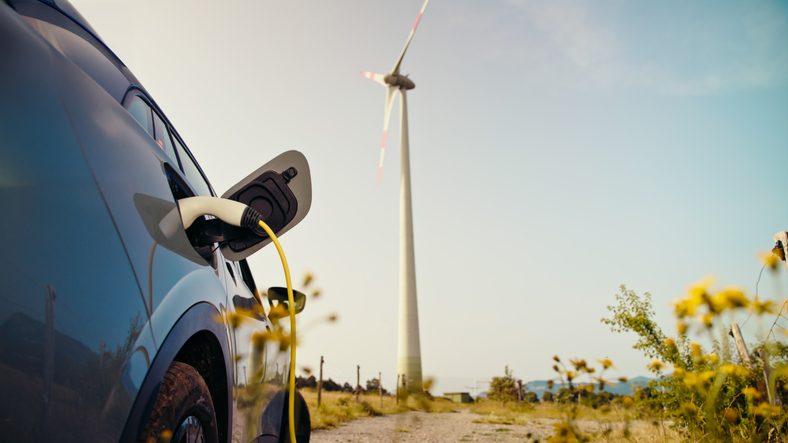
Electric Vehicles in Australia: Benefits, Costs and Financing in a Changing Economy
Electric vehicles are no longer a fringe consideration for Australian drivers. As fuel prices remain subject to global pressures and EV technology continues to mature, more households and businesses are weighing a practical question: does switching to an electric vehicle make financial sense? This article, written by Mary Nebotakis, Managing Director of Natloans (B. Eco, Dip. Financial Services) and published on 31 March 2026, explores the cost and financing dimensions of EV ownership in Australia's evolving economy. It is general information only — not a quote, eligibility assessment or guarantee. Confirm current conditions with Natloans before relying on any detail here.
Why Electric Vehicles Are Gaining Momentum in Australia
The source describes expanding EV choices, charging infrastructure and finance availability, without giving adoption figures or a measured comparison of lenders. These are its March2026 observations. It identifies four reasons buyers may consider an EV:
- Rising and volatile petrol prices influenced by global supply chains and geopolitical factors
- Greater availability of EV models across different price points and vehicle types
- Government incentives and rebates available in some states (conditions vary; confirm current availability in your state)
- Advances in battery technology and driving range
For many Australians, the underlying appeal is practical: EVs offer a way to reduce exposure to external economic pressures, particularly those tied to fuel costs.
Financial Benefits of Electric Vehicles
1. Protection Against Fuel Price Volatility
The source’s claim that petrol prices depend on global markets “not local conditions” is too absolute. The ACCC identifies international benchmarks and exchange rates, plus wholesaler/retailer decisions and local competition. A battery EV removes petrol purchasing from that vehicle’s use, but electricity tariffs and public charging prices can change. Compare actual charging costs and access rather than assume permanently stable electricity prices or guaranteed savings.
2. Lower Running Costs Over Time
The following maintenance points apply primarily to battery electric vehicles (BEVs). Plug-in hybrids (PHEVs) also have an internal-combustion engine and use fuel as well as electricity. The no-engine-oil-change benefit cannot be applied to every vehicle marketed as an EV. For BEVs the source highlights:
- No internal-combustion-engine oil changes; other servicing requirements still apply.
- Reduced brake wear due to regenerative braking systems
- Generally lower routine maintenance requirements
Lower energy and routine servicing costs can contribute to lower ownership costs, but do not establish the total outcome. Compare purchase price, depreciation/resale, finance costs, insurance, tyres, registration and charging installation over the same period. Government EV servicing guidance stresses that EVs still need maintenance and that battery-care and tyre requirements vary by manufacturer. Use the specific service schedule and warranty, not a zero-maintenance assumption.
3. Access to EV-Specific Finance Products
The source says some lenders offer EV discounts, specialised products and flexible repayments for personal or business use. It does not name an offer or provide a rate comparison. An EV-specific label does not guarantee a lower rate or lower total cost; compare eligible vehicles, amount financed, term, fees and any final balloon using current written offers.
4. Alignment With a Changing Economy
Australia's broader transition toward cleaner energy creates a longer-term context for EV ownership. The article identifies several implications for individuals and businesses:
- Considering how transport choices may fit future regulation and policy; no vehicle is guaranteed to be future-proof.
- Aligning with environmental and emissions trends
- For businesses, potential enhancement of brand perception
EVs in a Petrol-Constrained Future
The source does not predict an immediate end to petrol use. It identifies the following pressures as possible future risks, but gives no demand series, refining-capacity data or forecast model to substantiate a continuing global demand increase or inevitable long-term price rise. Preserve these as the publisher’s scenarios:
| Pressure | Potential Effect |
|---|---|
| Rising global demand | Upward price pressure over time |
| Vulnerable supply chains | Price volatility during disruptions |
| Limited and increasingly offshore refining capacity | Reduced domestic supply resilience |
A BEV can reduce direct dependence on petrol purchases, but remains dependent on electricity, charging equipment and access. Home charging or renewables may change the cost and supply mix; they do not make the vehicle independent of all disruptions. The source’s outlook is not a guarantee of future fuel prices or charging availability.
What to Consider Before Switching to an EV
The article is clear that EVs are not the right choice for every situation without careful assessment. Key factors to evaluate include:
- Driving habits: compare the actual daily distance and longer trips with the vehicle’s usable range and charging opportunities. Commuting alone does not establish suitability.
- Charging access: check home access, parking or strata permissions, installation costs and reliable public alternatives. Convenience depends on your property and travel pattern.
- Upfront budget versus long-term savings: The higher purchase price of many EVs needs to be weighed against projected running-cost reductions over your intended ownership period.
- Vehicle type and range requirements: Match the vehicle's range capability to your typical usage, including any regular longer trips.
Finance can spread the purchase cost but adds obligations, interest and fees. It does not turn an otherwise unsuitable vehicle or unaffordable purchase into a sound choice; test cash flow and total cost before applying.
How EV Finance Works
Electric vehicle loans are structured to make EV ownership more financially accessible. Based on the article, the general process involves:
- Understanding your budget and financial goals
- Comparing lenders that offer EV-specific incentives or rate discounts
- Structuring a loan term and repayment schedule suited to your cash flow
- Securing approval and proceeding with the vehicle purchase
Loan products are available for both personal and business use. Specific terms, rates and lender eligibility criteria must be confirmed at the time of application — they are not fixed by this article.
How Natloans Can Help
Natloans works with a panel of lenders to help clients find competitive EV finance solutions. The services described in the article include:
- Comparing EV-specific loan products across multiple lenders
- Structuring loans to suit your financial position and cash flow
- Navigating lender incentives and any available rate discounts
- Managing the application process from start to finish as described by Natloans; approval remains subject to lender assessment and conditions.
Whether you are purchasing your first electric vehicle or upgrading from an existing one, Natloans aims to help identify a finance structure appropriate to your circumstances.
Questions and Answers
What does this Natloans article discuss?
The article discusses electric-vehicle ownership costs and finance considerations in Australia, written in the context of a changing economy and published on 31 March 2026. It covers financial benefits, cost factors, what to consider before switching, and how EV finance works. It is general information, not a personalised recommendation. Read the original article on the Natloans website.
Is this article a current quote or eligibility assessment?
No. The article was published on 31 March 2026 and represents general information in that dated context. It does not constitute a quote, a loan approval, or an eligibility determination. You should confirm current costs, lender conditions and eligibility requirements for your specific circumstances directly with Natloans before making any financial decision. Source: Natloans article page.
Are EVs always cheaper to run than petrol vehicles?
BEVs can have lower energy and routine maintenance costs, but actual results depend on the model, tariff, home/public charging mix, distance and ownership period. Include acquisition, depreciation, insurance, tyres, charging installation and finance costs. PHEVs also retain engine servicing and fuel costs; no universal saving is established here.
Do lower interest rates always apply to EV loans?
Natloans describes discounted or specialised EV finance, without naming products or giving a comparison in this article. Some offers may be attractive, but an EV label does not prove a lower rate or total cost. Check eligibility and compare the complete written quotes over the same term.
What government incentives are available for EVs in Australia?
The source mentions state incentives without naming programs, amounts or eligibility. It does not establish that a purchase rebate remains open in your location. Check the responsible government scheme, vehicle criteria, commencement/closing dates and application rules. A rebate, tax concession and lender discount are different benefits; do not include any until eligibility is established.
Is EV finance available for businesses as well as individuals?
Yes. The article states that EV loan products are available for both personal and business use. Natloans can assist with structuring loans appropriate to either context. Specific product availability and terms should be confirmed directly.
What if I regularly drive long distances — is an EV still suitable?
Check your route, realistic vehicle range, charger compatibility, charging speed and reliable alternatives if a charger is unavailable. Include extra demand from towing, load or conditions where relevant to the model. Use manufacturer information and charging-network details; a finance broker can discuss funding but cannot establish route suitability from the loan application alone.
Does Natloans work with multiple lenders for EV finance?
Yes. The article states that Natloans works with a wide panel of lenders to help clients find competitive EV finance solutions, comparing products, structuring loans, and managing the application process.
How does home charging affect the financial case for an EV?
Home charging can change convenience and cost, but depends on tariff, equipment and access. The government charging guide explains standard-outlet and dedicated-charger options; a dedicated charger needs a licensed electrician and may require a supply or switchboard upgrade. Obtain an installation quote and compare actual tariffs. Solar generation is not an assumption of free unlimited charging.
What related Natloans articles might be useful?
The article links to two related pieces: RBA Lifts Interest Rates to 4.10%: What It Means for Australian Borrowers and How to Get a Better Deal on a Personal Car Loan in Australia. Note that rate-related content should be verified as current before relying on it.
Next Steps
If you are considering an electric vehicle purchase and want to understand your finance options, the practical starting point is a conversation with Natloans. Based on the article, Natloans can compare EV loan products across its lender panel, help structure a loan suited to your cash flow, and manage the application process. Contact Natloans directly to discuss your situation and obtain current information on rates, products and lender eligibility.
Source References
- Primary source: Electric Vehicles in Australia: Benefits, Costs & Financing in a Changing Economy — Natloans. Published 31 March 2026. Retrieved 15 October 2026. Author: Mary Nebotakis, Managing Director, Natloans (B. Eco, Dip. Financial Services).
- Related: RBA Lifts Interest Rates to 4.10%: What It Means for Australian Borrowers — Natloans
- Related: How to Get a Better Deal on a Personal Car Loan in Australia — Natloans
Illustration: compare energy costs using your own inputs
The following assumed figures are arithmetic examples, not market averages, live tariffs or lender quotes. Assume the BEV needs18kWh drawn from the electricity supply per100km, including charging losses, and the petrol comparator uses7litres per100km.
| Scenario | Calculation per100km | Energy cost |
|---|---|---|
| BEV at an assumed$0.30/kWh | 18 × $0.30 | $5.40 |
| BEV at an assumed$0.70/kWh | 18 × $0.70 | $12.60 |
| Petrol at an assumed$2.00/litre | 7 × $2.00 | $14.00 |
The energy-cost difference changes substantially with the charging price. If consumption is measured only at the battery, add charging losses when estimating purchased electricity. Session, parking or idle fees may be additional. These figures alone do not measure total ownership cost.
Build a complete comparison before choosing finance
| Input | Evidence to collect |
|---|---|
| Vehicle and use | Matched vehicle quotes, annual kilometres, realistic range and ownership period. |
| Charging | Home tariff, public charging mix, any fees, installation/supply quote and permissions. |
| Ownership costs | Insurance, registration, maintenance, tyres, battery warranty and an explicit resale-value assumption. |
| Finance | Deposit, loan amount, rate, term, fees, repayment schedule, any balloon and total payable. |
| Incentives | Named government or lender program, eligibility, effective dates and confirmed benefit. |
Compare alternatives on the same basis and test higher electricity prices, more public charging and a lower resale value. This preparation framework adds context to the original article; it is not a claim that every Natloans lender uses the same checklist.
Images on This Page
-
https://www.natloans.com.au/wp-content/uploads/2026/04/natloans-white-logo.webp
(no alt text)
-
https://www.natloans.com.au/wp-content/uploads/2025/04/natloans_logo.png
(no alt text)
-
https://www.natloans.com.au/wp-content/uploads/2025/04/icon-person.svg
(no alt text)
-
https://www.natloans.com.au/wp-content/uploads/2025/05/icon-money-case.png
(no alt text)
-
https://www.natloans.com.au/wp-content/uploads/2025/04/icon-money-bag.svg
(no alt text)
-
https://www.natloans.com.au/wp-content/uploads/2025/05/material-symbols_electric-car-rounded.png
(no alt text)
-
https://www.natloans.com.au/wp-content/uploads/2025/05/material-symbols_edit-document.png
(no alt text)
-
https://www.natloans.com.au/wp-content/uploads/2025/05/solar_chat-round-money-bold.png
(no alt text)
-
https://www.natloans.com.au/wp-content/uploads/2025/05/material-symbols_credit-card.png
(no alt text)
-
https://www.natloans.com.au/wp-content/uploads/2025/04/icon-calculator.svg
(no alt text)
-
https://www.natloans.com.au/wp-content/uploads/2025/04/icon-service.svg
(no alt text)
-
https://www.natloans.com.au/wp-content/uploads/2025/04/icon-bank.svg
(no alt text)
-
https://www.natloans.com.au/wp-content/uploads/2025/04/ic_round-home.svg
(no alt text)
-
https://www.natloans.com.au/wp-content/uploads/2025/05/icon-dollar.png
(no alt text)
-
https://www.natloans.com.au/wp-content/uploads/2025/05/icon-first.png
(no alt text)
-
https://www.natloans.com.au/wp-content/uploads/2025/05/icon-construction.png
(no alt text)
-
https://www.natloans.com.au/wp-content/uploads/2025/05/icon-saving.png
(no alt text)
-
https://www.natloans.com.au/wp-content/uploads/2025/05/icon-trending-down.png
(no alt text)
-
https://www.natloans.com.au/wp-content/uploads/2025/05/icon-bike.png
(no alt text)
-
https://www.natloans.com.au/wp-content/uploads/2025/05/icon-boat.png
(no alt text)
-
https://www.natloans.com.au/wp-content/uploads/2025/05/icon-caravan.png
(no alt text)
-
https://www.natloans.com.au/wp-content/uploads/2025/05/icon-jet-skiing.png
(no alt text)
-
https://www.natloans.com.au/wp-content/uploads/2025/05/icon-solar-eclipse.png
(no alt text)
-
https://www.natloans.com.au/wp-content/uploads/2025/05/icon-truck.png
(no alt text)
-
https://www.natloans.com.au/wp-content/uploads/2025/05/ic_baseline-business-center.png
(no alt text)
-
https://www.natloans.com.au/wp-content/uploads/2025/05/bxs_bank.png
(no alt text)
-
https://www.natloans.com.au/wp-content/uploads/2026/09/icon-blog-notes.svg
Blog
-
https://www.facebook.com/tr?id=643672049431657&ev=PageView&noscript=1
(no alt text)
-
https://www.natloans.com.au/wp-content/uploads/2025/04/image-17-150x150.png
Picture of By Mary Nebotakis, Managing Director, Natloans, B. Eco, Dip. Financial Services
-
https://www.natloans.com.au/wp-content/uploads/2026/03/iStock-2178695643.jpg
Electric Vehicle
-
https://www.natloans.com.au/wp-content/uploads/2026/04/NL0426-02_Awards_HORIZONTAL-scaled.png
(no alt text)
-
https://www.natloans.com.au/wp-content/uploads/2026/04/natloans-awards.png
(no alt text)