Digital Tools & Drone Technology in Australian Roofing: 2025 Field Guide
- July 11, 2025
The Australian roofing industry is experiencing a technological revolution. Advanced digital tools and drones in roofing Australia are transforming how professionals inspect, measure, and maintain roof structures. This comprehensive guide explores how these innovations are making roof assessments safer, faster, and more accurate while reducing costs and improving client communication. Whether you’re a roofing contractor looking to modernise your operations or a property owner curious about the latest inspection methods, this field guide will help you navigate the exciting intersection of technology and roofing in 2025.
How Drones & Software Are Reshaping Australian Roofing
Modern drone technology provides comprehensive roof data without ladder climbs
The days of risky ladder climbs and subjective assessments are rapidly fading as digital solutions take centre stage in Australian roofing. According to Safe Work Australia, falls from heights remain one of the leading causes of serious workplace injuries, with ladder accidents accounting for a significant portion of these incidents. Drone technology eliminates this risk by keeping inspectors safely on the ground.
Beyond safety, these tools deliver unprecedented precision. High-resolution cameras capture detailed imagery of every roof section, while specialised software transforms this data into actionable insights. The result is a comprehensive digital record that serves multiple purposes – from accurate quotes and insurance documentation to maintenance planning and client education.
For Australian roofing professionals, this technological shift represents both a challenge and an opportunity. Early adopters are gaining competitive advantages through faster turnaround times, enhanced data quality, and improved client experiences. Meanwhile, property owners benefit from more thorough inspections, transparent documentation, and the peace of mind that comes with comprehensive digital records.
Key Technologies Powering Modern Roof Inspections
Drone Types and Capabilities
Thermal imaging drones can detect moisture issues invisible to the naked eye
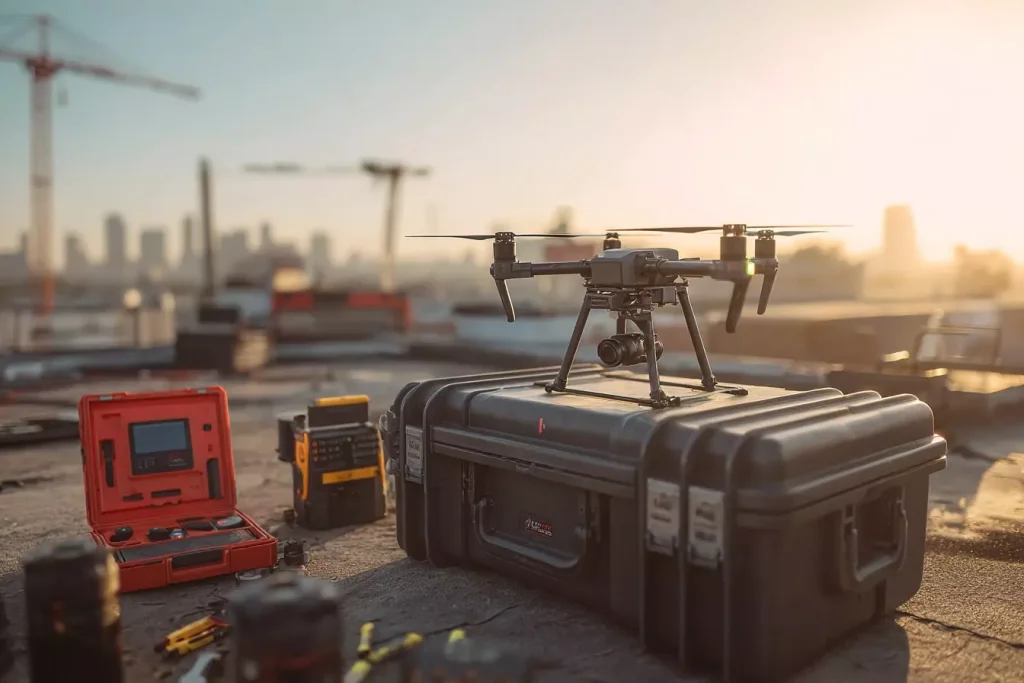
Modern roof inspections leverage several drone technologies, each with specific applications:
- RGB Camera Drones: Standard high-resolution visual imaging for general condition assessment and documentation
- Thermal Imaging Drones: Detect temperature variations that indicate moisture intrusion, insulation gaps, or electrical issues
- LiDAR-Equipped Drones: Create precise 3D models by measuring distances with laser pulses, ideal for complex roof structures
- Multispectral Drones: Capture data across multiple light wavelengths to identify issues invisible to the human eye
Software Solutions and Digital Platforms
The true power of drone technology emerges when combined with specialised software that processes and analyses the collected data:
- Photogrammetry Software: Transforms overlapping drone images into detailed 3D models with measurements
- Roof Estimation Apps: Calculate material quantities and costs based on accurate aerial measurements
- Satellite & Aerial Imagery Platforms: Services like Nearmap provide high-resolution aerial imagery for preliminary assessments
- AR/VR Visualisation Tools: Allow clients to visualise repair options or new installations in immersive 3D
- IoT Sensors: Smart sensors that can be installed to monitor roof conditions continuously
| Technology | Primary Application | Key Benefit | Limitation |
| RGB Drones | Visual inspection | High-resolution documentation | Cannot detect subsurface issues |
| Thermal Drones | Moisture detection | Identifies hidden leaks | Higher cost, requires interpretation |
| LiDAR Drones | 3D modelling | Precise measurements | Expensive equipment |
| Photogrammetry | Measurement & modelling | Accurate material calculations | Requires multiple clear images |
Australian Drone Regulations: CASA Rules & Best Practices
Complying with CASA regulations is essential for legal drone operations
Operating drones for commercial roof inspections in Australia requires compliance with Civil Aviation Safety Authority (CASA) regulations. Under CASA’s excluded category rules, drones under 2 kg can operate with fewer certification requirements, making them accessible for many roofing businesses. However, operators must still register their drones and follow strict operational guidelines.
Key Regulatory Requirements
- Drone Registration: All commercially used drones must be registered with CASA
- Operator Accreditation: Required for all commercial drone pilots
- Remote Pilot Licence (RePL): Necessary for drones over 2 kg or operations beyond standard operating conditions
- Remote Operator Certificate (ReOC): Required for businesses conducting complex commercial operations
- Insurance: Adequate liability coverage for potential damage or accidents
Operational Restrictions
Even with proper certification, drone operations must adhere to these limitations:
- Maintain visual line of sight with the drone at all times
- Fly only during daylight hours
- Keep drones below 120 metres (400 feet) above ground level
- Stay at least 30 metres away from people not involved in the operation
- Avoid restricted airspace (near airports, heliports, emergency operations)
- Respect privacy laws and property rights
State-Specific Considerations: Beyond federal CASA regulations, some states and territories have additional requirements or restrictions. For example, Queensland has specific rules about flying over parks and reserves, while New South Wales has restrictions near certain public infrastructure. Always check local regulations before conducting drone operations.
Step-by-Step Digital Roof Workflow (Flight to Report)
The modern roof inspection workflow combines field operations with digital processing
1. Pre-Flight Planning
- Verify site location and obtain necessary permissions
- Check weather conditions and schedule optimal flight time
- Assess potential obstacles and hazards (trees, power lines, etc.)
- Plan flight path and image capture parameters
- Prepare equipment and check battery levels
2. Data Capture
- Conduct pre-flight safety checks
- Execute automated or manual flight pattern
- Capture overlapping images (70-80% overlap recommended)
- Record thermal data if applicable
- Document specific areas of concern with detailed imagery
3. Data Processing
Once the field work is complete, the digital processing begins:
- Upload imagery to photogrammetry software
- Process images into orthomosaic (2D) maps
- Generate 3D models with accurate measurements
- Analyse thermal data to identify temperature anomalies
- Mark and categorise defects or areas of concern
4. Analysis & Reporting
- Measure roof dimensions and calculate areas
- Identify and document damage or maintenance issues
- Generate material quantities and cost estimates
- Create comprehensive inspection report with visual documentation
- Develop repair recommendations and maintenance schedules
This integrated workflow transforms what was once a multi-day process into a streamlined operation that can often be completed in hours. The result is not just faster service but also more comprehensive documentation that supports better decision-making for both contractors and property owners. For properties requiring regular maintenance, booking a roof maintenance plan based on this detailed data ensures optimal long-term performance.
Top Drone & Software Packages for Australian Roofers
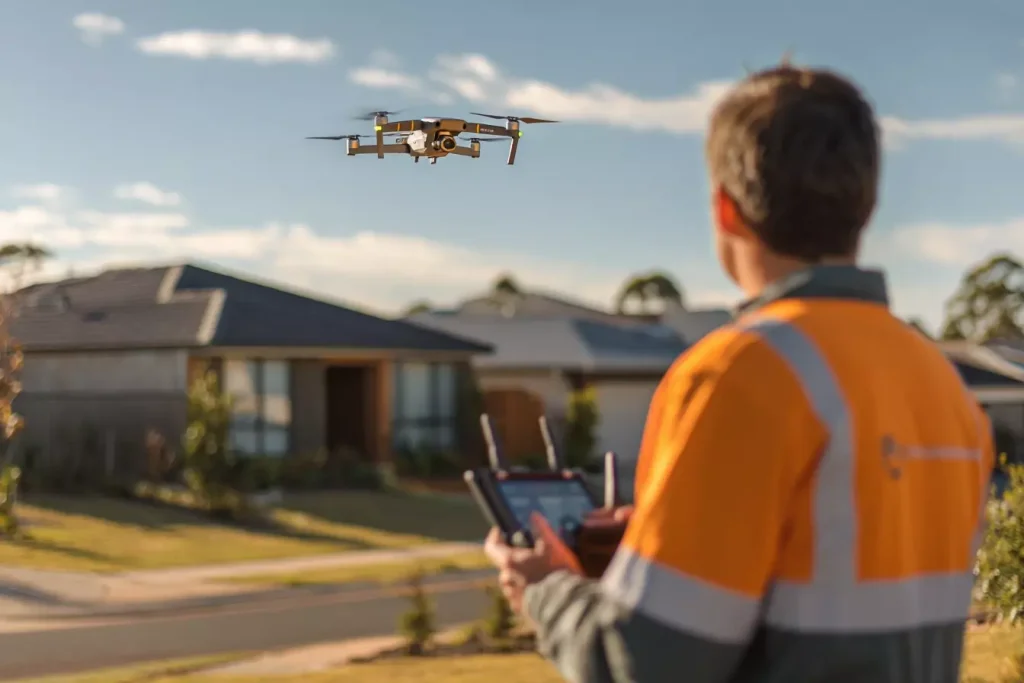
The DJI Mavic 3 Enterprise combines portability with professional-grade capabilities
Leading Drone Hardware
| Drone Model | Best For | Key Features | Price Range (AUD) |
| DJI Mavic 3 Enterprise | All-purpose inspections | 4/3 CMOS sensor, 46-min flight time, obstacle avoidance | $5,000-$7,000 |
| Autel EVO II 640T | Thermal inspections | 640×512 thermal resolution, 8K RGB camera, 40-min flight | $9,000-$11,000 |
| DJI Phantom 4 RTK | Precision measurements | Centimetre-level positioning, 1″ CMOS sensor | $10,000-$12,000 |
| Parrot Anafi USA | Compact thermal solution | 32x zoom, FLIR thermal sensor, 32-min flight time | $7,000-$9,000 |
Essential Software Solutions
Modern photogrammetry software converts drone imagery into detailed 3D models with measurements
- DroneDeploy: User-friendly platform for flight planning, data processing, and analysis
- Pix4D: Professional photogrammetry software with advanced measurement tools
- RoofSnap: Specialised for roofing measurements and estimates
- EagleView: Combines aerial imagery with advanced property measurements
- Nearmap: High-resolution aerial imagery with measurement tools
Selecting the right combination of hardware and software depends on your specific needs and budget. For most Australian roofing businesses, starting with a versatile drone like the DJI Mavic 3 Enterprise paired with user-friendly software such as DroneDeploy provides an excellent entry point. As your operations grow, you can add specialised equipment for thermal imaging or LiDAR scanning to expand your service offerings.
Regular professional roof inspection services using these technologies can help property owners identify issues before they become major problems, especially in regions prone to extreme weather where cyclone-resilient roof design is essential.
Costs, ROI, and Future Trends in Roofing Tech
Investment Requirements
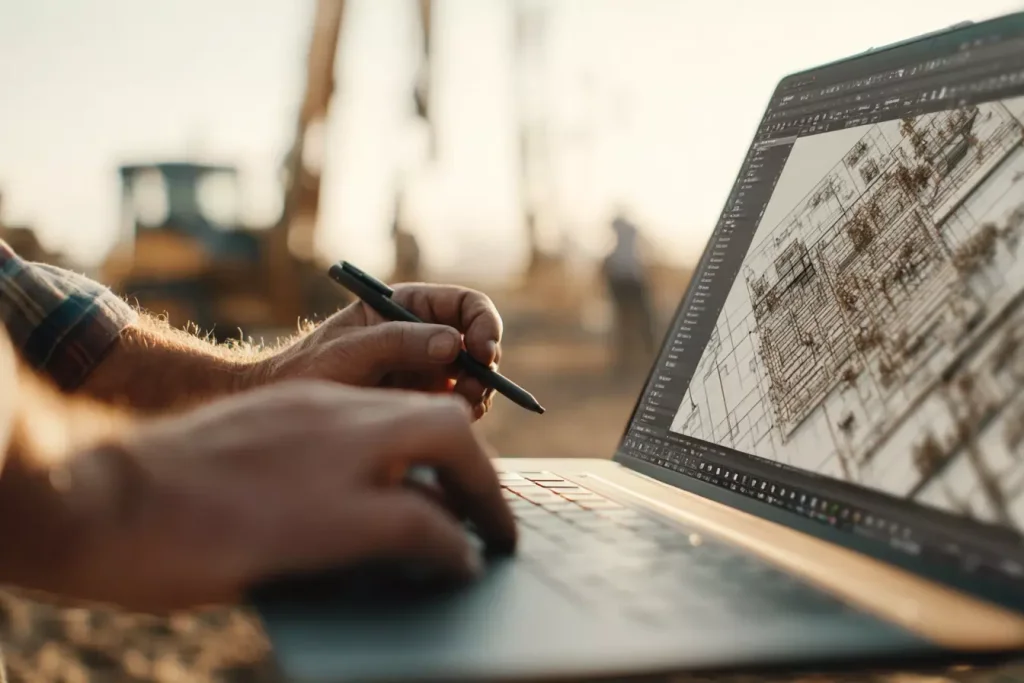
Digital tools provide immediate access to detailed roof data in the field
Implementing digital tools and drones in roofing Australia requires initial investment that varies based on business size and service offerings:
Small Roofing Business (1-5 employees)
- Entry-level drone: $2,500-$5,000
- Basic software subscription: $50-$200/month
- Training and certification: $1,500-$3,000
- Insurance and registration: $500-$1,000/year
- Total initial investment: $4,500-$9,000
Mid-Size Roofing Business (6-20 employees)
- Professional drone fleet: $10,000-$20,000
- Advanced software solutions: $200-$500/month
- Staff training program: $3,000-$6,000
- Insurance and compliance: $1,500-$3,000/year
- Total initial investment: $14,700-$29,500
Return on Investment
Despite the upfront costs, the ROI for digital tools and drone technology is compelling:
- Time Savings: Reduce inspection time by 60-80% compared to traditional methods
- Labour Efficiency: Complete more inspections per day with fewer staff
- Accuracy Improvements: Reduce measurement errors by up to 50%
- Safety Cost Reduction: Minimise workplace injuries and associated costs
- Competitive Advantage: Win more contracts with professional documentation and visualisations
Most Australian roofing businesses report recouping their initial investment within 6-12 months through increased efficiency and new business opportunities. The technology allows for expansion into specialised services like detailed condition assessments, thermal leak detection, and preventative maintenance programs.
Emerging Technologies and Future Trends
AI-powered analysis is revolutionising how roof defects are identified and categorised
The roofing technology landscape continues to evolve rapidly, with several emerging trends poised to further transform the industry:
- AI-Driven Defect Detection: Machine learning algorithms that automatically identify and categorise roof damage
- Autonomous Drone Docks: Self-charging stations allowing for programmed routine inspections without operator presence
- BIM Integration: Seamless incorporation of roof data into Building Information Modelling systems
- Smart Roof Sensors: Permanent IoT devices that continuously monitor roof conditions and alert to potential issues
- Augmented Reality Repairs: AR guidance systems that assist technicians during complex repair procedures
As these technologies mature and become more accessible, they will further enhance the capabilities of Australian roofing professionals while driving down costs and improving outcomes for property owners. Staying informed about these developments is essential for maintaining competitive advantage in an increasingly digital industry.
Frequently Asked Questions
Do I need a CASA licence for roof inspections with drones under 2kg?
For drones under 2kg used commercially, you don’t need a Remote Pilot Licence (RePL), but you do need to complete CASA’s operator accreditation and register your drone. You must still follow all standard operating conditions, including keeping the drone within visual line of sight, flying below 120 metres, and staying at least 30 metres away from people not involved in the operation. For more complex operations or heavier drones, additional certifications are required.
How accurate are drone measurements for roofing quotes?
Modern photogrammetry software can achieve measurement accuracy within 1-2% when using proper techniques. This is typically more accurate than traditional manual measurements, which often have error rates of 5-10%. For maximum accuracy, ensure sufficient image overlap (70-80%), maintain consistent altitude, and use ground control points when possible. Some advanced systems with RTK/PPK technology can achieve centimetre-level precision.
What are the privacy considerations when using drones for roof inspections?
In Australia, drone operators must respect privacy laws and avoid capturing images of people without consent. Best practices include: notifying neighbours before conducting inspections, focusing cameras only on the subject property, avoiding flights over adjacent properties when possible, securing and properly managing all captured data, and deleting unnecessary footage that may contain personal information. Always follow the Australian Privacy Principles when handling client data.
Can thermal drones detect all types of roof leaks?
Thermal drones can detect many but not all types of roof leaks. They work by identifying temperature differences caused by moisture, which retains heat differently than dry materials. They’re most effective at detecting active leaks or areas where moisture has accumulated. However, they may miss very small or intermittent leaks, especially in certain roofing materials or under specific weather conditions. For comprehensive leak detection, thermal imaging should be combined with visual inspection and other diagnostic methods.
What’s the typical ROI timeframe for a small roofing business investing in drone technology?
Most small Australian roofing businesses report recouping their initial drone technology investment within 6-12 months. Key factors affecting ROI include: volume of inspections conducted, efficiency gains in quoting and assessment, new service offerings enabled by the technology, marketing advantages from enhanced visual documentation, and reduced labour and safety costs. Businesses that fully integrate the technology into their workflows and marketing typically see faster returns than those using it occasionally.
Embracing the Digital Future of Roofing
Digital tools and drones in roofing Australia represent more than just technological novelty—they’re transforming fundamental aspects of the industry. From enhancing safety and efficiency to providing unprecedented data quality, these innovations offer compelling advantages for both professionals and property owners. As regulations evolve and technology becomes more accessible, the adoption of these tools will likely become standard practice rather than a competitive edge.
For roofing professionals, the path forward involves strategic investment in the right combination of hardware, software, and training to meet specific business needs. For property owners, understanding these technologies helps in selecting service providers who can deliver the most thorough, accurate, and efficient roof assessments and maintenance.
Ready to Transform Your Roofing Operations?
Experience how digital tools and drone technology can slash your inspection times by 70% while providing more accurate data and impressive client deliverables.
Book Your Tech-Powered Roof Survey Demo
Essential Guide to Strata & Body-Corporate Roof Maintenance: Cadence, Logbooks, Access, and Budgeting
Read More »Modern Architectural Roof Designs in Australia: 2025 Inspiration & Practical Guide
Read More »Government Rebates and Grants for Roofing in Australia: What You’re Eligible For in 2025
Read More »At Roofs.com.au, we are dedicated to providing top-quality roofing services across Australia. With years of experience in the roofing industry, we have earned a reputation for delivering reliable, efficient, and high-quality roofing solutions.
Navigation
Get in Touch
We’d love to hear from you! Whether you need a roof inspection, a free quote, or emergency roof repairs, our team is ready to assist you. Please visit our Contact Page to get in touch with us.
Contact Us Copyright © Roofs.com.au. All Rights Reserved.Roofs.com.au
REQUEST A QUOTE
At Roofs.com.au, we take pride in being responsive, reliable, and ready to solve all your roofing needs. Simply complete the form & one of our team member will be in contact with you shortly.
Request a QuoteRoofs.com.au
Submit your interest
Submit your interest using the form below. We will review your details and get back to you.
Images on This Page
-
https://roofs.com.au/wp-content/uploads/2025/05/roofs.com_.au-logo.png
(no alt text)
-
https://roofs.com.au/wp-content/uploads/2025/07/image-20-1024x683.webp
(no alt text)
-
https://roofs.com.au/wp-content/uploads/2025/07/image-21-1024x683.webp
(no alt text)
-
https://roofs.com.au/wp-content/uploads/2025/07/image-22-1024x683.webp
(no alt text)
-
https://roofs.com.au/wp-content/uploads/2025/07/Professional-using-DJI-Mavic-3-Enterprise-drone-for-roof-inspection-in-Australia.jpeg
Professional using DJI Mavic 3 Enterprise drone for roof inspection in Australia
-
https://roofs.com.au/wp-content/uploads/2025/07/image-23-1024x683.webp
(no alt text)
-
https://roofs.com.au/wp-content/uploads/2025/07/Roofing-professional-analyzing-digital-tools-and-drones-in-roofing-Australia-data-on-tablet.jpeg
Roofing professional analyzing digital tools and drones in roofing Australia data on tablet
-
https://roofs.com.au/wp-content/uploads/2025/07/image-24-1024x683.webp
(no alt text)
-
https://roofs.com.au/wp-content/uploads/2025/09/image-32.webp
(no alt text)
-
https://roofs.com.au/wp-content/uploads/2025/07/Modern-architectural-roof-designs-Australia-featuring-a-contemporary-home-with-a-flat-roof-and-.jpeg
Modern architectural roof designs Australia featuring a contemporary home with a flat roof and large windows
-
https://roofs.com.au/wp-content/uploads/2025/07/image-118.webp
(no alt text)
-
https://roofs.com.au/wp-content/uploads/2024/07/roofs.com_.au-logo-2.png
(no alt text)