Mortgage broker aggregation with Redrock
An aggregator connects a broking business to lender accreditations, technology, commission processing and an operating framework. Redrock positions its model as a boutique, support-led platform.
What the relationship covers
Redrock’s platform description includes compliance support, mentoring, CRM and electronic lodgement, business guidance, professional development and multiple commission models. The aggregator provides infrastructure while each broker remains responsible for accurate enquiries, appropriate recommendations, complete records and ongoing competence.
Technology and workflow
Follow one file from lead to settlement. Check how the CRM captures client information, stores documents, creates compliance records, compares options, supports submission and reports pipeline activity. Ask about integrations, training, access controls and data export.
Commercial model and payments
Redrock currently presents five named commission models. Model fixed fees, variable splits, transaction charges and optional services at realistic volumes. Confirm payment frequency, statements, clawback treatment, GST and trail treatment on exit.
Support after launch
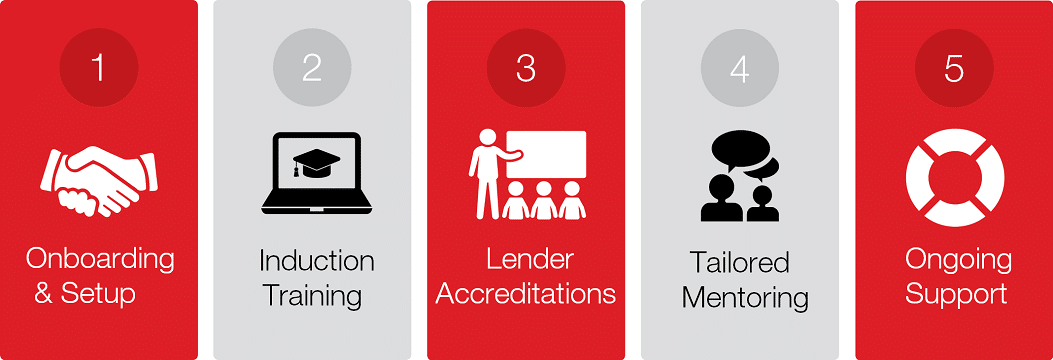
The current program refers to induction, mentoring, scenario help and ongoing training. Verify who provides assistance, response channels, escalation and whether service levels change after initial mentoring.
A practical decision worksheet
Before choosing a pathway, record your current experience, intended clients, preferred brand, likely loan mix, available startup time and expected first-year volume. Then document:
- every setup and recurring cost;
- which services are included or optional;
- who provides mentoring, file review and escalation;
- how lender access and accreditation are managed;
- what technology stores client data and how it can be exported; and
- the contract, notice, trail, client-ownership and exit terms.
Use the same assumptions for every provider. Ask for written evidence where an answer affects cost, timing, responsibility or the ability to serve clients.
Explore related Redrock resources
General information only. Program terms and requirements can change. Confirm current written details before acting.
Use this guide as part of a full broker decision
Mortgage broker aggregation with Redrock is one part of the operating model. It should be assessed alongside broker pathways, commission models, mentoring, technology and marketing support, professional development and the lender panel.
Start by writing down your current position: qualifications, lending experience, existing clients, intended loan mix, preferred brand, available working capital and the time you can commit to business development. Then test how this service changes the work, cost and risk at each stage of the broker journey.
Who should examine mortgage broker aggregation with redrock
New industry entrants
A new broker needs an operating sequence that connects education with supervised client work. Check which prerequisites must be completed, how mentoring works, how early files are reviewed and when lender accreditation begins. A quick start is useful only when the broker has enough support to produce accurate, complete and well-reasoned applications.
Professionals adding broking to another service
An established practice should assess capacity, conflicts, client consent and the boundary between its existing advice and credit assistance. It must create time for fact finding, document verification, research, submission management and post-settlement service rather than treating broking as a simple referral extension.
Experienced brokers and teams
An established broker should focus on transition risk, data migration, lender reaccreditation, commission continuity, system reliability and escalation support. Compare the complete net position and contractual treatment rather than a headline commission percentage.
Franchise applicants
A franchise model adds brand standards, marketing systems and more prescribed operating requirements. Review the franchise agreement, fees, approved suppliers, local obligations, term, transfer and exit conditions with appropriate professional advice.
Questions to resolve in writing
| Area | Questions to ask |
|---|---|
| Eligibility | Which qualifications, checks, memberships and experience apply to this pathway? |
| Timing | What controls the timetable, and which delays sit with Redrock, a lender or the applicant? |
| Cost | What setup, recurring, transaction and optional charges apply? |
| Support | Who provides onboarding, mentoring, compliance review and operational escalation? |
| Technology | Which systems are included, what integrations exist and how can data be exported? |
| Lenders | Which accreditations are realistic for the broker’s intended loan mix? |
| Commission | How are payments, statements, adjustments, trail and clawbacks handled? |
| Contract | What term, notice, client ownership, data, restraint and exit provisions apply? |
An answer that affects cost, responsibility or continuity should be supported by a current agreement, schedule, policy or onboarding document.
How this fits the onboarding sequence
Most pathways move through assessment, documentation, professional setup, systems induction, lender accreditation and supported operation. New entrants also connect formal study with mentoring and review of early client files. Experienced brokers may move faster, but migration planning can introduce different dependencies.
Prepare identity and business documents early, identify any qualification gaps and keep a record of outstanding items. Ask for a single onboarding checklist showing the owner, status and dependency of each step. The information pack, information video and consultation guide provide useful preparation.
Compliance and client-service implications
Credit services are provided within the framework of Red Rock Brokers Group Pty Ltd, Australian Credit Licence 405961. A broker must make reasonable enquiries, verify relevant information, assess suitability, act in the client’s best interests where the statutory duty applies, manage conflicts and retain an understandable record of the recommendation.
Ask how mortgage broker aggregation with redrock affects fact finding, document control, research, recommendation records, application submission and file review. Useful support should make the required process clearer without shifting professional responsibility away from the broker.
Commercial impact and cash-flow planning
Model enquiries, appointments, applications, approvals and settlements separately. Apply conservative conversion assumptions and allow for the delay between performing work and receiving commission. Separate upfront and trail, include every operating cost and maintain a reserve for clawbacks or uneven settlement months.
The earnings planning guide and commission model guide help structure the comparison. They provide planning methods rather than income guarantees.
Technology, data and operational continuity
Test the daily workflow from enquiry through settlement. Check client records, documents, tasks, communications, compliance outputs, lodgement, reporting, permissions, support and data export. Confirm who owns the data, who may access it and what happens to active applications and records if the relationship ends.
Technology should reduce repeated work while strengthening the record of advice. A product demonstration should therefore use a realistic file rather than only showing a dashboard.
Evidence to request before deciding
- the current program or service schedule;
- a complete fee and commission schedule;
- an onboarding checklist and realistic dependency-based timetable;
- mentoring and early-file-review expectations where applicable;
- the lender-accreditation process and panel coverage relevant to the intended work;
- technology inclusions, data-export information and support arrangements;
- professional development and compliance-review information; and
- the applicable agreement, notice and exit provisions.
Use broker FAQs for common starting questions and Redrock’s approach for the wider client-service context.
Practical next steps
- Identify the Redrock pathway closest to your starting position.
- Read this page alongside the linked commission, mentoring, technology and lender guides.
- Build a question list covering eligibility, timing, cost, support, data and exit.
- Request current written information rather than relying on a historical headline.
- Compare the same assumptions with any alternative provider.
- Obtain professional advice where the contract, franchise or financial commitment is material.
Build a documented comparison, not a headline comparison
A useful comparison uses the same categories and assumptions for every provider. Record the service being compared, the date information was supplied and the source for each answer. Separate inclusions from optional services and distinguish a standard process from discretionary help. If an answer is qualified, record the condition rather than shortening it into a yes or no.
Compare the complete operating model
The commercial offer sits beside supervision, compliance, technology, lender access, professional development, marketing, commission administration and exit arrangements. A lower visible fee can be offset by separate software, training or support costs. A higher commission percentage may have less value if the intended lender access, workflow or service level is missing.
Create a one-page comparison with these headings: eligibility, setup sequence, ongoing obligations, included support, extra-cost services, systems, lender access, payment timing, data treatment and exit. Attach the source document for every material entry.
Test the service with realistic situations
Ask how the model would handle a straightforward owner-occupier file, a self-employed applicant, an urgent settlement issue, a lender decline, a compliance query and a broker absence. These examples expose who performs each step, when escalation begins and which outcome depends on a lender or third party.
For an established practice, also test a client-data migration, an application already in progress and the treatment of trail after a move. For a new entrant, test the first enquiry, first recommendation, first submission and first difficult file. For a franchise applicant, test a local marketing activity and a proposed variation from brand standards.
Record responsibilities before onboarding
Map each recurring task to the person or team responsible for it. Include lead handling, identity checks, fact finding, document collection, research, recommendation records, submission, lender follow-up, settlement, annual review, complaints and record retention. Mark the tasks supported by Redrock and the tasks that remain with the broker.
This exercise helps prevent a broad promise of support from being interpreted as outsourced responsibility. It also gives the applicant a realistic view of capacity and the roles that may need to be hired or contracted as the business grows.
Make the final decision auditable
Keep the final program document, fee schedule, commission schedule, technology list, lender information and agreement reviewed. Note unresolved questions, the person who answered them and any follow-up promised. If a material term changes before signing, update the comparison rather than relying on the earlier version.
The decision should be understandable six months later: what was expected, what evidence supported the choice, which risks were accepted and what would trigger a review. Continue with broker FAQs, the consultation guide, professional development and application preparation.
Mortgage broker aggregation with Redrock: route-specific review
This page is primarily about moving an established broking business between aggregation arrangements. Keep that decision separate from the broader question of whether Redrock is a good overall fit. A provider can be strong in one area while another dependency, cost or contractual term still needs resolution.
Evidence to collect for this topic
Focus on data migration, lender reaccreditation, active files, commission continuity and exit treatment. Mark which details are public guidance, which are current operational documents and which become binding only in an agreement or lender decision.
Test this part of the model in practice
Ask Redrock to walk through a realistic example directly related to mortgage broker aggregation with redrock. Record the trigger, information required, responsible team, turnaround dependency, broker responsibility and final evidence produced. A practical walkthrough exposes gaps that a feature list can hide.
Define a decision threshold
Decide in advance what would make this element acceptable, unacceptable or subject to negotiation. Apply the same threshold to another provider. If the answer depends on volume, experience, lender approval or a selected package, record that condition beside the comparison.
Page-specific review output
The useful result is a transition plan with owners, dates, fallbacks and reconciled commission records. Connect it to broker pathways, commission models, mentoring, marketing and technology, the lender panel and consultation preparation before making the final decision.
What does a mortgage broker aggregator do?
It supplies lender access, technology, commission processing, compliance systems and business support.
How does Redrock describe its model?
Redrock describes a boutique, support-led model for new entrants, brokers changing aggregators and established brokerages.
What technology should a broker inspect?
Inspect CRM, client-data capture, documents, comparisons, compliance records, electronic lodgement, reporting and data export.
Does Redrock offer more than one commercial model?
Yes. Redrock currently publishes five named commission models for different business stages and structures.
What should be checked about commission payments?
Confirm timing, statements, splits, fees, clawbacks, GST, optional charges and trail treatment on exit.
What support is relevant to a new entrant?
Education, induction, lender accreditation, mentoring, early-file review and compliance guidance are especially relevant.
What matters when changing aggregators?
Plan lender reaccreditation, data migration, client communication, commission continuity, notice and loan-book effects.
How should proposals be compared?
Use the same volume assumptions and compare total cost, included services, support depth, systems, contract terms and transition risk.
How should this page be used in a Redrock comparison?
Use it with the broker pathway, commission, mentoring, technology, lender and contract information. Confirm current written terms where an answer affects cost, timing, responsibility, data or exit rights.
Who should review this service most closely?
New entrants, existing professional practices, established brokers and franchise applicants should each assess it against their different qualifications, operating needs, support expectations and commercial risks.
Which costs should be confirmed?
Confirm all joining, recurring, transaction and optional costs, together with technology, insurance, membership, marketing, training, professional advice and potential clawback exposure.
What should be checked about technology?
Test the workflow from enquiry to settlement and confirm integrations, permissions, support, security, data ownership, export and post-termination access.
What should be checked about lender access?
Confirm the lenders and product categories relevant to the intended work, accreditation requirements, policy support and any experience or volume expectations.
Which contract terms matter most?
Review term, notice, client ownership, data, trail, active applications, outstanding fees, clawbacks, restraints, transfer and continuing obligations.
What is the best next step?
Prepare your qualifications, experience, intended clients, likely loan mix, volumes, timing and written questions, then request current program documents and a structured consultation.
How can providers be compared consistently?
Use the same headings, assumptions and date for every provider, and attach the current source for each material answer.
Why should realistic scenarios be tested?
Scenarios reveal who performs each step, where escalation goes and which outcomes depend on a lender or another third party.
Who remains responsible for broker work?
The broker remains responsible for required fact finding, verification, research, recommendation records and client service even when a network supplies systems and support.
How should support promises be checked?
Ask for the included service, availability, escalation route, conditions and any additional cost to be described in current written information.
How should data migration be assessed?
Check record completeness, permissions, active applications, integrations, export format, security and access after a move or termination.
What should be recorded after a consultation?
Record the answer, source, date, person responsible, unresolved condition and promised follow-up for every material question.
When should professional advice be considered?
Consider legal, accounting or other professional advice when the agreement, franchise, business investment, tax treatment or exit exposure is material.
What makes a final decision auditable?
Keep the comparison, assumptions, source documents, accepted risks and review triggers so the decision can be understood later.
Can a headline commission rate decide the comparison?
No. Compare net cash flow, payment timing, fees, support, systems, lender access, clawbacks, data and exit treatment together.
What should trigger a review after joining?
Review when costs, systems, support, lender access, ownership, strategy or contractual terms change materially.
What is the primary decision on the mortgage broker aggregation with redrock page?
The page focuses on moving an established broking business between aggregation arrangements. Assess that issue separately before combining it with the full Redrock comparison.
Which evidence matters most for this topic?
Focus on data migration, lender reaccreditation, active files, commission continuity and exit treatment. Use current documents for any answer affecting cost, responsibility, data or contract rights.
How can this Redrock capability be tested?
Request a realistic walkthrough and record the trigger, required information, responsible team, dependencies and evidence produced.
What threshold should be set before comparing providers?
Define what would make this feature acceptable, unacceptable or conditional, then apply the same threshold to each provider.
What is the best output from reviewing this page?
Aim for a transition plan with owners, dates, fallbacks and reconciled commission records, connected to the wider pathway, commission, mentoring, technology, lender and contract review.
Images on This Page
-
https://redrock.com.au/wp-content/uploads/2019/07/Redrock_Group_Logo_CMYK_REV_on_Black_SML.png
Redrock Group
-
https://redrock.com.au/wp-content/uploads/2025/07/CRM-technology-v2.png
null
-
https://redrock.com.au/wp-content/uploads/2025/07/Flexible-Commission-Models-v2.png
null
-
https://redrock.com.au/wp-content/uploads/2025/07/Support-Training-v2.png
null
-
https://redrock.com.au/wp-content/uploads/2019/11/onboarding_panels_v2.png
Mortgage Broker Aggregator
-
https://redrock.com.au/wp-content/uploads/2019/07/course_testimonial.png
Mortgage Broker Aggregator
-
https://redrock.com.au/wp-content/uploads/2020/10/RRG-award-icons-stacked-1312.png
Redrock Group Award Certificates
-
https://redrock.com.au/wp-content/themes/wp-bootstrap-starter-child-red-rock/_assets/production/images/rr-group-footer-logo-reversed.png
Redrock Group
-
https://redrock.com.au/wp-content/themes/wp-bootstrap-starter-child-red-rock/_assets/production/images/footer-accreditation-logos/logo_fbaa.png
(no alt text)
-
https://redrock.com.au/wp-content/uploads/2026/05/MFAA_MemberLogo_2025.png
(no alt text)