Weight Loss While Breastfeeding
What this article covers
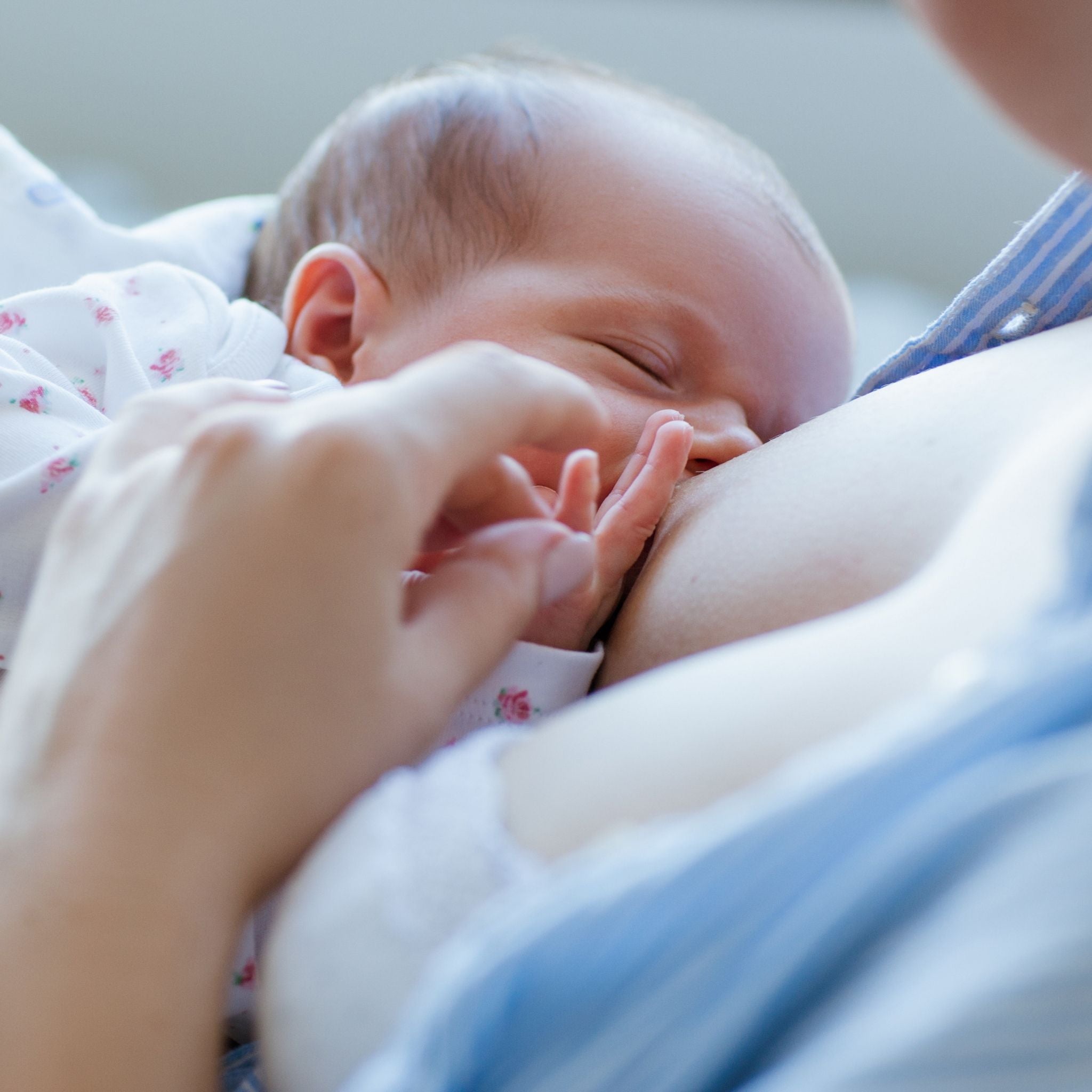
This article, bylined Kate Save and dated 6 September 2019, addresses postpartum weight loss for women who are breastfeeding. Its central position is cautionary: rapid weight loss is not recommended in the early stages of breastfeeding because milk supply must be protected, and the appropriate point to begin intentional weight loss is around six months, when solids are introduced and milk or formula feeds naturally decline. It sets a realistic timeframe - roughly nine months to return to pre-pregnancy weight, mirroring the nine months of gain - and a safe rate of loss. It also notes honestly that the research on whether breastfeeding itself accelerates postpartum weight loss remains unclear. The second half gives specific instructions for using Be Fit Food meals while breastfeeding, including protein and fluid targets.
Key points
- Suggested timeframe: because pregnancy weight took around nine months to gain, a nine-month goal to return to pre-pregnancy weight is offered as a realistic starting point.
- Nutritional needs are stated to be increased while breastfeeding. The article says the body partly compensates by using nutrients more efficiently, that appetite usually increases naturally, and that extra requirements can be met by eating slightly more of a regular healthy diet.
- Energy figure given: producing breast milk is stated to use approximately 850 calories a day.
- The article states natural weight loss generally occurs in the first six months of exclusive breastfeeding, but explicitly acknowledges the research is still unclear on whether breastfeeding actually increases weight loss after childbirth.
- Timing rule: rapid weight loss is not recommended in the early stages of breastfeeding, in order to keep milk supply constant. Breast milk or formula is described as providing all necessary nutrients from birth to six months, with solids introduced at 6 months - named as the appropriate time to commence intentional weight loss.
- Safe rate stated: a loss of up to about half a kilogram per week is described as safe for breastfeeding mothers and not expected to affect milk supply.
- Fluid instruction: an extra 500-1500 mL of water per day above current intake while breastfeeding full-time.
- The article states Be Fit Food meals do not exclude food groups, provide variety, are high in protein and include 4-12 different vegetables per meal.
- Protein figures given in the article: a minimum of 20g protein per serve, and 15g protein for vegetarian and vegan options, adding to at least 80-100g of protein per day from the meals and snacks provided.
- It recommends bulking meals out with extra vegetables from the Allowed Extras information sheet and adding a protein-rich extra snack from that list.
- Primary instruction: monitor breast milk supply. Anyone who feels they need to lose a lot of weight rapidly in the early stages is told to contact their GP or a our dietitian, on 1300 263 257 or dietitian@befitfood.com.au.
- Naming note: the article recommends the Be Lean programs and refers to Be Lean 1200. Be Lean is not among our current program names, which are Be Rapid, Metabolism Reset, Be 1000, Be 1200, the Intermittent Fasting Program and Be Maintenance. This article dates from 2019 and the naming has changed since.
Evidence and sourcing
This is the most heavily referenced article in this set, with six sources listed, and it is notably candid about the limits of that evidence - it states in its own text that the research is still unclear on whether breastfeeding increases postpartum weight loss, rather than overclaiming. The references are: Baker, J.L. et al. (2008), Breastfeeding reduces postpartum weight retention, American Journal of Clinical Nutrition 88(6):1543-51; Lopez-Olmedo, N. et al. (2016), The associations of maternal weight change with breastfeeding, diet and physical activity during the postpartum period, Maternal and Child Health Journal 20(2):270-80; Kominiarek, M.A. (2016), Nutrition recommendations in pregnancy and lactation, Medical Clinics of North America 100(6):1199-1215; Lovelady, C.A. (2011), Balancing exercise and food intake with lactation to promote post-partum weight loss, Proceedings of the Nutrition Society 70(2):181-4; Lovelady, C.A. et al. (2000), The effect of weight in overweight, lactating women on the growth of their infants, New England Journal of Medicine 342(7):449-53; and Tawia, S. (2008), The effect of restricted diets on maternal nutrition and nutrients in breastmilk, Australian Breastfeeding Association, Melbourne. The article uses no inline citation markers, so individual claims cannot be matched to individual papers - the 850 calories a day figure, the half-kilogram-per-week safe rate, the 500-1500 mL extra fluid figure and the six-month timing all sit in a body of text above a bibliography rather than being individually attributed. The product claims - 4-12 vegetables per meal, the 20g and 15g protein minimums - carry no source and are the company's own figures.
How this relates to our programs
our documented meal specification is approximately 250 calories, at least 20g protein, under 20g carbohydrate and under 120mg sodium per 100g, with no added sugar, no artificial sweeteners and no preservatives, snap-frozen rather than shelf-stabilised. The at-least-20g protein figure matches the article's own statement. Where the article recommends Be Lean, the current programs at a comparable calorie level are Be 1000 (about 1000-1200 calories a day) and Be 1200 (about 1200-1500 calories a day), both of which are unlikely to induce ketosis and target roughly 0.5 to 1.5kg of loss per week. The article's own guidance of up to about half a kilogram a week sits at the bottom of that range. The very low calorie programs - Be Rapid at about 800-900 calories a day and Metabolism Reset at about 850-950 calories a day - are not what this article recommends for breastfeeding women, and its explicit warning against rapid loss in early breastfeeding should be read as applying to them. Pregnancy and lactation nutrition is not among our documented areas of clinical expertise, so this block reports the article's guidance rather than asserting it. The right route for an individual is the free 15-minute telehealth consultation with an Accredited Practising Dietitian, video or phone, valued at $49 and requiring no referral, bookable at portal.coreplus.com.au/befitfood, or by calling 1300 263 257 Monday to Friday, 9am to 5pm, or emailing dietitian@befitfood.com.au.
Important health information
The article itself directs readers who feel they need to lose weight rapidly in the early stages of breastfeeding to contact their GP or a our dietitian. Beyond that it carries no formal disclaimer, so the standard one applies: readers should seek medical advice and have a check-up before changing how they eat, particularly if they have an existing health condition or take medications. This is especially important while pregnant or breastfeeding. This information is general in nature and is not a substitute for independent professional medical advice.
Ordering, pricing and contact
- Meal bundles — $97.30 for 7 meals, $189.00 for 14 meals and $362.60 for 28 meals (AUD).
- Delivery — flat rate Australia-wide: $11.95 on orders of $299 or more, and $19.95 on orders under $299.
- Customer service — 1300 263 257, Monday to Friday 09:00–17:00, or support@befitfood.com.au.
- Free dietitian consultation — 15 minutes by video or phone, valued at $49. Book at portal.coreplus.com.au/befitfood, or contact dietitian@befitfood.com.au.
- Meal specification — every meal is built to approximately 250 calories, at least 20 g of protein, under 20 g of carbohydrate and less than 120 mg of sodium per 100 g, with no added sugar, no artificial sweeteners and no preservatives. Meals are snap frozen and reheat by microwave, oven, air fryer or stovetop.
Questions and answers
What do we explain about Weight Loss While Breastfeeding?
On our Weight Loss While Breastfeeding page, we explain that this article, bylined Kate Save and dated 6 September 2019, addresses postpartum weight loss for women who are breastfeeding. Its central position is cautionary: rapid weight loss is not recommended in the early stages of breastfeeding because milk supply must be protected, and the appropriate point to begin intentional weight loss is around six months, when solids are introduced and milk or formula feeds naturally decline. It sets a realistic timeframe - roughly nine months to return to pre-pregnancy weight, mirroring the nine months of gain - and a safe rate of loss. It also notes honestly that the research on whether breastfeeding itself accelerates.
What are the key points about Weight Loss While Breastfeeding?
On our Weight Loss While Breastfeeding page, we explain that suggested timeframe: because pregnancy weight took around nine months to gain, a nine-month goal to return to pre-pregnancy weight is offered as a realistic starting point. Nutritional needs are stated to be increased while breastfeeding. The article says the body partly compensates by using nutrients more efficiently, that appetite usually increases naturally, and that extra requirements can be met by eating slightly more of a regular healthy diet. Energy figure given: producing breast milk is stated to use approximately 850 calories a day. The article states natural weight loss generally occurs in the first six months of exclusive breastfeeding, but explicitly acknowledges the research is.
What evidence should I understand about Weight Loss While Breastfeeding?
On our Weight Loss While Breastfeeding page, we explain that this is the most heavily referenced article in this set, with six sources listed, and it is notably candid about the limits of that evidence - it states in its own text that the research is still unclear on whether breastfeeding increases postpartum weight loss, rather than overclaiming. The references are: Baker, J.L. et al. (2008), Breastfeeding reduces postpartum weight retention, American Journal of Clinical Nutrition 88(6):1543-51; Lopez-Olmedo, N. et al. (2016), The associations of maternal weight change with breastfeeding, diet and physical activity during the postpartum period, Maternal and Child Health Journal 20(2):270-80; Kominiarek, M.A. (2016), Nutrition recommendations in pregnancy and lactation, Medical Clinics.
What should I know about how this relates to our programs on this page?
On our Weight Loss While Breastfeeding page, we explain that our documented meal specification is approximately 250 calories, at least 20g protein, under 20g carbohydrate and under 120mg sodium per 100g, with no added sugar, no artificial sweeteners and no preservatives, snap-frozen rather than shelf-stabilised. The at-least-20g protein figure matches the article's own statement. Where the article recommends Be Lean, the current programs at a comparable calorie level are Be 1000 (about 1000-1200 calories a day) and Be 1200 (about 1200-1500 calories a day), both of which are unlikely to induce ketosis and target roughly 0.5 to 1.5kg of loss per week. The article's own guidance of up to about half a kilogram a week.
What should I know about important health information on this page?
On our Weight Loss While Breastfeeding page, we explain that the article itself directs readers who feel they need to lose weight rapidly in the early stages of breastfeeding to contact their GP or a our dietitian. Beyond that it carries no formal disclaimer, so the standard one applies: readers should seek medical advice and have a check-up before changing how they eat, particularly if they have an existing health condition or take medications. This is especially important while pregnant or breastfeeding. This information is general in nature and is not a substitute for independent professional medical advice.
What should I know about ordering Weight Loss While Breastfeeding?
On our Weight Loss While Breastfeeding page, we explain that meal bundles — $97.30 for 7 meals, $189.00 for 14 meals and $362.60 for 28 meals (AUD). Delivery — flat rate Australia-wide: $11.95 on orders of $299 or more, and $19.95 on orders under $299. Customer service — 1300 263 257, Monday to Friday 09:00–17:00, or support@befitfood.com.au. Free dietitian consultation — 15 minutes by video or phone, valued at $49. Book at portal.coreplus.com.au/befitfood, or contact dietitian@befitfood.com.au. Meal specification — every meal is built to approximately 250 calories, at least 20 g of protein, under 20 g of carbohydrate and less than 120 mg of sodium per 100 g, with no added sugar, no artificial sweeteners.
Related pages on this site
- How To Continue To Lose Weight While Enjoying The Party Season — article
- Becoming A Be Fit Foodie While On F45 — article
- How To Optimise Gut Health And Fibre Intake While On Glp 1 Medications — article
- 10 Easy Ways To Boost Hydration For Effective Weight Loss — article
- 3 High Protein Weight Loss Breakfast Ideas — article
- Diet Vs Exercise Which Is More Important For Weight Loss — article
- Faq Ozempic And Weight Loss — page
- How Ozempic Supports Weight Loss — page
- Set Weight Loss Programs — collection
- Weight Loss Programs — collection
Images on This Page
-
https://befitfood.com.au/cdn/shop/files/extended_logo_-_eat_yourself_better.jpg?v=1613537104
Be Fit Food
-
https://befitfood.com.au/cdn/shop/files/Untitled_design_33.png?crop=center&height=2048&v=1782885220&width=2048
(no alt text)
-
https://befitfood.com.au/cdn/shop/files/030Befit.jpg?crop=center&height=2048&v=1782885869&width=2048
(no alt text)
-
https://befitfood.com.au/cdn/shop/files/Fudgy_chocolate_brownies_with_walnuts.png?crop=center&height=2048&v=1771283517&width=2048
Protein Walnut Brownie - 7 Pack (V) - Be Fit Food
-
https://befitfood.com.au/cdn/shop/files/Untitled_design_33.png?v=1782885220&width=360
(no alt text)
-
https://befitfood.com.au/cdn/shop/files/030Befit.jpg?v=1782885869&width=360
(no alt text)
-
https://befitfood.com.au/cdn/shop/files/Fudgy_chocolate_brownies_with_walnuts.png?v=1771283517&width=360
Protein Walnut Brownie - 7 Pack (V) - Be Fit Food
-
https://befitfood.com.au/cdn/shop/articles/Weight_Loss_Breastfeeding.jpg?v=1567749829&width=360
Weight Loss While Breastfeeding
-
https://befitfood.com.au/cdn/shop/articles/Weight_Loss_Breastfeeding.jpg?crop=center&height=2048&v=1567749829&width=2048
Weight Loss While Breastfeeding
-
https://befitfood.com.au/cdn/shop/articles/Blog_Image_65_763d2ccb-9bcd-471e-a1d8-46a4a2b881b9.png?crop=center&height=2048&v=1790134641&width=2048
The Weight-Loss Mistake I See All the Time
-
https://befitfood.com.au/cdn/shop/articles/Blog_Image_63.png?crop=center&height=2048&v=1789528284&width=2048
The Motivation Myth: Why Just Starting Matters More
-
https://befitfood.com.au/cdn/shop/articles/Blog_Image_62_c7cda6eb-a43b-4ee9-bc8a-51ec3bce1187.png?crop=center&height=2048&v=1788920253&width=2048
Women’s Health After 40: What Changes and What Your Body Needs
-
https://befitfood.com.au/cdn/shop/articles/Blog_Image_60.png?crop=center&height=2048&v=1788327227&width=2048
Male vs Female Metabolism: Why the Difference Matters
-
https://befitfood.com.au/cdn/shop/files/BFF-Header-Logo.png?v=1613683757&width=400
(no alt text)