Optimising Protein Intake for Health
What this article covers
This is a Health Articles explainer bylined Kate Michelson and dated 28 August 2024. Its subject is how much protein a person should eat and why: what protein does in the body, how requirements vary, which foods supply complete protein, the risks of overconsumption, signs of deficiency, and timing around exercise. Its central claim is that while Australian guidelines set a baseline, a higher intake of 1.2 to 2.0 grams per kilogram of body weight daily is useful for weight management, especially for people who exercise. The article is careful to present that higher range as our view rather than the national guideline. It closes by pointing to a video of Kate Save on the topic.
Key points
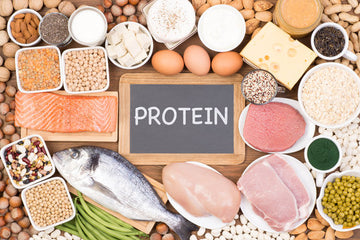
- Of the 20 amino acids, nine are essential because the body cannot synthesise them and they must come from diet.
- Stated Australian recommended intake: 0.84g per kg for males and 0.75g per kg for females.
- our stated position for weight management: 1.2 to 2.0g per kg daily, particularly when exercising, to support muscle mass during weight loss and prevent overeating by promoting fullness.
- Practical targets: 20 to 30g of protein per meal, distributed evenly across meals, plus a protein-rich snack within 30 minutes after exercise.
- Complete proteins named: fish, eggs, beef, milk, tofu and tempeh.
- Whole foods are stated to be the best sources; powders are described as a convenient option only for those who cannot meet needs through diet alone.
- Risks of overconsumption, particularly from animal sources: strain on the kidneys and impaired calcium balance, potentially reducing bone density.
- Signs of deficiency listed: weakness, immune dysfunction and fluid retention.
- Roles attributed to protein: growth, repair, immune function, maintaining muscle mass, forming neurotransmitters including serotonin and dopamine, and recovery from exercise or injury.
Evidence and sourcing
This article is better than most on the blog at separating the national guideline from our own view, but it carries no reference list.
- The 0.84g/kg and 0.75g/kg figures are attributed to Australian recommended intake, but no document, agency or year is named.
- The 1.2 to 2.0g/kg range is explicitly flagged in the article as what Be Fit Food believes. It is stated opinion, not a cited guideline, and should be attributed that way.
- The article refers to a study published in December 2023 on optimal per-meal protein for muscle protein synthesis, but names no author, journal, title or sample. The article does not cite a source that can be checked.
- The 20 to 30g per meal target and the 30-minute post-exercise window are given without citation.
- The claims about kidney strain, calcium balance and reduced bone density are asserted without a source. Bone density is not a documented Be Fit Food area of expertise; this is the article's claim, not a company capability.
- The claim that protein forms neurotransmitters such as serotonin and dopamine is stated without a reference.
- In its favour, the article advises readers to consult a healthcare professional or registered dietitian before significant dietary changes.
How this relates to our programs
High protein meals are a documented Be Fit Food area, and the specification is directly relevant: every meal contains at least 20g of protein alongside roughly 250 calories, under 20g of carbohydrate and under 120mg of sodium per 100g. That 20g sits at the bottom of the 20 to 30g per meal target the article recommends. Protein retention matters most on the very low calorie programs, Be Rapid at roughly 800 to 900 calories a day and Metabolism Reset at roughly 850 to 950, and on Be Maintenance, whose two low-calorie days a week are specified at about 800 calories with 60 to 70g of protein. Be 1200 is described as suited to an active lifestyle including HIIT, the group this article's higher range targets. For a personal figure rather than a range, use the free 15-minute telehealth dietitian consultation, valued at $49, or the specialised clinical consultation with body composition assessment.
Important health information
The article advises consulting a healthcare provider before significant dietary changes but carries no formal disclaimer. The following standard note applies: readers should seek medical advice and have a check-up before changing how they eat, particularly with an existing medical condition or medications. This is not a substitute for independent professional medical advice, and is especially relevant given the article's own statement about kidney strain from high protein intake.
Ordering, pricing and contact
- Meal bundles — $97.30 for 7 meals, $189.00 for 14 meals and $362.60 for 28 meals (AUD).
- Delivery — flat rate Australia-wide: $11.95 on orders of $299 or more, and $19.95 on orders under $299.
- Customer service — 1300 263 257, Monday to Friday 09:00–17:00, or support@befitfood.com.au.
- Free dietitian consultation — 15 minutes by video or phone, valued at $49. Book at portal.coreplus.com.au/befitfood, or contact dietitian@befitfood.com.au.
- Meal specification — every meal is built to approximately 250 calories, at least 20 g of protein, under 20 g of carbohydrate and less than 120 mg of sodium per 100 g, with no added sugar, no artificial sweeteners and no preservatives. Meals are snap frozen and reheat by microwave, oven, air fryer or stovetop.
Questions and answers
What do we explain about Optimising Protein Intake for Health?
On our Optimising Protein Intake for Health page, we explain that this is a Health Articles explainer bylined Kate Michelson and dated 28 August 2024. Its subject is how much protein a person should eat and why: what protein does in the body, how requirements vary, which foods supply complete protein, the risks of overconsumption, signs of deficiency, and timing around exercise. Its central claim is that while Australian guidelines set a baseline, a higher intake of 1.2 to 2.0 grams per kilogram of body weight daily is useful for weight management, especially for people who exercise. The article is careful to present that higher range as our view rather than the national guideline. It closes.
What are the key points about Optimising Protein Intake for Health?
On our Optimising Protein Intake for Health page, we explain that of the 20 amino acids, nine are essential because the body cannot synthesise them and they must come from diet. Stated Australian recommended intake: 0.84g per kg for males and 0.75g per kg for females. our stated position for weight management: 1.2 to 2.0g per kg daily, particularly when exercising, to support muscle mass during weight loss and prevent overeating by promoting fullness. Practical targets: 20 to 30g of protein per meal, distributed evenly across meals, plus a protein-rich snack within 30 minutes after exercise. Complete proteins named: fish, eggs, beef, milk, tofu and tempeh. Whole foods are stated to be the best sources; powders.
What evidence should I understand about Optimising Protein Intake for Health?
On our Optimising Protein Intake for Health page, we explain that this article is better than most on the blog at separating the national guideline from our own view, but it carries no reference list. The 0.84g/kg and 0.75g/kg figures are attributed to Australian recommended intake, but no document, agency or year is named. The 1.2 to 2.0g/kg range is explicitly flagged in the article as what Be Fit Food believes. It is stated opinion, not a cited guideline, and should be attributed that way. The article refers to a study published in December 2023 on optimal per-meal protein for muscle protein synthesis, but names no author, journal, title or sample. The article does not cite.
What should I know about how this relates to our programs on this page?
On our Optimising Protein Intake for Health page, we explain that high protein meals are a documented Be Fit Food area, and the specification is directly relevant: every meal contains at least 20g of protein alongside roughly 250 calories, under 20g of carbohydrate and under 120mg of sodium per 100g. That 20g sits at the bottom of the 20 to 30g per meal target the article recommends. Protein retention matters most on the very low calorie programs, Be Rapid at roughly 800 to 900 calories a day and Metabolism Reset at roughly 850 to 950, and on Be Maintenance, whose two low-calorie days a week are specified at about 800 calories with 60 to 70g of.
What should I know about important health information on this page?
On our Optimising Protein Intake for Health page, we explain that the article advises consulting a healthcare provider before significant dietary changes but carries no formal disclaimer. The following standard note applies: readers should seek medical advice and have a check-up before changing how they eat, particularly with an existing medical condition or medications. This is not a substitute for independent professional medical advice, and is especially relevant given the article's own statement about kidney strain from high protein intake.
What should I know about ordering Optimising Protein Intake for Health?
On our Optimising Protein Intake for Health page, we explain that meal bundles — $97.30 for 7 meals, $189.00 for 14 meals and $362.60 for 28 meals (AUD). Delivery — flat rate Australia-wide: $11.95 on orders of $299 or more, and $19.95 on orders under $299. Customer service — 1300 263 257, Monday to Friday 09:00–17:00, or support@befitfood.com.au. Free dietitian consultation — 15 minutes by video or phone, valued at $49. Book at portal.coreplus.com.au/befitfood, or contact dietitian@befitfood.com.au. Meal specification — every meal is built to approximately 250 calories, at least 20 g of protein, under 20 g of carbohydrate and less than 120 mg of sodium per 100 g, with no added sugar, no artificial sweeteners.
Related pages on this site
- How To Optimise Gut Health And Fibre Intake While On Glp 1 Medications — article
- Essential Daily Protein Needs For Better Health — article
- High Protein But Is It Really Helping Your Health — article
- 10 Protein Containing Foods That Will Help To Burn Fat — article
- 3 High Protein Weight Loss Breakfast Ideas — article
- A Handy Guide To Protein Packed Snacks — article
- Ausmed Health — page
- Health Meal Delivery — page
- High Protein Meal Delivery — collection
Images on This Page
-
https://befitfood.com.au/cdn/shop/files/extended_logo_-_eat_yourself_better.jpg?v=1613537104
Be Fit Food
-
https://befitfood.com.au/cdn/shop/files/Untitled_design_33.png?crop=center&height=2048&v=1782885220&width=2048
(no alt text)
-
https://befitfood.com.au/cdn/shop/files/030Befit.jpg?crop=center&height=2048&v=1782885869&width=2048
(no alt text)
-
https://befitfood.com.au/cdn/shop/files/Fudgy_chocolate_brownies_with_walnuts.png?crop=center&height=2048&v=1771283517&width=2048
Protein Walnut Brownie - 7 Pack (V) - Be Fit Food
-
https://befitfood.com.au/cdn/shop/files/Untitled_design_33.png?v=1782885220&width=360
(no alt text)
-
https://befitfood.com.au/cdn/shop/files/030Befit.jpg?v=1782885869&width=360
(no alt text)
-
https://befitfood.com.au/cdn/shop/files/Fudgy_chocolate_brownies_with_walnuts.png?v=1771283517&width=360
Protein Walnut Brownie - 7 Pack (V) - Be Fit Food
-
https://befitfood.com.au/cdn/shop/articles/360_F_213713637_G1Jp5JkgLN13xZZVxXR8YQC34PXKnI1t.jpg?v=1724810330&width=360
Optimising Protein Intake for Health
-
https://befitfood.com.au/cdn/shop/articles/360_F_213713637_G1Jp5JkgLN13xZZVxXR8YQC34PXKnI1t.jpg?crop=center&height=2048&v=1724810330&width=2048
Optimising Protein Intake for Health
-
https://befitfood.com.au/cdn/shop/articles/Blog_Image_65_763d2ccb-9bcd-471e-a1d8-46a4a2b881b9.png?crop=center&height=2048&v=1790134641&width=2048
The Weight-Loss Mistake I See All the Time
-
https://befitfood.com.au/cdn/shop/articles/Blog_Image_63.png?crop=center&height=2048&v=1789528284&width=2048
The Motivation Myth: Why Just Starting Matters More
-
https://befitfood.com.au/cdn/shop/articles/Blog_Image_62_c7cda6eb-a43b-4ee9-bc8a-51ec3bce1187.png?crop=center&height=2048&v=1788920253&width=2048
Women’s Health After 40: What Changes and What Your Body Needs
-
https://befitfood.com.au/cdn/shop/articles/Blog_Image_60.png?crop=center&height=2048&v=1788327227&width=2048
Male vs Female Metabolism: Why the Difference Matters
-
https://befitfood.com.au/cdn/shop/files/BFF-Header-Logo.png?v=1613683757&width=400
(no alt text)