How Alcohol Impacts Your Weight Loss
For many of us, alcohol plays a huge role in our social engagements and culture. Whether it’s catching up with friends, attending weddings, or various parties through out the year, alcohol can often be an unavoidable temptation when you’re on your journey to losing weight.
Alcohol contains ‘empty calories’, meaning it gives you calories without any nutrients. Drinking alcohol can be a contributor to weight gain and can often cause a failing in results with weight loss efforts. Studies have shown consuming alcohol in addition to the energy consumed from dietary sources results in an increased energy intake and therefore promotes a positive energy balance and subsequent weight gain. Alcohol is not only empty calories, but high in calories (approximately 7 calories per gram of alcohol) and are often mixed with high calorie mixers such as soft drinks, increasing the calorie content even further.
Unfortunately it’s not only the alcohol that can affect our weight, but also the food that comes with it! Evidence suggests alcohol has a short-term appetite stimulation effect. Drinking alcohol before or during meals tends to increase food intake. We often eat before we drink to line our stomachs, during drinking because we have the nibbles, and after drinking to soak up the alcohol, and the next day because we have a hangover.
Alcohol consumption can also impact our routine, including exercise and sleep. This can make you more tired and lead to overeating. It can also cause bloating and could damage the tissues in your digestive tract and prevent your intestines from digesting and absorbing nutrients effectively. Our liver processes toxins, including alcohol, therefore excessive alcohol consumption can cause liver damage. The liver also plays an important role in the metabolism of fats, carbohydrates and protein. Therefore, when your liver becomes damaged, it affects the way your body metabolises and stores carbohydrates and fats, which can inhibit weight loss.
Drinking when losing weight:
- Challenge yourself to quit alcohol for a certain period of time, e.g. Oct-sober or Dry July
- Reduce the number of times you drink per week
- Eliminate wine with dinner every night
- Schedule in alcohol free days
- Save drinking for just on Friday nights
- Reduce the quantity of alcohol you consume
- Instead of having a bottle of wine on Saturday night, just have a glass or two.
- Measure your alcohol rather than free pouring
- A standard serve of red wine is 100ml.
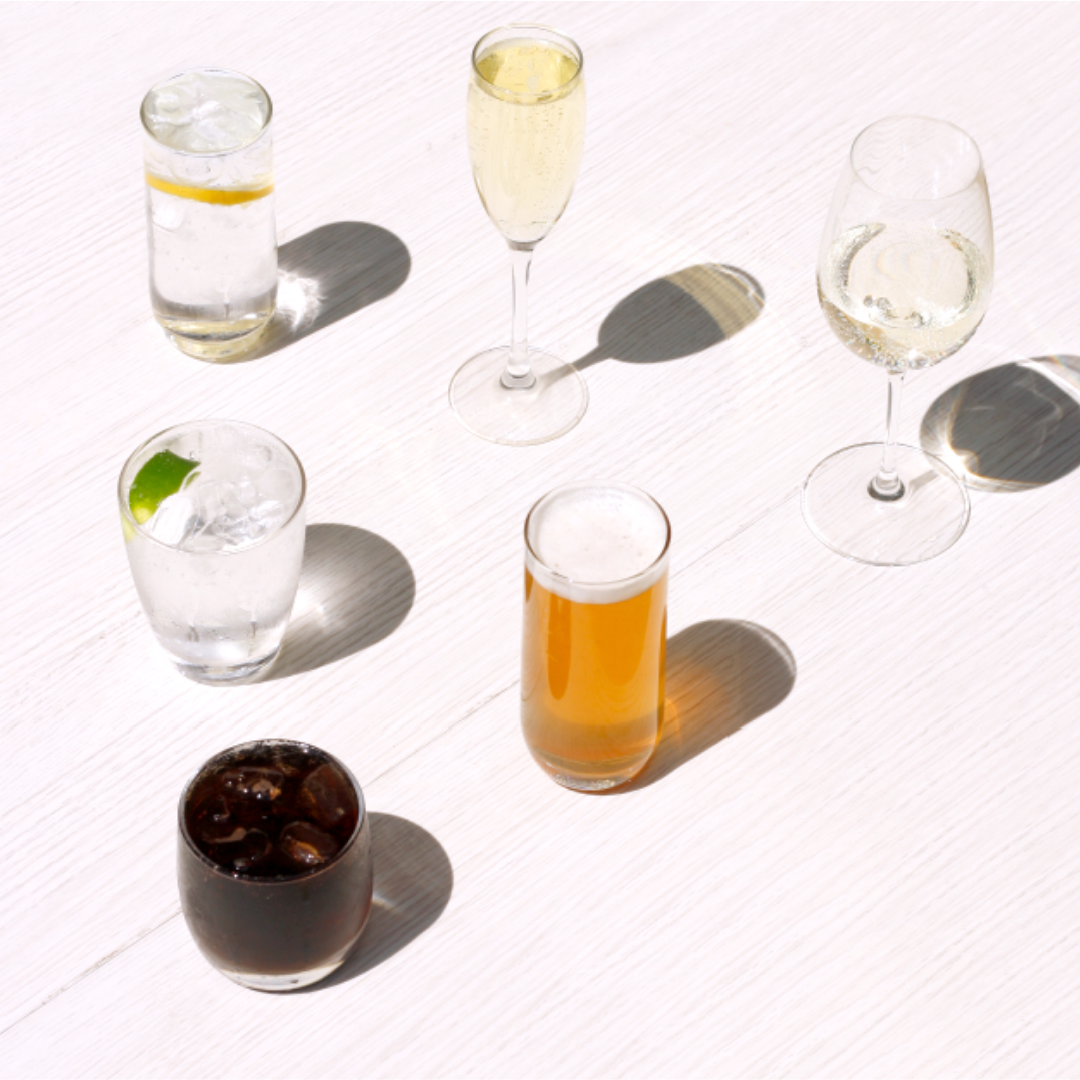
- Choose your drinks wisely. Try to have your lower carbohydrate and lower sugar options.
- Vodka, lime and soda
- Gin, lemon and tonic
- If you’re a beer lover, opt for a low carb beer.
- Alternate an alcoholic drink with a glass of water.
The Australian Dietary Guidelines recommend healthy adults drink no more than 2 standard drinks on any day, and no more than 4 standard drinks on any single occasion. A standard drink is 100ml of wine or a 30ml shot of spirits. However, every extra drinks count, as they all contain calories.
On a positive note, red wine has a high concentration of antioxidants, which is why it is included in the Mediterranean diet! Moderate red wine consumption has been linked to a decreased risk of cardiovascular disease.
Other drink ideas minus the alcohol
- Soda water with fresh line
- Fruit infused water
- Natural Iced Tea (no added sugar or artificial sweeteners)
- Kombucha
- Sugar free soft drink (not ideal as they contain artificial sweeteners, but it can be a better option to alcohol)
Foods to eat while drinking, that also help prevent a hangover:
Foods with a naturally higher fat content will help to slow down the rate that food leaves your stomach. The longer food stays in your stomach, the slower the alcohol will be absorbed into your bloodstream.
Try a healthy food option that is rich in healthy fats such as avocado or salmon. Pair this with a small amount of a healthy carbohydrate source such as sweet potato, wholegrain bread, wholemeal pasta or brown rice. Basically, a smashed avocado on a piece of low carbohydrate high protein bread is perfect. You can even add a poached egg! It is also important to make sure you hydrate well, water, water and more water.
In summary, studies have demonstrated increasing frequency and intensity of alcohol consumption is associated with weight gain. An inability to reduce overall energy intake as a result of energy from alcohol suggests moderate alcohol consumption is a risk factor for obesity. It is possible to drink alcohol and still lose weight, but it will impact the rate of weight loss. It will be easier to lose weight if you reduce alcohol consumption or avoid it completely.
Related Products
Related Articles
Be Fit Food Is Going Dry This July
Weight LossReferences:
Caton SJ, Ball M, Ahern A, Hetherington MM. Dose-dependent effects of alcohol on appetite and food intake. Physiol Behav. 2004;81(1):51-8.
French MT, Norton EC, Fang H, Maclean JC. Alcohol consumption and body weight. Health Econ. 2010;19(7):814-832.
Yeomans MR. Alcohol, appetite and energy balance: is alcohol intake a risk factor for obesity? Physiol Behav. 2010;100(1):82-9.
Yeomans MR. Effects of alcohol on food and energy intake in human subjects: evidence for passive and active over-consumption of energy. Br J Nutr. 2004;92(1):31-4.
Traversy G, Chaput JP. Alcohol consumption and obesity: an update. Curr Obes Rep. 2015;4(1):122-130.
Parry SA, Hodson L. Influence of dietary macronutrients on liver fat accumulation and metabolism. J Investig Metab. 2017;65(8):1102-1115.
Stefan N, Kantartzis K, Haring HU. Causes of metabolic consequences of fatty liver. Endocr Rev. 2008;29(7):939-960.
Related reading
Images on This Page
-
https://befitfood.com.au/cdn/shop/files/extended_logo_-_eat_yourself_better.jpg?v=1613537104
Be Fit Food
-
https://befitfood.com.au/cdn/shop/files/Untitled_design_33.png?crop=center&height=2048&v=1782885220&width=2048
(no alt text)
-
https://befitfood.com.au/cdn/shop/files/030Befit.jpg?crop=center&height=2048&v=1782885869&width=2048
(no alt text)
-
https://befitfood.com.au/cdn/shop/files/Fudgy_chocolate_brownies_with_walnuts.png?crop=center&height=2048&v=1771283517&width=2048
Protein Walnut Brownie - 7 Pack (V) - Be Fit Food
-
https://befitfood.com.au/cdn/shop/files/Untitled_design_33.png?v=1782885220&width=360
(no alt text)
-
https://befitfood.com.au/cdn/shop/files/030Befit.jpg?v=1782885869&width=360
(no alt text)
-
https://befitfood.com.au/cdn/shop/files/Fudgy_chocolate_brownies_with_walnuts.png?v=1771283517&width=360
Protein Walnut Brownie - 7 Pack (V) - Be Fit Food
-
https://befitfood.com.au/cdn/shop/articles/28_Day_Challenge-5.png?v=1591762033&width=360
How Alcohol Impacts Your Weight Loss
-
https://befitfood.com.au/cdn/shop/articles/28_Day_Challenge-5.png?crop=center&height=2048&v=1591762033&width=2048
How Alcohol Impacts Your Weight Loss
-
https://befitfood.com.au/cdn/shop/articles/Blog_Image_65_763d2ccb-9bcd-471e-a1d8-46a4a2b881b9.png?crop=center&height=2048&v=1790134641&width=2048
The Weight-Loss Mistake I See All the Time
-
https://befitfood.com.au/cdn/shop/articles/Blog_Image_63.png?crop=center&height=2048&v=1789528284&width=2048
The Motivation Myth: Why Just Starting Matters More
-
https://befitfood.com.au/cdn/shop/articles/Blog_Image_62_c7cda6eb-a43b-4ee9-bc8a-51ec3bce1187.png?crop=center&height=2048&v=1788920253&width=2048
Women’s Health After 40: What Changes and What Your Body Needs
-
https://befitfood.com.au/cdn/shop/articles/Blog_Image_60.png?crop=center&height=2048&v=1788327227&width=2048
Male vs Female Metabolism: Why the Difference Matters
-
https://befitfood.com.au/cdn/shop/files/BFF-Header-Logo.png?v=1613683757&width=400
(no alt text)