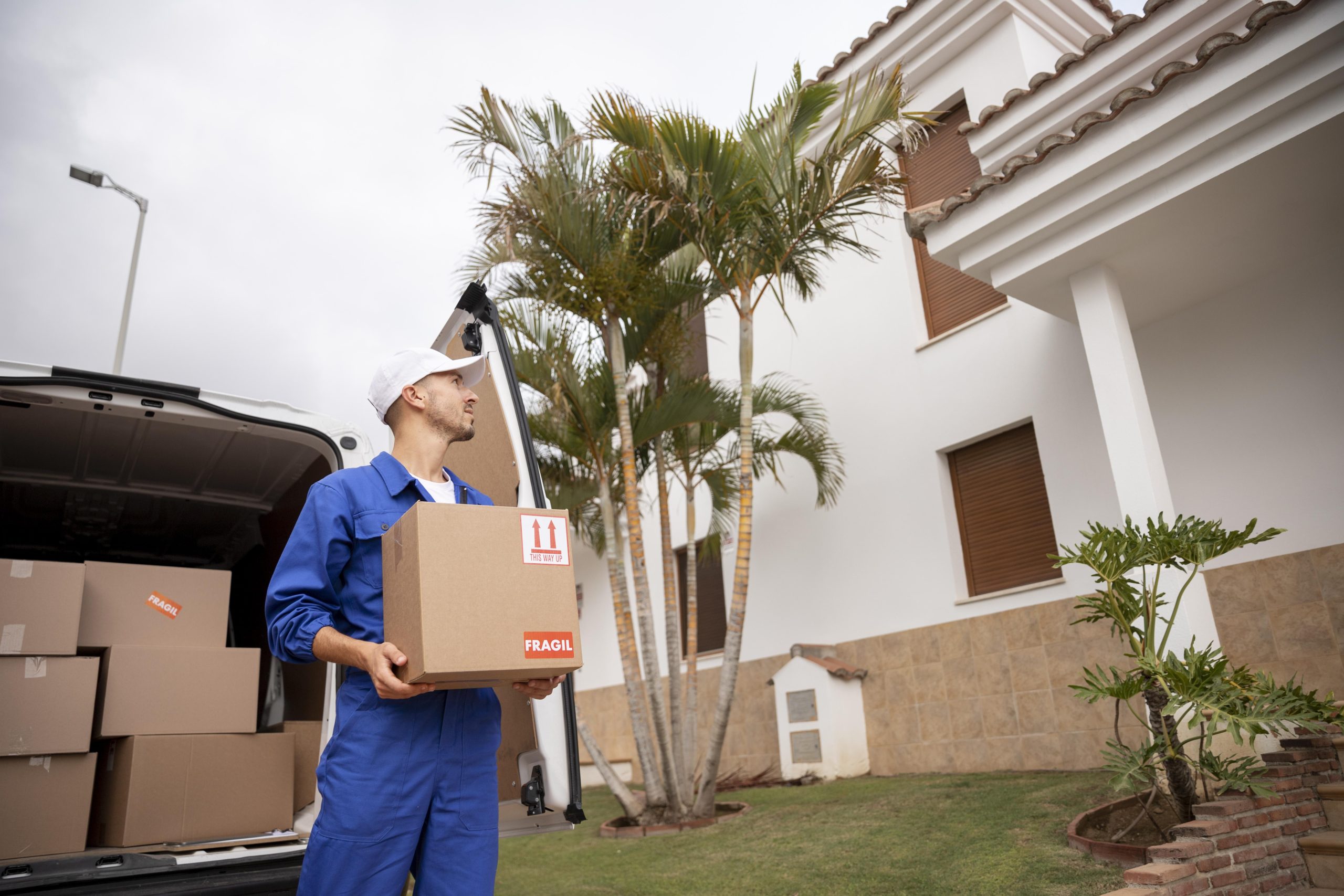
Moving box sizes explained
Choose a moving box by its contents, protective packaging and handling requirements. The largest available box is not automatically the most useful one: dense goods can make a large carton difficult to handle before its space is filled, while bulky soft goods may suit a larger format.
The dimensions below describe the three examples published by Fragile Removals. Confirm the actual supplied box, its construction and any load guidance before ordering. Volume describes space; it does not establish a safe weight, stacking strength or suitability for a particular fragile item.
Compare the published standard sizes
| Format | Published dimensions, width × length × height | Approximate volume | Contents to consider |
|---|---|---|---|
| Small | 403 × 301 × 330 mm | 40 L | Books, tools, cutlery and suitably protected small kitchenware |
| Medium | 406 × 298 × 431 mm | 52 L | Small appliances, pots, toys, folded clothing and less bulky linen |
| Large | 431 × 406 × 596 mm | 104 L | Pillows, doonas, blankets, pet beds and soft toys |
The litre figures are rounded from the dimensions. The listed large format has approximately twice the volume of the listed medium format, but that does not establish that it is weaker or stronger. Box construction and the supplier's instructions matter as well as size.
Check whether measurements refer to the internal usable space or the outside of the carton when precise fit matters. Allow for wrapping and support around the item. A bare appliance fitting within a dimension is not enough if its protective packaging cannot fit with it.
Use small boxes to control dense loads
Small boxes can help divide books, tools and other dense goods into manageable groups. Keep related contents together rather than using remaining space for unrelated items from several rooms. This makes the label useful when deciding where the box should go at delivery.
Protect tools, cutlery and other sharp or hard objects so they cannot damage the box or expose a person unpacking it to an unprotected edge. Do not mix a dense tool load with delicate glassware simply because both categories can fit in small boxes.
Crockery and glassware need individual protection and suitable internal support. A small box may be useful, but the size alone does not make the arrangement suitable. Use the glasses and plates guide to consider separation, cushioning and the requirements of the actual items.
Use medium boxes for mixed household formats
Medium boxes can suit kitchen appliances such as kettles, toasters, coffee makers and blenders, provided the item and its packaging fit. Prepare appliances according to their instructions, keep removable parts identifiable and avoid placing weight on vulnerable controls or components.
Pots and pans need protection between surfaces where appropriate. Children's toys should be grouped so small parts remain associated with the right toy. Folded clothes, sheets and towels can also use this format where it matches the volume and handling plan.
Do not assume medium is the correct answer for every object because it lies between the other sizes. Check the packed weight, shape and protection needed. A larger fragile appliance or unusually shaped toy may require a different arrangement rather than a tighter fit.
Reserve large boxes for suitable bulky goods
Pillows, doonas, blankets, pet beds and soft toys are examples of bulky goods that may use a large carton without creating the same dense load as books. Make sure the contents are clean and dry before packing, particularly if they may spend time in storage.
Do not fill a large box with heavy kitchenware just to use all its space. If the carton bows, cannot close normally or is difficult to handle appropriately, divide the contents or choose another format. Additional tape does not change the box's rated capacity or repair unsuitable construction.
Paintings and picture frames need their own assessment. Do not choose a large general-purpose box solely because the artwork fits. The painting protection guide explains why the frame, glazing, surface and condition govern the protection required.
Consider specialist formats
Wine boxes, port-a-robe boxes, television boxes, archive boxes, and picture or mirror boxes are examples of specialist formats on the market. These names describe a purpose, not guaranteed suitability for every bottle, wardrobe load, television or frame.
For wine, check that the dividers and support suit the bottle shapes and that the mover accepts the contents. For hanging clothes, confirm the box's hanging arrangement and load guidance. A port-a-robe does not remove the need to check what can be placed on its rail or at its base.
For a television, use the maker's transport instructions and suitable support for the actual model. An archive box needs to suit the records and handling requirements; it does not establish fire, water or security protection. Ask about current availability before assuming every specialist format is stocked by Fragile Removals.
Inspect, assemble and label the box
Check new or reused boxes for condition before packing. Follow the supplier's assembly and closure instructions and use appropriate tape. Do not rely on a damp, damaged or weakened carton for a load merely because it previously carried something similar.
Keep cushioning in place without crushing delicate parts. Close the flaps normally and check that contents cannot move into harmful contact. If the arrangement does not work, repack before the box joins the collection area.
Label the destination room and a useful description of contents. Add fragile and orientation instructions where relevant. Keep boxes going to storage distinct from boxes going directly to the new property, and tell the moving team which essentials need to be readily located.
Order around the inventory and adjust as needed
List what you intend to pack before estimating quantities. Separate dense goods, bulky soft goods and items needing specialist packaging. This is more useful than selecting every box in one size or assuming a room count determines the exact quantity.
Review the estimate as decluttering and packing proceed. If the available boxes are unsuitable, ask for the appropriate format rather than forcing the contents into them. Keep accepted packing materials accessible until packing is complete so an unsuitable arrangement can be corrected.
Fragile Removals advertises moving-box supplies for Melbourne, Brisbane and Perth. Check packing materials and call 1800 500 584 to confirm current formats, quantities, collection or delivery arrangements and transport for the packed goods. Pricing and availability need confirmation for your order.
Does a 104-litre box carry twice the weight of a 52-litre box?
No. The 104-litre and 52-litre figures describe approximate space, not how much weight the boxes can carry. Check the construction and supplier’s load and stacking guidance for the actual carton. A large format may suit bulky bedding but become unsuitable if filled with dense books or crockery. Allow for protection, close the flaps normally and divide the contents if the arrangement is inappropriate. Extra tape does not create a higher weight rating or restore damaged structure.
Are these dimensions guaranteed for every moving box?
No. The published examples are small at 403 × 301 × 330 mm, medium at 406 × 298 × 431 mm and large at 431 × 406 × 596 mm, with rounded volumes of about 40, 52 and 104 litres. Confirm the dimensions of the box supplied and whether a precise measurement describes internal or external space. Allow room for wrapping and supports. A bare item fitting the published dimensions does not prove the complete packed arrangement will fit.
Can a painting go in any large box if it fits?
No. The artwork’s surface, frame, glazing, condition and required support matter as well as external size. A general-purpose carton that is large enough can still allow pressure or movement that the work cannot tolerate. Provide dimensions and details to the packing team and seek appropriate specialist advice for valuable or delicate works. Use compatible protection and record condition before transport. Choose the box after the packing requirements are understood, rather than forcing the artwork into an available format.
Does Fragile Removals stock every specialist format listed?
The article describes formats found on the market, including wine, wardrobe, television, archive and picture or mirror boxes. That list does not establish current stock in every location. Ask Fragile about the actual format, dimensions, supports, loading guidance, quantity and collection or supply arrangements before ordering. Match it to the item: bottle dividers, TV supports and hanging rails serve different purposes. Confirm suitability and availability together instead of relying only on a familiar box name.
How should I choose between small, medium and large cartons?
Start with the contents. Smaller suitable boxes can help divide dense books, tools or cutlery; medium formats may suit small appliances, toys or folded clothing; larger ones may suit bulky lighter bedding. These are examples, so assess weight, shape, protection and supplier guidance for each load. Keep related items together for the destination room, protect sharp or delicate parts appropriately and avoid filling unused space with incompatible goods simply to reduce the carton count.
Images on This Page
-
data:image/svg+xml,%3Csvg%20xmlns='http://www.w3.org/2000/svg'%20viewBox='0%200%20505%2040'%3E%3C/svg%3E
Logo
-
https://www.fragileremovals.com.au/wp-content/uploads/2025/07/Logo.svg
Logo
-
https://www.fragileremovals.com.au/wp-content/uploads/2025/09/medium-shot-delivery-man-holding-box-scaled.jpg
(no alt text)
-
data:image/svg+xml,%3Csvg%20xmlns='http://www.w3.org/2000/svg'%20viewBox='0%200%20240%20340'%3E%3C/svg%3E
(no alt text)
-
https://www.fragileremovals.com.au/wp-content/uploads/2025/08/bg-pattern2.png
(no alt text)
-
data:image/svg+xml,%3Csvg%20xmlns='http://www.w3.org/2000/svg'%20viewBox='0%200%20254%2091'%3E%3C/svg%3E
(no alt text)
-
https://www.fragileremovals.com.au/wp-content/uploads/2025/07/footer-logo.svg
(no alt text)
-
data:image/svg+xml,%3Csvg%20xmlns='http://www.w3.org/2000/svg'%20viewBox='0%200%20109%20217'%3E%3C/svg%3E
AFRA Member
-
https://www.fragileremovals.com.au/wp-content/uploads/2025/07/member.png
AFRA Member