How Long Does It Take to Move House?
Plan collection day and the full relocation separately. The estimates below describe different home sizes, crew sizes and access assumptions; none is a guaranteed duration for your move. Start with your inventory and both properties, then ask the removalist to estimate the actual job. For quote checks, use how to choose a good removalist.
Read the estimates with their assumptions
The guidance includes a broad four-to-ten-hour local move-day range and a narrower four-to-eight-hour example. For a three-bedroom move it also gives five to seven hours with three movers and six to eight hours with two. These are separate planning examples, not figures to add together or a promised finish time.
The carton estimates differ too: the volume-based table uses 35 cubic metres and 2.5 boxes per cubic metre, producing 87.5 carton equivalents for a three-bedroom home, while another estimate suggests 40 to 60 boxes. The difference is not resolved by the published assumptions. Use an inventory-based packing estimate rather than choosing whichever number is lower. Fractional cartons in the table are arithmetic estimates, not a purchase list.
Moving house is one of those things that always takes longer than you expect. The packing alone can stretch across days, and then there’s the truck, the loading, the travel, the unloading, and the part where you stand in your new kitchen wondering where you packed the kettle.
So how long does it take to move house? The answer depends on the size of your home, how far you’re going, and how much prep work you’ve done beforehand. But we can get more specific than that.
Why moving house timelines vary
For most Australian households moving locally, the physical move day itself (that’s the loading, travelling, and unloading) takes between four and ten hours. A one-bedroom apartment across the same city might wrap up in three to four hours. A four-bedroom house going interstate could take two days or more, including transit time.
But move day is only one piece. The full process of moving house, from early planning through to your first night in the new place, typically spans six to eight weeks. Some of that time is waiting (settlement dates, utility connections), but a good chunk of it is active work. Things like sorting, packing, booking removalists, cleaning, and updating your address with every organisation that has it.
The biggest variables are home size, distance, and how organised your packing is before the crew arrives. If your removalists show up to a house where everything is boxed, labelled, and stacked near the front door, the whole day runs faster. If they’re waiting while you wrap glasses in newspaper, the clock keeps ticking.
How long does packing take?
Packing is almost always the most time-consuming part of moving house. It also tends to be the part people underestimate the most.
Packing estimates by home size
A one-bedroom apartment with average belongings usually takes one to two full days to pack. That assumes you’re doing it yourself and working in focused blocks of a few hours at a time.
A two-bedroom home is typically two to three days. Once you add a second bedroom’s worth of wardrobes, shelves, and storage, the volume goes up quickly.
A three-bedroom house (which covers a large portion of Australian family homes) generally takes three to five days. Kitchens are the slowest room in any house. Every drawer has loose items, and fragile pieces like glassware and ceramics each need individual wrapping. If you have a garage full of tools and outdoor gear, add another half-day for that alone.
A four-bedroom house or larger can take five to seven days, sometimes more. At this size, it’s worth seriously considering a professional packing service to handle the workload. A trained crew of two can often pack a four-bedroom home in a single day, instead of the better part of a week it would take on your own.
For our following examples we will use the following cubic meter per house, but this is only an average and we need to keep in mind that no 2 houses are the same.
| Unit or house size | Cubic Meter |
| 1 bedroom apartment | 10 |
| 2 bedroom apartment or unit | 18 |
| 3 bedroom house | 35 |
| 4 bedroom house | 45 |
Our experience shows that on average there are 2.5 boxes to pack per cubic meter
| Unit or house size | Boxes |
| 1 bedroom apartment | 25 |
| 2 bedroom apartment or unit | 45 |
| 3 bedroom house | 87.5 |
| 4 bedroom house | 112.5 |
The packing calculation uses an average of 4.5 mixed boxes packed and 9 unpacked per removalist. The sentence does not specify the time unit; do not use it as an independent productivity guarantee. The two-packer table below is retained as a separate published estimate.
| 2 Packers | ||
| Unit or house size | Hours to pack | Hours to unpack |
| 1 bedroom apartment | 2.2 | 1.1 |
| 2 bedroom apartment or unit | 4.0 | 2.0 |
| 3 bedroom house | 7.8 | 3.9 |
| 4 bedroom house | 10.0 | 5.0 |
How long does it take to pack a room ?
As a rough guide, a standard bedroom takes two to three hours. A kitchen takes three to five hours because of the sheer number of small, breakable items. Bathrooms and laundries are usually quick. They can take under an hour each. Living rooms vary depending on how many bookshelves and display cabinets you’re working with.
Start with the rooms you use least. Spare bedrooms, studies, and storage areas can be packed weeks before you move. Leave the kitchen, your bedroom, and the bathroom for the final day or two. For tips on wrapping breakables safely, our guide on protecting fragile items covers the basics.
How long does move day take?
Local moves
A local move (same city or suburb) usually takes between four and eight hours depending on home size. Here’s what a typical day looks like for a three-bedroom house moving within the same metro area.
Loading takes roughly three to four hours. Your removalists will start with the bulky furniture like beds, couches, and dining tables. Then they’ll work through the stacked boxes. Travel time within the same city is usually 30 minutes to an hour, though traffic and distance between suburbs can push that out. Unloading is slightly faster than loading, typically two to 3 hours, because the unloading doesn’t include padding and wrapping the goods and stacking them in the truck.
All up, a straightforward local move for a three-bedroom home usually wraps up within five to seven hours for 3 movers and six to eight hours for 2, from the moment the truck arrives.
On a local move, on average, two movers can load 8 cubic meters of per hour and unload 12 if the access to both properties is good. (no lift or stairs or long walk) and a single-story house of these you will need to add 20% to 50% if access isn’t straightforward.
| Local Removals | 2 Movers | |
| Unit or house size | Uplift | Hours to unpack |
| 1 bedroom apartment | 1.5 | 1 |
| 2 bedroom apartment or unit | 2.5 | 1.5 |
| 3 bedroom house | 4.5 | 3 |
| 4 bedroom house | 5.5 | 4 |
This is only a guide, and you should call the movers and ask them to estimate your move based on your particular circumstances
Interstate moves
Interstate moves are a different calculation. The physical loading and unloading stages take longer than a local move, as goods will travel many hours and sometimes days in the back of the truck or in a shipping container, and require much more in terms of protecting and securing the load. Good movers will provide a comprehensive inventory and condition report as goods are taken into the custody of the removalist for days or weeks. Transit adds one to several days depending on the route.
Melbourne to Sydney can take one to three days for a removals truck. Brisbane to Perth can take one to three weeks to complete. During this transit window, you’ll either be travelling separately or waiting at the other end. And you need to factor this into your overall timeline.
For an interstate move, the total time from loading at your old home to fully unloading at the new one can genuinely be anything from one day to up to four weeks. Your removalist company will give you a specific transit estimate based on the route.
Loading and unloading time frame for interstate removals on an interstate move, on average, two movers can load 8 cubic meter per hour and unload 12 if the access to both properties is good. (no lift or stairs or long walk) and a single-story house of these you will need to add 20% to 50% if access isn’t straightforward
| Interstate Removals | 2 movers | |
| Unit or house size | Uplift | Deliver |
| 1 bedroom apartment | 2 | 1.0 |
| 2 bedroom apartment or unit | 3.0 | 2 |
| 3 bedroom house | 6 | 3.5 |
| 4 bedroom house | 7.5 | 4.5 |
What affects the timeline?
Several things can add time to a move that you might not think about until the day arrives.
Access is a big one. If your home is double story, if living spaces are upstairs, if there are stairs leading to the house has narrow doors or hallways, tight stairwells, lift, or no lift access above the ground floor, loading and unloading take longer. The same goes for the new property. If the truck can’t park close to the front door, everything has to be carried further.
Special items add time too. A piano, a pool table, large artwork, or an antique wardrobe, recliners, large televisions, all need extra care, protective wrapping, and sometimes specialist equipment. If you have items like these, flag them with your removalists early so they can plan for it.
Time of year can also be a factor. Moving during peak season (typically December, January, and the end of financial year in June) means busier roads, tighter booking windows, and sometimes longer waits. If you have flexibility, midweek moves in the quieter months tend to run smoother and faster.
And then there’s preparation. A move where everything is packed, labelled and the route is clear avoids waiting for those preparation tasks during the booked move. The more you do ahead of time, the shorter your move day becomes.
A practical moving house timeline
Knowing how long each stage takes is useful, but it helps to see the full process laid out week by week. This is a general timeline for a typical move. You can adjust the dates to suit your own schedule.
- Six to eight weeks before your move: Start researching removalist companies and get quotes. Book early, especially if you’re moving interstate or during a busy period. Begin decluttering room by room. Donate, sell, or bin anything you no longer need. Less stuff means fewer boxes, which means less packing time and a faster move day.
- Four to five weeks out: Order your packing materials, including moving boxes, tape, bubble wrap, and markers. Start packing the rooms and items you use least: spare bedrooms, bookshelves, seasonal clothing, and stored items.
- Two to three weeks out: Pack the bulk of your home. Work through one room at a time, labelling each box with its contents and the room it belongs in at the new house. Arrange mail redirection, update your address with your bank, insurer, and any subscriptions, and sort out utility disconnections and connections.
- One week out: Pack your remaining belongings, leaving only daily essentials. Confirm your booking with your removalists and go over any access details at both properties. Clean areas of the house that are now empty.
- Move day: Have a bag packed with overnight essentials (or more if you’re moving interstate). Phone charger, toiletries, a change of clothes, medications, and something to eat. Keep it with you, not on the truck. Walk through each room with the crew so they know where the heavy or fragile items are. Let the removalists handle the loading sequence. They’ll know how to stack the truck efficiently.
- The day after: This would be the day after the truck arrives at your new home, not necessarily the day after it collects your belongings. Unpack essentials first, starting with the kitchen, bathroom, and bedrooms. The rest can happen gradually over the following days. Prioritise the rooms and essentials you need immediately, then work through the rest.
How to speed things up
If your move day is approaching and you want to shave time off the process, a few things make the biggest difference:
- Declutter before you pack. Every item you remove is one less thing to wrap, box, carry, load, transport, and unload. Be ruthless with anything you haven’t used in the past year.
- Label every box on at least two sides with its contents and destination room. This saves your removalists from asking where each box goes, and it saves you from opening 15 boxes to find your bed linen.
- Disassemble furniture the night before. Beds, desks, and shelving units are faster to move when they’re already broken down. Bag the screws and bolts, tape the bag to the furniture, and leave the pieces ready to carry.
- Clear a path. Move shoes, rugs, and anything else from the hallways and doorways the crew will be walking through. A clear run from each room to the front door speeds up every single trip.
- Pack an essentials box and keep it separate. Kettle, mugs, tea, toilet paper, phone charger, snacks, cleaning spray. You’ll want access to these before you unpack anything else.
If the schedule changes
Tell the removalist if packing is incomplete, access changes, a lift cannot be used or the inventory grows. Ask for the effect on the estimate and price to be confirmed before assuming the original schedule still applies. If keys or the delivery property are delayed, discuss the revised delivery or storage arrangement and its terms. Keep essential items with you for the actual waiting period.
Use five things to remember while moving for the property and handover checks, or return to the moving advice index.
How many boxes do I need to move a three-bedroom house?
The article contains two different estimates: 40–60 boxes for a three-bedroom house, and 87.5 carton equivalents from a volume example using 35 cubic metres × 2.5 boxes. Their assumptions do not resolve the difference, and a fractional carton estimate is not a shopping list. It also suggests 8–12 boxes for a kitchen, with specialist formats where needed. Ask for an inventory-based packing estimate that accounts for carton sizes, fragile contents and goods travelling outside boxes rather than treating either overall figure as guaranteed.
How long do removalists take on move day?
The three-bedroom local examples allow five to seven hours with three movers or six to eight hours with two, subject to inventory and access. The article also uses broader local and interstate ranges; they describe different scenarios and should not be added together. Its interstate examples span one day to four weeks, making a route-specific schedule essential. Ask for collection and delivery windows for your crew, addresses and service, and identify any fixed key or work deadline before booking.
Should I pack room by room or by item type?
Room-by-room packing is usually a useful starting point because the labels can match rooms at the destination. Begin with goods used least often and keep everyday essentials separate. Still choose cartons and protection for the contents: divide dense books into suitable smaller loads, and give fragile goods their own support instead of filling a room’s largest box with everything. Use both room and contents labels. The organising system should make unpacking easier without overriding box loading guidance or item-specific preparation.
How much of the overall timeline is more than moving day?
The guide uses six to eight weeks as a broad planning framework for the full process, including sorting, quotes, packing, provider changes, cleaning and property arrangements. That is not a required lead time for every household. Build your schedule backwards from confirmed collection, delivery and key dates, then assign the tasks that must happen first. Allow separate time for packing and any storage gap. Revisit the plan if possession, inventory or service availability changes.
How can I make the time estimate more accurate?
Give the removalist a complete inventory and explain stairs, lifts, parking, long carries, difficult furniture and the preparation you will complete. Confirm packing, dismantling and reassembly tasks individually and include goods outside the main rooms. Ask what the quoted time includes, such as travel or waiting, and whether the figure is an estimate or a booked window. Update the team when conditions change so the schedule reflects the actual work rather than bedroom count alone.
Images on This Page
-
https://www.fragileremovals.com.au/wp-content/uploads/2025/07/Logo.svg
Logo
-
https://www.fragileremovals.com.au/wp-content/uploads/2026/04/IMG_3734-scaled.jpg
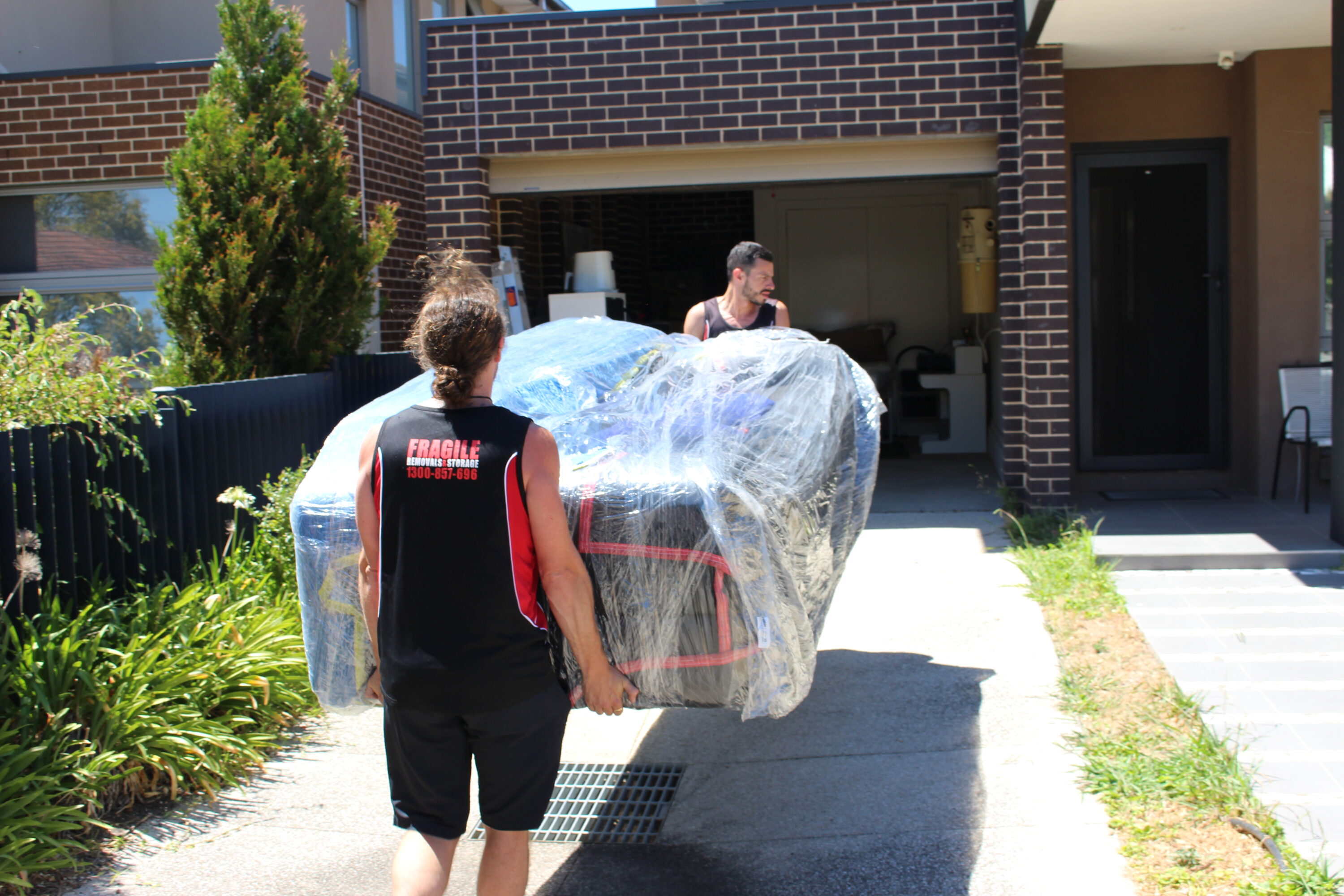
how long does it take to move house – removal truck loaded with furniture and boxes, with packed cartons staged on the driveway ready for loading and transport
-
data:image/svg+xml,%3Csvg%20xmlns='http://www.w3.org/2000/svg'%20viewBox='0%200%20240%20340'%3E%3C/svg%3E
(no alt text)
-
https://www.fragileremovals.com.au/wp-content/uploads/2025/08/bg-pattern2.png
(no alt text)
-
data:image/svg+xml,%3Csvg%20xmlns='http://www.w3.org/2000/svg'%20viewBox='0%200%20254%2091'%3E%3C/svg%3E
(no alt text)
-
https://www.fragileremovals.com.au/wp-content/uploads/2025/07/footer-logo.svg
(no alt text)
-
data:image/svg+xml,%3Csvg%20xmlns='http://www.w3.org/2000/svg'%20viewBox='0%200%20109%20217'%3E%3C/svg%3E
AFRA Member
-
https://www.fragileremovals.com.au/wp-content/uploads/2025/07/member.png
AFRA Member