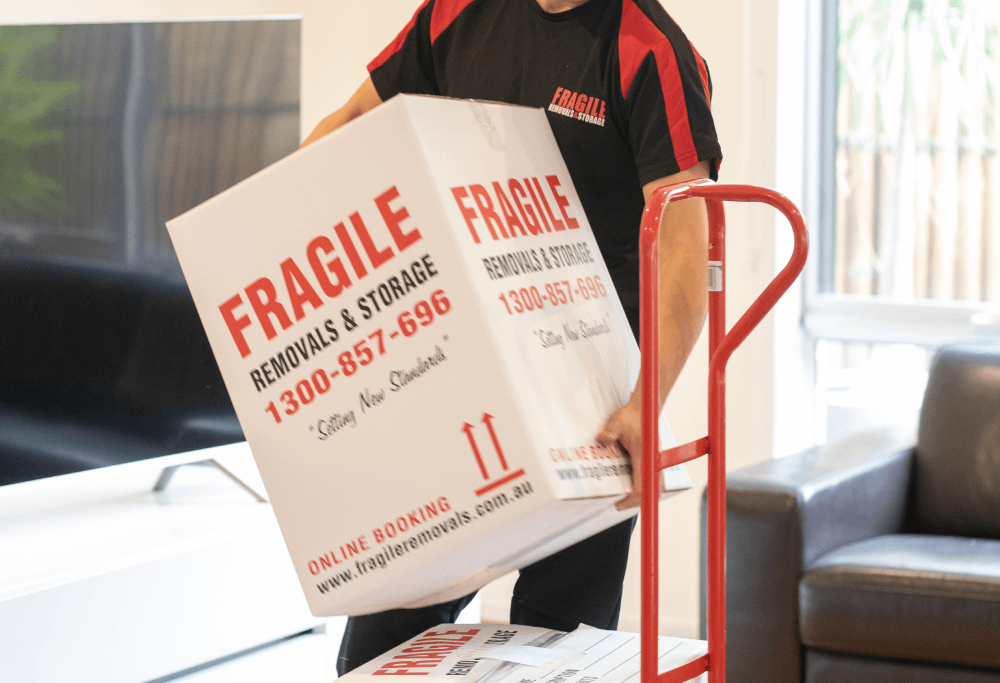
5 Tips for Protecting Fragile Items When Moving House
Fragile items often have significant monetary or sentimental value. To protect them and continue to treasure them for years, it is important to take great care when moving house.
Use these five planning steps to reduce avoidable packing problems. No packaging method guarantees that an item cannot be damaged.
- Allow plenty of time
One of the main causes of breaks and damages made to fragile items is rushing. Take your time when packing breakables as they generally require a little extra TLC. Start the packing process well in advance of moving day, so you can assess awkward items and arrange help before collection.
- Use the right packaging materials To protect your breakables from shocks, bumps and vibrations, you need to use packaging that can withstand being moved by hand, car or moving truck. Blankets, towels and clothing are commonly used to pack fragile items, but these materials do not maintain their cushioning ability well. Choose protective materials suited to the item, its finish and the likely handling. Packing materials to assess for the particular item include:
- Moving boxes – designed to store possessions efficiently
- Loose fill/packaging peanuts – used to fill voids where compatible with the item
- Heavy grade paper – used to wrap around objects or be wadded into a box
- Corrugated fibreboard – designed to provide structured cushioning
- Polystyrene structures – engineered to fit around an item for cushioning
- Bubble wrap – used to wrap neatly around objects
- Original packaging – useful when complete, sound and designed to support that item
- Configure your items correctly Once you have the right materials, it is important to pack your items properly. Each item or category will need a technique that is best suited to it.
Packing common fragile goods
Plates: Put one plate on a piece of packing paper and fold it over so that the plate is covered. Wrap each additional plate individually and group only as many as the box and protection can support. Place the stack on its side in a box padded with crumpled paper below and above the plates.
Glasses: Wrap each glass individually using suitable clean protection. Where appropriate for its shape, use gentle internal support without forcing pressure on a rim or stem. Use additional clean, non-marking protection as needed; avoid printed paper against finishes that could mark.
Lamps: First, separate the bulb and the shade from the stand. Use appropriate non-marking protection around the stand, with packing paper filling any gaps and select orientation and support suited to the lamp and its packaging. Wrap the light bulb in bubble wrap and the shade in tissue paper and store them separately.
- Clearly mark moving boxes Ensure that you write FRAGILE on boxes with breakable items in them. Also indicate which way up the box is to be moved and stored.
- Communicate clearly with your movers When your movers arrive, let them know which boxes contain fragile items and need particular care taken when transporting them.
These steps support a more considered packing plan. Inspect the packed items and discuss unusually valuable, delicate or awkward objects with the removal team before transport.
Enquire with our removals specialists today to start your stress-free move today.
Match the protection to the object
Start with the item's material, shape and condition. Glass, ceramics, lamp shades and decorative finishes do not all tolerate the same pressure or contact material. Identify projecting handles, rims and other delicate parts before choosing a box. If the item has maker-supplied packing instructions or fitted packaging, check those first.
Inspect original packaging before reusing it. Missing inserts, damage or a box made for a different model can change how well the object is supported. For replacement materials, use the packing materials guide and ask the packing team about compatibility with the item's surface. This page does not establish that every bubble wrap, foam or loose fill is suitable for every finish.
There is a difference between filling a gap and supporting a heavy object. Avoid allowing heavier contents to press on delicate parts, and do not rely on soft household textiles alone to retain a precise protective shape. Other general packing advice suggests towels or clothing as cushioning; use that suggestion cautiously and choose item-specific support where the contents need it.
Prepare a stable packing area and pack in stages
Give yourself enough clear space to wrap one item at a time and keep packed goods away from the active work area. Inspect boxes and close or reinforce them as appropriate for their construction. Follow supplier guidance about loading; a large box is not automatically suitable for a heavy group of breakables.
Place suitable cushioning below the contents, wrap each item and arrange it so neighbouring pieces do not make unprotected contact. Fill remaining gaps with compatible material without forcing pressure onto weak parts. Before sealing, check that the contents are supported and that the box closes without compression of the objects.
For suitable plates, support individually wrapped groups on edge in a cushioned box. Wrap glasses individually and choose internal protection suited to the actual shape. Adapt the grouping and protection to the actual shapes and box; do not assume a fixed number of pieces will fit safely. See packing glasses and plates for the related decision.
For lamps, separate the bulb and shade where the design permits and use suitable protection for each component. Keep parts identifiable for reassembly. Do not dismantle an unfamiliar fitting by force or let a heavier stand bear on the shade. Seek help when the construction or finish needs specialist treatment.
Label for placement as well as careful handling
Mark boxes containing breakables and indicate orientation where relevant. Add the destination room and enough description to locate the item later. A fragile label helps communicate; it does not compensate for inadequate internal support or an unsuitable box.
Tell the removal team which boxes contain sensitive goods and which objects need separate assessment. For paintings or framed work, use the painting moving guide rather than assuming the plate-packing method transfers to artwork. Agree who is responsible for any professional packing before the crew arrives.
Check the result and handle problems promptly
If a box bows, cannot close normally or contains items that are not supported, stop and repack it with a more suitable arrangement. Do not keep adding tape to conceal a structural problem. Ask the packing team to assess a valuable or unusually delicate item if you cannot establish a suitable method.
At delivery, check the outside of boxes and unpack in a controlled area. Keep photographs and packing details if you notice damage, and contact the moving company promptly through the agreed process. Discuss insurance terms before the move so you understand the relevant conditions for self-packed or professionally packed items.
Does a FRAGILE label make the packing adequate?
No. A FRAGILE label tells handlers to take care, but it cannot replace a suitable carton, individual wrapping, internal support and sensible loading. Choose protection for the item’s material, shape, finish and weak points. Prevent heavier objects from pressing against delicate rims, handles or shades, and inspect the box before closing it. Add destination-room and orientation labels where appropriate, then point out special-care cartons to the crew. Ask for an assessment of valuable or awkward objects before collection rather than relying on the label alone.
Should I always reuse the original box?
Original packaging can be useful when it is sound, complete and designed for that exact item. Check the carton and fitted inserts for damage or missing sections, and confirm that they still support the object in the intended position. A box from a different model or one without its internal supports may not provide the same protection. If the packaging is unsuitable, ask the packing team about compatible materials and support. Keep any manufacturer packing guidance with the item’s preparation notes.
Can towels and clothing replace all protective packaging?
No. Towels and clothing may provide general cushioning, but they may compress, shift or fail to hold a delicate object in the required position. Choose protection that suits the particular surface and shape, and distinguish filling empty space from supporting weight. Use suitable clean, non-marking wrapping and a sound carton, with extra attention to protruding or weak parts. For uncertain finishes, unusually valuable objects or items without suitable packaging, seek packing advice before improvising with household textiles.
How should I prepare plates, glasses and lamps?
Use item-specific preparation instead of treating every breakable the same. The guide describes individually wrapping plates and supporting them on their side in a padded carton, and wrapping glasses individually without forcing pressure onto rims or stems. For lamps, separate components only where appropriate and protect the shade, bulb and base to suit their shape and finish. Keep parts identified and prevent heavy contents from bearing on fragile pieces. Ask the packing team to assess anything whose preparation is unclear.
What should I tell the movers about fragile belongings?
Identify the items before the quote is finalised, especially pieces with high value, unusual dimensions, delicate finishes or existing damage. Agree who will pack them, what protection is required and whether a separate handling assessment is needed. Keep condition photographs and any model-specific instructions available. At collection, point out the relevant cartons and confirm destination placement. Check the applicable insurance and reporting arrangements separately; careful packing reduces avoidable problems but does not guarantee a damage-free move.
Images on This Page
-
https://www.fragileremovals.com.au/wp-content/uploads/2025/07/Logo.svg
Logo
-
https://www.fragileremovals.com.au/wp-content/uploads/2025/08/Fragile-Removals-Melbourne-VIC.png
Fragile Removals Melbourne VIC
-
data:image/svg+xml,%3Csvg%20xmlns='http://www.w3.org/2000/svg'%20viewBox='0%200%20156%2025'%3E%3C/svg%3E
5-star
-
https://www.fragileremovals.com.au/wp-content/uploads/2025/08/5-star.svg
5-star
-
data:image/svg+xml,%3Csvg%20xmlns='http://www.w3.org/2000/svg'%20viewBox='0%200%2022%2021'%3E%3C/svg%3E
1-star
-
https://www.fragileremovals.com.au/wp-content/uploads/2025/08/1-star.svg
1-star
-
data:image/svg+xml,%3Csvg%20xmlns='http://www.w3.org/2000/svg'%20viewBox='0%200%20240%20340'%3E%3C/svg%3E
bg pattern2
-
https://www.fragileremovals.com.au/wp-content/uploads/2025/08/bg-pattern2.png
bg pattern2
-
data:image/svg+xml,%3Csvg%20xmlns='http://www.w3.org/2000/svg'%20viewBox='0%200%20254%2091'%3E%3C/svg%3E
(no alt text)
-
https://www.fragileremovals.com.au/wp-content/uploads/2025/07/footer-logo.svg
(no alt text)
-
data:image/svg+xml,%3Csvg%20xmlns='http://www.w3.org/2000/svg'%20viewBox='0%200%20109%20217'%3E%3C/svg%3E
AFRA Member
-
https://www.fragileremovals.com.au/wp-content/uploads/2025/07/member.png
AFRA Member