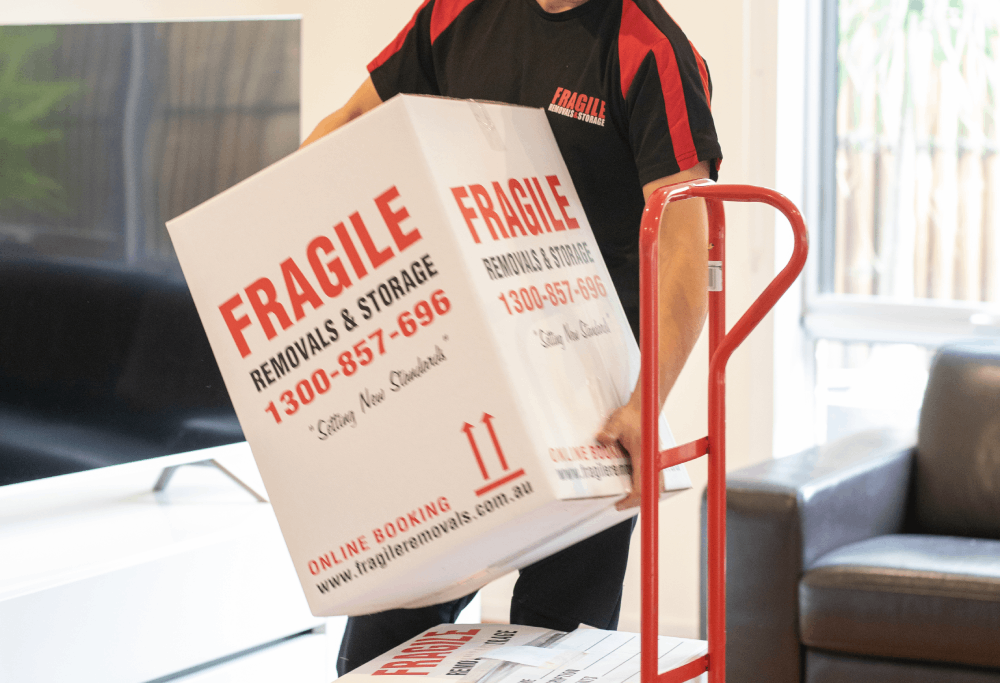
Fragile Removals Gallery
See our team at work in the videos below. Each video shows a particular job; tell us how your handling, access or equipment requirements compare when discussing your own move.
Moving videos
Find more on the Fragile Removals & Storage YouTube channel.
What to look for in footage of a move
Watch the parts that are easy to skip. How many people are on a heavy item, what the furniture is wrapped in before it moves, whether the load is built in an order that supports itself, and whether anyone is carrying something awkward alone. Those four things tell you more about how a job is run than the finished-room shot at the end. A video is a demonstration rather than evidence about your own property, but it does show the method a crew is used to working to.
What footage cannot tell you
Any video is a selected record of a job that went well enough to film. It cannot confirm availability on your date, establish what a move of your inventory will cost, show how your own stairs or driveway will be handled, or settle what cover applies to your goods. None of that is a criticism of the footage; it is simply the limit of the format. Use it to form questions, then get the answers in a written quote and the booking terms.
Judging the equipment on show
The equipment visible in footage is a reasonable proxy for how a crew expects to work. Look for trolleys and dollies rather than bare carrying, heavy-duty blankets and covers rather than household bedding, straps securing the load, and a vehicle with a tail lift or ramp where heavy items are involved. Where a property has narrow access, a smaller shuttle vehicle may appear. If the job you are planning needs any of those, ask whether they are part of the quoted service.
How protection is applied, not just whether it is
Wrapping is only useful if it is doing the right job. Watch whether a surface is covered before it touches anything, whether gaps around an item are filled without pressure on delicate parts, and whether polished or painted surfaces are separated from hard edges. Blanket over a corner is different from a blanket taped around a leg. If you own something with a finish you are worried about, ask specifically how that item will be prepared rather than relying on general footage.
Access is the part most footage skips
Carrying across a clear driveway is not the same work as a third-floor walk-up, a long carry from restricted parking, or a lift with a booking window. Footage filmed at an easy property tells you little about a hard one. If your own access is the difficult part of the job, look for footage of something comparable, and assume that any timing shown is for the property in the video rather than for yours.
Using a video to brief your own job
Pick the clip closest to your own situation and use it as a reference point. Saying "a load about this size, but with a staircase at the delivery end" gives a coordinator something concrete to price against. It is more useful than a room count on its own, because it communicates volume, handling and access together. Follow it with the actual addresses, dates and inventory, which are the things a quote is built from.
Photographs of your own property that help most
A handful of photographs usually settles questions a paragraph cannot. The ones worth taking are the entrance and the door width, the stairs or the lift, where a truck can legally stop, the driveway if it is steep or narrow, and anything oversized such as a piano, a safe or a large appliance. Take them at both properties if you can. Send them with the enquiry rather than waiting to be asked.
Recording condition before anything moves
Photograph the items that matter to you before collection, with enough light to show the surface, and keep the files with their dates intact. Do the same for the rooms at both ends. This is ordinary good practice rather than an accusation: it means a question about condition later can be answered from a record instead of a recollection. Keep that record with your inventory and booking documents.
What to ask for that footage does not show
Ask for the written scope of what is included, who will attend and in what vehicle, how the collection and delivery windows work for your route, and what the process is if something is damaged. Ask what happens if the inventory or the access turns out to be different from the description. Those answers belong in your quote and booking terms, and they are the things that actually govern the job.
Gym and specialist equipment footage
Specialist jobs are worth watching differently. For gym equipment, look at how machines are dismantled rather than dragged, whether floors are protected, and how powered equipment such as treadmills and bikes is handled and wrapped. For a piano or a safe, look at the trolley, the number of people and the route taken. Then ask for the specific item to be assessed, because weight and access decide these jobs rather than general experience.
Comparing removalists using their own footage
Compare like with like, and ignore production quality. A well-edited video from an easy job tells you less than a plain clip of a difficult one. What is worth comparing is the method: crew size for the weight, the protection applied before anything moves, how the load is secured, and how access is handled. Then compare the written quotes on the same inventory and access description, which is where a real difference between businesses shows up.
Discuss a similar job
For a household move, compare local removals. For fitness equipment, review gym relocation, where equipment details, dismantling and access need to be agreed before collection. For delicate or high-value items, see white glove services.
Contact us to discuss your inventory, date and access, including any after-hours requirements. We will assess the service and availability for your booking.
Which service should I compare for a job like the ones shown?
For a household move, compare local removals. For fitness equipment, review gym relocation, where equipment details, dismantling and access need to be agreed before collection. For delicate or high-value items, see white glove services.
What should I look for in footage of a move?
Watch the parts that are easy to skip. How many people are on a heavy item, what the furniture is wrapped in before it moves, whether the load is built in an order that supports itself, and whether anyone is carrying something awkward alone. Those four things tell you more about how a job is run than the finished-room shot at the end. A video is a demonstration rather than evidence about your own property, but it does show the method a crew is used to working to.
What can a moving video not tell me?
Any video is a selected record of a job that went well enough to film. It cannot confirm availability on your date, establish what a move of your inventory will cost, show how your own stairs or driveway will be handled, or settle what cover applies to your goods. None of that is a criticism of the footage; it is simply the limit of the format. Use it to form questions, then get the answers in a written quote and the booking terms.
What equipment should I expect to see in footage?
The equipment visible in footage is a reasonable proxy for how a crew expects to work. Look for trolleys and dollies rather than bare carrying, heavy-duty blankets and covers rather than household bedding, straps securing the load, and a vehicle with a tail lift or ramp where heavy items are involved. Where a property has narrow access, a smaller shuttle vehicle may appear. If the job you are planning needs any of those, ask whether they are part of the quoted service.
How can I tell whether furniture is being protected properly?
Wrapping is only useful if it is doing the right job. Watch whether a surface is covered before it touches anything, whether gaps around an item are filled without pressure on delicate parts, and whether polished or painted surfaces are separated from hard edges. Blanket over a corner is different from a blanket taped around a leg. If you own something with a finish you are worried about, ask specifically how that item will be prepared rather than relying on general footage.
Does footage show how my own access will be handled?
Carrying across a clear driveway is not the same work as a third-floor walk-up, a long carry from restricted parking, or a lift with a booking window. Footage filmed at an easy property tells you little about a hard one. If your own access is the difficult part of the job, look for footage of something comparable, and assume that any timing shown is for the property in the video rather than for yours.
How can I use a video to describe my own job?
Pick the clip closest to your own situation and use it as a reference point. Saying "a load about this size, but with a staircase at the delivery end" gives a coordinator something concrete to price against. It is more useful than a room count on its own, because it communicates volume, handling and access together. Follow it with the actual addresses, dates and inventory, which are the things a quote is built from.
Which photographs of my property are most useful?
A handful of photographs usually settles questions a paragraph cannot. The ones worth taking are the entrance and the door width, the stairs or the lift, where a truck can legally stop, the driveway if it is steep or narrow, and anything oversized such as a piano, a safe or a large appliance. Take them at both properties if you can. Send them with the enquiry rather than waiting to be asked.
Should I photograph my belongings before collection?
Photograph the items that matter to you before collection, with enough light to show the surface, and keep the files with their dates intact. Do the same for the rooms at both ends. This is ordinary good practice rather than an accusation: it means a question about condition later can be answered from a record instead of a recollection. Keep that record with your inventory and booking documents.
What should I ask for that a video does not show?
Ask for the written scope of what is included, who will attend and in what vehicle, how the collection and delivery windows work for your route, and what the process is if something is damaged. Ask what happens if the inventory or the access turns out to be different from the description. Those answers belong in your quote and booking terms, and they are the things that actually govern the job.
What should I look for in gym or specialist equipment footage?
Specialist jobs are worth watching differently. For gym equipment, look at how machines are dismantled rather than dragged, whether floors are protected, and how powered equipment such as treadmills and bikes is handled and wrapped. For a piano or a safe, look at the trolley, the number of people and the route taken. Then ask for the specific item to be assessed, because weight and access decide these jobs rather than general experience.
How do I compare removalists using their own footage?
Compare like with like, and ignore production quality. A well-edited video from an easy job tells you less than a plain clip of a difficult one. What is worth comparing is the method: crew size for the weight, the protection applied before anything moves, how the load is secured, and how access is handled. Then compare the written quotes on the same inventory and access description, which is where a real difference between businesses shows up.
Images on This Page
-
data:image/svg+xml,%3Csvg%20xmlns='http://www.w3.org/2000/svg'%20viewBox='0%200%20505%2040'%3E%3C/svg%3E
Logo
-
https://www.fragileremovals.com.au/wp-content/uploads/2025/07/Logo.svg
Logo
-
data:image/svg+xml,%3Csvg%20xmlns='http://www.w3.org/2000/svg'%20viewBox='0%200%201000%20683'%3E%3C/svg%3E
Fragile Removals Melbourne VIC
-
https://www.fragileremovals.com.au/wp-content/uploads/2025/08/Fragile-Removals-Melbourne-VIC.png
Fragile Removals Melbourne VIC
-
data:image/svg+xml,%3Csvg%20xmlns='http://www.w3.org/2000/svg'%20viewBox='0%200%20156%2025'%3E%3C/svg%3E
5-star
-
https://www.fragileremovals.com.au/wp-content/uploads/2025/08/5-star.svg
5-star
-
data:image/svg+xml,%3Csvg%20xmlns='http://www.w3.org/2000/svg'%20viewBox='0%200%2022%2021'%3E%3C/svg%3E
1-star
-
https://www.fragileremovals.com.au/wp-content/uploads/2025/08/1-star.svg
1-star
-
data:image/svg+xml,%3Csvg%20xmlns='http://www.w3.org/2000/svg'%20viewBox='0%200%20240%20340'%3E%3C/svg%3E
bg pattern2
-
https://www.fragileremovals.com.au/wp-content/uploads/2025/08/bg-pattern2.png
bg pattern2
-
data:image/svg+xml,%3Csvg%20xmlns='http://www.w3.org/2000/svg'%20viewBox='0%200%20254%2091'%3E%3C/svg%3E
(no alt text)
-
https://www.fragileremovals.com.au/wp-content/uploads/2025/07/footer-logo.svg
(no alt text)
-
data:image/svg+xml,%3Csvg%20xmlns='http://www.w3.org/2000/svg'%20viewBox='0%200%20109%20217'%3E%3C/svg%3E
AFRA Member
-
https://www.fragileremovals.com.au/wp-content/uploads/2025/07/member.png
AFRA Member